
Add ₹999 more to unlock FREE SHIPPING!
Your sacred cart is currently empty.
Shop Photo FramesLocated in Vengao, near the Karjat railway station, is the ancient, self-manifested (Swayambhu) abode of Goddess Mahalakshmi. This temple is renowned as a replica of the Ambabai of Kolhapur. Nanasaheb Peshwa, a prominent leader in the freedom struggle of 1857, was born in this very village, and records indicate that he oversaw the renovation of this temple. Thousands of devotees visit during the nine days of Navaratri to seek the blessings of this form of Ambabai, who is revered as the Kuldevi (family deity) of Maharashtra.
In the ‘Devi Mahatmya’, a text based on the ‘Durga Saptashati’, Mahalakshmi is described as the Adi Maya (the primordial source). It states, “She is the beginning of all, Mahalakshmi herself. She is the supreme Goddess of the entire universe, the embodiment of the three Gunas (Triguna).” These three forms of the Goddess are seen at the Mahalakshmi temple in Kolhapur, where Mahalakshmi is enshrined alongside Mahakali and Mahasaraswati. According to the legends in the Devi Mahatmya, Mahalakshmi created these two forms from the Tamoguna and Sattvaguna and instructed them to create pairs of men and women suitable to their respective qualities, which led to the creation of the universe. Thus, her devotees believe that Mahalakshmi is the original Prakriti (nature). This means she is not a secondary consort to any deity like Brahma, Vishnu, or Mahesh, but is the direct embodiment of Brahman—the Mother, Sustainer, and Destroyer of the universe.
The legend of the Mahalakshmi temple at Vengao states that the Mahalakshmi of Kolhapur was once traveling through this route to visit her sister. During the journey, the wheel of her chariot slipped at the spot where the temple now stands. A short distance away, the hoof of one of the horses pulling the chariot also slipped. Consequently, the Goddess decided to stop there. The spots where the chariot wheel and the horse’s hoof slipped can still be seen in the area today. According to another story, two hundred years ago, the Goddess appeared in a dream to a villager and revealed this location. Upon searching, the villagers discovered the Swayambhu idol of the Goddess, and a temple was subsequently built on that very spot. The daily worship and evening lamp rituals (Sanjvat) that began then continue uninterrupted to this day. The current temple structure was built in 1997.
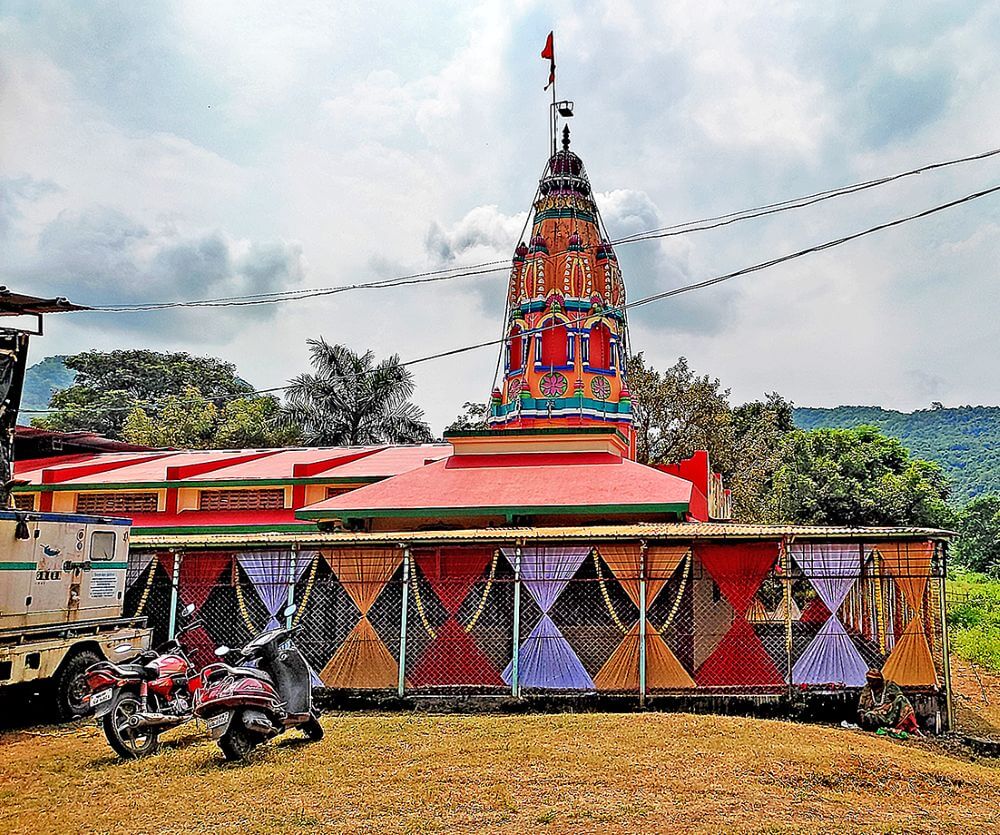
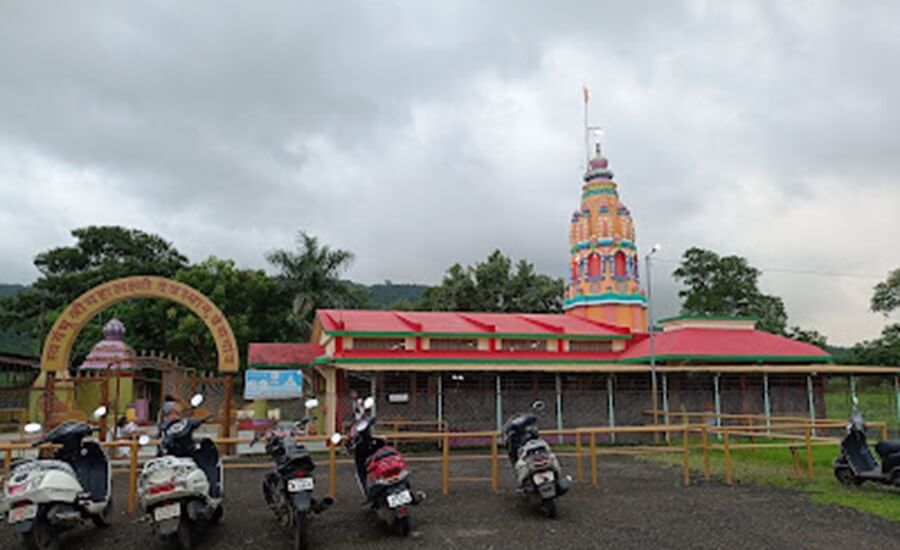
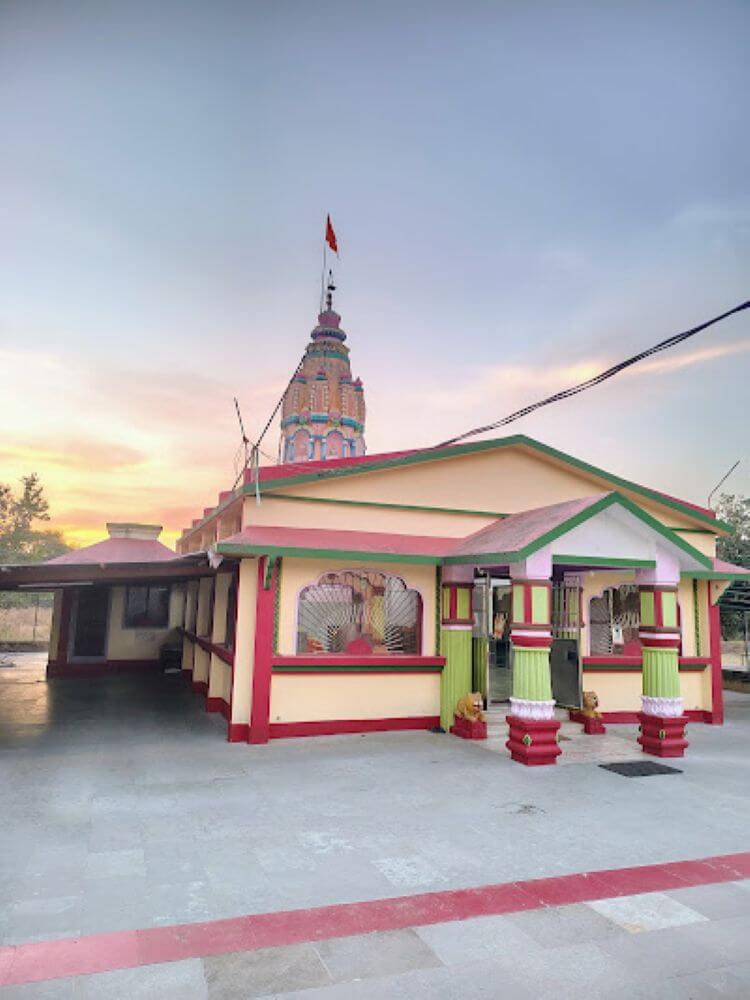
Situated at the foothills of the Sahyadri mountains, nestled in nature at the outskirts of Vengao, the temple is entered through a semicircular arch. In front of the temple, there is an attractive Tulsi Vrindavan, along with shrines dedicated to Ganpati, Hanuman, and the guardian deities. The main temple structure consists of a Mukh-mandap (entrance hall), Sabha-mandap (assembly hall), and a Garbhagriha (sanctum sanctorum) surrounded by a Pradakshina path (circumambulatory path). Steps lead from the Mukh-mandap into the Sabha-mandap through two pillars. On platforms on both sides of the entrance to the Sabha-mandap, there are sculptures of tigers, the vehicle of the Goddess. In the center of the Sabha-mandap, there is a sculpture of a lion on a pedestal. The Sabha-mandap is enclosed (Gudhamandap), with large windows in the walls for light and ventilation. These walls are adorned with information and pictures of revolutionaries from the freedom struggle.
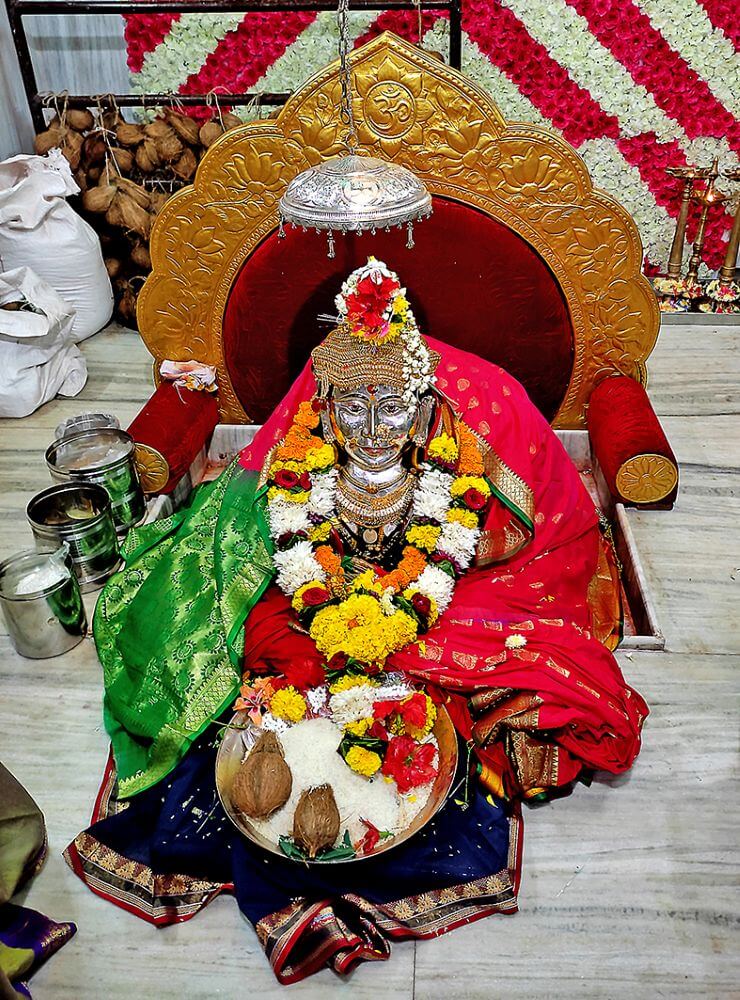
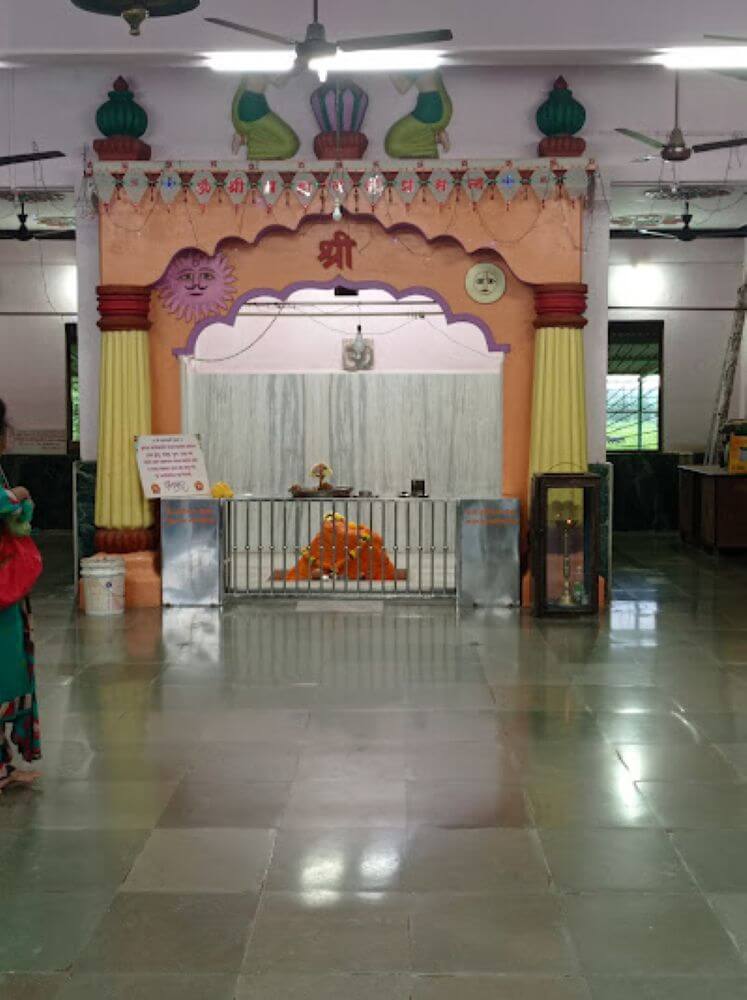
The Garbhagriha features a traditional semicircular arch in the Torana style. The upper parts of the pillars on both sides display symbols of the Sun, Moon, and other auspicious signs. Inside the Garbhagriha, the idol of the Goddess is in the form of a Taandala (a naturally shaped stone). During festivals, the idol is adorned with colorful garments, flowers, garlands, silver ornaments, and a mask. The Shikhara (spire) above the Garbhagriha is 55 feet high and reflects the Nagara style of architecture. It is decorated with numerous Devakoshtakas (niches) and replicas of Kalashas. At the pinnacle of the Shikhara are two Amalakas topped with a Kalasha.
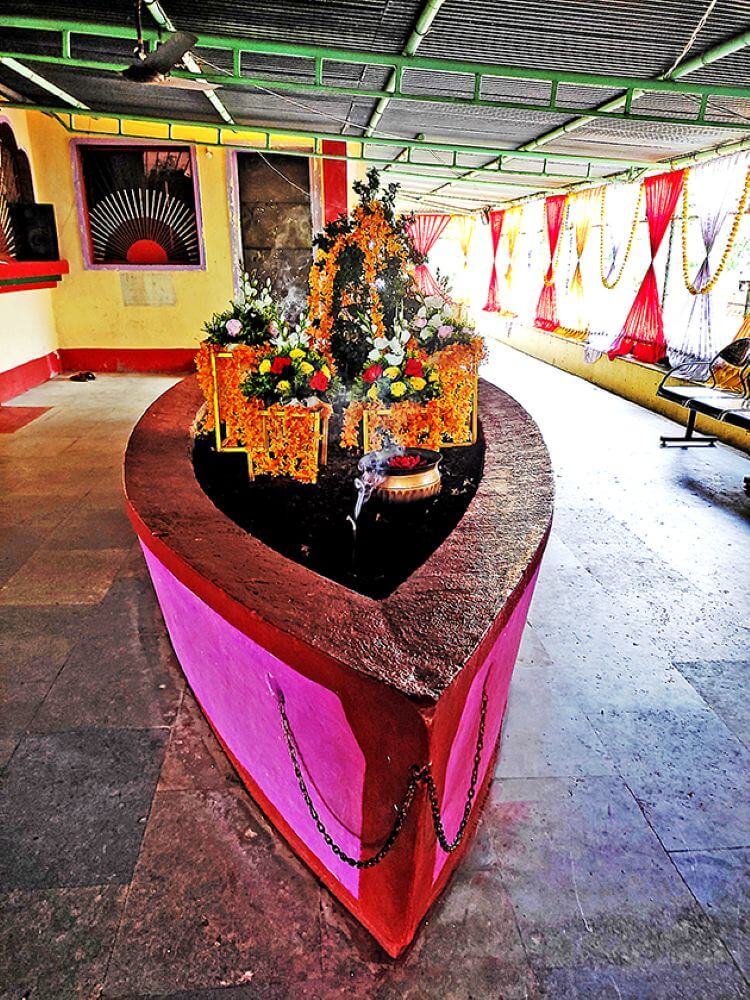
In the temple courtyard, towards the northeast, one can see the mark of the chariot wheel, and towards the west, the spot where the horse’s hoof slipped. The Navaratri festival is the most significant event here, marked by a grand fair that lasts for nine days. During this time, rituals such as Puja, Saptashati Path, Abhishek, Bhajan, Kirtan, and Gondhal are performed. A large number of women visit to offer ‘Oti’ (a traditional offering of a blouse piece and coconut) to the Goddess. On the final day of the Ghat, a Navchandi Homa is performed. Additionally, festivals like Tripurari Purnima, Holi, Hanuman Jayanti, Ganeshotsav, and Dussehra are celebrated with great enthusiasm. The temple trust also engages in social work, including blood donation camps, encouraging budding artists, and providing school supplies to students.
This sacred temple stands as a testament to deep spiritual devotion, ancient architectural grandeur, and rich local cultural traditions.
The sanctum sanctorum houses the divine idol consecrated according to ancient Vedic traditions, surrounded by serene courtyards and traditional temple architecture.
Navratri, Maha Shivratri, Annual Temple Jatra & Deepotsav
Compare and book flights, secure top-rated local hotels near the temple, hire reliable guides, and rent cars instantly.
Extend your pilgrimage by visiting other highly sacred temples located nearby.


Add ₹999 more to unlock FREE SHIPPING!
Your sacred cart is currently empty.
Shop Photo FramesFill in your delivery details below to place your order.
Add comment