
Add ₹999 more to unlock FREE SHIPPING!
Your sacred cart is currently empty.
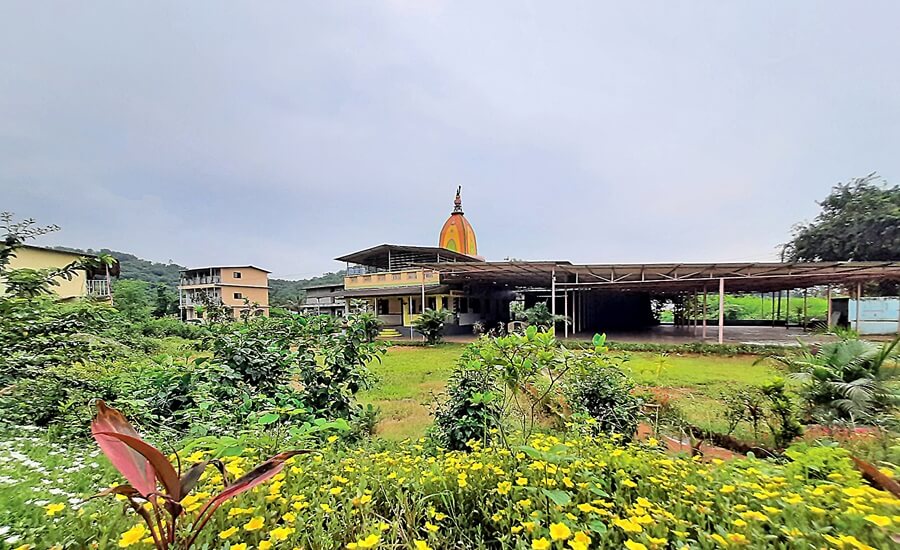
Shop Photo FramesA narrow valley situated between two mountains is known as a ‘Ghal’. The Shivthar Ghal, where Samarth Ramdas Swami composed the ‘Dasbodh’, is famous. There are many such valleys in Konkan, locally referred to as ‘Ghol’. Most of these Ghol are home to various deities. Among these, the temple of Kshetreshwar Mahadev, located in the Gholnagar area between three mountains near Wave village in Raigad district, is well-known. Since there are also temples dedicated to Shri Ram and Dnyaneshwar Mauli adjacent to this temple of Mahadev, the area is also known as ‘Devachi Navi Alandi’ (The New Alandi of the Gods).
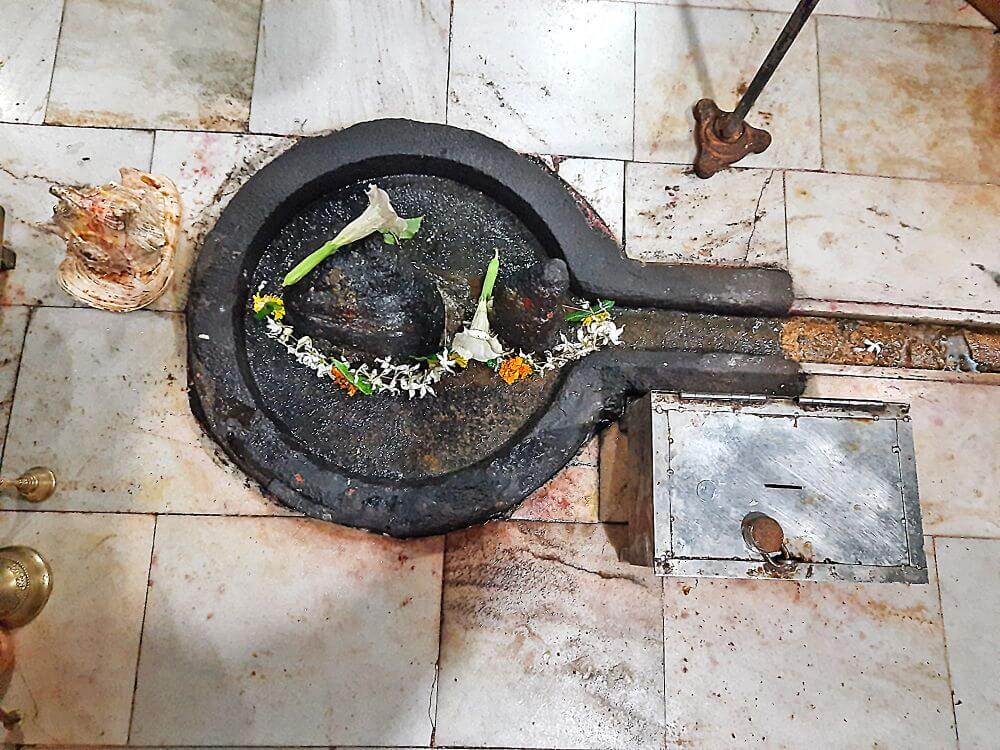
Legend has it that long ago, while a farmer was ploughing a field here, his ploughshare got stuck firmly in the ground, and water began to flow from that spot. To find the source of this water, the villagers dug into the ground. About seven to eight feet deep, they discovered a Swayambhu (self-manifested) Shivling. Water, like the holy Ganga, was flowing from beneath this Linga. Subsequently, the villagers built a simple temple with a thatched roof over this Linga and began worship. It is said that this shrine is about four hundred years old. In 1990, the temple was renovated through public participation, giving it its current form.
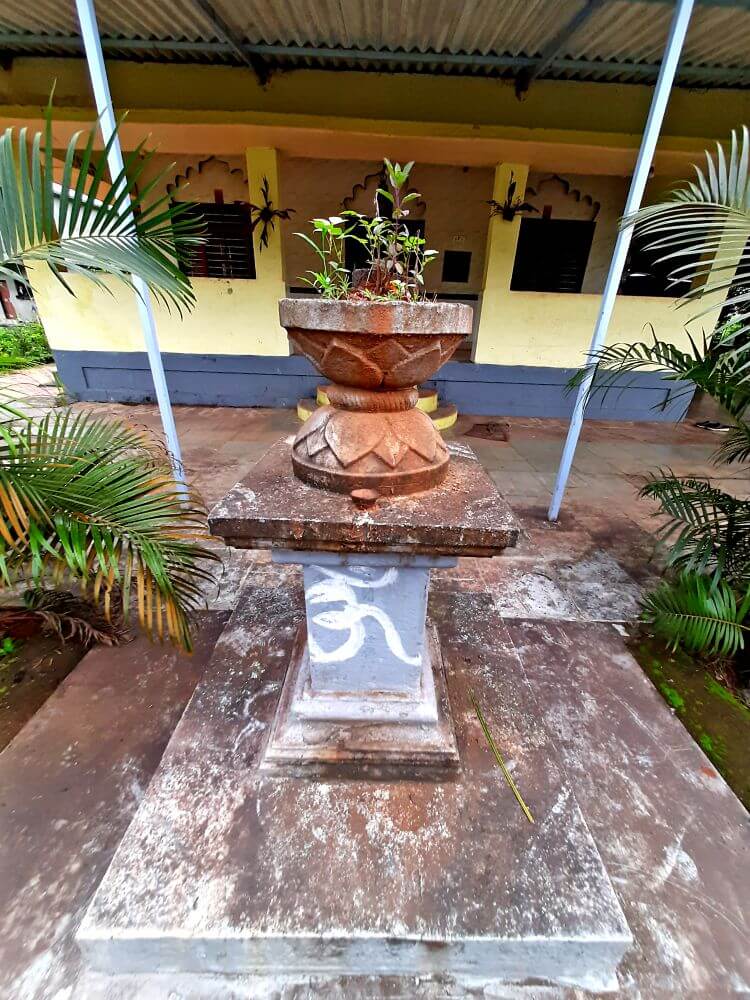
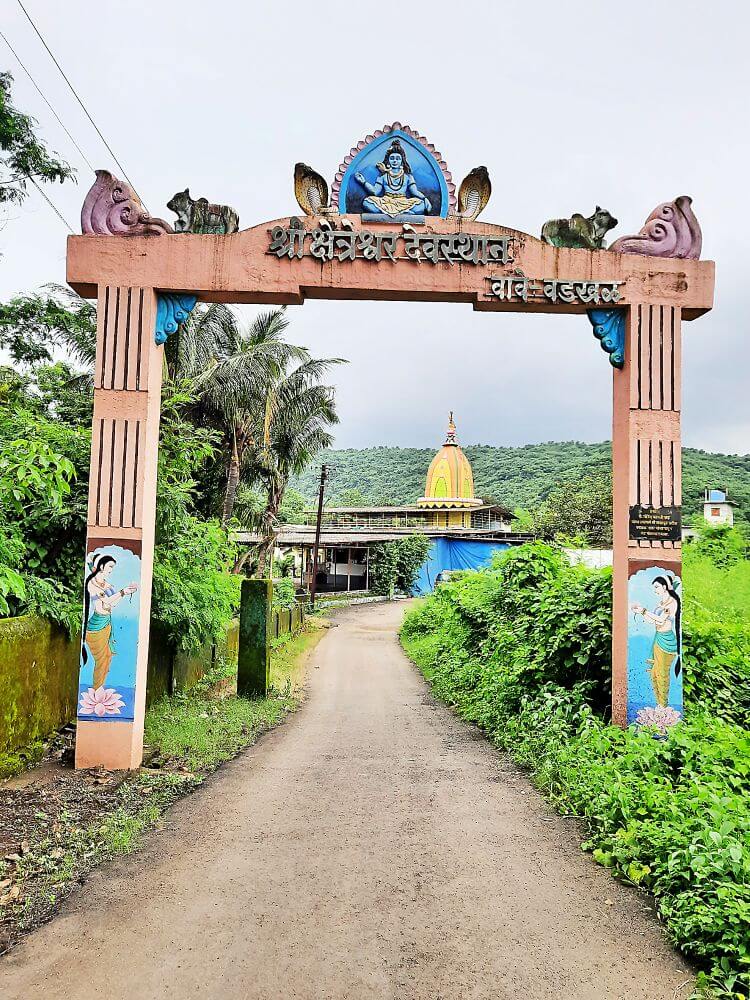
It is said that at night, tigers come down from the mountains to seek the darshan of Kshetreshwar. However, they have never harmed the villagers or those staying overnight in the temple. The villagers believe that this Mahadev has protected many generations here. Therefore, they address this deity as their ‘Kshetrapal’ (Guardian of the region). Consequently, the name ‘Kshetreshwar’—the Lord of the region—became popular for this Mahadev. Devotees believe that Kshetreshwar is a deity who answers the calls of his devotees and fulfills their vows. This temple is situated in Wave village near Vadkhal on the Pen-Alibaug road. As one approaches the temple along a path adorned with natural beauty, the first sight is the welcome arch. The arch features ornate square pillars on both sides, and on the beam above, a painting of Mahadev is depicted in the center. On either side of it are sculptures of hooded cobras, and next to the cobras are Nandi sculptures. Further ahead is the spacious courtyard of the temple, which contains various types of trees and a beautiful garden. In the courtyard, in front of the temple, there is a platform with an ornate square Tulsi Vrindavan.
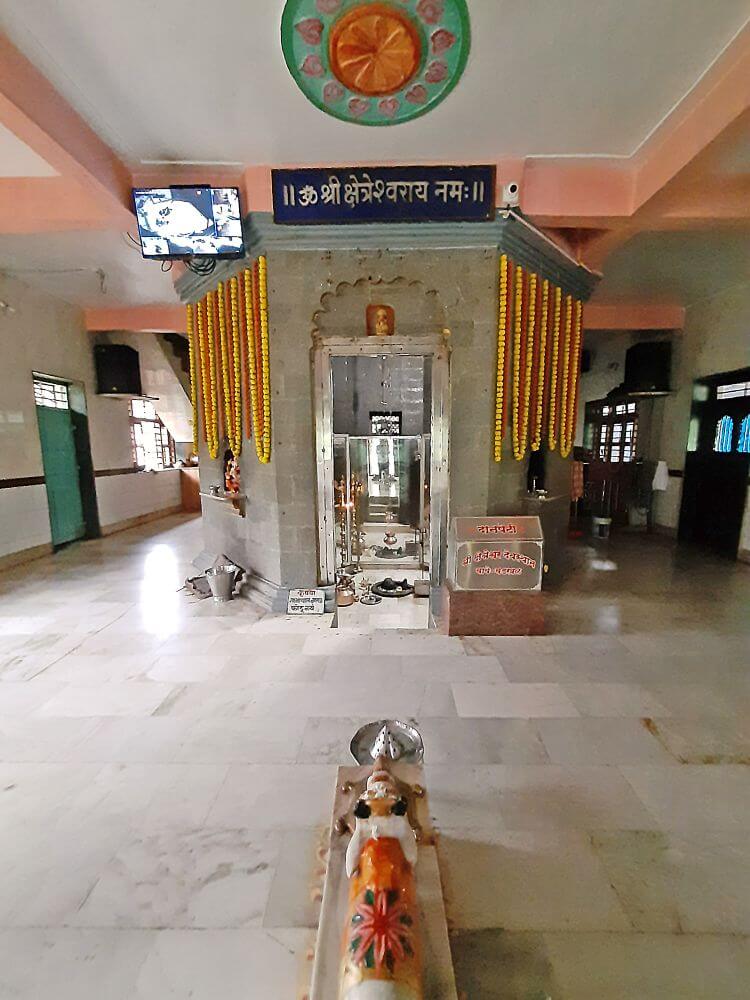
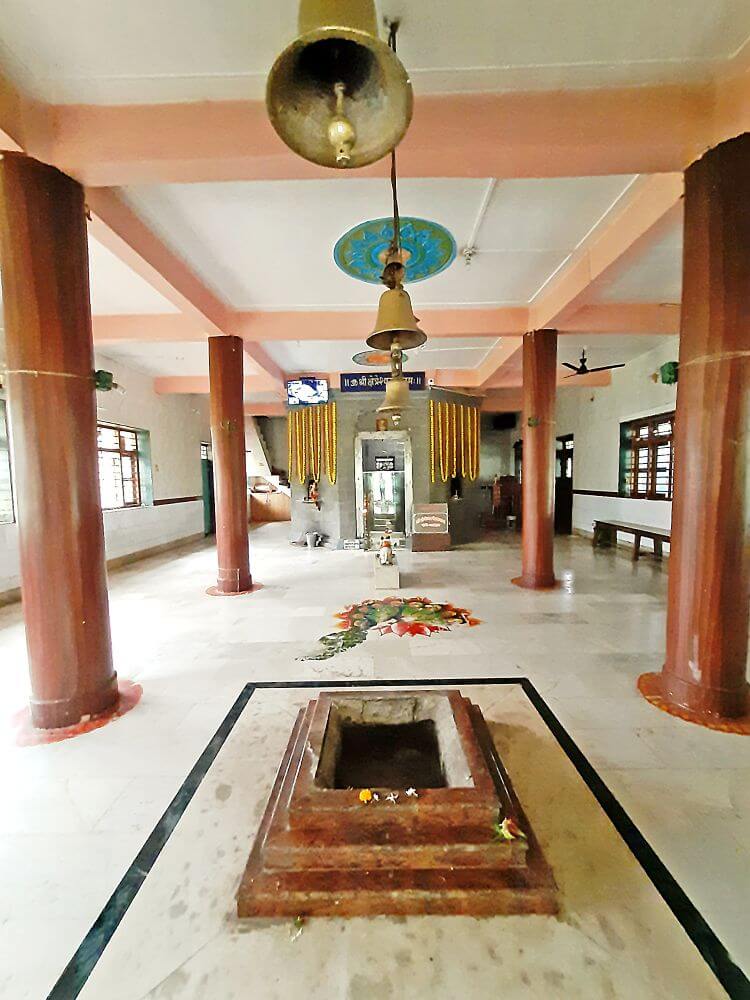
The temple structure consists of a Mukhamandapa (entrance porch), Sabhamandapa (main hall), and Garbhagriha (sanctum sanctorum). In front of the Mukhamandapa, there is a pavilion with a tin roof supported by iron pillars. The temple is situated at a higher level than the pavilion, requiring one to climb three steps to enter the Mukhamandapa. The Mukhamandapa has four square pillars in the front and a built-in railing. The wooden door frames of the Sabhamandapa feature vertical fluted carvings. The upper half of the entrance doors is transparent, while the lower half is carved. The Sabhamandapa has four circular pillars supporting the ceiling beams. The ceiling features circular carvings. Many brass bells, offered upon the fulfillment of vows, can be seen hanging from the ceiling. This enclosed Sabhamandapa has windows for ventilation and sunlight. There are seats for devotees to sit. In the center of the floor, there is a Yajna Kund, and on a platform in front of the Garbhagriha, there is an idol of Nandi. In the front wall of the octagonal Garbhagriha, on both sides of the entrance, there are niches. The right niche houses an idol of Ganpati, and the left houses an idol of Parvati. The door frames of the entrance have vertical fluted carvings, and an idol of Ganpati is placed on the lintel. There are five steps leading down from the Sabhamandapa to the Garbhagriha. Inside the Garbhagriha, the Swayambhu Shivling is in the center of the floor. The Shalunka (base) of the Shivling is adorned with an ornate silver covering. There are silver masks of Shankar and Parvati on the Shivling, and a brass cobra forms a canopy over it.
There is a circumambulation path (Pradakshina Marg) around the exterior of the Garbhagriha, with exits leading out. The roof of the Garbhagriha features a square Shikhara (spire) that tapers towards the top. At the pinnacle of the Shikhara is an Amalaka, topped with a Kalash and a flag. Adjacent to these temples are the temples of Shri Ram and Saint Dnyaneshwar Maharaj, as well as a freshwater pond.
The main annual festival is celebrated with great enthusiasm on Mahashivratri. The festival begins at dawn with a Laghurudra Abhishek. Throughout the day, programs such as Bhajan, Kirtan, Pravachan, music, Haripath, and Mahaprasad are organized. At night, the deity is taken on a village procession in a Palkhi (palanquin) amidst the sound of drums and the throwing of Gulal. Thousands of devotees come for the darshan of the deity, to fulfill their vows, and to participate in the Palkhi procession. The temple is crowded with devotees every Shravan Monday. There is also a significant influx of devotees on Mondays, full moon days (Purnima), new moon days (Amavasya), Ekadashi, and Pradosh.
This sacred temple stands as a testament to deep spiritual devotion, ancient architectural grandeur, and rich local cultural traditions.
The sanctum sanctorum houses the divine idol consecrated according to ancient Vedic traditions, surrounded by serene courtyards and traditional temple architecture.
Navratri, Maha Shivratri, Annual Temple Jatra & Deepotsav
Compare and book flights, secure top-rated local hotels near the temple, hire reliable guides, and rent cars instantly.
Extend your pilgrimage by visiting other highly sacred temples located nearby.


Add ₹999 more to unlock FREE SHIPPING!
Your sacred cart is currently empty.
Shop Photo FramesFill in your delivery details below to place your order.
Add comment