
Add ₹999 more to unlock FREE SHIPPING!
Your sacred cart is currently empty.
Shop Photo FramesSituated on the banks of the Bhogavati River, the historic town of Pen has been renowned as a prominent port and commercial center since ancient times. Various dynasties, including the Chalukyas, Kadambas, and Shilaharas, ruled over this region. During the era of Chhatrapati Shivaji Maharaj, the Maratha chieftain Waghoji Tupe captured the fort of Pen. Records indicate that Chhatrapati Shivaji Maharaj himself visited the port of Pen on 6 August 1668 and 11 May 1674. In this historic and ancient city, the Chalukya-era Rameshwar and Durga Mata temples serve as the presiding deities of the town and remain a place of deep faith for thousands of devotees.
The dictionary meaning of the word ‘Pene’ is a specific place where a palanquin is stationed during a procession or a halting place during a journey. The village name Pen is derived from this. According to the records in the Kolaba Gazetteer, this was an important center on the route of the Bhor Ghat that connected Mumbai to the Deccan. Salt trade was primarily conducted from here. Every year, salt was transported from here on thousands of bullocks. As such, because Pen was a bustling port, the Mughals, the Siddi, and the British all had their eyes on it. According to references in documents held at the Bharat Itihas Sanshodhak Mandal, the British had demanded Pen from Chhatrapati Shivaji Maharaj during the treaty with the Siddi. During the Peshwa era, the Brahmin population here increased. At that time, a branch of the ‘Abhinav Bharat’ organization, founded by the Savarkar brothers, was located in Pen. British civil servant A. M. T. Jackson, a renowned Indologist known as ‘Pandit Jackson’ who also wrote the two-volume work ‘Folklore Notes’ exploring the deities and traditions of the Konkan, was assassinated in Nashik on 21 December 1909 by the revolutionary Anant Kanhere. He took revenge for the sentence of transportation for life (Kala Pani) handed down to Savarkar. In that case, 40 suspects were arrested from Pen. This region was also a focal point during the Salt Satyagraha. After this Satyagraha, Sane Guruji was arrested in Pen itself. The Jungle Satyagraha took place at Chirner on 25 September 1930; however, before that, the district’s first Jungle Satyagraha had taken place at Badgaon near Pen. Women from Pen were at the forefront of the 1932 Civil Disobedience Movement. In this movement, many women such as Saraswati Vinayak Limaye, Yamuna Mukund Limaye, Leela Vinayak Manohar, and Prabhavati Vasant Varkhedkar were arrested by the British.
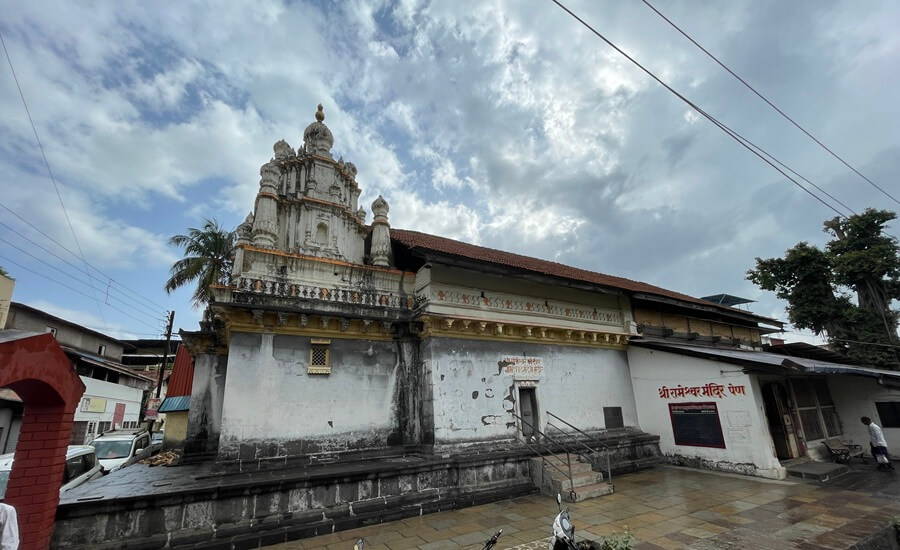
The Rameshwar Temple, built in the Chalukyan architectural style, is located in the Deulwada area of Pen city, which is currently famous as the ‘home of Ganesh idols’. It is said that this temple was constructed during the Chalukya dynasty. Signs of antiquity are visible everywhere in this temple. There is a stone lamp pillar outside the temple. This south-facing temple stands on a large stone plinth. Stone and wood have been used in the construction of the temple. In front of the original temple The assembly hall, built in a later period, is spacious and two-storied. This assembly hall features multicolored glass chandeliers that are over one hundred years old. One enters the main temple from the assembly hall. Here, there is an ancient inscription that indicates the period of the temple’s construction.
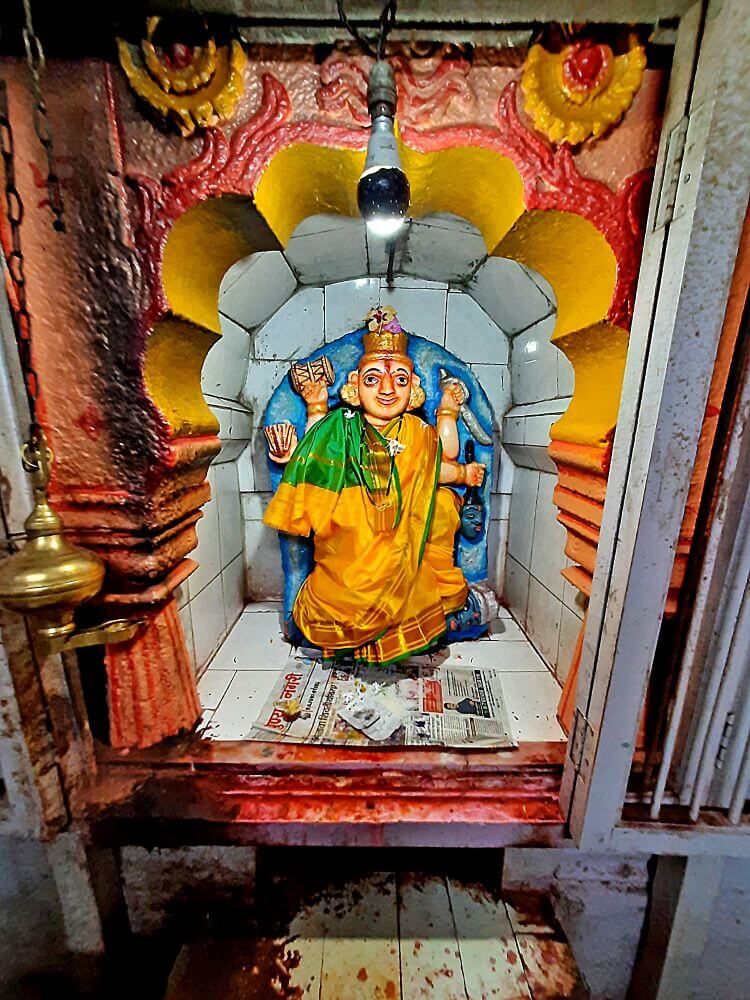
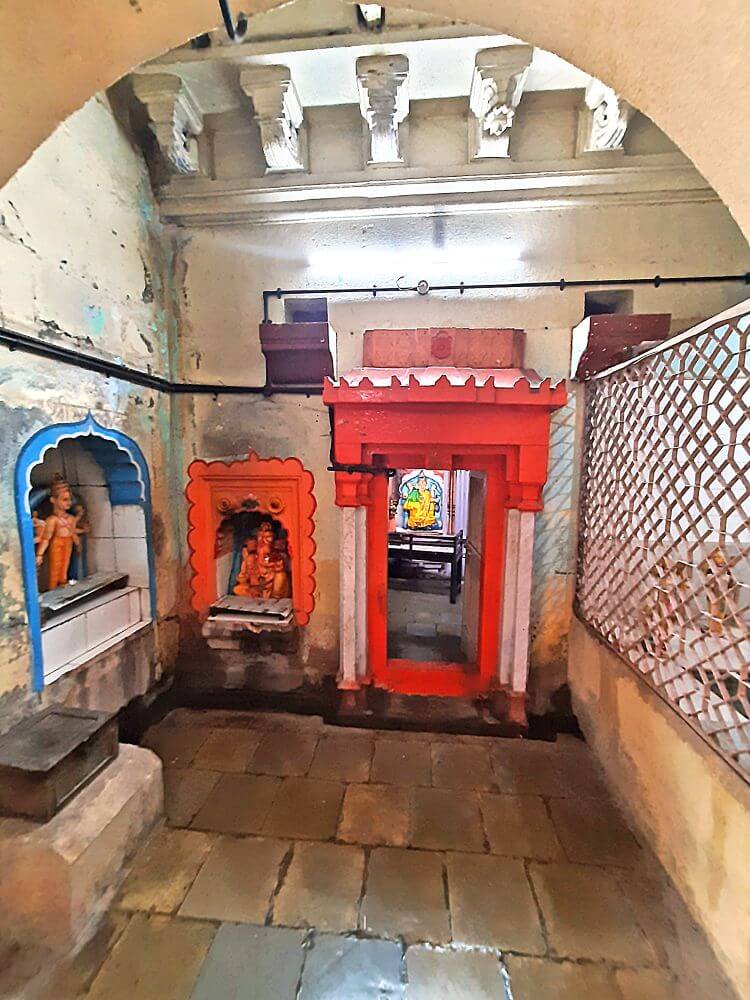
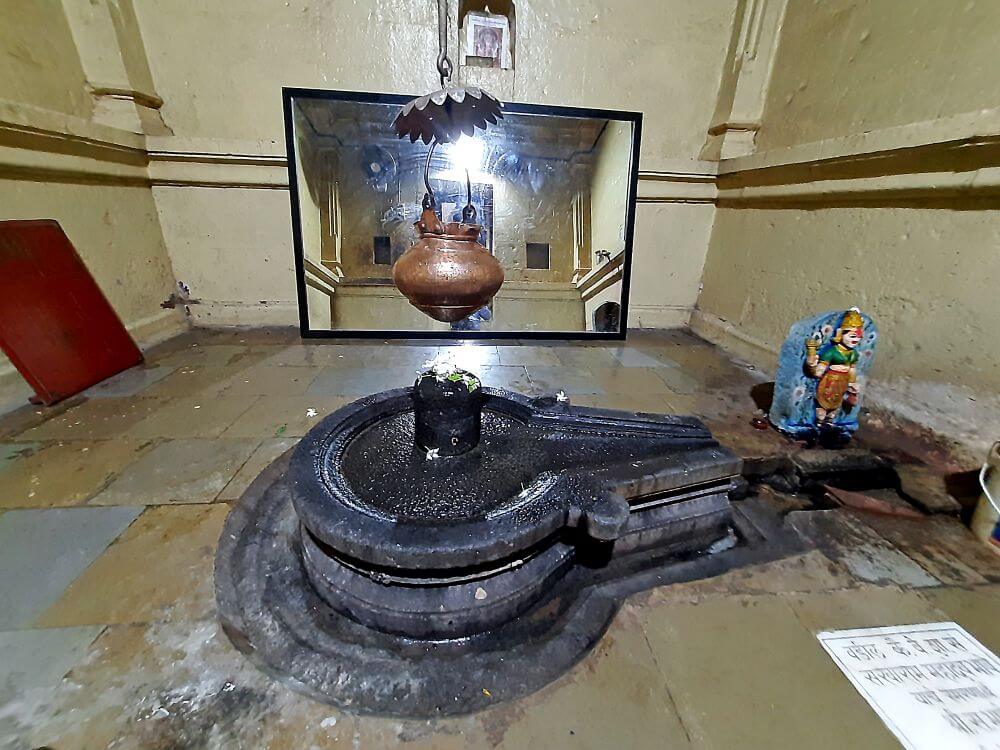
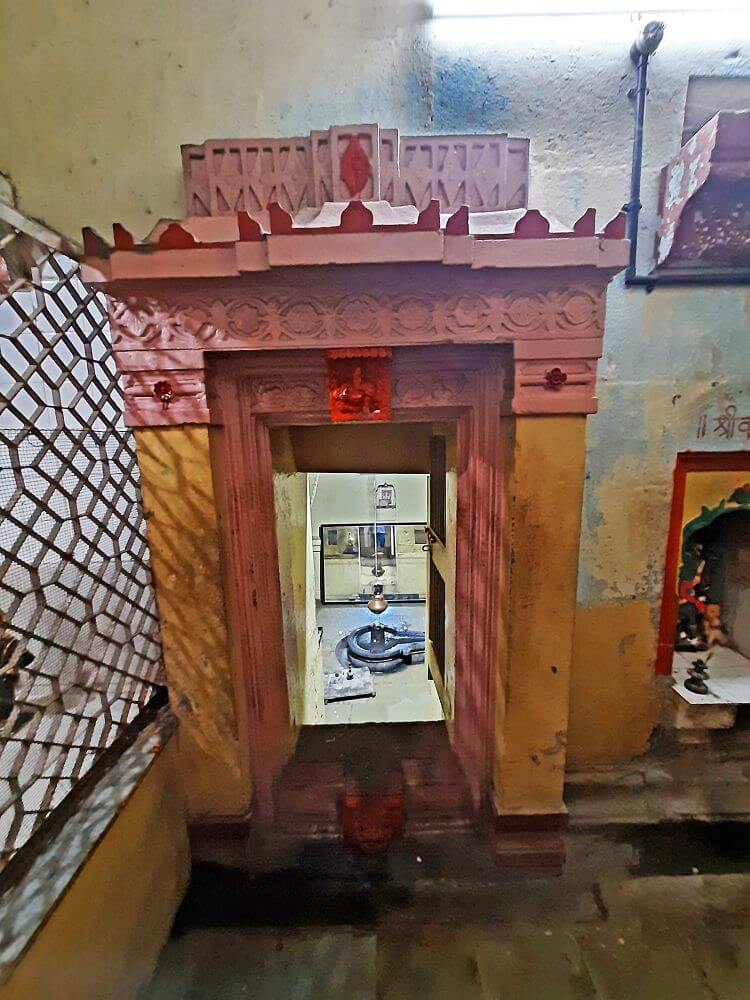
At the entrance of the temple are the images of Jaya and Vijaya. On the lintel is the idol of Ganesha, and on the semi-circular stone above the architrave is the Kirtimukha. Upon entering from here, the Ram Darbar is visible in front. It contains the idols of Shri Rama, Sita, Lakshmana, Vishnu, Vitthal-Rakhumai, and Maruti. Outside this court, in the shrines on the left, are the idols of Ekamukhi Dattatreya and Ganesha. On the right side, in a separate sanctum sanctorum, is a distinctive, well-defined four-armed idol of Mother Durga. The sanctum of Mother Durga has a separate spire. The structure of its stone dome is cone-shaped, well-defined, and elegant from the inside. In front of the sanctum of Rameshwar Mahadeva is a Nandi carved from a single stone. On the front wall of the sanctum are the idol of Kalabhairava, a Shiva Linga, and a small Nandi. On the lintel of the entrance is the idol of Ganesha, and on the semi-circular stone above the architrave is the Kirtimukha. From here, one must descend five steps to enter the sanctum sanctorum. In the center of the sanctum is a large and beautiful Linga of Rameshwar Mahadeva. This Linga is situated slightly higher than the ground level. Like the sanctum of Mother Durga, this sanctum also has a separate stone spire. The stone dome here is considered an excellent example of the skilled architecture of that era.
A legend associated with this temple states that the Shankaracharya of Kashi had donated two golden kalashas for this temple. A debate had taken place between the Shankaracharya of Kashi and a knower of Brahman named Bhaveshastri from Pen. Having lost the debate, the Shankaracharya left his palanquin at the Rameshwar temple and from there he They walked along the Khopoli route. There, they requested a second palanquin and proceeded further on their journey.
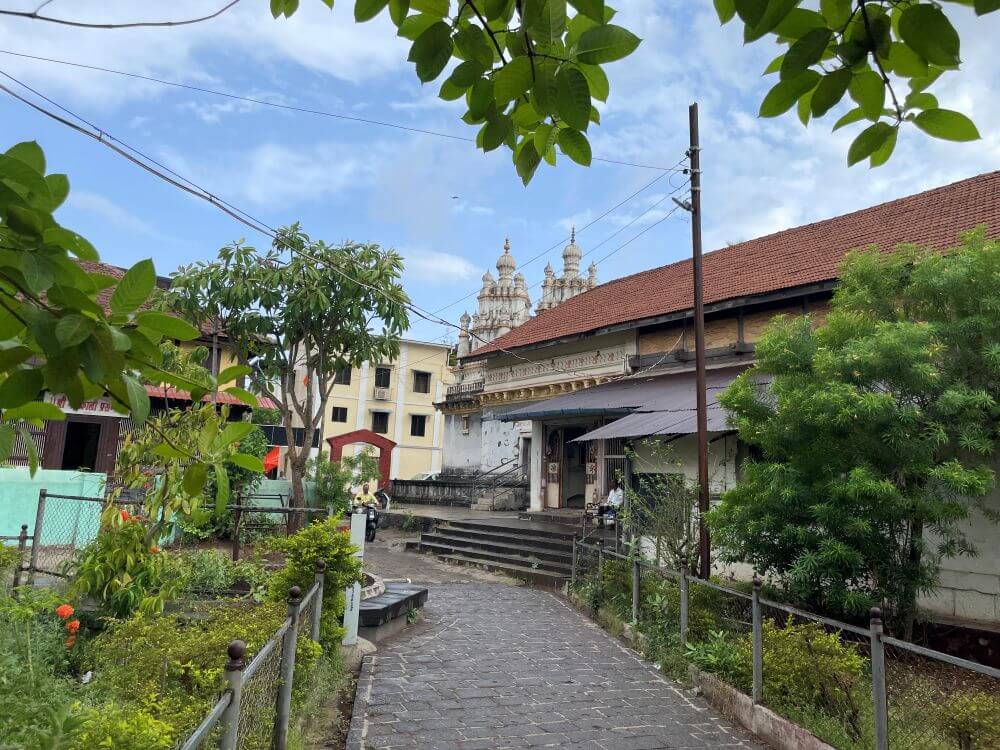
There is a beautiful garden outside the temple. To the side is the temple of Goddess Mahakali, and to its left is the temple of Shri Rama. Directly in front is the temple of Maruti, which is known as Tipyecha Maruti. The year Shake 1820 (1898 CE) is inscribed on the steps of this temple. In front of the Mahakali temple, there is a sculpture carved from a single monolithic stone. Local people refer to this sculpture as Bapdev. According to historians, this sculpture was created in the sixth century. The first Peshwa, Balaji Vishwanath, had visited this temple. Previously, this temple was situated on the banks of a lake; however, many buildings now stand where the lake once was. This area is now known as Kasartale. According to the Kolaba District Gazetteer, Malik Ambar had constructed this Kasartale. Along with the Rameshwar temple, the Vyaghreshwar, Goteshwar, and Pataneshwar temples located in this area are said to be from the Chalukya period.
This sacred temple stands as a testament to deep spiritual devotion, ancient architectural grandeur, and rich local cultural traditions.
The sanctum sanctorum houses the divine idol consecrated according to ancient Vedic traditions, surrounded by serene courtyards and traditional temple architecture.
Navratri, Maha Shivratri, Annual Temple Jatra & Deepotsav
Compare and book flights, secure top-rated local hotels near the temple, hire reliable guides, and rent cars instantly.
Extend your pilgrimage by visiting other highly sacred temples located nearby.


Add ₹999 more to unlock FREE SHIPPING!
Your sacred cart is currently empty.
Shop Photo FramesFill in your delivery details below to place your order.
Add comment