
Add ₹999 more to unlock FREE SHIPPING!
Your sacred cart is currently empty.
Shop Photo FramesBharat is a land of Yoga. Sadhana, Sannyasa, Tantra, Mantra, Japa, Tapa, Kriya, Upasana, and lifestyle are the various limbs of Yoga. The primary aim of Yoga is to awaken the seven Mooladhara Chakras within the body. With the objective of Yoga sadhana, certain places in the country were developed. The names of these places, as they are known today, reflect this purpose. One such place is Chakreshwar Wadi, nestled on the banks of the Hiranyakeshi River in Radhanagari Taluka. The ancient Chakreshwar Mahadev Mandir, caves, and the chakra-shaped carvings on the stones here, which are over ५०० years old, attest to the name of this place.
It is said that the location of Chakreshwar Mahadev here dates back to the eighth or ninth century. An inscription found here mentions a donation made to this temple in the fifteenth century. The Tapsa Cave here houses a Shiva Lingam that is approximately two thousand years old. The legend of this temple tells of a time when a Siddha Purusha, to absolve a mother and son of an unintentional sin, gave them a white cloth dyed with the sap of the Bibva tree and instructed them to wash it in various sacred rivers. Carrying that cloth, the mother and son journeyed across the country and arrived at Chakreshwar Wadi. As soon as they washed the cloth in the waters of the Hiranyakeshi River in front of the temple, it became pure white. Hence, this place is known as Papakshalak (the cleanser of sins).
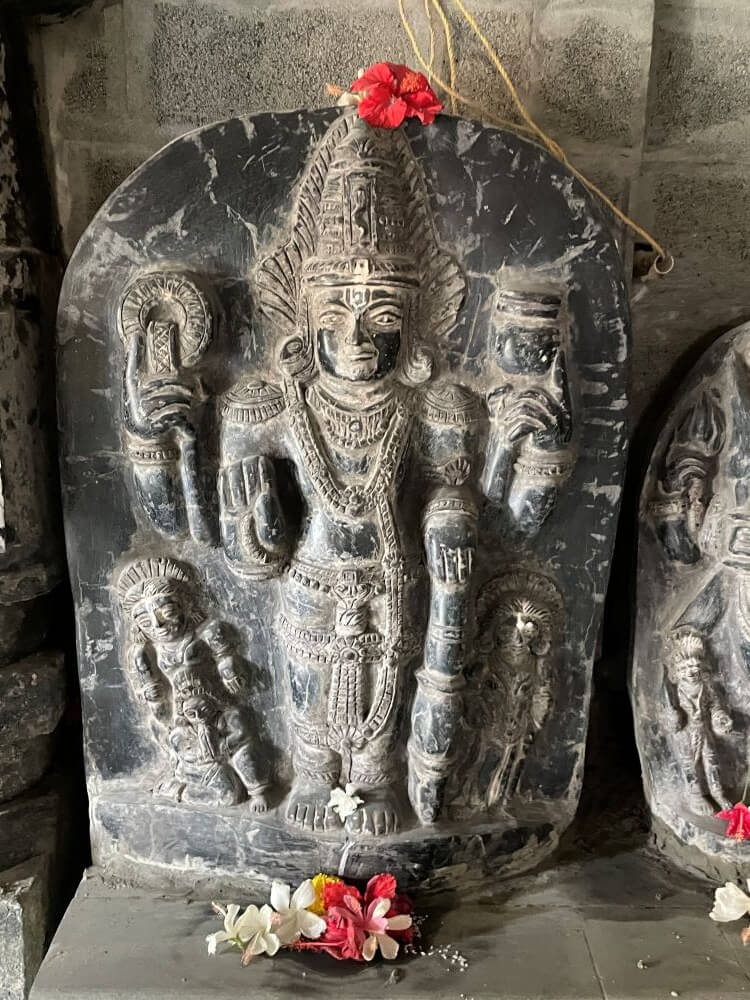
In front of the temple, which is built in the Hemadpanti architectural style, there is a two-tiered platform and a large hexagonal Deepmala (lamp tower) upon it. On the first tier of the platform, there are Gajraj (elephant) sculptures at all four corners. On the second tier, there are Vyala (mythical beast) sculptures at all four corners. The Deepmala has separate hands for lighting the lamps. Descending a few steps from here leads to the temple courtyard. In the courtyard, on the left side, in a small temple, there are black stone idols of Mahakali, Mahalakshmi, Saraswati, Virabhadra, and Viragals (hero stones) on a Vajrapitha. Adjacent to the temple is a water tank. The walls of the tank are built with dressed stones and have steps for descending into it.
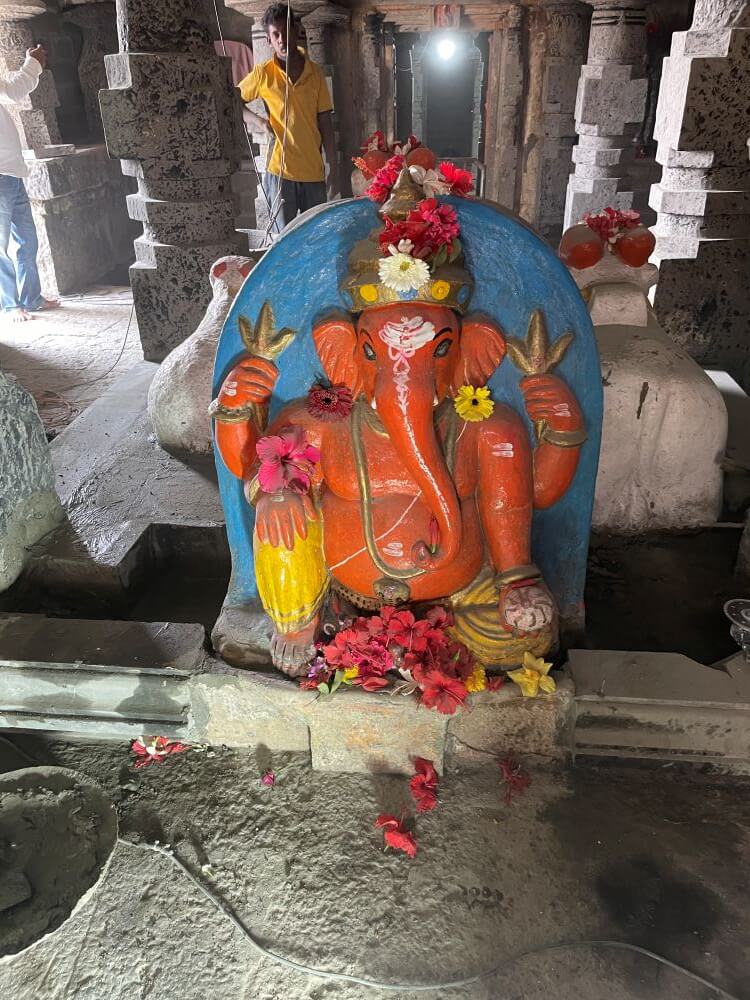
The temple’s structure comprises a Darshanmandap, Sabhamandap, Antarala, and Garbhagriha. In the Sabhamandap, there are four rows, each with five intricately carved stone pillars. The pillars feature various geometric shapes such as squares, hexagons, octagons, and circles. At the top of the pillars are circular mouldings with hands. Beams rest on these hands, supporting the roof. In the enclosed Sabhamandap (Gudhamandap), there are Kaksasanas (stone benches) along the walls for devotees to sit, leaving a circumambulatory path. The outer pillars are within these Kaksasanas. In the center of the Sabhamandap, there are doorways on the left and right sides. The floor of the Sabhamandap is covered with stone slabs, and in the center, between four pillars, there is a four-armed black stone idol of Ganapati on a Vajrapitha. Ganapati holds a Trishul in both of his upper hands, one lower hand rests on his knee, and the other holds a Modak. Ganapati, adorned with a Kase Pitambar, wears a crown on his head, bangles on his wrists, a necklace around his neck, and a Naga Pasha (serpent noose) around his waist. Behind Ganapati, there are three idols of Nandi of different sizes, all facing the Shiva Lingam in the Garbhagriha.
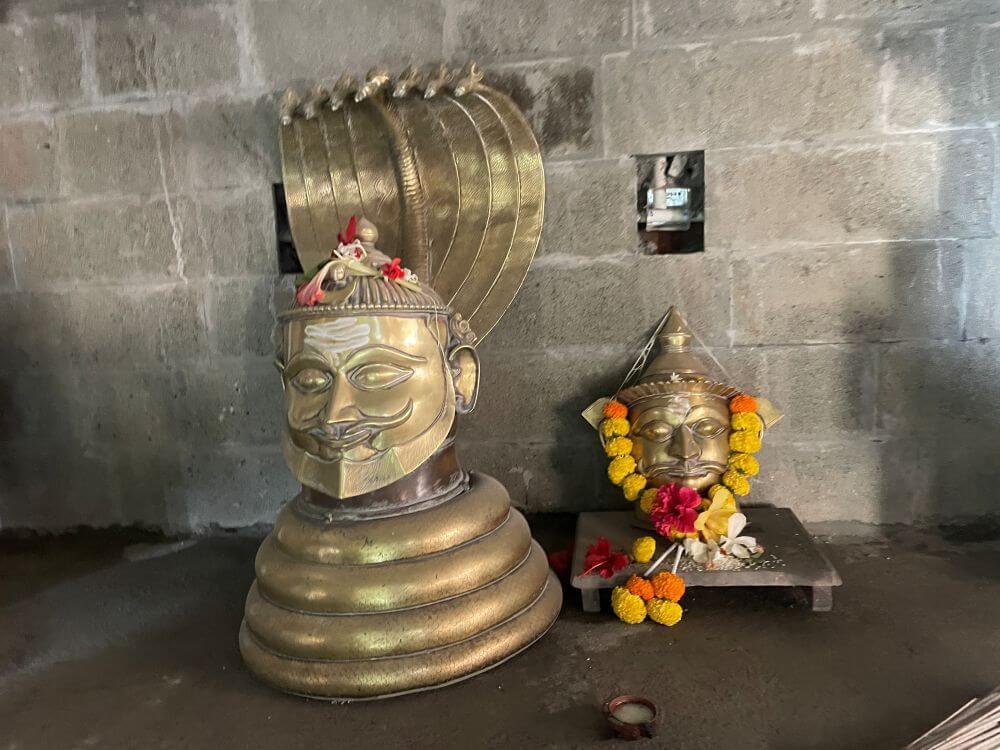
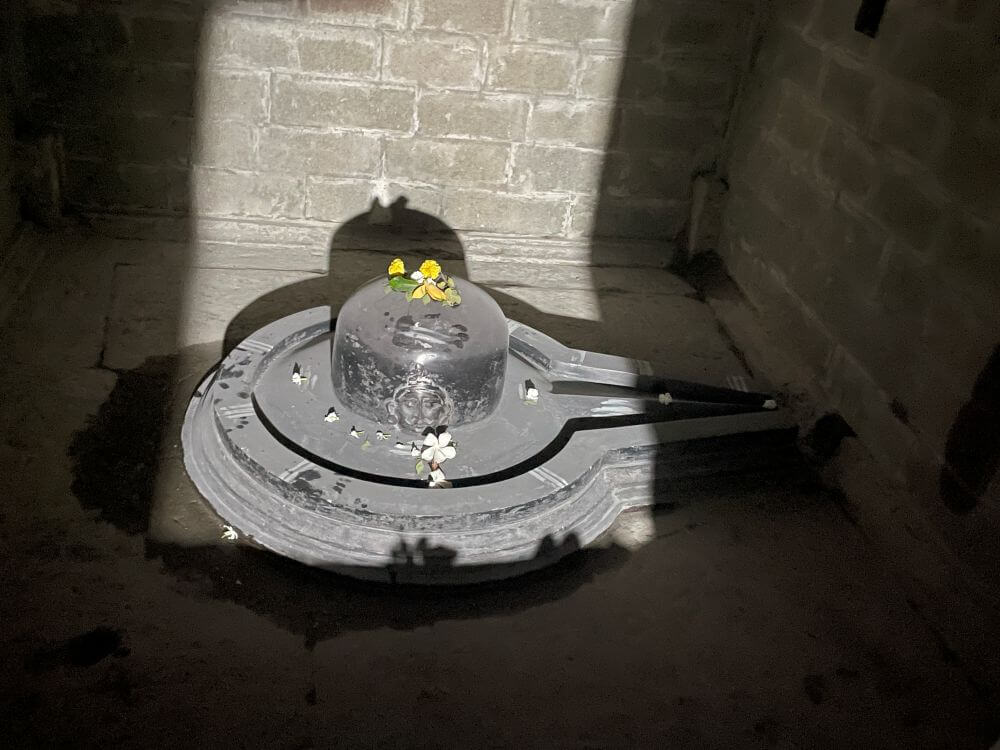
Further ahead is the entrance to the Antarala, which has five intricately carved door jambs. Ganapati is seated on its Lalatabimba (lintel). In the Antarala, along the wall, there is an armed and adorned black stone idol of Ashtabhuja Tulja Bhavani Devi. On the left side is a four-armed Narasimha idol, and on the right side are two brass masks. Further ahead is the entrance to the Garbhagriha. The door jambs of the Garbhagriha are intricately carved, and Ganapati is on the Lalatabimba. In the center of the Garbhagriha is the ancient Shivapindi, flanked by brass masks of Shankar and Parvati Devi. The roof of the assembly hall has a parapet, and the Garbhagriha is topped with a twelve-tiered square Shikhara. The uppermost tier features a lotus flower replica, and above it, on the Amalaka, is a crescent moon.
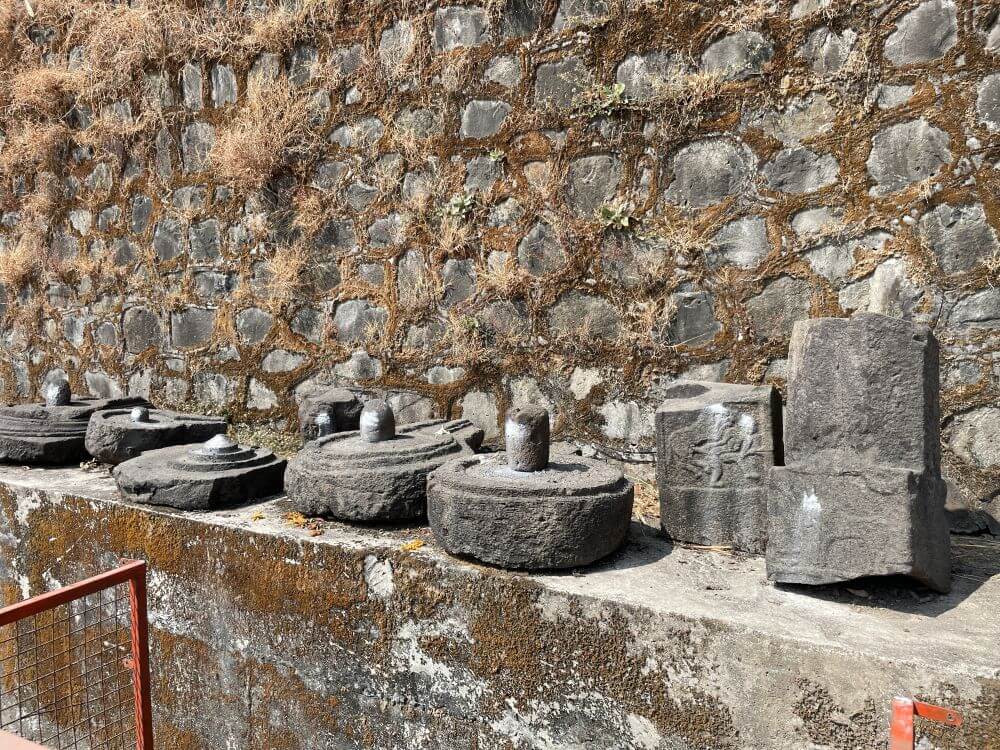
In the temple courtyard, on a platform, there are Shiva Lingams of various sizes and Viragals. Here, an archaeologically very important remnant is an inscription. The words ‘Vikram Samvat १४२९’ (१४९९ CE) are clearly visible on it. This clearly indicates that the temple here predates that period. In the courtyard, there are small temples dedicated to Ghoramukh, Jyotiba, and other deities. Mahashivaratri is the main annual festival celebrated at the temple. On this day, many devotees from across the state come to seek the darshan of Chakreshwar Mahadev. On this day, programs such as Laghurudra, Mahabhishek, Palkhi Sohala, Bhajan, Kirtan, Pravachan, Jagaran, etc., are organized. The temple is also crowded with devotees on Shravani Somvar, Pradosh, and Amavasya.
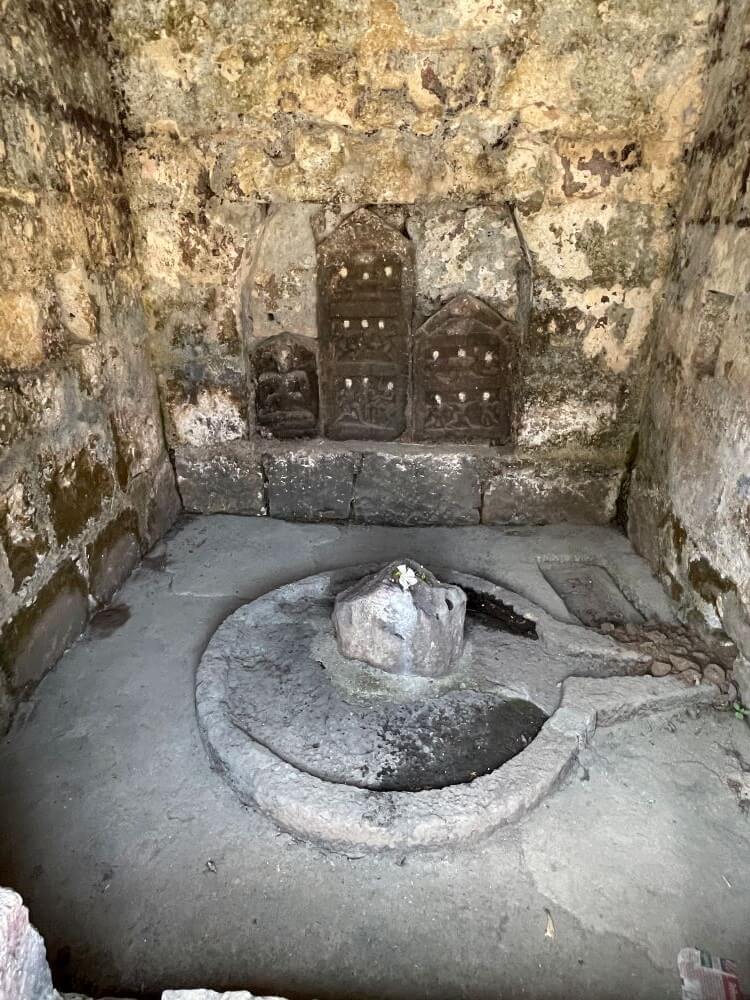
Nearby are the Tapsa Caves. The ancient name of the caves is said to be Tapasthan. Idols are carved on the walls of the caves. These caves are currently filled with water. It is said that there is an underground passage from these caves to the Chakreshwar Temple.
On a hillock some distance from the temple, many stones with Yoni Mukh and Chakra carvings are found. Also, at the top of the hillock, a Mahachakra has been formed by a specific arrangement of stones. It is said that this is why the village was named Chakreshwar Wadi. It is also said that this hillock contains an extinct volcano and a Stone Age burial ground.
This sacred temple stands as a testament to deep spiritual devotion, ancient architectural grandeur, and rich local cultural traditions.
The sanctum sanctorum houses the divine idol consecrated according to ancient Vedic traditions, surrounded by serene courtyards and traditional temple architecture.
Navratri, Maha Shivratri, Annual Temple Jatra & Deepotsav
Compare and book flights, secure top-rated local hotels near the temple, hire reliable guides, and rent cars instantly.
Extend your pilgrimage by visiting other highly sacred temples located nearby.


Add ₹999 more to unlock FREE SHIPPING!
Your sacred cart is currently empty.
Shop Photo FramesFill in your delivery details below to place your order.
Add comment