
Add ₹999 more to unlock FREE SHIPPING!
Your sacred cart is currently empty.
Shop Photo FramesAccording to the Puranas, Brahma is the first deity among the Trimurti of Brahma, Vishnu, and Mahesh. He is considered the creator of the universe. As per the Puranic tales, the cosmic creator first brought forth the cosmic waters and cast a seed into them. From this, a golden cosmic egg was formed. After a thousand years, the creator of the universe Himself took birth from this egg in the form of Brahma. Although He is an important deity in the Hindu Dharma, His significance began to wane after five hundred CE. There are only a few temples dedicated to Brahmadev in the country. One such renowned temple is in the village of Korle in Devgad Taluka.
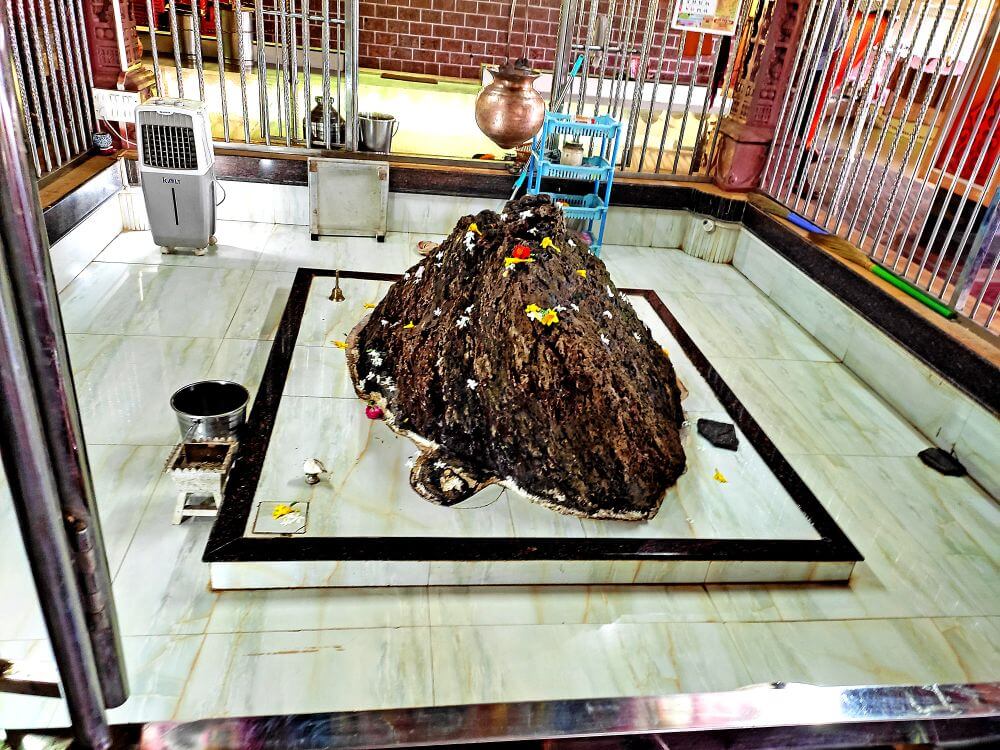
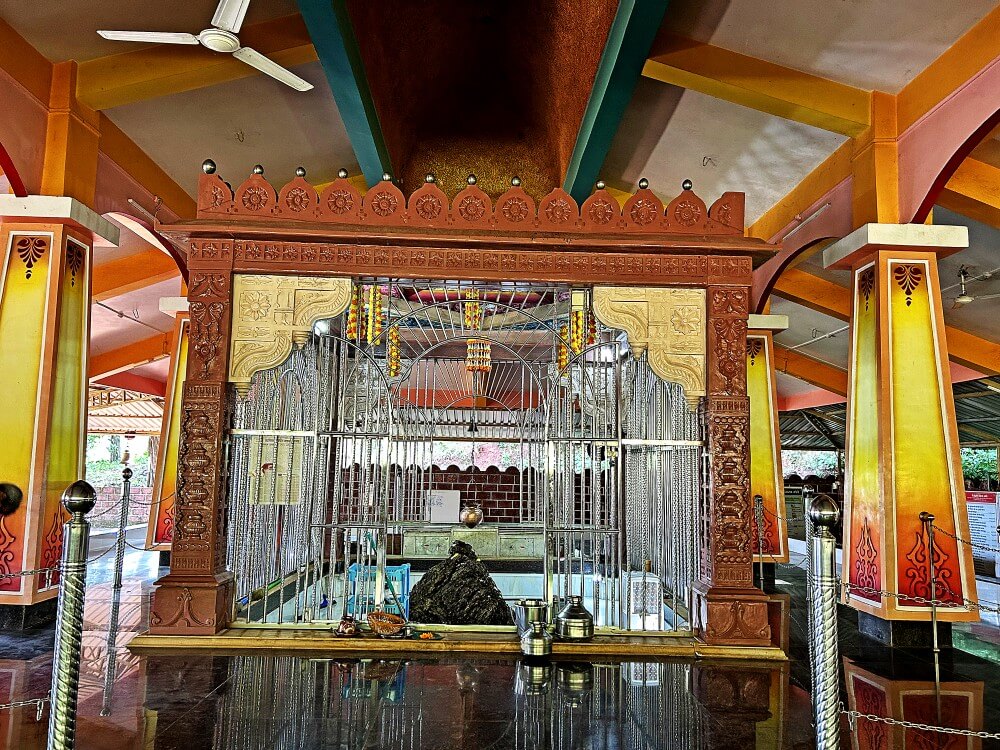
There is a popular belief that there is only one temple of Brahmadev in the entire country, and that is in Pushkar, Rajasthan. However, in reality, there are also temples of Brahmadev in Ashotra in Barmer District of Rajasthan, Khokhan in Himachal Pradesh, Kullu Valley, Kumbakonam and Tirupattur in Tamil Nadu, as well as in Panaji. In Konkan, there is also a Brahmnath temple in Nerur, which houses an idol of Brahmadev. According to a mythological legend, Brahmadev was Panchaanan (five-headed); but because he spoke ill of Shankara, Shankara had one of his heads severed by Kalabhairava. Therefore, the idol of Brahmadev is Chaturmukhi (four-faced). It symbolizes the four directions, the four Vedas, and so on. However, in the Brahmadev temple in Korle village, there is no sculpted idol of the deity. Here, Brahmadev is enshrined in the form of a self-manifested, living rock. This very rock is worshipped as Brahmadev. Devotees believe that the Brahmadev here is awakened, grants wishes, and rushes to answer their calls.
The legend of this temple goes that about three hundred years ago, a farmer named Sadashiv Gorule from Korle village was ploughing here. Suddenly, the ploughshare struck a rock, and blood began to gush out profusely. Seeing this sight, the farmer was terrified. He immediately stopped ploughing and went home. That night, he had a dream vision in which he saw that the rock from which blood was flowing after being struck by the ploughshare was inhabited by Brahmadev. The next day, the farmer went back to that rock and saw a cow showering milk upon it. It was then that he became convinced of the divinity of this rock. With the help of the villagers, the farmer built a simple temple at this spot and began the worship of Brahmadev. This worship continues to this day. As devotees experienced the deity’s presence, the form of the temple transformed, and in due course, it acquired its present modern appearance.
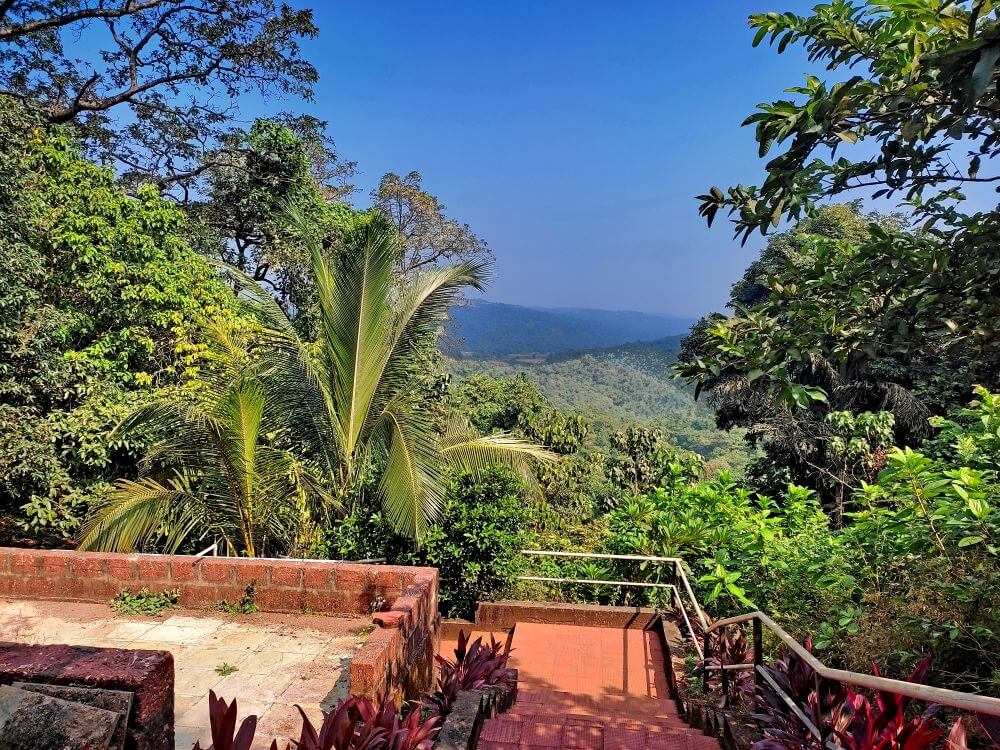
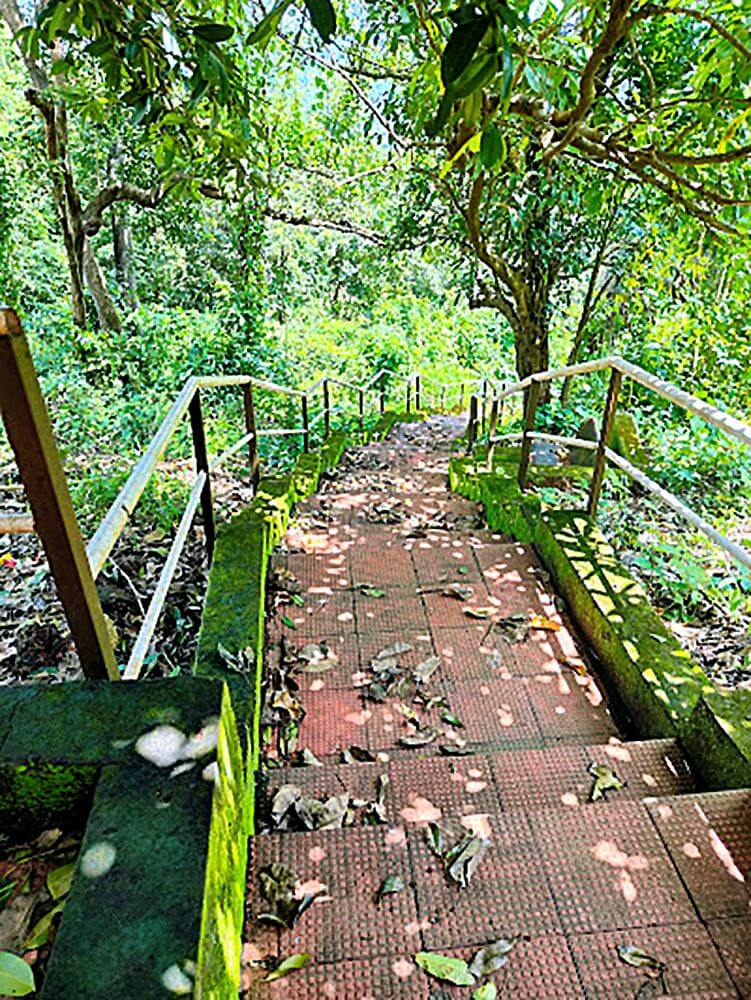
This temple is nestled in the lap of a hill in Korle village. At the foot of the hill on which the temple stands, there are three water tanks. The temple is situated a hundred steps above these tanks. It is customary to bring water from these tanks in a pitcher to the temple and perform an abhishek (ritual bathing) of Brahmadev. There is dense foliage on both sides of the steps, and arrangements have been made for devotees to sit at regular intervals. A new road has also been constructed for direct access to the temple.
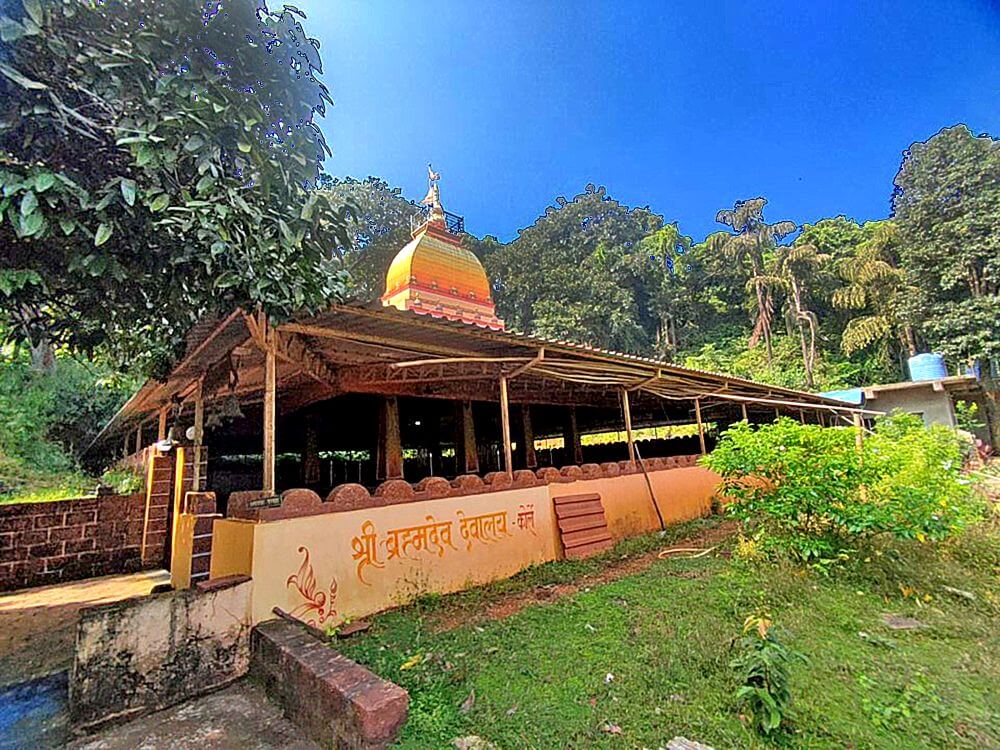
Around the temple, there is a compound wall built of laterite stone. On the platform to the left of the entrance in the fortified wall, there is a Tulsi Vrindavan. In the center of the courtyard, there is a square platform, with a tall pillar on it, and a roof above, which constitutes the form of this temple. This temple has no walls. It is said that since Brahmadev is Chaturanan (four-faced) and Chaturmukh (four-mouthed), all four directions of the temple are kept open. The outer part of the platform is the sabhamandap (assembly hall), the central part is the antarala (vestibule), and the innermost part is the garbhagriha (sanctum sanctorum) – this is the arrangement here. In the antarala, there are eight square pillars that taper upwards from bottom to top.
Beyond the antarala is the garbhagriha, with a railing a few inches high. In the four corners of the garbhagriha are four intricately carved pillars. The bottom one-foot section of the pillars is wider and features relief sculptures. The upper part is carved with leaf and flower patterns. The four pillars are connected to each other by an ornate beam. Relief sculptures are also carved on the beam here. Stainless steel mesh has been installed around this entire garbhagriha. The inner floor of the garbhagriha is a few inches recessed, and within it is the self-manifested living rock of Brahmadev. In the Vayu Purana, Maharshi Vyasa offers a hymn of praise to Brahma. In it, he states: ‘Prapadye Devameeshanam Shashvatam Dhruvamavyayam | Mahadevam Mahatmanam Sarvasya Jagatah Patim ||’ This means: ‘O Lord, You are the master of all, You are eternal (imperishable), constant (stable), and immutable (indestructible). You are the God of gods, the great soul, and the father of the entire universe. Salutations to You.’ The living rock of Brahmadev in the Korle temple gives a tangible experience of the eternal, constant, and immutable nature described in this verse.
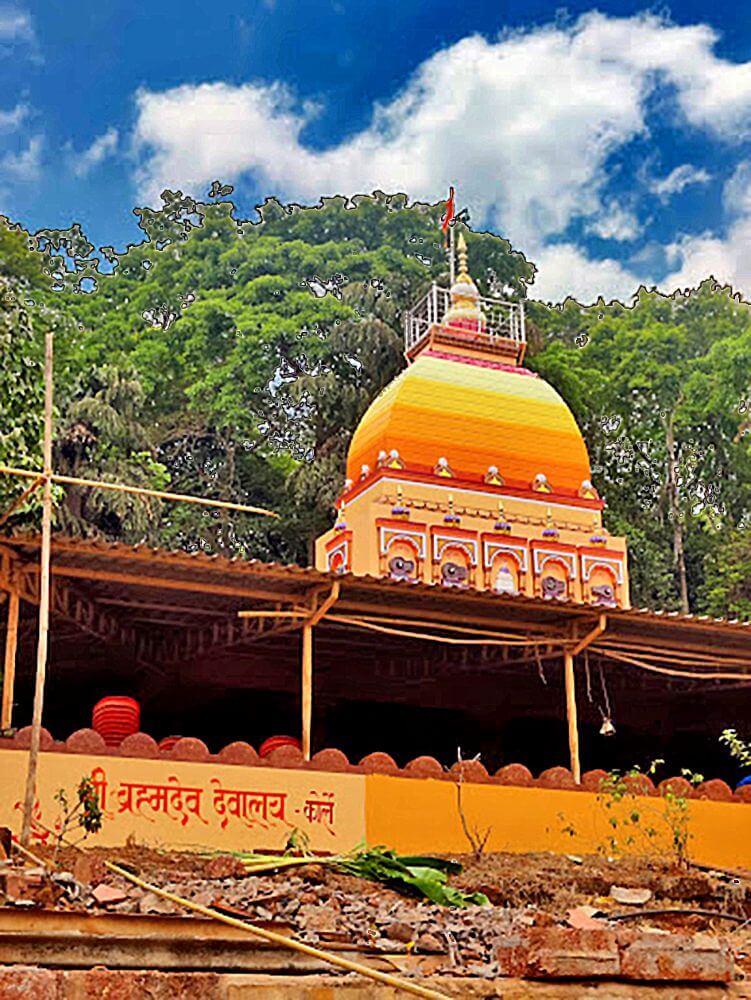
The temple’s cement concrete roof, with a central shikhara, is sloping, four-sided, and tiled on top. The shikhara here is rectangular. The bottom two-foot section is wider and has lotus petal designs on the upper part. On the approximately four-foot-high section above, there are twelve niches containing sculptures of the twelve Jyotirlingas. The uppermost part has lotus flower designs and a dome. The top part of the dome is adorned with lotus flower patterns. Above the dome are two amalakas placed one above the other, and on top of them is a tall kalasha.
Various annual festivals are celebrated in this temple. The temple’s anniversary is celebrated with great enthusiasm every year on the sixth and seventh of May. On this day, Jugai Devi, the village deity of Korle, comes in a palanquin to visit Brahmadev. On this day, a grand abhishek of the deity, a Satyanarayan Mahapuja, and a mahaprasad are organized. Every year in the month of Shravan, a Maharudra Anushthan is performed. Thousands of devotees come for darshan of the deity on the occasion of the annual festival and fulfill their vows for granted wishes. The ancient temple of Jugai Devi, the village deity of Korle, is located nearby.
This sacred temple stands as a testament to deep spiritual devotion, ancient architectural grandeur, and rich local cultural traditions.
The sanctum sanctorum houses the divine idol consecrated according to ancient Vedic traditions, surrounded by serene courtyards and traditional temple architecture.
Navratri, Maha Shivratri, Annual Temple Jatra & Deepotsav
Compare and book flights, secure top-rated local hotels near the temple, hire reliable guides, and rent cars instantly.
Extend your pilgrimage by visiting other highly sacred temples located nearby.

Add ₹999 more to unlock FREE SHIPPING!
Your sacred cart is currently empty.
Shop Photo FramesFill in your delivery details below to place your order.
Add comment