
Add ₹999 more to unlock FREE SHIPPING!
Your sacred cart is currently empty.
Shop Photo FramesChhatrapati Shivaji Maharaj laid the foundation of Sindhudurg Fort in the year 1664, and following the construction of this fort, the village on the coast here gradually began to transform into a large town. This town is Malvan. Adorned with a beautiful coastline and coconut groves, this ancient city possesses a heritage of spirituality alongside its history. One part of this area is itself named Deulwada. In this area lies the ancient temple of Rameshwar, the presiding village deity of Malvan. Adjacent to Rameshwar is the temple of Devnarayan, the revered deity of Malvan.
The history of the city of Malvan is narrated as follows: formerly, Malvan was a small hamlet of the village of Nandrukh. Malvan consisted of two parts, Medha and Deulwada. The land between them was submerged and marshy. Medha was, in fact, an island. It was surrounded by thickets of bamboo. Initially, this region was under the rule of various dynasties such as the Shilaharas, Rashtrakutas, Kadambas, and Yadavas. The city of Malvan truly took shape during the era of Chhatrapati Shivaji Maharaj. After Maharaj built the Sindhudurg Fort, that Under the shelter of the fort and due to the increased activity brought about by it, Malvan began to take shape as a marketplace. A large population began to settle here. Since ancient times, the temples of Sateri and Kalbadevi existed in this village. However, the village did not have a presiding village deity (Gramadaivata). Driven by the religious necessity that the village should have a primary place of worship, Lord Rameshwar arrived here.
The legend regarding this is that there were shrines of Rameshwar at Kandalgaon and Achare near Malvan. Wishing for the original deity to be at Malvan, the villagers, according to the customs of that time, sought the consent of the Rameshwar deities in those villages. Through the medium of the divine oracle, those deities did not grant permission for the installation of Rameshwar in Malvan. Then, an inquiry was made to the Rameshwar of Anavgaon. The Rameshwar there granted permission for the installation of the Goddess. Consequently, Pavnai was installed here. Following this, the Rameshwar temple was established at Deulwada. It is said that the temple of the village deity Rameshwar, as well as the temples of the deities Narayan, Bhavani, and Maruti located there, were built by the moneylenders of Malvan at that time. For progeny, this Money lenders would take a vow to build a temple for the deity. Once their heart’s desire was fulfilled, they would construct the temple.
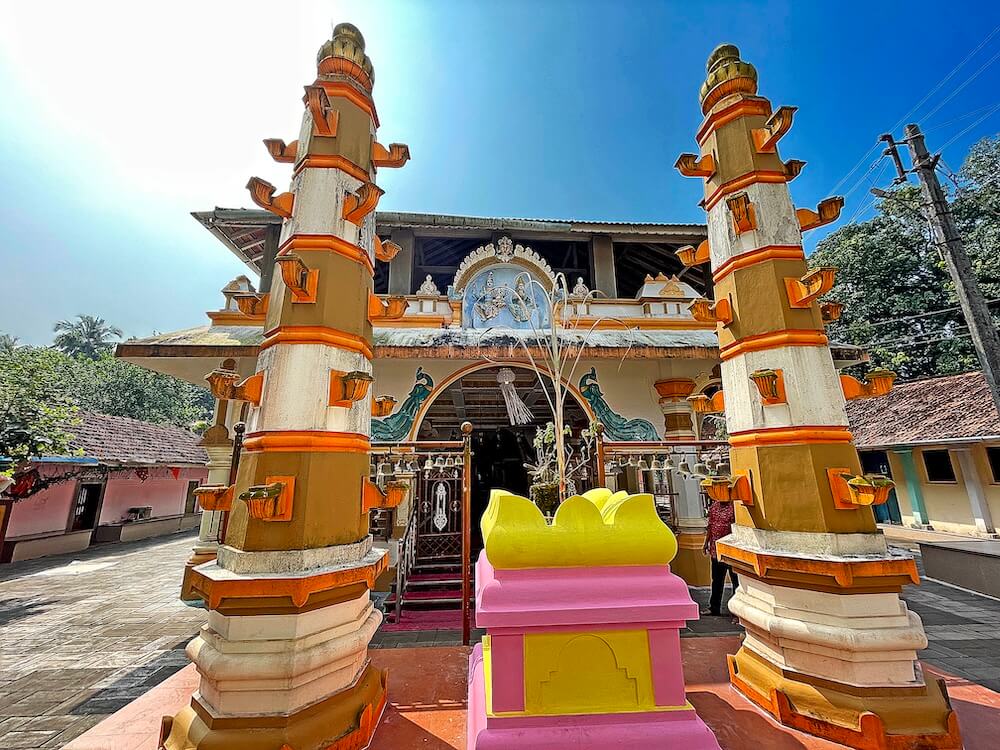
This temple of the presiding deity of Malvan stands in a spacious courtyard in the Deulwada area. In front of the temple, on a high platform, are two eight-tiered lamp pillars built in the Konkani style. Between them lies a Tulsi Vrindavan. In front of the platform, many small and large bells are hung on an iron stand. Devotees have offered these bells to the temple as a fulfillment of vows after their wishes were granted. A short distance behind this platform stands a large, two-storey, square building resembling a drum house. The design of this temple, built on a high plinth, reflects the ancient Nagara architectural style. The temple structure consists of a Sabha Mandapa, an Antarala, and a Garbhagriha. The construction of the Sabha Mandapa and its roof, however, is in the distinct Konkani architectural style. There is a tall Shikhara above the Garbhagriha of the temple.
At the entrance of the assembly hall, there is a wide arch, flanked by beautiful images of peacocks. At the center of the lintel, there are idols of Shiva-Parvati. In these idols, child Ganesha is seated on the lap of Shiva. The assembly hall is of an open design. The outer pillars are connected by arches, and on the inside, there are two rows of octagonal pillars. Various images such as Vyala, Gomukha, Shivapinda, and Nagas are carved onto the bracket capitals of these pillars. The ceiling is adorned with relief sculptures of lotus flowers.
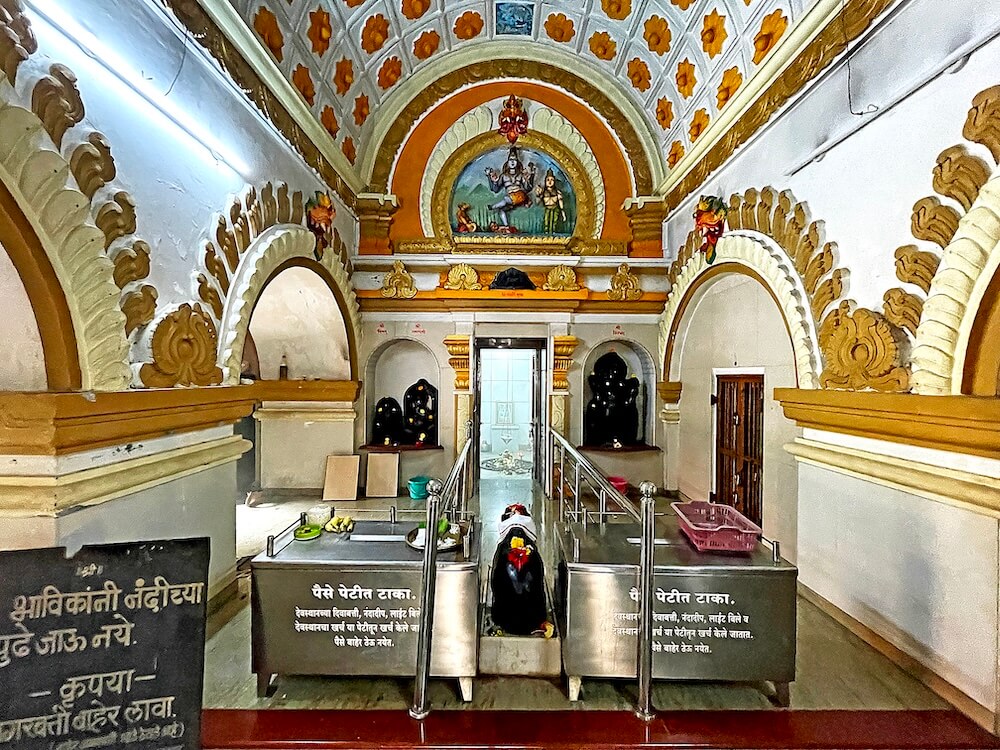
On both sides of the entrance to the Antarala (vestibule), there are large niches. These contain exquisite sculptures of Shaiva Dvarapalas (gatekeepers). These sculptures are in the Tribhanga posture—bent at three points—and feature the Kunchita Pada-bheda (bent foot) stance found in Bharatanatyam. Adorned with ornaments, these Dvarapalas hold a Trishula (trident), Damaru (drum), Sarpa (serpent), and Gada (mace) in their hands, with crowns upon their heads and Tripundra (three horizontal lines of sacred ash) on their foreheads. Above the entrance of the Antarala, there is a sculptural representation of the temple Shikhara (spire), flanked by Nandi figures on both sides. The pillars within the Antarala are short, square-shaped, and broad. They are connected by arches. The ceiling of the Antarala is barrel-vaulted (Gajaprishthakara). Its unique feature is that upon it Twelve sculpted images representing the twelve zodiac signs. On one side in the celestial space, the palanquin of the deity is placed.
To the right of the entrance of the sanctum sanctorum, in the niche, is an idol of Virabhadra carved in black stone, while to the left are idols of Ganesha and Vishnu. At the lintel of the entrance is a Kirtimukha. Above it is an idol of Nataraja performing the Tandava dance. Beside this idol stands Parvati holding a lotus bud in her hand, and below is an idol of Tumburu playing the mridangam. In the sanctum sanctorum, on the ground level, is the stone Shiva Linga of Rameshwar, and behind it, on a high pedestal, is an image of Mahadeva.
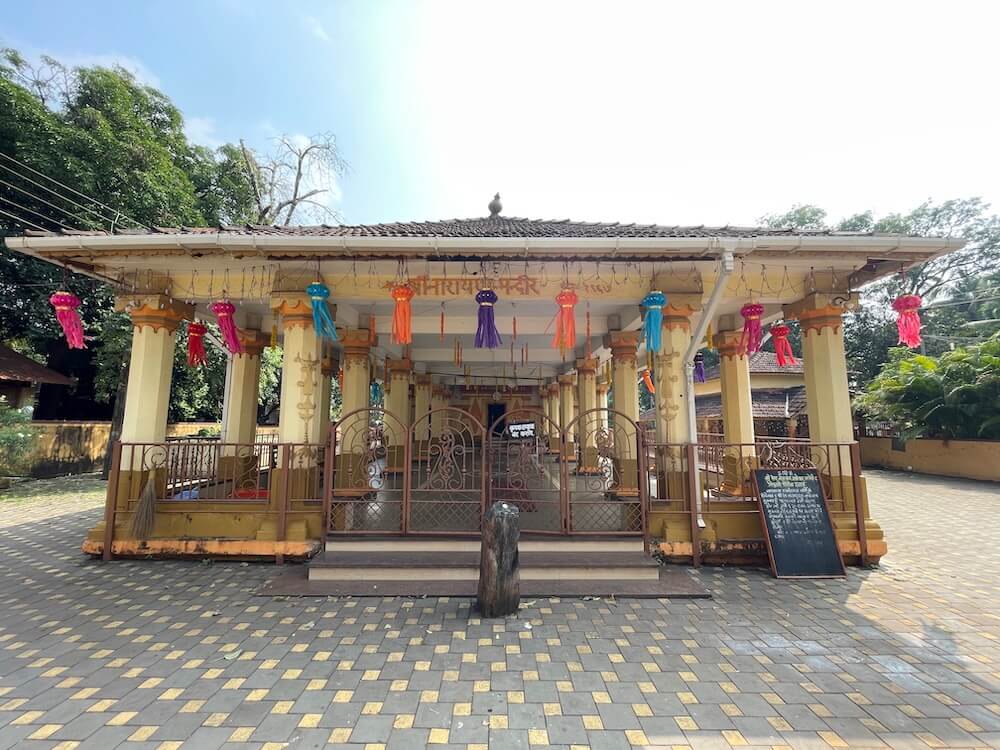
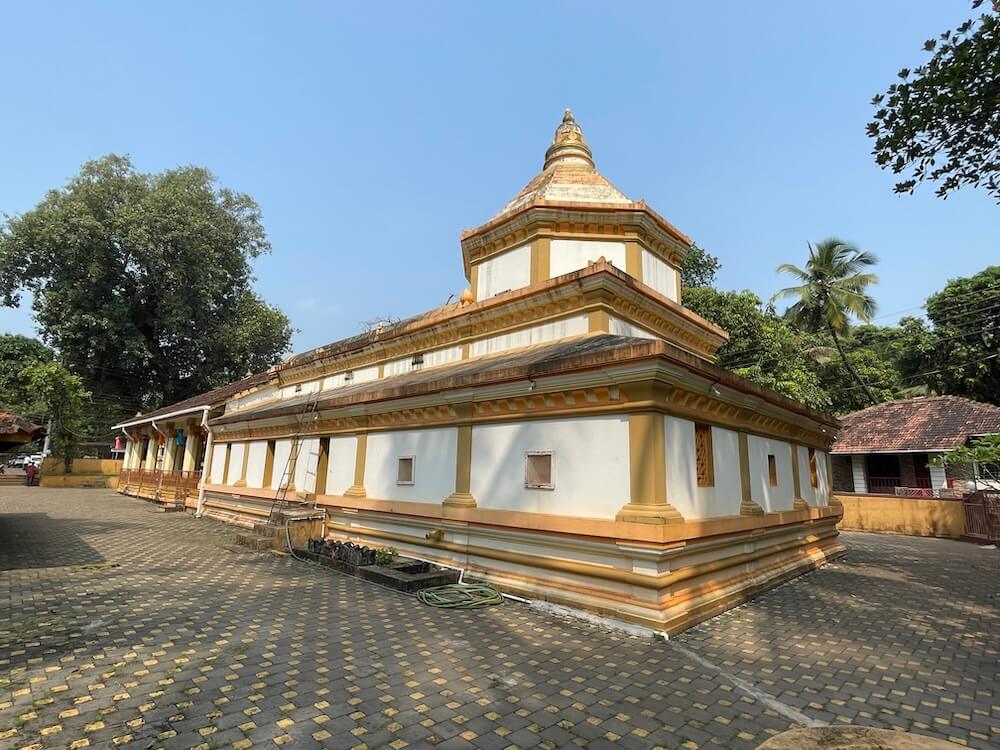
Near this temple is the ancient temple of Lord Narayana. The architecture of this temple also follows the Konkani style, featuring a sloping-roofed assembly hall (sabhamandapa), an antechamber (antarala), and a sanctum sanctorum (garbhagriha) within the antechamber. Above the sanctum sanctorum, there is an octagonal base that tapers into a spire (shikhara), topped with an amalaka and a pinnacle (kalasha).
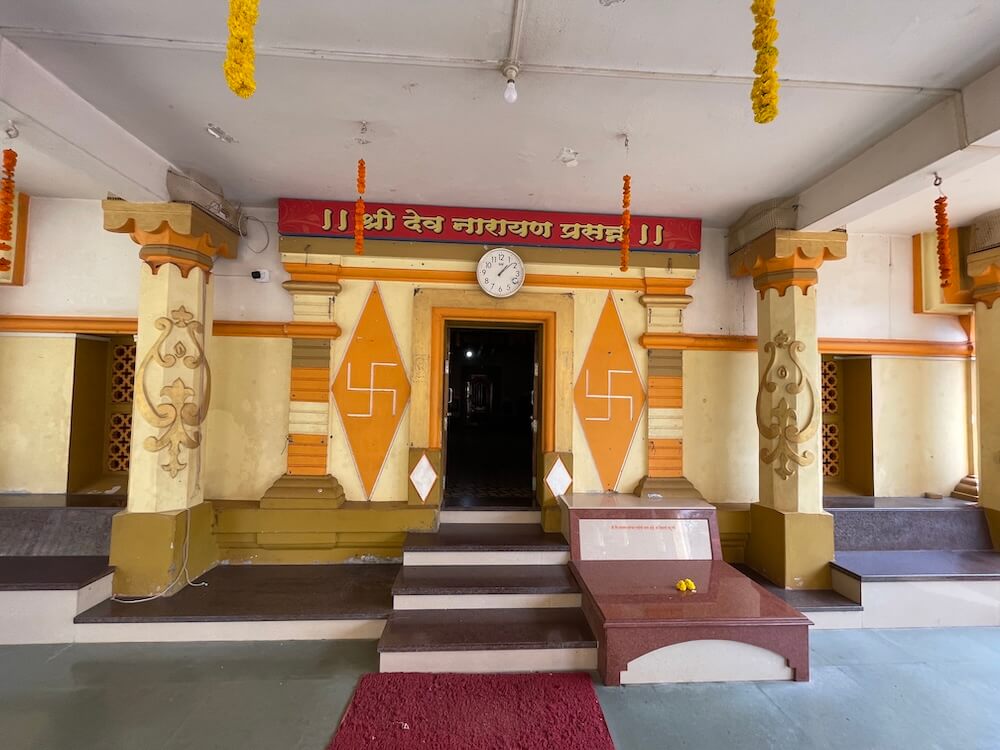
The temple’s assembly hall is of an open design. It has an entrance gate made of iron mesh. In front of this entrance stands a tall, cylindrical stone pillar. The assembly hall is spacious. Both its outer and inner sides feature rows of six circular pillars each. Three steps higher from here is the inner sanctum of the temple. On the sides of the entrance to the sanctum, there are niches in the wall. In these, on the right side, are the idols of Maruti and Ganapati, while on the left side are the Narayan Paduka and the idol of Suryanarayan. In the treatise ‘Brihatsamhita’ by Varahamihira, details such as how to craft idols of deities, their shape, height, characteristics, and symbols are provided. Regarding the idol of the Sun, it states, ‘Nasallalatajanghorugandasvakshansi chonnutani ravehe | Kuryadudichyavesham gudham padaduro yavat ||’. This means that the nose, forehead, shanks, thighs, cheeks, and chest of the Sun’s image should be made prominent. Furthermore, the attire of the Sun’s image should resemble the dress of the people living in the northern region. The image should be draped in clothing from the feet up to the chest. However, the Sun idol here is different from this. It is noteworthy that here, the Sun God wears a crown on his head, and the upper part of his body above the waist is bare.
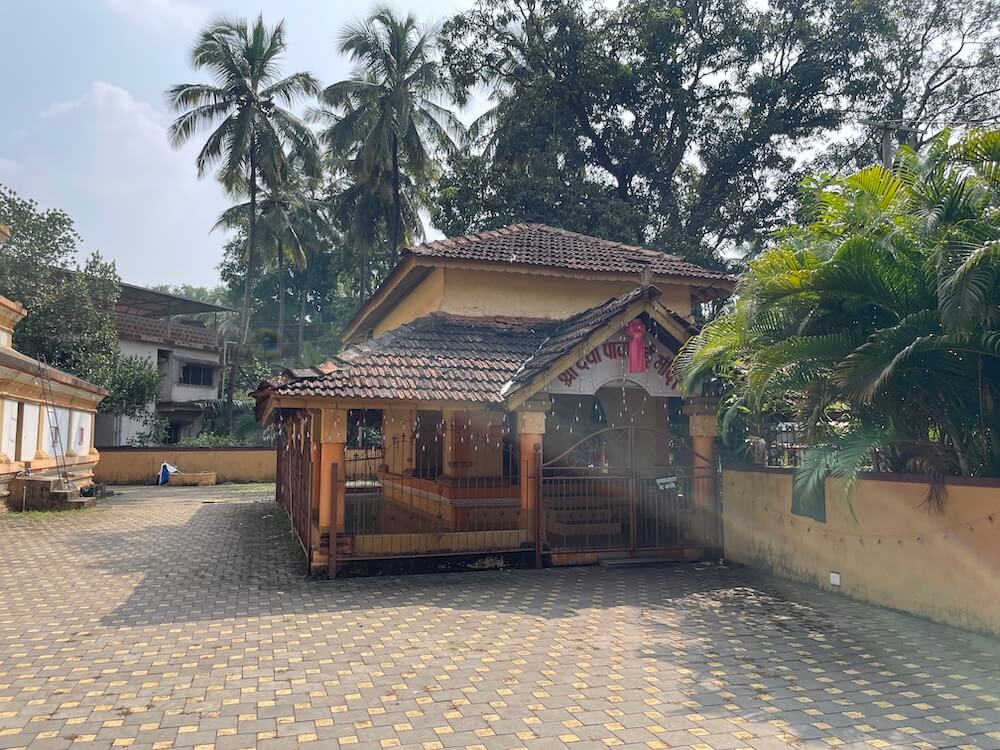
In the sanctum sanctorum of the temple, there is an idol of Lord Narayana made of black stone, placed on a marble pedestal. Similar to Lord Vitthal of Pandharpur, this idol is in a standing posture (Samabhanga) and has two arms. In one hand, it holds a vessel of nectar, and in the other, a Kamandalu. At the feet of the idol are the figures of Garuda and Hanuman. Near this temple are the temples of Goddess Pavnai and Goddess Bhavai. The temple of Goddess Pavnai is in its original ancient form, while the temple of Goddess Bhavai has been recently renovated.
The Deepavali festival is celebrated with great grandeur in the Rameshwar and Dev Narayana temples. On the day of Diwali Padwa, the palanquin procession of the village deity, Rameshwar-Narayana, is celebrated. This procession begins in the afternoon. The villagers and village officials place coconuts before Lord Rameshwar and offer prayers. Thereafter, the palanquin sets out for the circumambulation of Malvan. The palanquin visits the Sateri temple in Advan and the Bhootnath temple in Vairi. Later, via the sea route, it also visits Morayacha Dhonda, Devdandeshwar, Kalbai temple, and Joshi Mand. The palanquin is kept for public viewing at the Rameshwar Mand in the market area. Later, late at night, it returns to the temple via the market and Deulwada. Thousands of devotees are present for this ceremony. Other festivals are also celebrated with devotion in this temple. On Tripurari Purnima, the temple is decorated with rows of lamps.
This sacred temple stands as a testament to deep spiritual devotion, ancient architectural grandeur, and rich local cultural traditions.
The sanctum sanctorum houses the divine idol consecrated according to ancient Vedic traditions, surrounded by serene courtyards and traditional temple architecture.
Navratri, Maha Shivratri, Annual Temple Jatra & Deepotsav
Compare and book flights, secure top-rated local hotels near the temple, hire reliable guides, and rent cars instantly.
Extend your pilgrimage by visiting other highly sacred temples located nearby.


Add ₹999 more to unlock FREE SHIPPING!
Your sacred cart is currently empty.
Shop Photo FramesFill in your delivery details below to place your order.
Add comment