
Add ₹999 more to unlock FREE SHIPPING!
Your sacred cart is currently empty.
Shop Photo FramesThe personality of Chhatrapati Shivaji Maharaj was truly extraordinary. He was deeply devoted to the Hindu Dharma, and at the same time, he was a visionary king who treated people of other faiths with justice and generosity. The great thinker Narhar Kurundkar has stated that Shivaji Maharaj’s Hindavi Swarajya was tolerant of other religions and liberal in its outlook, and that this religious tolerance was the moral foundation of his kingdom. It was for this reason that he held in high regard not only saints and noble souls like Samarth Ramdas Swami, Morya Gosavi, Chintamani Dev, Siddheshwarbhat Brahme, Gopalbhat, and Shridharbhat Bapat of Pule, but also Baba Yakut of Kelshi in Konkan. One such name in this list is that of Mauni Maharaj!
The temple of Mouni Maharaj is situated in the Medha area of Malvan city. Mouni Maharaj was a saintly figure of the seventeenth century. He resided at Patgaon, near Rangna Fort in the Bhudargad taluka of Kolhapur district. His early life remains unknown. Scholars speculate that he may have belonged to the Avadhut sub-sect of the Nath Panth or the Giri sect of the Gosavis. He used to impart teachings through stories and kirtans. According to the Vishwakosh (encyclopedia), he was persecuted by the religious orthodoxy of that time because, much like Tukaram Maharaj, he expressed the wisdom of the Vedas. It is said that after arriving at Patgaon, he adopted silence to escape this persecution, which earned him the name Mouni Buwa. Chhatrapati Shivaji Maharaj regarded all the saints and holy men of the kingdom as his gurus. He also held Mouni Maharaj in the same high regard as a guru.
Among the sources of Shiv-history, historical references regarding Chhatrapati Shivaji Maharaj and Mouni Maharaj are found in ‘Shri Shivadigvijaya’ and ‘91 Kalmi Bakhar’. In ‘Shri Shivadigvijaya’, it is stated, “…in the Maharaj’s kingdom, virtuous yogis, who were manifestations of the Divine Himself, lived as renowned realized souls, their names are detailed,” and it further mentions, “Mouni Bava came and resided at Patgaon.” This has been recorded. The account of Chhatrapati Shivaji Maharaj visiting Mounibaba in the year 1676 AD, before embarking on his southern expedition, is given in clause 76 of the ‘91 Kalmi Bakhar’. The story is as follows: ‘Thereafter, he (Shivaji Maharaj) arrived at Panchwada. Having gathered his forces there, he assembled Moropant, Antajipant, and all the chieftains. After entrusting the administration of the entire kingdom to the prominent officials, he took Kesopant and Nilopant Mujumdar with him. Keeping the political affairs of Bijapur in mind, he went to Pargaon to seek the blessings of Mounibaba. He gave a bouquet and a garland of champa flowers into the hands of Moropant. The panchapati (ritual vessel) was in the hands of the Pant. Coconuts and various other floral offerings were given to the other attendants. The Maharaj stood there with the intention in his mind that he was setting out for the conquest of the Jinji kingdom and sought a blessing. He stood there for seven hours. Thereafter, he performed the puja. Taking a cup of sugar in his own hands, he placed the sugar in his mouth…’ It is further stated that at this time, Mounibaba took the bouquet of flowers from Moropant’s hands and placed it upon the Maharaj’s head. It is also said that Mounibaba was present at a conference of saints convened by Shivaji Maharaj at Raigad. Shivaji Maharaj had granted an annual sum of 18 hons for the Puraniks, Haridas, and others at Mounibaba’s math. Furthermore, a provision was made through a royal decree (sanad) to provide enough rations to feed one thousand people every year. It is also said that after the time of Chhatrapati Shivaji Maharaj, Chhatrapati Sambhaji Maharaj, Rajaram Maharaj, and Maharani Tarabai also took proper care of Mounibaba’s Math.
In the August 1908 issue of the monthly magazine ‘Itihas Sangraha’, edited by Dattatraya Balwant Parasnis, an insightful historical article by Itihasacharya V. K. Rajwade regarding the image of Chhatrapati Shivaji Maharaj in Malvan was published. In it, citing folklore, he states that Rajaram Maharaj had commissioned a stone statue of Shivaji Maharaj for the temple in Sindhudurg Fort. He also had a stone statue of Mauni Swami commissioned. Rajwade mentions that there are a total of three statues of Mauni Swami. One is located outside the threshold of the sanctum sanctorum in the temple of Shivaji Maharaj, on the right side. This statue was previously placed separately in the place of Jaya-Vijaya in the temple of Shivaji Maharaj. ‘The reason for this is that two individuals, Mauni Swami of Patgaon and Baba Yakub of Ratnagiri, were instrumental in establishing the rule of Shivaji Maharaj in Konkan. Both of them had immense love for Shivaji Raja. At their behest, the people of Konkan became agreeable and submissive to the rule of Shivaji Raja. Mauni Swami held influence from Goa to Rajapur, and Baba Yakub held influence from Rajapur to Dabhol.’ There were two more statues of Mauni Swami. One statue is in the Math at Patgaon, and one statue is in the temple in Malvan.
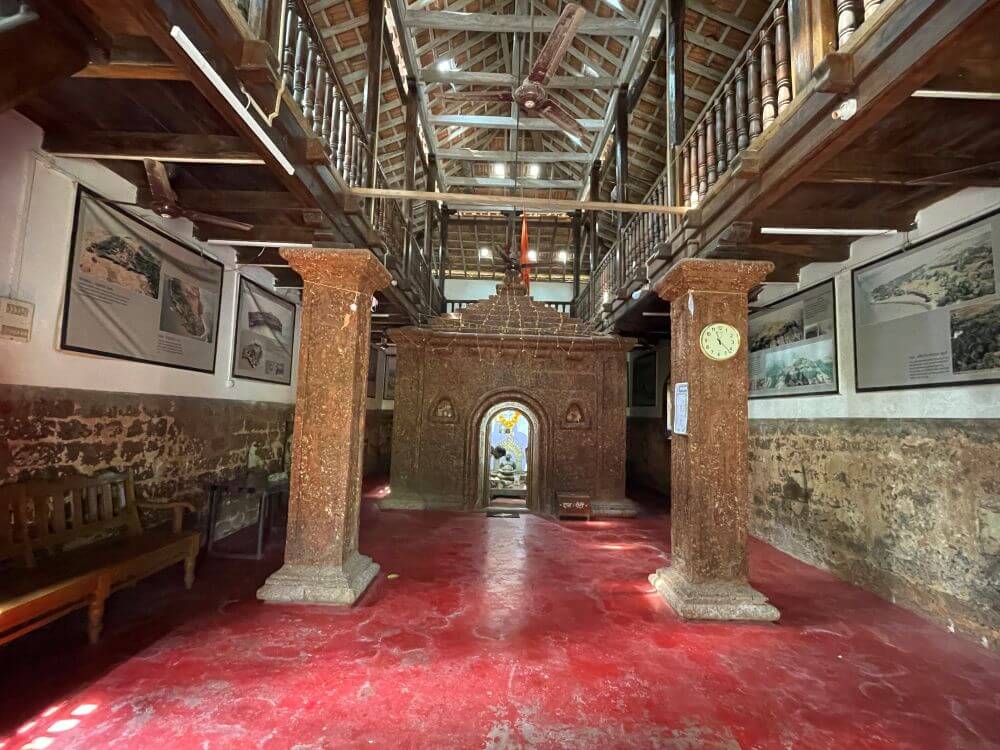
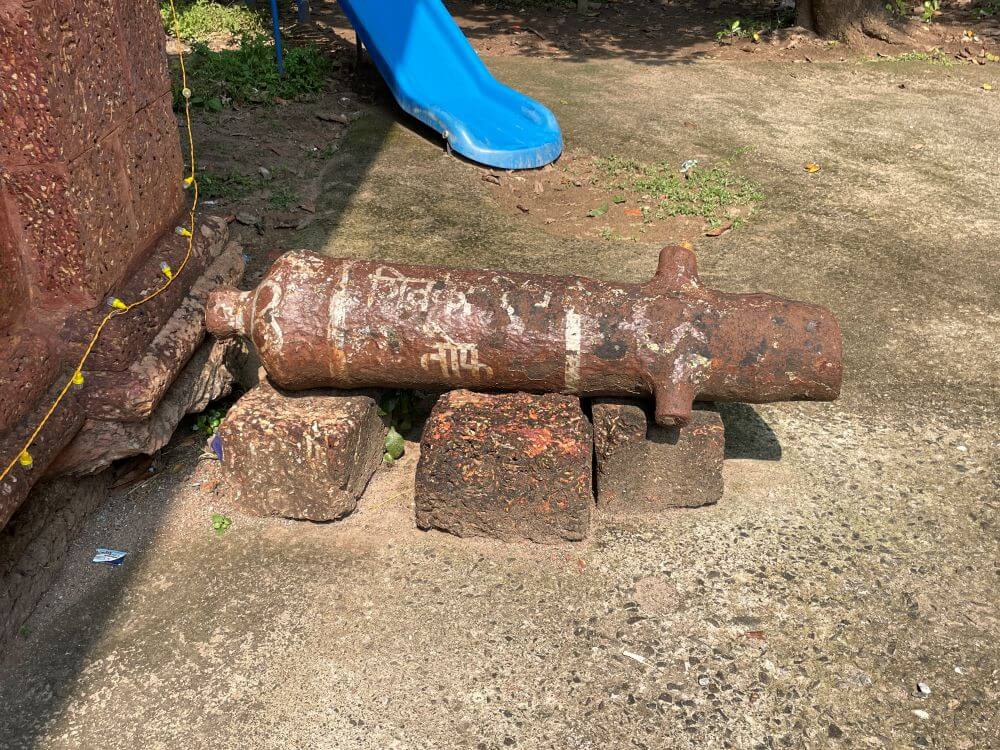
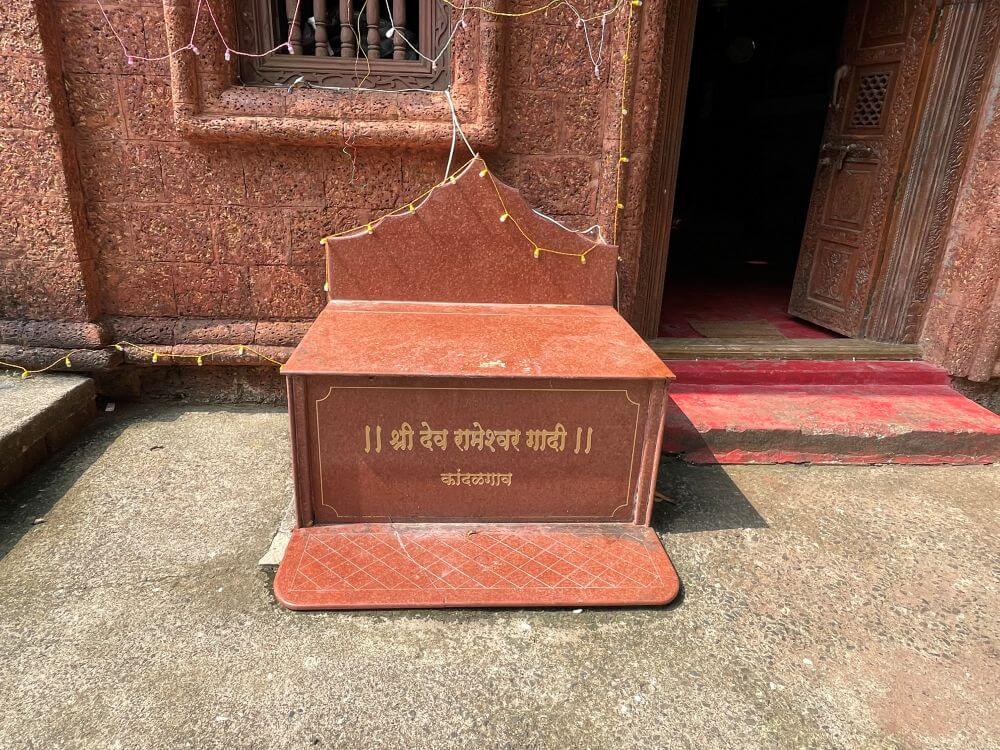
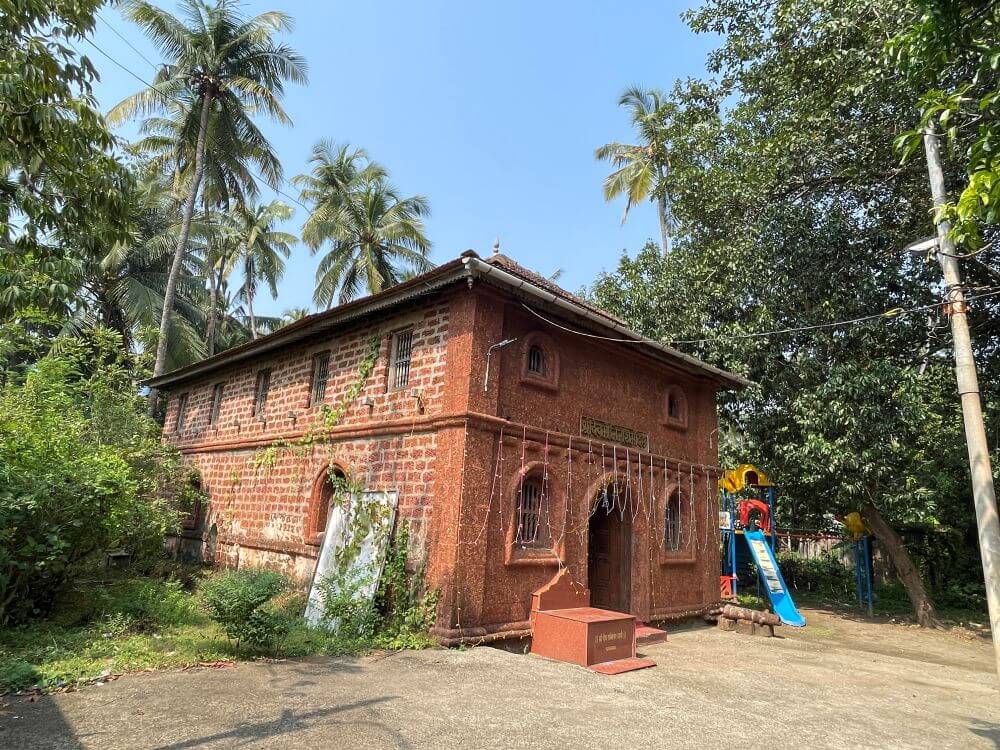
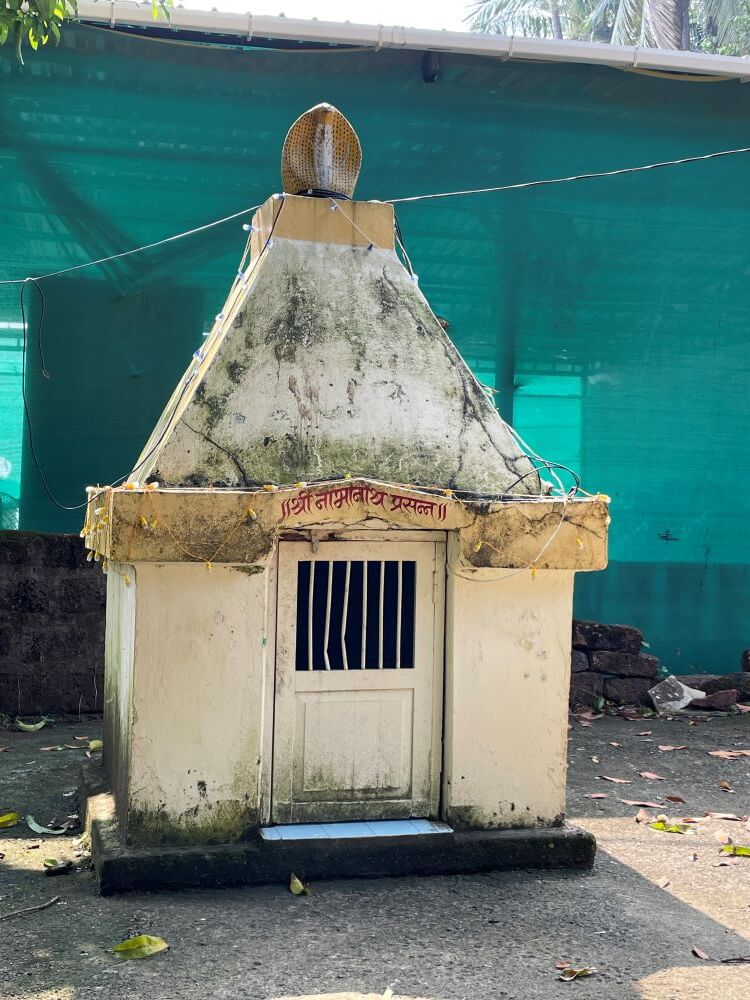
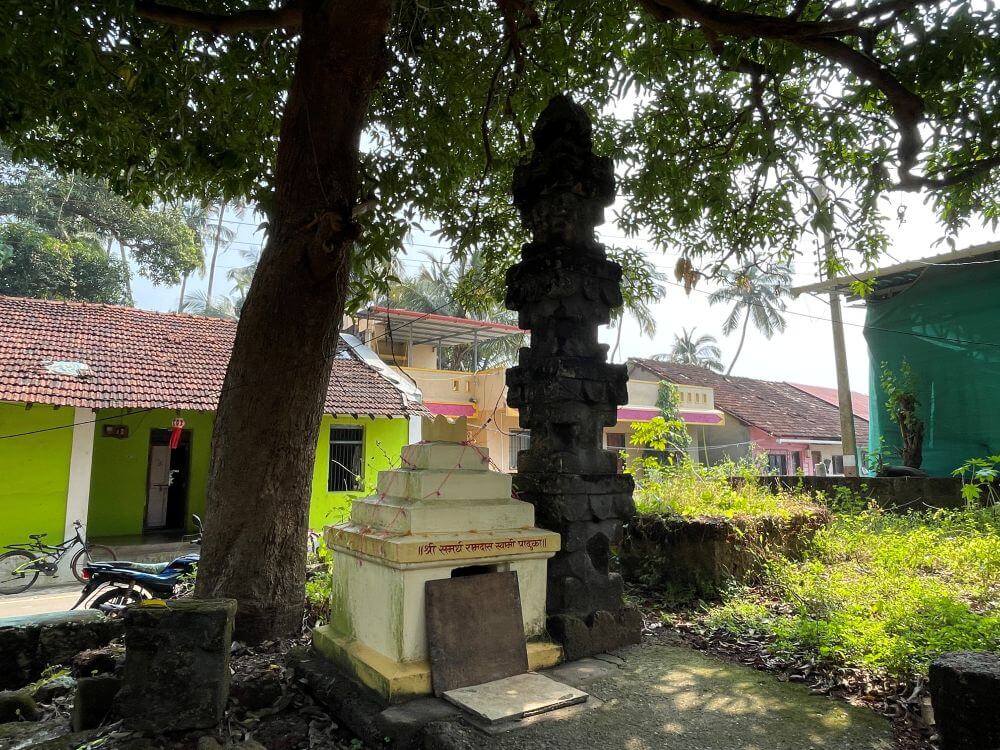
The ‘Shree Dev Mouninath Temple’ stands in a spacious courtyard surrounded by lush greenery in Medha, Malvan. Judging by the dilapidated stone remnants found there, it appears that the temple premises were once enclosed by a boundary wall. Upon entering these premises, on the left side, stands an ancient five-tiered lamp pillar (Deepastambha) built in the Konkani style using laterite stones. Adjacent to it is a small square shrine. This is the temple housing the Padukas (footprints) of Samarth Ramdas Swami. A short distance away from it is the shrine of Nabhanath. Directly in front is the two-storied temple of Mauninath, built with reddish laterite stones and featuring a traditional Konkani-style tiled roof. The ancient temple here was renovated in the year 2011. Near the entrance, against the facade wall of this renovated temple, is a large marble platform. This is the seat (Gadi) of Rameshwar of Kandalgaon. On the facade wall of the temple, on both sides of the entrance, are two large cylindrical windows. The upper floor also has two small ventilators. The entrance is cylindrical in shape. The temple structure consists of a Sabha Mandap (assembly hall) and a Garbhagriha (sanctum sanctorum) within it. The Sabha Mandap is enclosed and features a wooden balcony supported by red square pillars. On the walls of the Sabha Mandap are large photographs providing information about the historical forts and structures of Raigad. The Garbhagriha resembles a small square shrine. It is topped by a low, pyramid-shaped Shikhara, which is crowned with a Kalash. Inside, on a pedestal, is the meditative idol of Mauni Swami, depicted sitting cross-legged with fingers interlocked and resting on the lap. Behind the idol, on the platform, is an ornate metal arch (Mahirap). Mauni Maharaj took Jiva Samadhi at Patgaon on Magh Shuddha Ekadashi in the year 1686. The Punyotsav (death anniversary) is celebrated in a religious atmosphere at the temple in Malvan.
This sacred temple stands as a testament to deep spiritual devotion, ancient architectural grandeur, and rich local cultural traditions.
The sanctum sanctorum houses the divine idol consecrated according to ancient Vedic traditions, surrounded by serene courtyards and traditional temple architecture.
Navratri, Maha Shivratri, Annual Temple Jatra & Deepotsav
Compare and book flights, secure top-rated local hotels near the temple, hire reliable guides, and rent cars instantly.
Extend your pilgrimage by visiting other highly sacred temples located nearby.


Add ₹999 more to unlock FREE SHIPPING!
Your sacred cart is currently empty.
Shop Photo FramesFill in your delivery details below to place your order.
Add comment