
Add ₹999 more to unlock FREE SHIPPING!
Your sacred cart is currently empty.
Shop Photo FramesSiddheshwar of Salshi is revered as the overlord of eighty-four villages. Are is one of the villages that falls under his dominion. The Ishwar (Lord) of this village is Areshwar. He is the Gramdaivat (village deity) of Are village, and the villagers hold profound faith in Him. Before embarking on any auspicious undertaking, the villagers here seek the blessings of Areshwar. The ancient residents narrate that this sacred abode of Areshwar is exceedingly ancient, boasting a history spanning hundreds of years. A distinctive feature of this temple, with its ancient wooden architecture, is the exquisitely carved Veersatigal (hero-sati stone) situated in front of it.
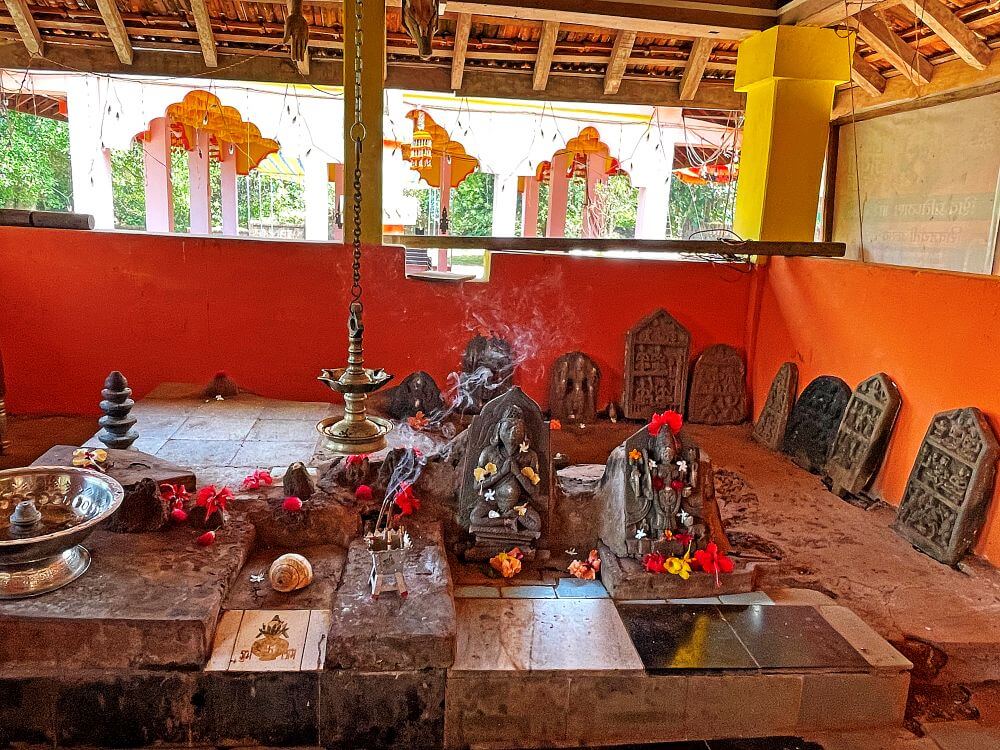
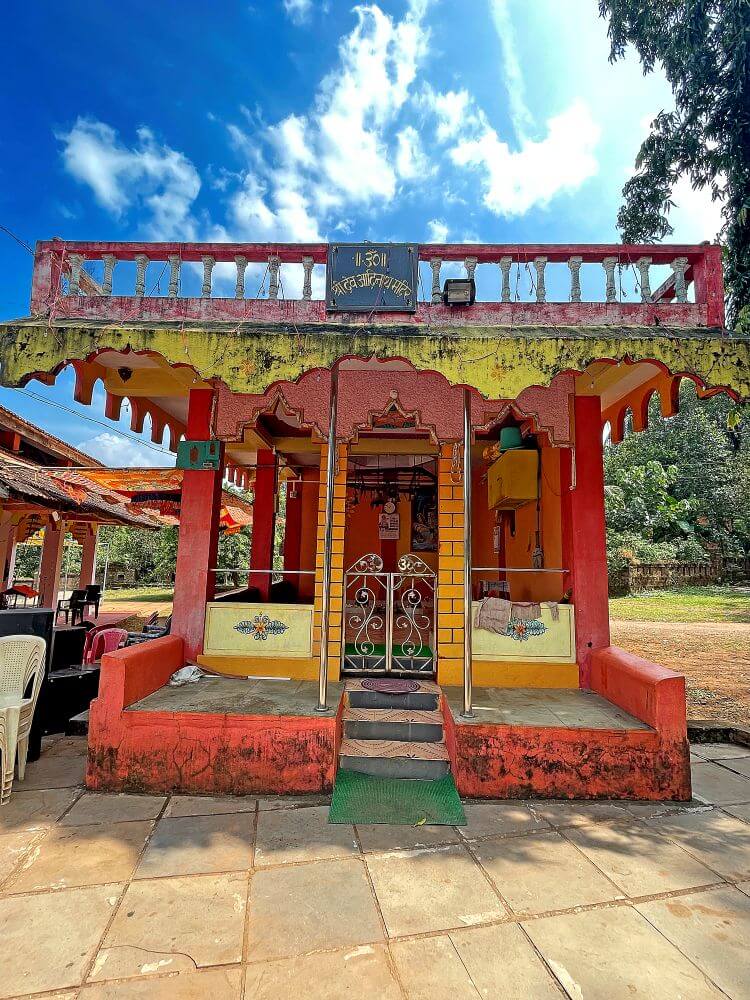
This temple is nestled amidst a tranquil environment, featuring an ancient, large Bael tree, a platform built around it, and a serene atmosphere. The temple is tiled and has a sloping roof. The overall architectural design of the temple reflects the old Konkani style. Typically, temples have a Deepstambh (lamp pillar) and a Tulsi Vrindavan (basil altar) in front of the Sabhamandap (assembly hall). However, a unique characteristic of the Areshwar Temple is the presence of a small temple in front of its Sabhamandap, with the Deepstambh and Tulsi Vrindavan located behind it. This small temple houses an ancient stone idol of the Devi (Goddess). The Devi is Chaturbhuj (four-armed) and wields weapons. A tall Kiritmukut (crown) adorns her head. Adjacent to this idol is a sculpture of a man seated on a pat (low wooden stool) in a meditative posture, with his hands joined in a gesture of reverence. This idol features a triangular beard and hair tied upwards. He wears a mala (garland) and a Janave (sacred thread).
The legend of this temple recounts that hundreds of years ago, the original progenitor of Are village established this settlement. At that time, he consecrated a Shivling here. This deity is known by the name Areshwar. It is surmised that the idol of this original progenitor is situated beside the Devi’s idol, in front of the Areshwar temple. Behind the idols of this Devi and the original progenitor, leaning against the wall, are several Sati-shilas (sati stones) and deity idols. Among these is an exceptionally intricately carved Veersatigal. When a valiant man from the village met his demise in battle or in a struggle for the village, his wife would perform Sati on his pyre. Such a Sati-shila would also have the idol of that valiant man carved into it. This is known as a Veersatigal. In one of the Veersatigals present here, the lowest tier depicts the woman who performed Sati and her weapon-wielding husband. The tier above features two female figures in a posture of reverence, and the uppermost tier shows a woman worshipping a Shivling, along with carvings of the moon and sun. Another similar Veersatigal is also found here, with a battle scene carved in its lowest tier, depicting a warrior on horseback. Additionally, there are two Sati-shilas here, one of which is uniquely semicircular.
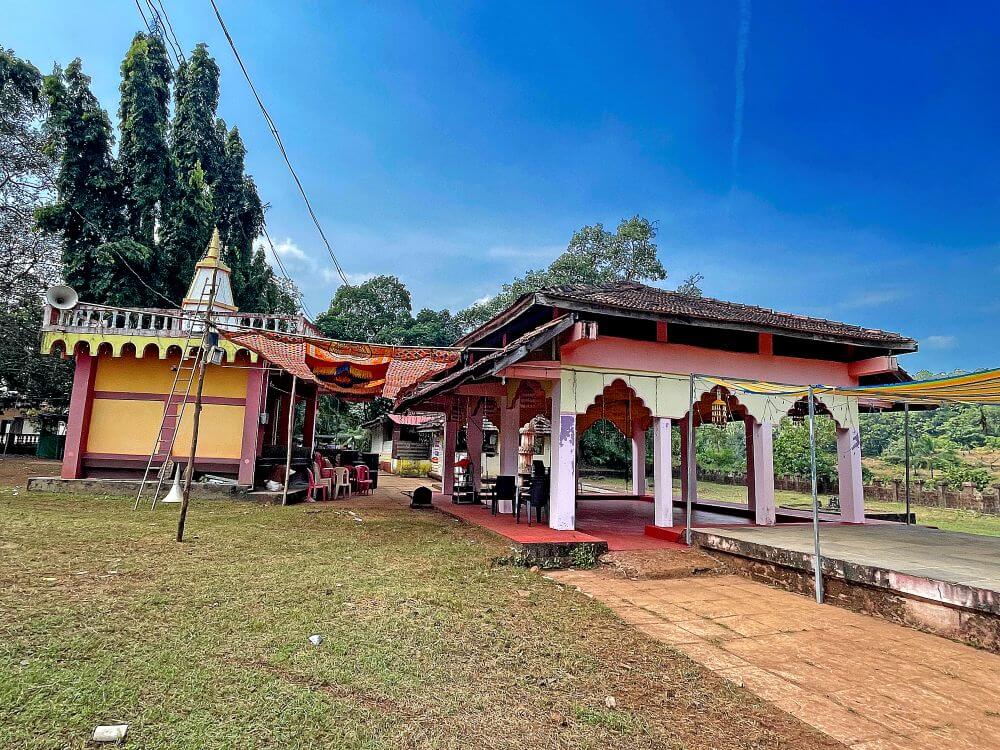
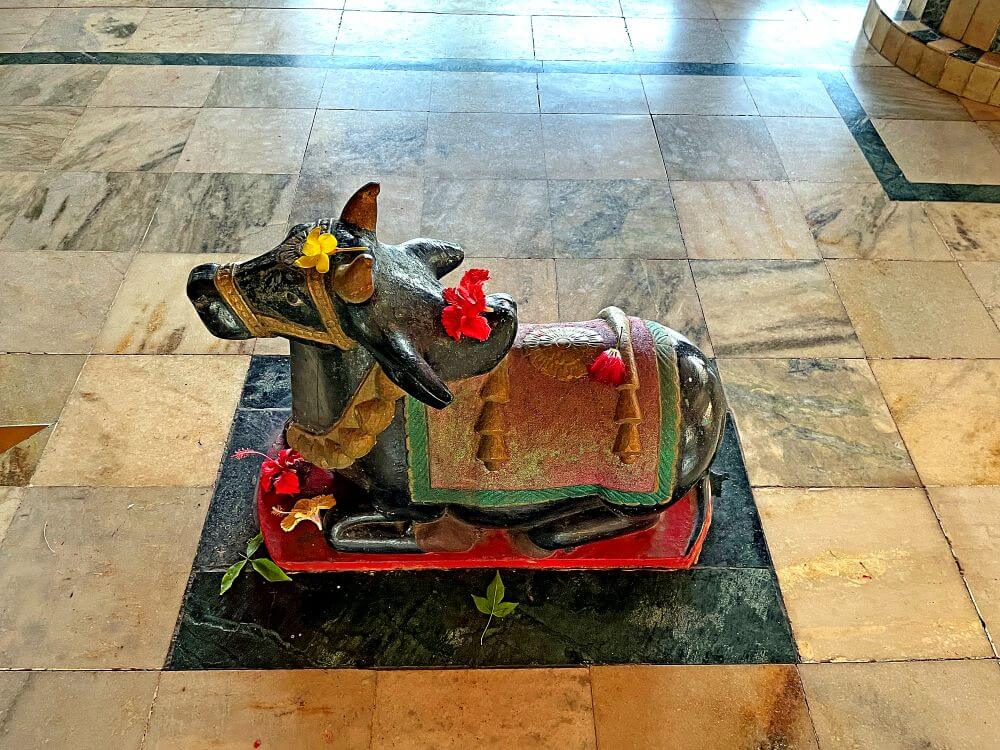
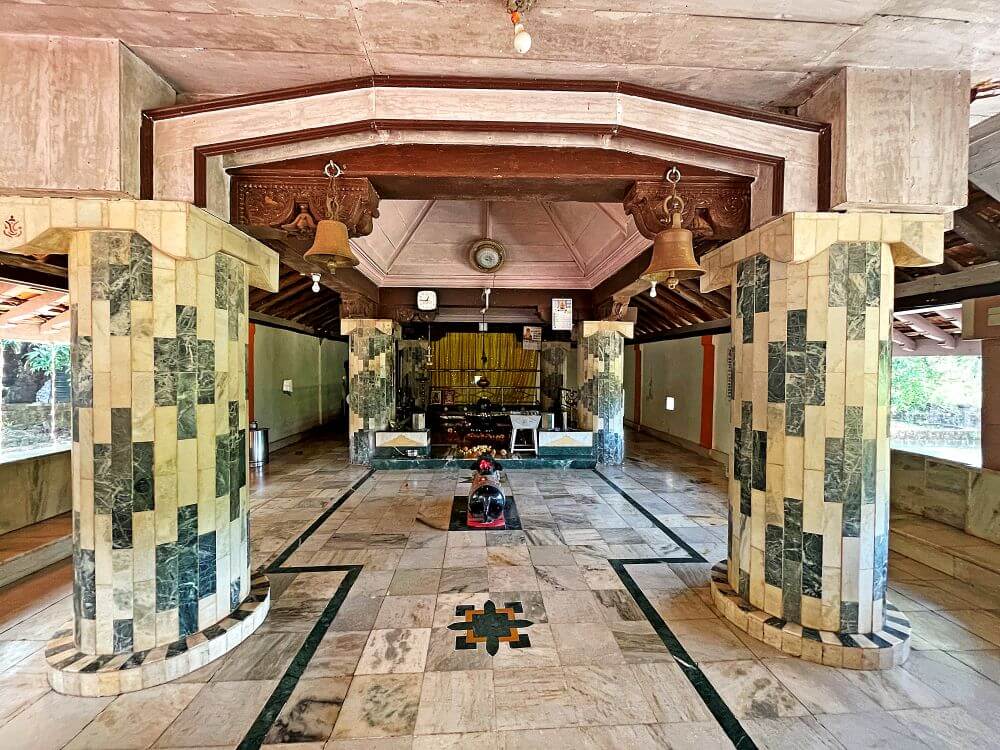
In front of this temple, which houses these deities and Sati-shilas, stands the ancient shrine of Areshwar. This temple is elevated by eight steps. The Garbhagriha (sanctum sanctorum) is located within the spacious Sabhamandap of this Konkani-style temple. A circumambulatory path around the Garbhagriha is accessible from the Sabhamandap. Half of the Sabhamandap is semi-open, featuring large circular pillars. These pillars support sturdy wooden beams, and above the pillars are intricately carved Taranghastas (wave-like brackets). An exquisite stone idol of Nandi is positioned in front of the Garbhagriha. The Garbhagriha is open on all four sides and has high railings. In the center of the sanctum is the Areshwar Pindi (Shivling). This Shivpindi is of an excellent type, resting on a tall, circular pedestal. The Pindi comprises a Vedi (base), a Shālunkā (yoni base), and a cylindrical Lingam in the center.
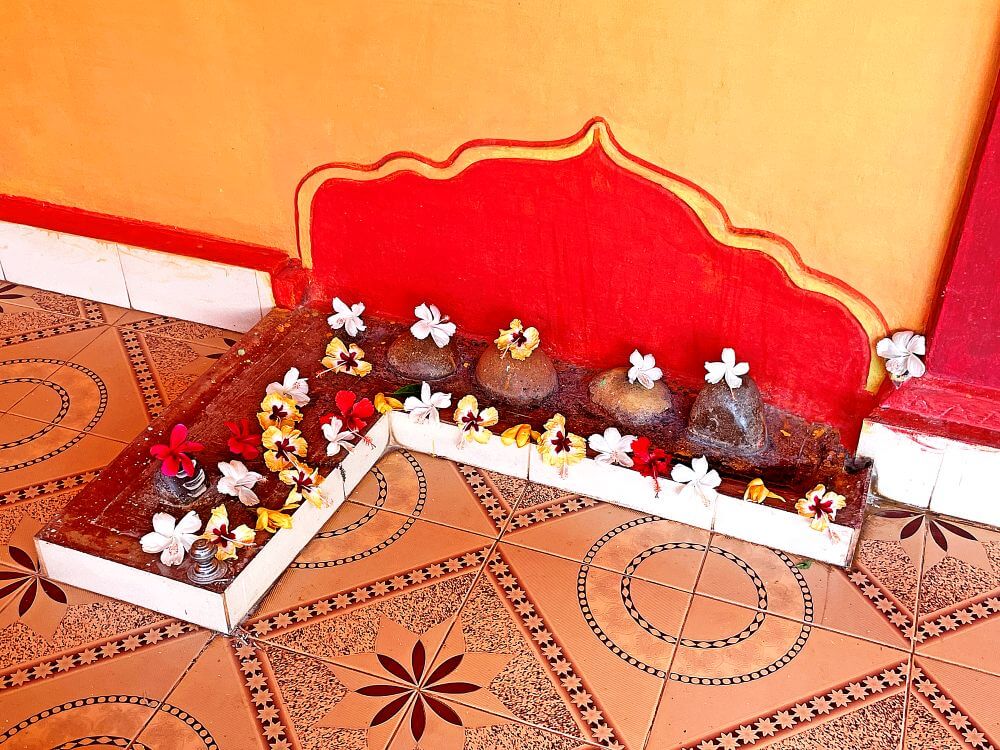
Within the temple complex, there is also a temple dedicated to Adinath. This modernly constructed temple houses stone Lingams within two Shālunkās crafted from marble tile pieces. One of these Lingams resembles a twisted stone and also features two eyes. Beside these two Lingams is a stone representing a local deity. Furthermore, within the temple courtyard, behind the Deepstambh, a large mandap has recently been constructed for Hari Naam Saptah (week-long chanting of Lord Hari’s name) and other religious festivals. During Ashadhi Ekadashi, a Hari Naam Saptah is organized with great enthusiasm at this temple. Similarly, Mahashivratri is celebrated here with immense fervor. Devotees also gather in large numbers every Shravani Monday.
This sacred temple stands as a testament to deep spiritual devotion, ancient architectural grandeur, and rich local cultural traditions.
The sanctum sanctorum houses the divine idol consecrated according to ancient Vedic traditions, surrounded by serene courtyards and traditional temple architecture.
Navratri, Maha Shivratri, Annual Temple Jatra & Deepotsav
Compare and book flights, secure top-rated local hotels near the temple, hire reliable guides, and rent cars instantly.
Extend your pilgrimage by visiting other highly sacred temples located nearby.


Add ₹999 more to unlock FREE SHIPPING!
Your sacred cart is currently empty.
Shop Photo FramesFill in your delivery details below to place your order.
Add comment