
Add ₹999 more to unlock FREE SHIPPING!
Your sacred cart is currently empty.
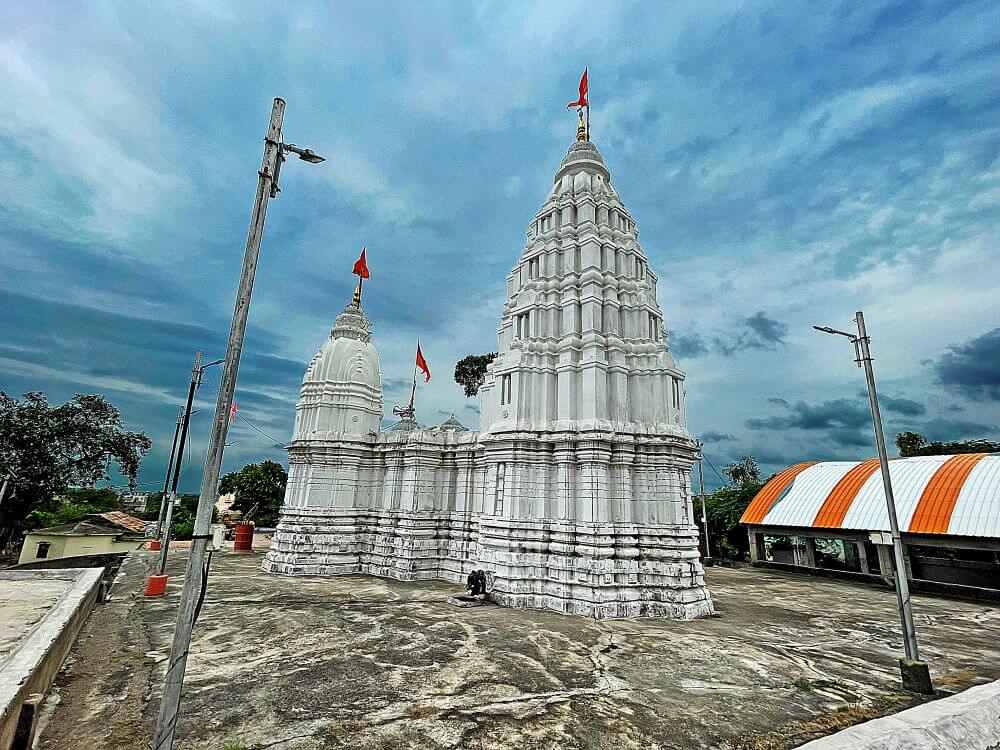
Shop Photo FramesSiddheshwar means the Lord of Siddhis (divine powers). Lord Shiva is revered as Siddheshwar. Among the various Siddheshwar temples in the country, one is located in Pishor. The exact date of the temple’s establishment is unknown. However, based on its architectural style, it is estimated to date back to the eleventh to thirteenth centuries. During this period, temples in the Bhumija style were built extensively across Maharashtra. This style, which incorporates features of both Nagara and Dravidian architecture, is reflected in the Siddheshwar temple.
Many legends are told in the Puranas regarding this form of Lord Shiva. According to one such story, in ancient times, a king named Ashwashira ruled in Aryavarta. He had attained divine powers through the performance of the Rajayajna ritual. Once, Sage Kapilmuni and Sage Jaigishavya arrived in his kingdom. At that time, the king remarked that it is said Lord Vishnu is the supreme being in the universe, so why does no one offer obeisance to Him? Upon this, the two sages asked, “Who told you this?” and, right there in the royal court, granted the king a vision of the entire universe along with Lord Vishnu. Astonished by their divine power, the king asked how they had attained such Siddhi. The sages then narrated the story of Siddheshwar Mahadev and explained that worshipping Him leads to the attainment of supernatural powers.
According to the Puranas, the Sanskrit term Siddheshwar refers to sixty-eight locations where a Swayambhu Linga, or self-manifested Shiva Linga, is installed. This Linga is considered the most sacred because it is naturally formed and has existed since time immemorial. For this reason, even if it is damaged, there is no need for its reconsecration. There are many temples of Lord Shiva in the form of Siddheshwar across the country. The tallest Shiva Linga is located in the city of Hapoli in Arunachal Pradesh and is known as the Siddheshwar Temple. There is also an ancient Siddheshwar temple at Toka Kaygaon in Marathwada. The Mahadev temple in Pishor is also a Siddheshwar temple and is regarded as an excellent example of architectural style. It is also known as the Ratneshwar Temple.
Standing in the central part of Pishor village on a high, flat hill, this temple is known as the ‘Stone Mahadev Temple’. Near the entrance of the Mahadev temple is the Nandi Mandapa, which houses a Nandi idol carved from a single stone. After climbing a step, one enters the temple’s Darshan Mandapa. This hall features four carved pillars and stone benches known as Kakshasanas on both sides for devotees to sit. Due to the backrests of these high benches, the lower half is covered while the upper part remains open; this structure is called a semi-open Mandapa. Beyond this is the enclosed Sabha Mandapa. This hall consists of side walls and stone pillars placed at some distance. These pillars are decorated with intricate carvings. They are square at the base, carved in the middle, and circular at the top. On one of these pillars, the scene of Lord Krishna lifting Mount Govardhan on his little finger is depicted.
The pillars are adorned with carved, high-relief figures of Sursundaris playing various musical instruments, Yakshas, and minor deities.
On all these pillars, there is a circular, flat, low-height section called the Palgai, and above it, the pillars take the shape of a ‘Taranghasta’. Where the pillars connect to the beams, small pillars resembling additional marks are placed to ensure the weight is not concentrated on a single point; these are called Taranghasta. Kichaka figures are carved upon them. Kichakas are short,pot-bellied Yakshas with large eyes and curly hair. In this sculpture, they are shown supporting the upper beam with both hands. It is these Kichakas that confirm the temple belongs to the post-Chalukya period. The stone beams of the Sabha Mandapa are also carved. The ceiling from the inside is circular like a coconut shell, following the Karotaka Vitana method.
The doorway of the temple’s sanctum sanctorum is Panchadwarshakhiya, meaning it has five frames. Extremely fine craftsmanship and sculptural figures are carved on all these door frames. One frame features images of Sursundaris playing various musical instruments. At the lower part of all these frames, figures of various deities are carved. In the center of the lintel above the frame, there is an idol of Lord Ganesha. On the beam above the frame, there is a ‘Kapot’ shaped like an oil lamp. In temple architecture, the gutters designed to drain water from the roof are called Kapot. The wall section above the frame is called the Uttararang, on which figures of various deities are carved. The entrance has a high threshold, known as Mandarak, on which a Kirtimukh is carved. In front of the Mandarak is the Ardha-chandrashila, a semi-circular step. From there, one descends into the sanctum. In the square sanctum sanctorum, there is a Shiva Pindi. Apart from the Linga portion, this Shiva Pindi is covered with an ornate metal sheet.
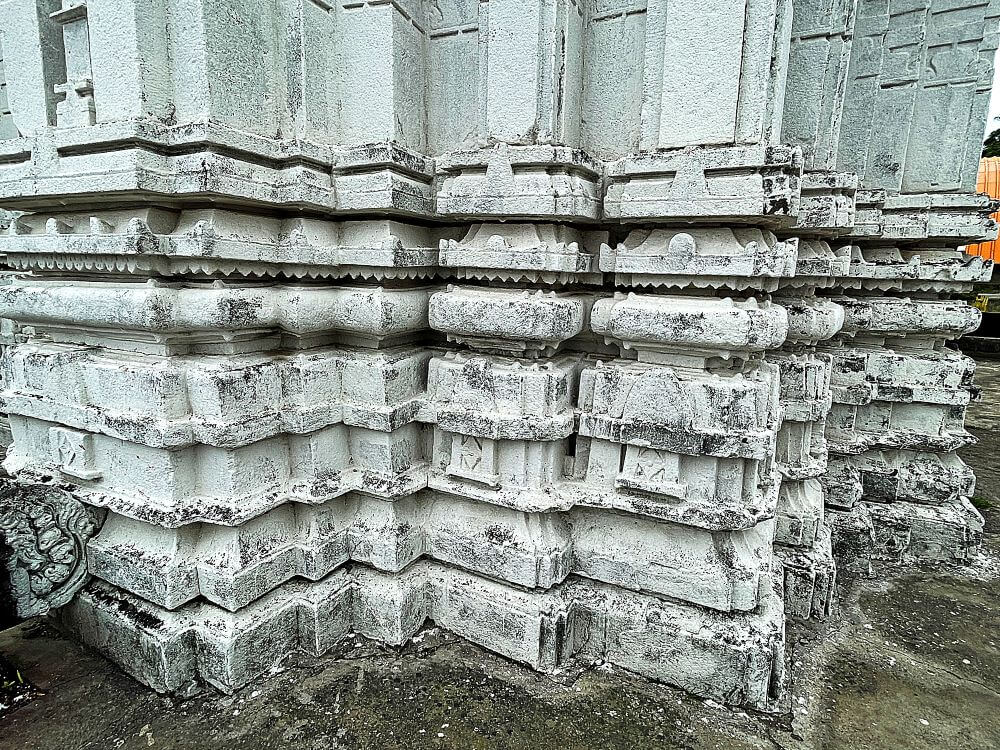
When viewed from the outside, the temple appears to be built by joining various chambers. It has a high Adhishthana, or plinth. Above it is a wall that appears to be constructed by joining various large pillars. This wall is also intricately carved. In the temple premises, there is an ancient Vitthal-Rukmini temple. This temple, being a fine specimen of architecture, is frequently visited by many scholars along with devotees.
Useful Information:
The sanctum sanctorum houses the divine idol consecrated according to ancient Vedic traditions, surrounded by serene courtyards and traditional temple architecture.



Navratri, Maha Shivratri, Annual Temple Jatra & Deepotsav
Compare and book flights, secure top-rated local hotels near the temple, hire reliable guides, and rent cars instantly.
Extend your pilgrimage by visiting other highly sacred temples located nearby.

Add ₹999 more to unlock FREE SHIPPING!
Your sacred cart is currently empty.
Shop Photo FramesFill in your delivery details below to place your order.
Add comment