
Add ₹999 more to unlock FREE SHIPPING!
Your sacred cart is currently empty.
Shop Photo FramesThe Pardeshwar Temple in Chhatrapati Sambhajinagar, built by harmonizing spirituality and science, is a major attraction for many Shiva devotees and tourists visiting the area. The Shiva Linga in this temple is crafted from 111 kilograms of mercury and is placed upon a pedestal made from 151 kilograms of sulfur. One can see a reflection of the Shiva Linga from the Kailasa Temple of the famous Ellora Caves here.
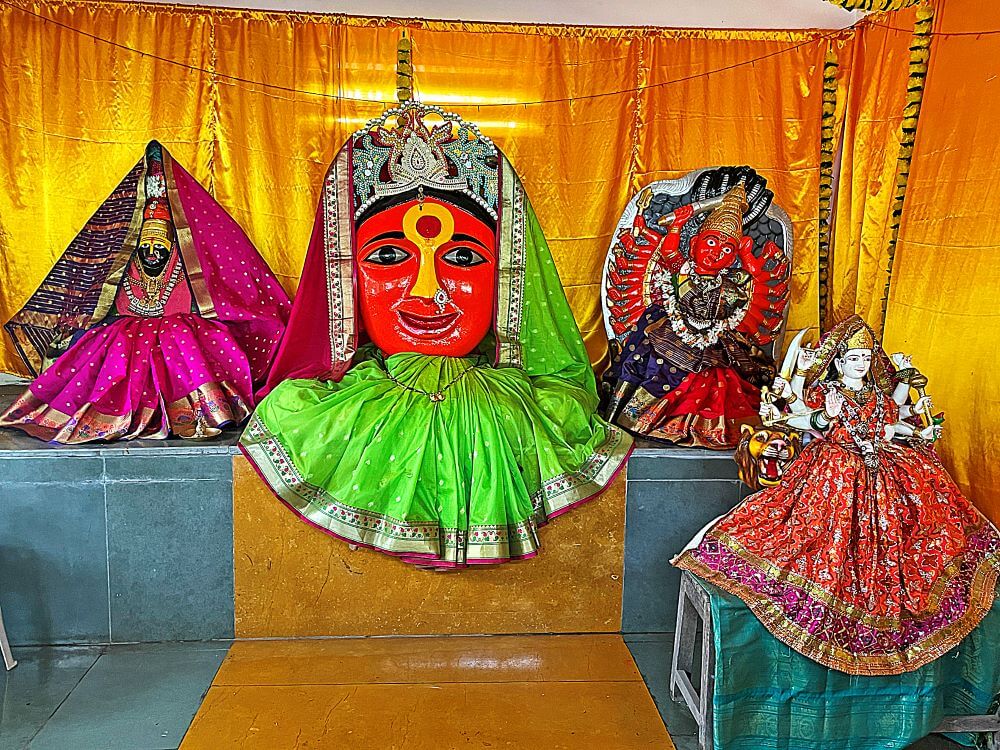
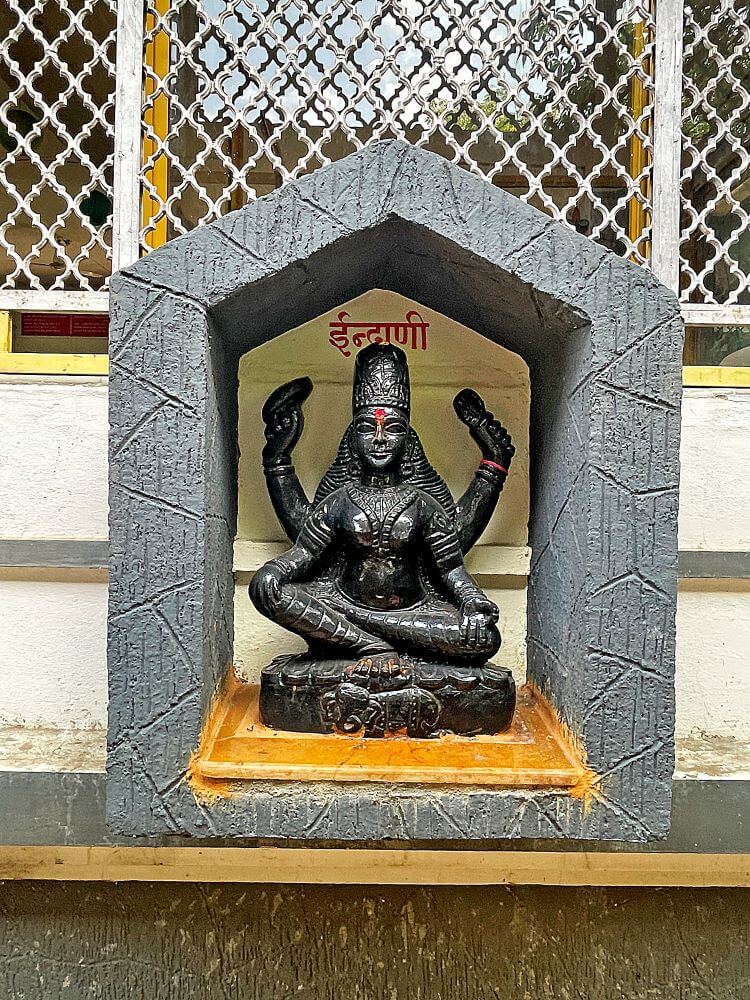
There are only a few Pardeshwar temples in India. This temple, being one of them, is located near the city of Chhatrapati Sambhajinagar. Anant Shastri built this temple about twenty years ago. Upon entering through the main gate, one reaches the spacious temple courtyard. The courtyard, paved with paver blocks throughout, is clean and well-maintained. There are trees of various sizes scattered across the premises. To the left of the courtyard is the Goshala (cow shelter) and the Ram-Krishna Hall. Further ahead are the Vatsiddha Yakshini Temple, Navagraha Temple, Yajnashala, Saraswati Temple, Hanuman Temple, and the temple of Kartikeya Swami. The Kartikeya Swami temple is opened for darshan only once a year. This complex also houses the Saptaghrit Matruka Shaktipeeth of Goddess Renuka, Goddess Tulja Bhavani, and Goddess Saptashrungi.
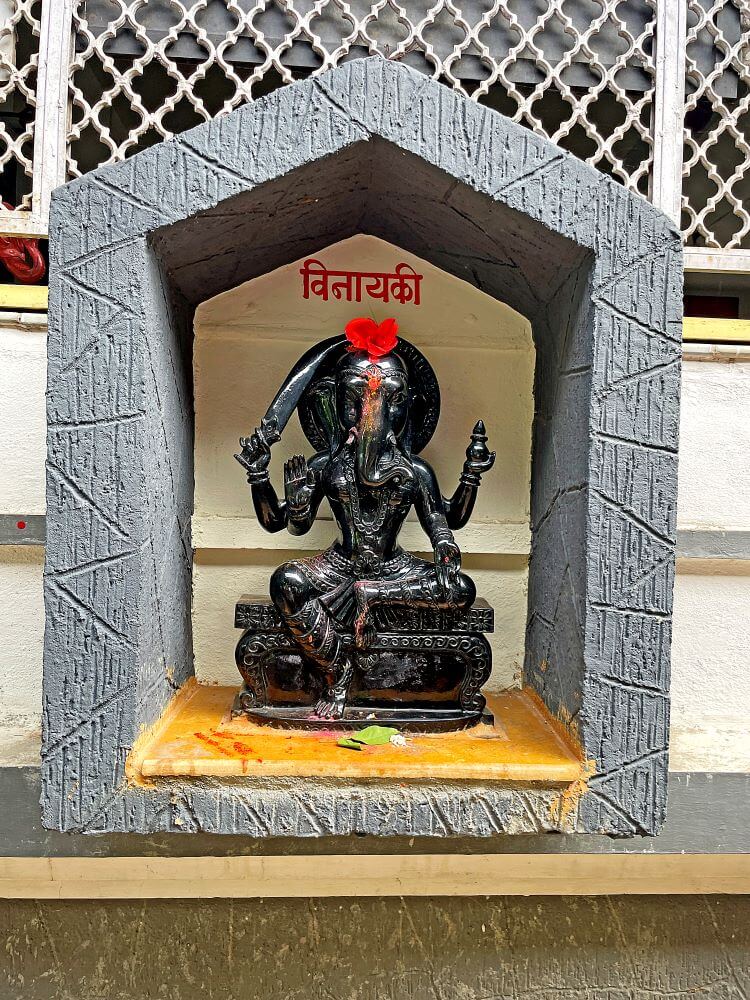
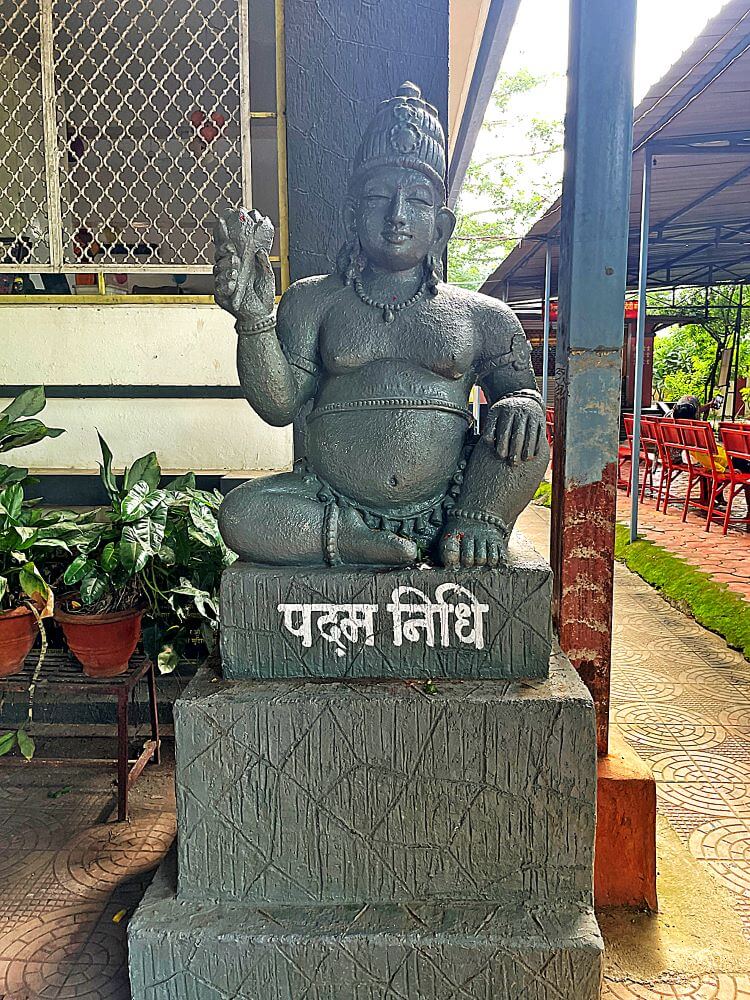
Near the entrance of the Pardeshwar Temple stands the idol of Shankhanidhi (the guardian). On both sides of the entrance steps, there are lion sculptures and Warli paintings. The temple structure consists of a Sabha Mandap (assembly hall), followed by an open space (antarala), and the Garbhagriha (sanctum sanctorum). On the upper walls of the Sabha Mandap, images of ancient monuments, famous landmarks, and temples of old Aurangabad (now Chhatrapati Sambhajinagar) are displayed. This also includes old photographs of the caves of Ajanta-Ellora. There is an open space between the enclosed Sabha Mandap and the Garbhagriha. In this space, facing the Garbhagriha, is a sculpture of Nandi, with lion sculptures on both sides. In the niches on the walls of the Garbhagriha, there is an idol of Dattatreya on the left and Lord Ganesha on the right. The Shiva Linga in the Garbhagriha is made of mercury. It was created by melting 111 kilograms of mercury and solidifying it. This Shiva Linga rests on a pedestal made of sulfur. According to mythological belief, sulfur represents the Rajas (energy) of Goddess Parvati, and mercury represents the Veerya (essence) of Lord Shiva.
It is said that this temple combines spirituality and science. Mercury is considered energizing and liberating. Therefore, upon coming into the presence of Pardeshwar, devotees receive strength and energy. The belief behind this is that because mercury has the capacity for energy conduction, it activates the neural pathways of the mind. The intention behind building this temple is also for the future generation to view spirituality from a scientific perspective. By performing worship of the Parad Shiva Linga, a human can attain all four Purusharthas (goals of life). The Parad Shiva Linga is the living presence of Lord Shiva. It is believed that its darshan grants humans happiness, prosperity, longevity, health, and wealth, which is why many Shiva devotees come here for darshan.
Beside the temple is the Shri Lakshmi Kuber Siddhpeeth (temple). In a small pond in front of this temple, there is a sculpture of a mongoose. There are live fish in this pond. The mongoose, fish, and horse are the vehicles of Kuber. Mythology states that the gods gave these vehicles to Kuber to keep watch over the wealth of the sky, earth, and water. Hence, these vehicles have been given a place here. The temple contains idols of Lakshmi, Kuber, and Chitralekha. These idols were commissioned and brought from Rajasthan. In the center is Goddess Lakshmi, holding a treasure pot (Dhanakumbha) and pouring it out. To her left is Kuber, and to her right is his consort, Chitralekha. Kuber holds a treasure pot in his right hand.
Puranic references also mention that Kuber, a devotee of Shiva, was the cousin of Ravana. There is also a legend that Lord Balaji took a loan from Kuber, the treasurer of the gods, for his wedding. Goddess Lakshmi considered Kuber as her son. Therefore, there is a tradition of seeking his blessings on the day of Lakshmi Pujan. Against this backdrop, the Shri Lakshmi Kuber Siddhpeeth celebrates a three-day festival during Diwali, comprising Vasubaras, Narak Chaturdashi, and Lakshmi Pujan. During the festival, 11,000 recitations of Shri Sukta are performed, followed by a Havan. A Yajna is held for the first two days. On the day of Lakshmi Pujan, an offering of 56 food items (56 Bhog) is made. Hundreds of devotees come for darshan on this day. Devotees can visit the temple from 6:30 AM to 1:00 PM and from 3:00 PM to 6:30 PM.
This sacred temple stands as a testament to deep spiritual devotion, ancient architectural grandeur, and rich local cultural traditions.
The sanctum sanctorum houses the divine idol consecrated according to ancient Vedic traditions, surrounded by serene courtyards and traditional temple architecture.
Navratri, Maha Shivratri, Annual Temple Jatra & Deepotsav
Compare and book flights, secure top-rated local hotels near the temple, hire reliable guides, and rent cars instantly.
Extend your pilgrimage by visiting other highly sacred temples located nearby.

Add ₹999 more to unlock FREE SHIPPING!
Your sacred cart is currently empty.
Shop Photo FramesFill in your delivery details below to place your order.
Add comment