
Add ₹999 more to unlock FREE SHIPPING!
Your sacred cart is currently empty.
Shop Photo FramesWithin Daulatabad Fort, nestled in Chhatrapati Sambhajinagar district, a silent witness to countless historical events, stands the first Bharat Mata Mandir of independent India. This temple, built in the Hemadpanti architectural style, is a beautiful example of ancient craftsmanship. After India attained independence, the Jain, Buddhist, Muslim, and Hindu devotees were all unwilling to relinquish the land where the temple now stands. Against this backdrop, the then Home Minister, Sardar Vallabhbhai Patel, decided to consecrate an idol of Bharat Mata on this disputed site. Since then, this Divine Mother has stood in this fort as a symbol of religious harmony.
The ancient Daulatabad Fort is situated on a hill approximately २०० meters high, distinct from other ranges, on the Verul Road, northwest of Chhatrapati Sambhajinagar city. This fort, which served as the capital for many empires—Yadav, Muslim, Maratha, and British—has witnessed the political and social transformations of each era. It is said that Bhillama V Yadav built a fort on this hill in ११8७ CE, establishing the Yadav capital here. The fort’s original name was Devagiri (Hill of the Gods). In १३३८ CE, Sultan Muhammad bin Tughlaq of Delhi shifted his capital from Delhi to this location. Seeing the immense wealth of the Yadavas, he renamed the fort Daulatabad. Archaeological remains of Jain, Hindu, and Muslim presence are found here. The fort houses ancient places of worship for Hindus, Muslims, and Buddhists. Among these, the Bharat Mata Mandir is considered the most significant.
Historians claim that this was formerly a Jain temple. The exact period of this temple’s construction is uncertain. Some books mention that Yadav King Ramdevrai built this temple, while Shaukat Ali’s book attributes its construction to King Bhoj. On the other hand, the Bharat Itihas Sanshodhak Mandal believes that Prithvidhar, a minister of the Parmar king, constructed this temple. Alauddin Khalji captured this fort in १२९४. After his demise, the fort was briefly returned to the Yadav King Harpaldev. However, Alauddin’s son, Qutbuddin Mubarak Shah Khalji, who succeeded him, recaptured the fort. In १३१८, he vandalized the temples on Devagiri Fort, including this Jain temple. Subsequently, a mosque was built on the site. After India gained independence, the Nizam’s state was merged into India. Marathwada also became part of independent India. However, a dispute arose among Jain, Hindu, and Muslim devotees regarding the temple site within the fort. Hindu devotees desired a Hindu temple, and Jain devotees wished for a Jain temple. Meanwhile, Muslim devotees were unwilling to vacate the mosque site. In this context, Sardar Vallabhbhai Patel consecrated an idol of Bharat Mata on this disputed site as a symbol of religious harmony.
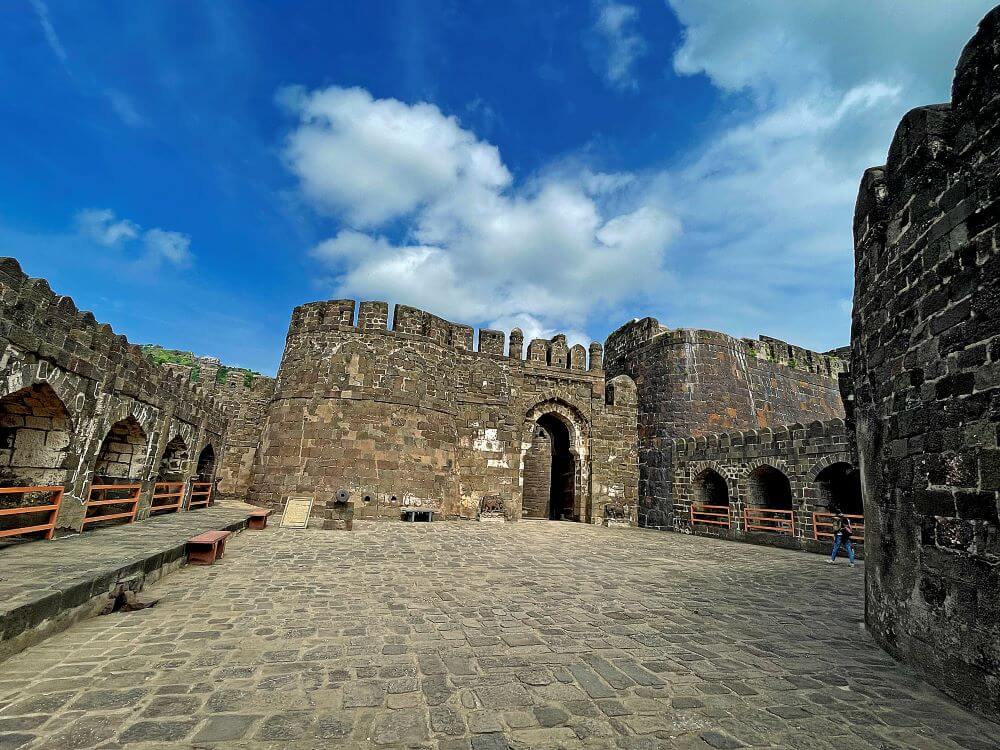
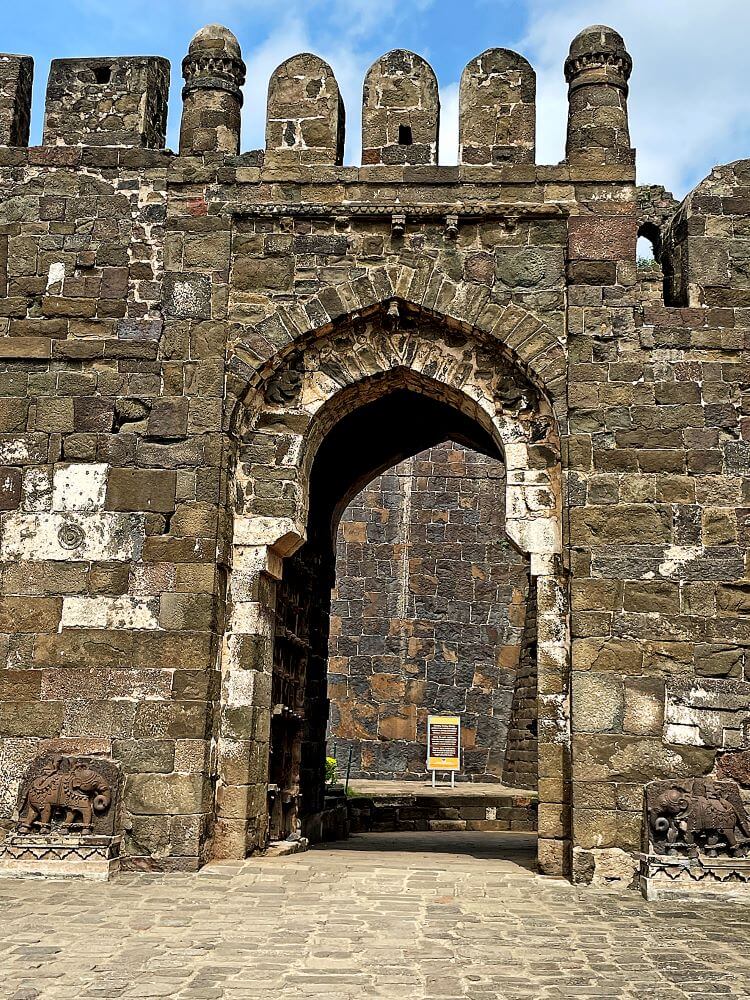
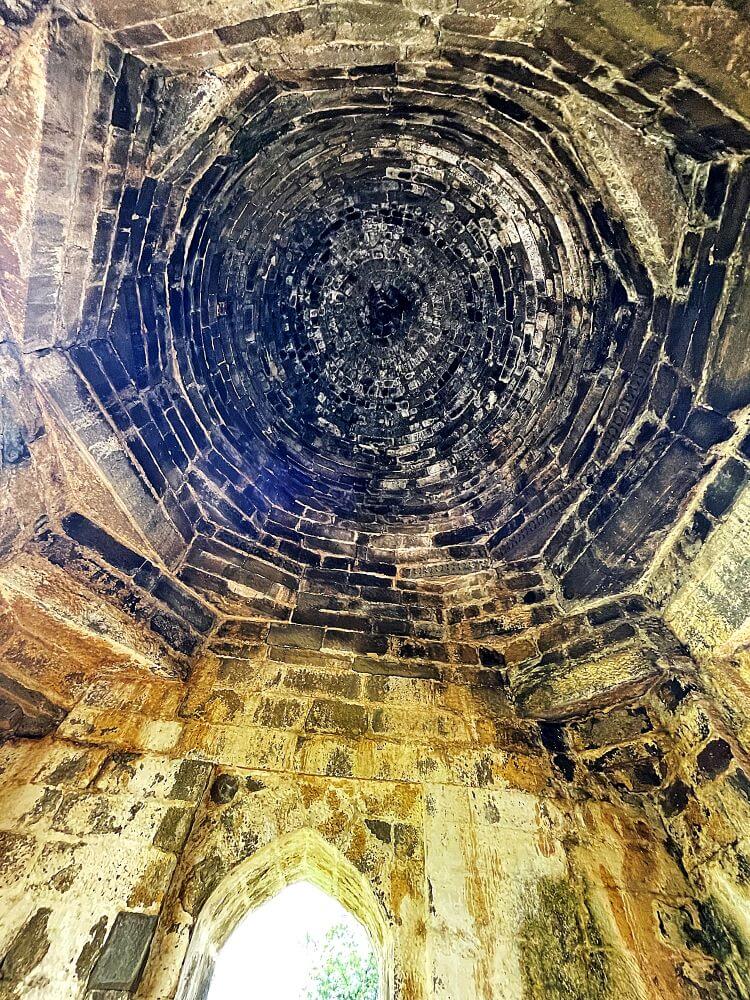
Daulatabad Fort features the Hathi Talao (Elephant Pond), measuring ४७.७५ meters in length, ४६.७५ meters in width, and ६.६१ meters in depth. If one claps while standing on the edge of this pond, an echo can be heard. Previously, the fort’s residents used the water from this pond throughout the year. Directly opposite this pond is the main entrance to the Bharat Mata Mandir. This entrance is adorned with a dome. The entrance, built with sturdy stonework, is square in shape. The strong ramparts surrounding the temple are still in good condition today. The temple courtyard is paved with stones. There are two more gates on the north and south sides of the courtyard. Additionally, there are bastions and minarets at all four corners of the courtyard. Many sculptures are visible on the path leading from the main eastern entrance to the temple. All this construction showcases the architectural characteristics of the Khalji-Bahmani period.
The temple complex is spacious. On its western side, there is a prayer hall measuring ८५ meters in length and २० meters in width. This hall contains a remarkable १२६ stone pillars. Each pillar features different carvings, including lotus flowers, deities, and idols of Jain Tirthankaras. During the Yadav period, the Navratri festival was celebrated with great enthusiasm in this hall. Records indicate that the public was also allowed entry at that time. In the sanctum sanctorum, located in the center of the prayer hall, stands an idol of Bharat Mata with a serene expression, adorned with minimal jewelry. Draped in a green sari, Bharat Mata is Ashtabhuja (eight-armed), holding weapons such as a lotus, trident, sword, chakra, fire, Nagraj (serpent king), and conch in her hands. One hand is in a posture of blessing. This armed deity wears a crown on her head. Currently, this temple is under the purview of the Archaeological Survey of India.
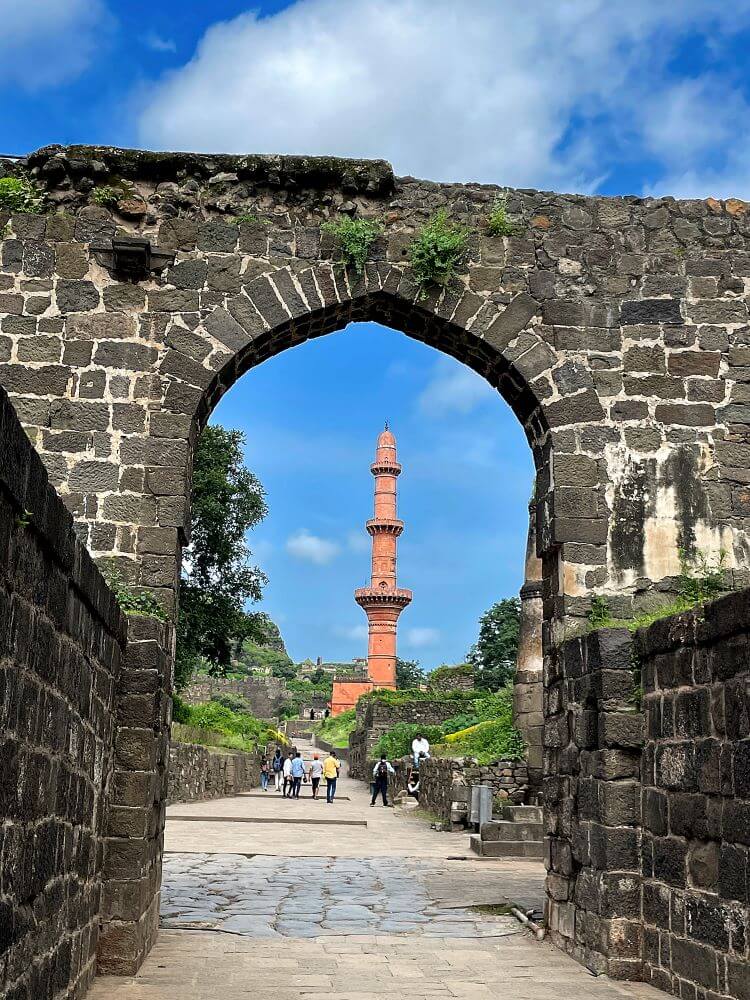
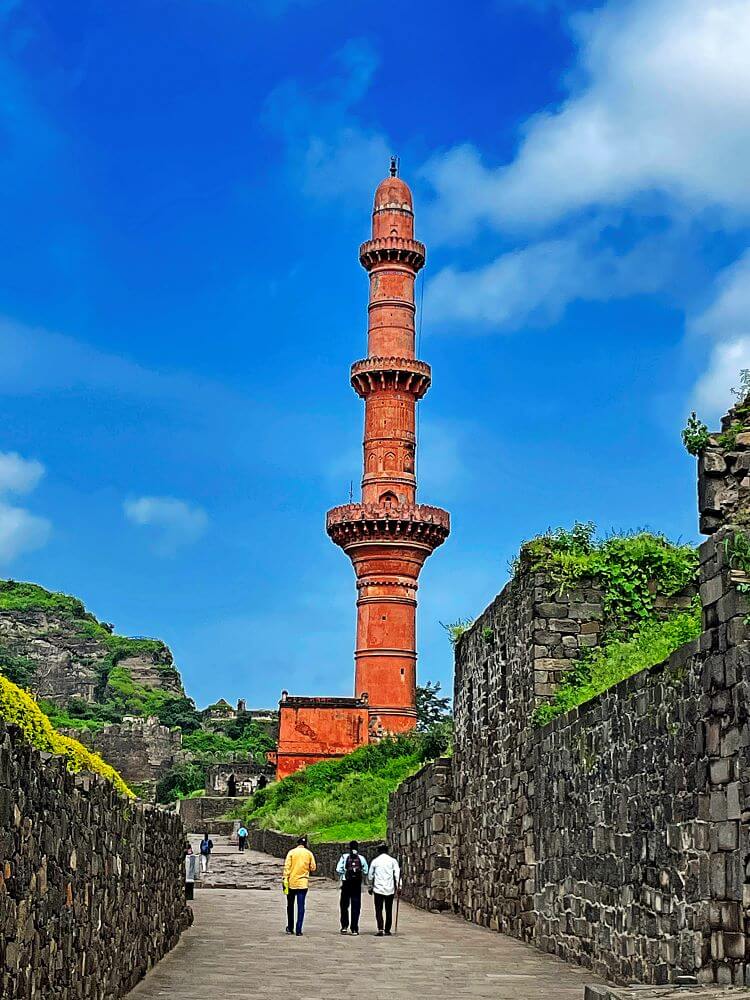
Similar to the Qutub Minar in Delhi, there is a tall minaret adjacent to the Bharat Mata Mandir. It is famously known as Chand Minar. Bahmani Sultan Ahmed Shah constructed Chand Minar in १४४५ CE to commemorate his victory over the Sultan of Gujarat. This four-story minaret is १०० meters tall, with a diameter of ten meters at its base. The minaret tapers towards the top. One can ascend the internal staircase of Chand Minar. The lowest floor here is the tallest, with subsequent floors being shorter. Small windows have been provided on the circular staircase inside the minaret to allow light and ventilation. Each floor has approximately ८० steps and six small windows. Due to the presence of a balcony on each floor, one can enjoy a panoramic view of Daulatabad Fort from there.
Additionally, there is a cave near the highest peak of the fort. It is said that Saint Eknath Maharaj’s Guru, Janardan Swami, performed penance in this cave. Some historical books mention that Janardan Swami was the fort commander here. It was at this very spot that Eknath Maharaj received spiritual guidance from Janardan Swami. Eknath Maharaj, along with Guru Janardan Swami, resided in this fort for six years. On the Punyatithi (death anniversary) of Saint Janardan Swami, which falls on Phalguna Vadya Shashthi, many devotees and descendants of Eknath Maharaj visit this place. According to their faith, Swami attained mahasamadhi here.
This sacred temple stands as a testament to deep spiritual devotion, ancient architectural grandeur, and rich local cultural traditions.
The sanctum sanctorum houses the divine idol consecrated according to ancient Vedic traditions, surrounded by serene courtyards and traditional temple architecture.

Navratri, Maha Shivratri, Annual Temple Jatra & Deepotsav
Compare and book flights, secure top-rated local hotels near the temple, hire reliable guides, and rent cars instantly.
Extend your pilgrimage by visiting other highly sacred temples located nearby.
No other temples found nearby.
Add ₹999 more to unlock FREE SHIPPING!
Your sacred cart is currently empty.
Shop Photo FramesFill in your delivery details below to place your order.
Add comment