
Add ₹999 more to unlock FREE SHIPPING!
Your sacred cart is currently empty.
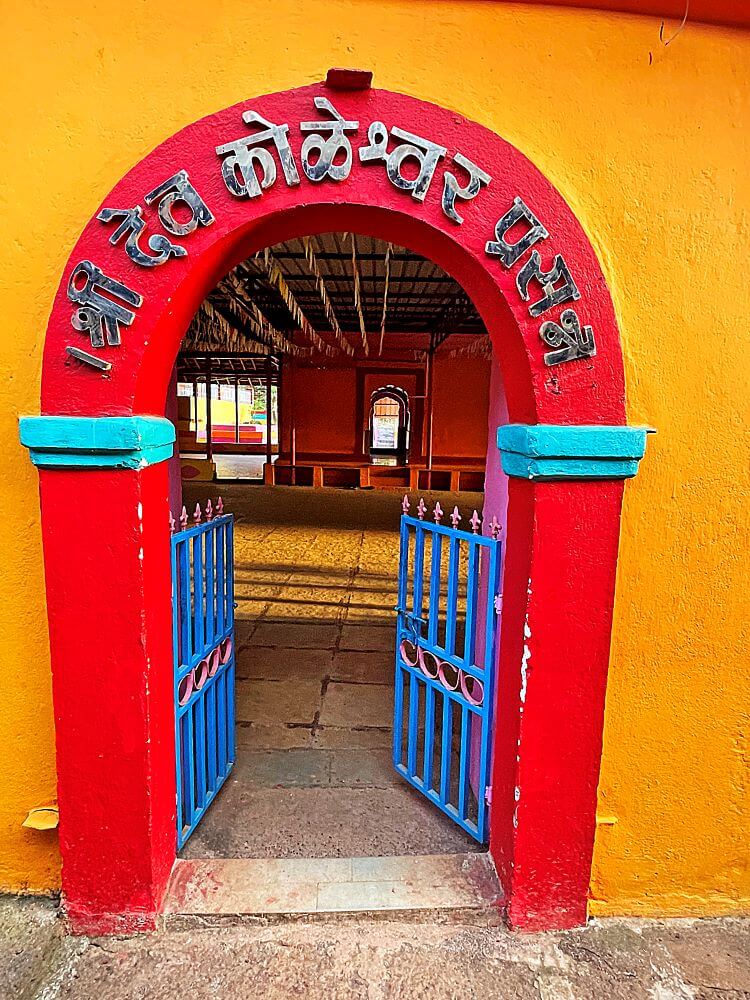
Shop Photo FramesThe Shri Koleshwar Temple in Kolthare, located in the Dapoli taluka of Ratnagiri district, is one of the ancient Shiva temples in the district. It is said that the deity was named Koleshwar as the ‘God of the Kolis’ (fisherfolk). This temple of the Trigunatmak deity Koleshwar, who embodies the three principles of Brahma, Vishnu, and Mahesh, is the family deity (Kuldaivat) of many Konkanastha Brahmins of this region. There is a deep-seated belief that consuming the Tirtha (holy water) from this temple cures chronic ailments, which draws many devotees for darshan every day.
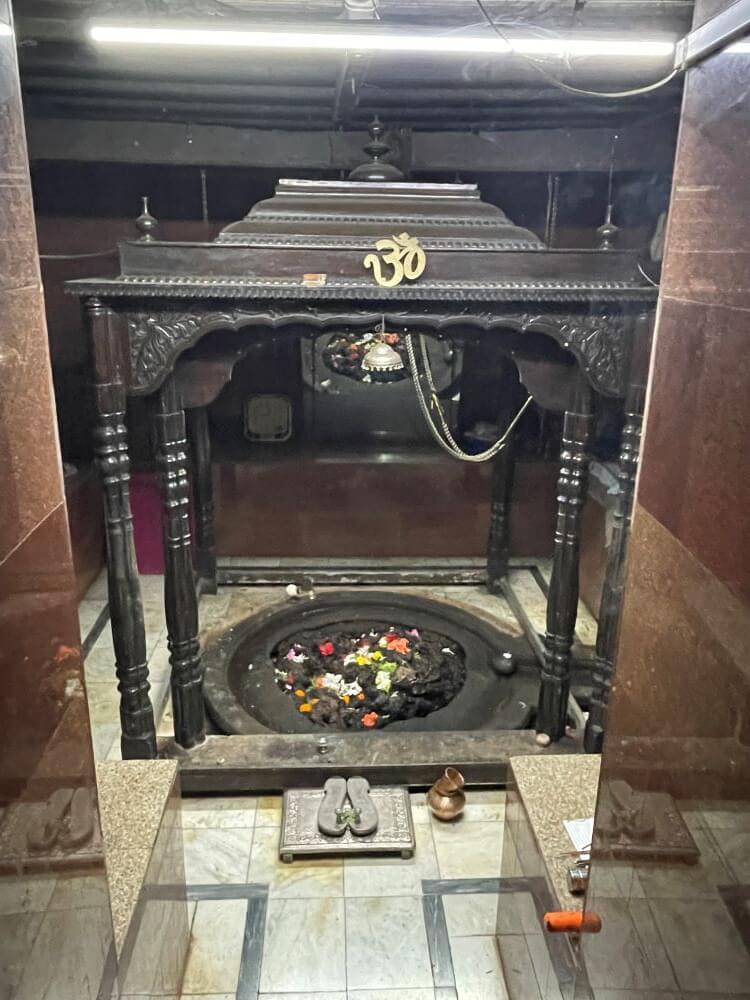
The legend of the temple states that while a fisherman was ploughing his field for rice, he noticed blood oozing from the ground. He also observed that the ploughshare was stained with blood. That same night, Lord Shiva appeared to the fisherman in a dream and revealed that He had manifested there. Following this, the next day, the fisherman took the villagers to the field, where they were blessed with the sight of a Swayambhu Linga. Subsequently, the villagers built a small temple at that site. According to the temple records, this temple was built in 1837 by a devotee of Koleshwar named Joshi from Panchnadi village near Burondi. Over time, a person with the surname Late constructed the front portion of the temple. In the month of Phalguna, a member of this Koli family brings an offering from Burondi village, and the villagers honor them here. It is said that the Pandavas resided in this area. There is a belief that the impressions on the rock atop the hill here are the footprints of the five Pandavas.
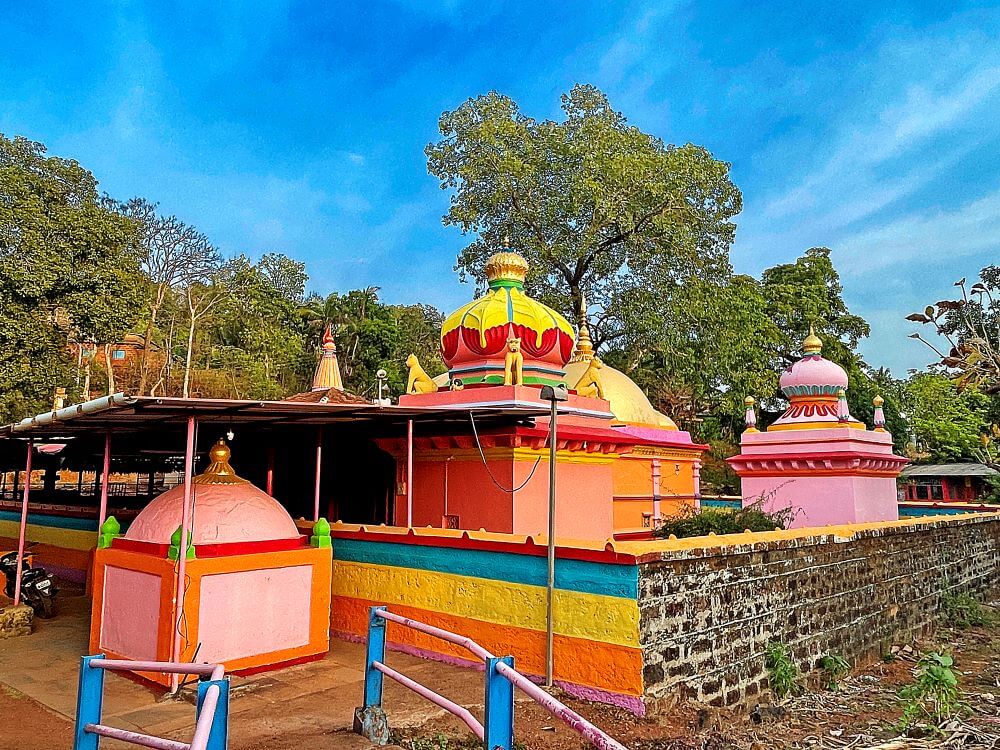
Kolthare village is situated slightly off the main Dapoli-Dabhol road. A path leads from the temple arch on this road, running along one side of a stream, all the way to the temple. Along this path, there are coconut and areca nut orchards on both sides. After crossing a small iron bridge over the stream along the road, one catches sight of this temple, which features stone masonry from the Peshwa era. The temple’s sturdy fortification wall is made of five-foot-thick laterite stone. One enters the temple courtyard through a small arch in the fortification. The entire courtyard is paved with stone. Near the entrance stands a Deepmal (lamp pillar), and to the right is a Maruti temple. To the left of the main temple is a Tulsi Vrindavan, and in front of it lies the Lakshmi-Vishnu temple. The idol of Vishnu holds a conch (Shankha), mace (Gada), lotus (Padma), and discus (Chakra). Beside this idol is the idol of Lakshmi. Opposite the main temple is the temple of Jakhai Kaleshri. Here, there are two idols in the form of Taandala (aniconic stones), and this temple features a wooden Meghadambari (canopy). In addition to these, there is a Ganpati temple, a Dharmashala (pilgrim rest house), and a Nagarkhana (drum house) here.
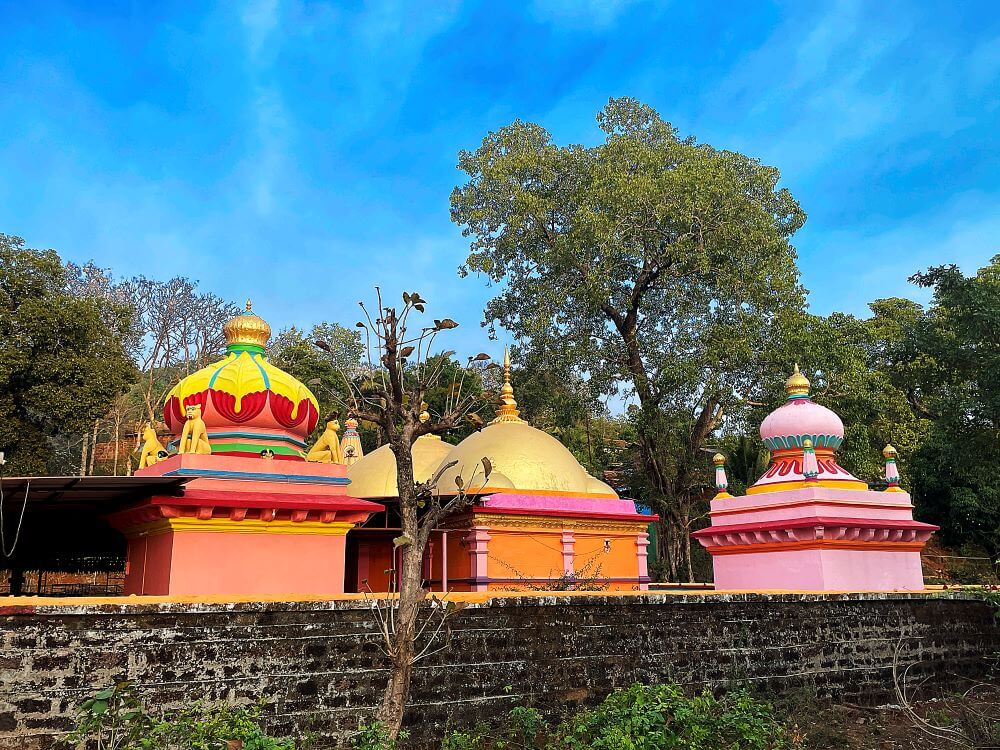
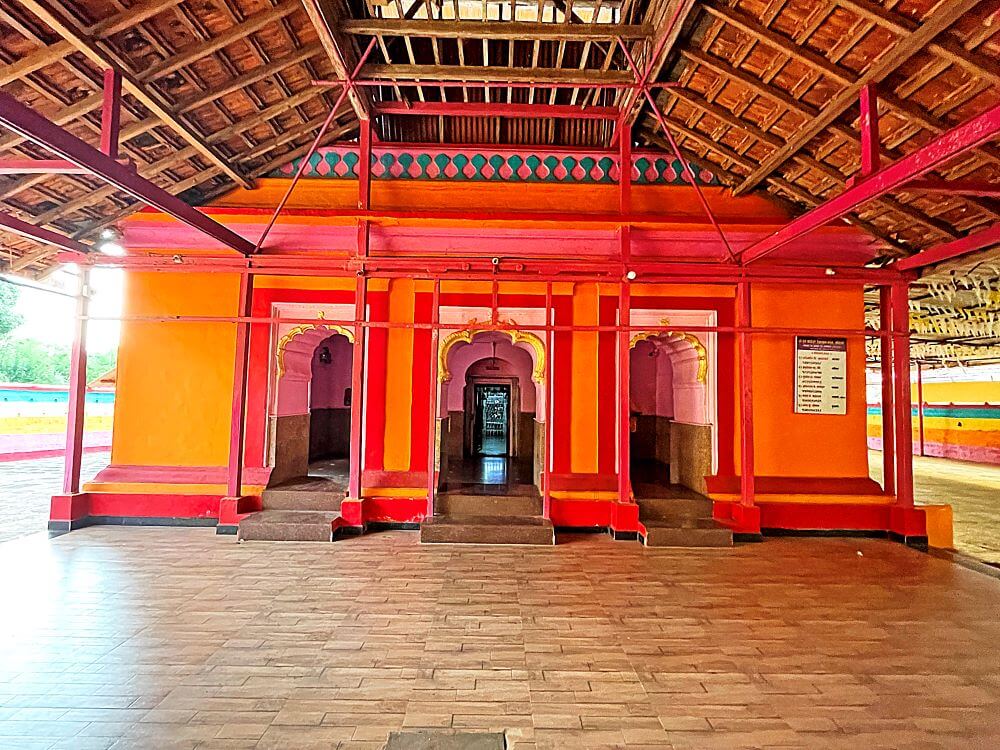
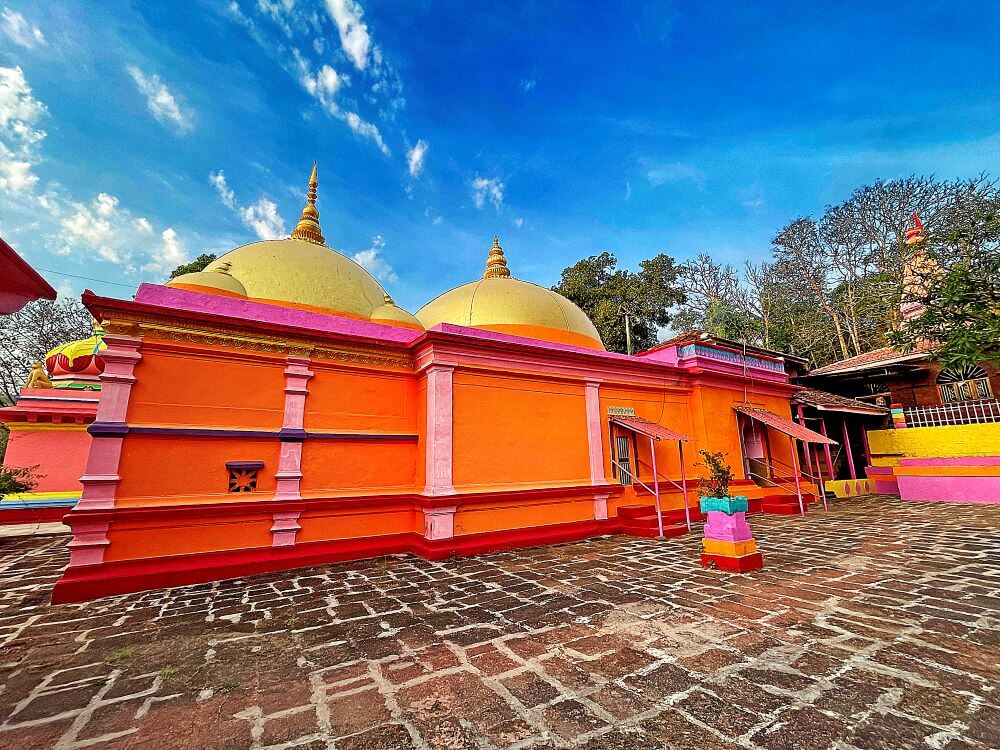
The Koleshwar Temple consists of a Darshan Mandap (viewing hall), Sabha Mandap (assembly hall), and Garbhagriha (sanctum sanctorum). The Darshan Mandap features three arches and is topped with a tiled roof. The entrance to the Garbhagriha is low in height, requiring one to bow down to enter the sanctum. one has to go there. The unique feature of this temple is the wooden canopy (meghadambari) over the linga in the sanctum sanctorum, where the sound of a lion’s roar (sinhanad) can be heard. The assembly hall (sabhamandap) and the sanctum sanctorum have hemispherical, dome-like shikhara spires. Intricate carvings can be seen on the rear wall of the sanctum sanctorum. The style of the domes of all the temples here appears to lean towards Islamic architecture. Every year, a seven-day festival is held here from Kartik Shuddha Dashami to Kartik Vadya Pratipada. On the final day, Mahaprasad is distributed to the visiting devotees. Apart from this, festivals are also celebrated in the temple on Mahashivratri, Vaikuntha Chaturdashi, and Tripuri Purnima.
Bringing water in pitchers in both hands, they carry it and pour it over the head of Lord Samba.
They listen to the sweet sound of the lion’s roar, and perform the aarti with lamps and camphor.
The fragrance of incense, the lighting of lamps, and the resonant peal of bells; by these, Lord Kuleshwar is pleased.
A local anonymous poet is found to have recorded this temple in such verses.
Koleshwar Mahadev is the Kuladaivat (family deity) of the Kokanastha Brahmin families here, including the Barve, Mail, Chhatre, Bhave, Kolhatkar, Bapaye, Borkar, Pimpalkhare, Mahajan, Lonkar, Vartak, Late, Shethe, Shendye, Joshi, Lagu, Datar, and others. Along with this temple, the village of Kolthare is home to many other temples, such as Shri Ram, Shri Dattatreya, Warebuva, Khem, the Datta Mandir in Brahmin Ali, Bapeshwar, Durgadevi, and the Ganpati temple in Sonar Ali, which is why this village is known as the ‘Village of Temples’. The Koleshwar Devasthan provides Bhakta Niwas (pilgrim accommodation) facilities for devotees. (Contact: Madhukar Anand Paranjape, Trustee, Tel: 02358 285218). Devotees can have darshan of Koleshwar from 6:00 AM to 9:00 PM.
Apart from its temples, Kolthare village is famous for its turtle conservation project. This project has been implemented here since 2005 with the cooperation of the Forest Department, nature enthusiasts, and the villagers. Nests of the ‘Olive Ridley’ species of turtles are protected along the seashore here. The famous pharmaceutical company ‘Agom’ is located in this village. Former Indian cricket team player Ajit Agarkar also hails from this same village.
This sacred temple stands as a testament to deep spiritual devotion, ancient architectural grandeur, and rich local cultural traditions.
The sanctum sanctorum houses the divine idol consecrated according to ancient Vedic traditions, surrounded by serene courtyards and traditional temple architecture.
Navratri, Maha Shivratri, Annual Temple Jatra & Deepotsav
Compare and book flights, secure top-rated local hotels near the temple, hire reliable guides, and rent cars instantly.
Extend your pilgrimage by visiting other highly sacred temples located nearby.
No other temples found nearby.
Add ₹999 more to unlock FREE SHIPPING!
Your sacred cart is currently empty.
Shop Photo FramesFill in your delivery details below to place your order.
Add comment