
Add ₹999 more to unlock FREE SHIPPING!
Your sacred cart is currently empty.
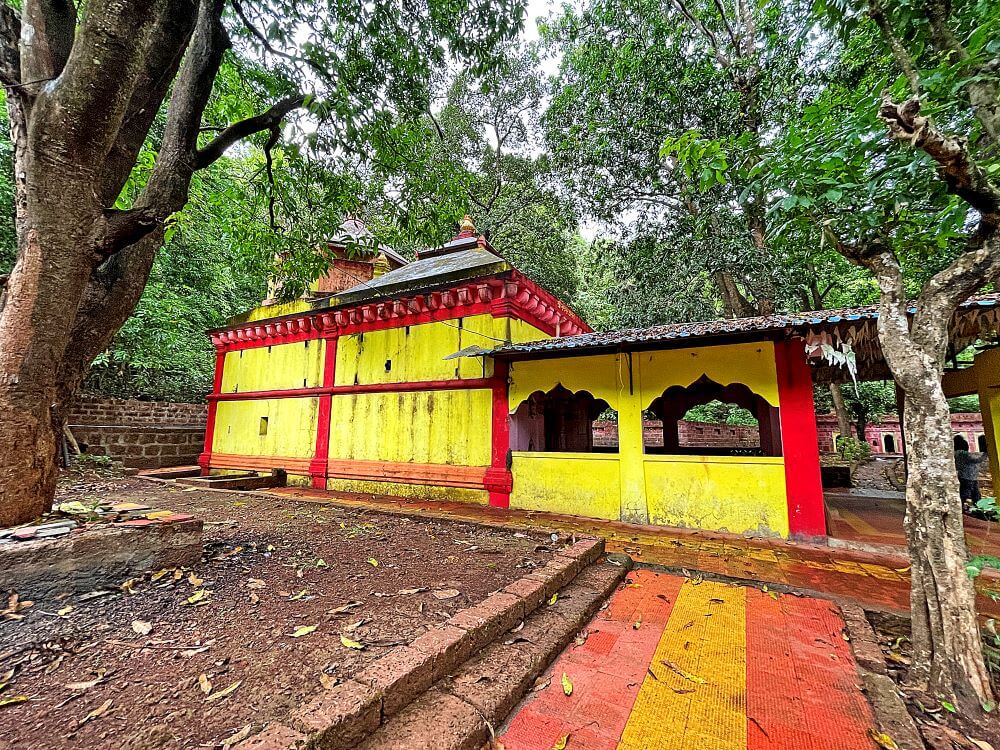
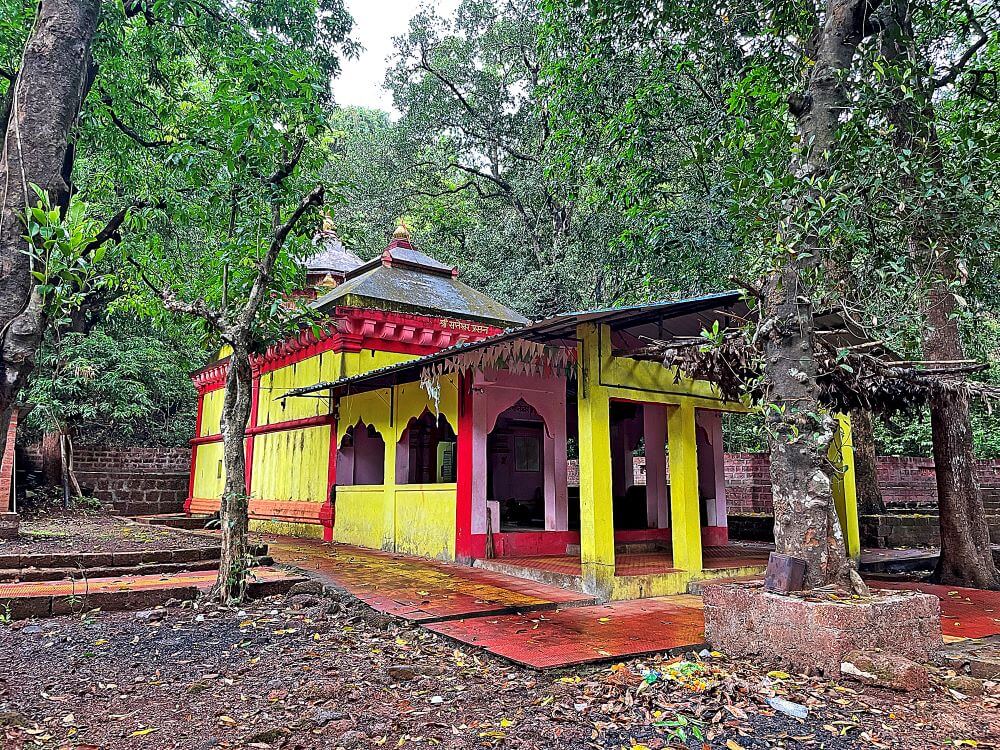
Shop Photo FramesThe Sapteshwar Temple in the village of Sangameshwar (District Ratnagiri), known as the Ramkshetra of the Konkan region, is one of the ancient Shiva temples of Maharashtra. The Swayambhu Mahadeva resides within a dense sacred grove (Devrai). The site of Sapteshwar is an excellent example of ancient water management from the medieval period. Many devotees and tourists visit this place to experience the profound silence and to witness the ancient water management system. The main attraction here is a reservoir where the water from seven springs converges; hence, the temple at this site is called the Sapteshwar Temple.
Sangameshwar, the confluence of the Alaknanda, Varuna, and Shastri rivers, is known as a town of ancient temple clusters. Many of these ancient temples still exist today. One of them, the Sapteshwar Temple, is mentioned to have been built by the Vakataka kings during the Shilahara regime in the twelfth century. The place is known as the abode of the Lord of the seven streams, i.e., Lord Sapteshwar. In ancient times, there were eight Tirthas (sacred water bodies) in the eight directions of the Kasba Sangameshwar region: Kamalja, Goshpad, Agasti (also known as Sapteshwar), Gautami, Ekvira, Varun, Malhari May, and Gauri. It is believed that by consuming the water of the Gautami Tirtha, one attains Brahmaloka after death. The Sapteshwar Tirtha in the south is also considered sacred. The ‘Sangameshwar Mahatmya’, a text written by Kaviraj Shesha in the court of King Karna, describes these temples and mentions the greatness of Sapteshwar.
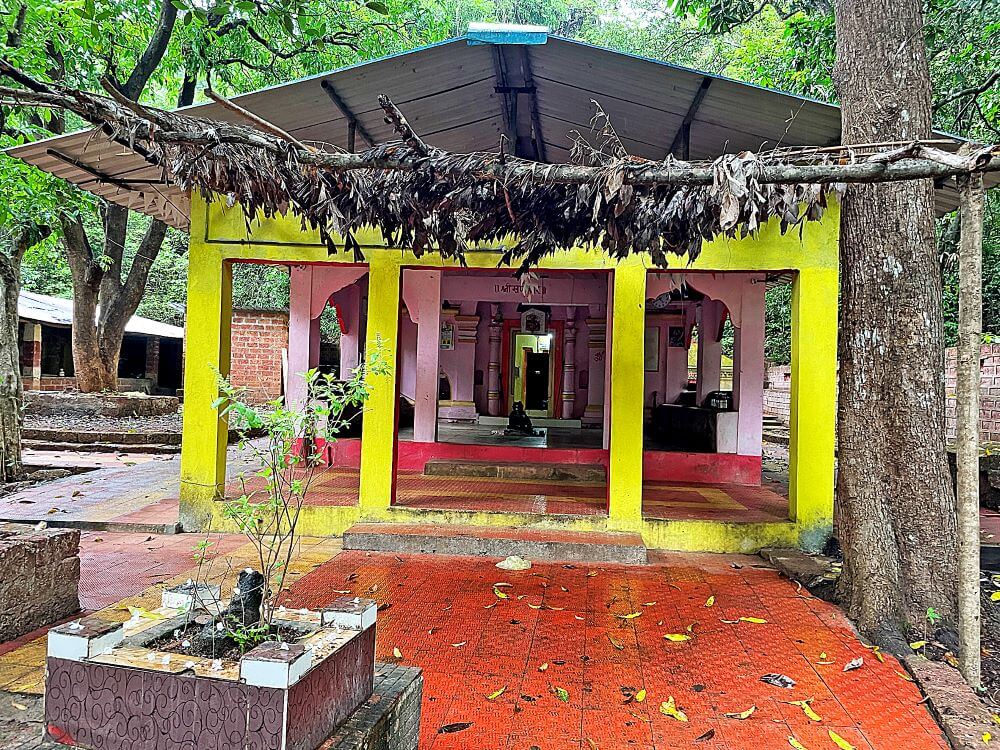
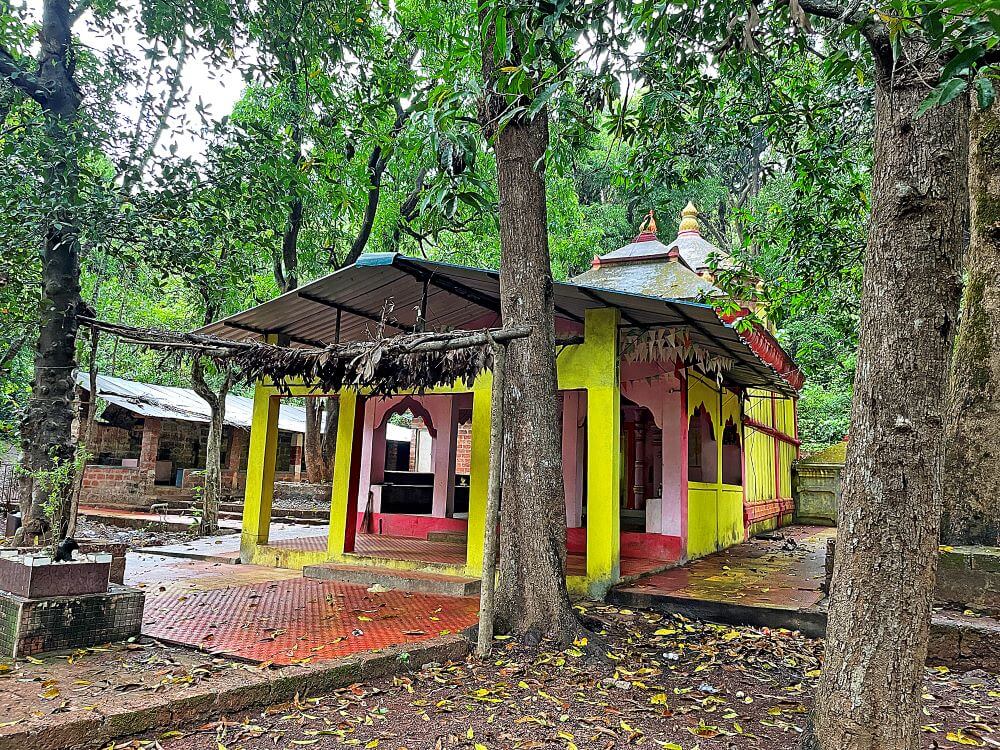
While traveling from Sangameshwar towards the Kasba, the road to the right in front of the Dhanvantari Hospital leads to this temple. One can reach the temple via a ghat-like road shaded by lush green trees. There is a small stream near the temple, and after crossing the check dam over it, one enters the temple premises. The temple is enclosed by a laterite stone wall. One can experience profound silence in the temple area. In front of the temple, there is a stone lamp pillar (Deepastambha) and a Tulsi Vrindavan. There is a small stone idol of Nandi in the Tulsi Vrindavan.
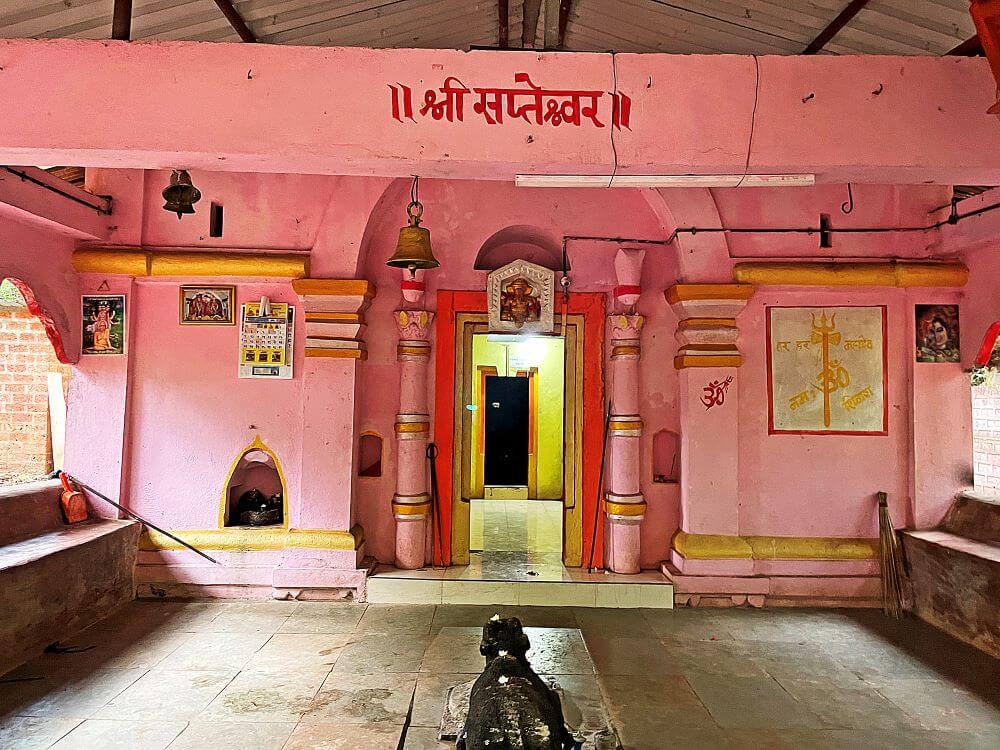
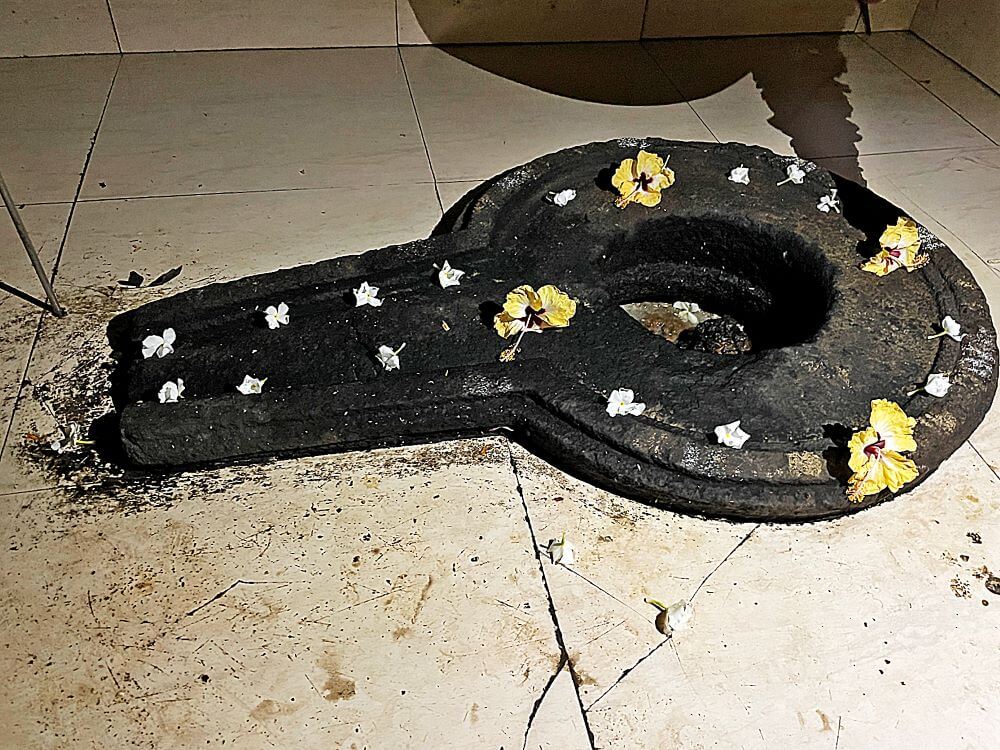
This west-facing temple is structured with a Sabhamandap (assembly hall), Antarala (vestibule), and Garbhagriha (sanctum sanctorum). The Sabhamandap is in the form of an Ardhamandap and has stone benches two to two and a half feet high along the sides. In the center of the Sabhamandap is an idol of Nandi carved from a single stone. On the lintel of the doorway to the Antarala, there is a small idol of Ganesha. On the pillars near the doorway, there are two sculptures of horse heads. In the Antarala, there is an idol of Ganesha in a niche on the right. The Garbhagriha contains the Sapteshwar Pindi carved from a single stone. This Pindi does not have a Shiva Linga, but instead, there is a hollow space one foot deep and one foot in diameter. It contains four to five small stone elevations and always holds water. In a niche here, there is a stone idol of Parvati. According to the local customs, women are not permitted to enter this Garbhagriha. Adjacent to this temple is a small temple of Vaijanath.
The two reservoirs near the temple, the sturdy seven-arched chambers (rooms) made of dressed stone behind them, and the water management system here are excellent examples of ancient architecture. The influence of Islamic architecture is visible in the construction. Two of the seven arches are larger in size. The walls of the arches are carved with floral motifs, lotuses, moths, and Vyala (mythical creatures) sculptures. Niches are also carved into the arches, where lamps were lit in ancient times. Lime was used for the construction of these arches and chambers. The stone mill used for grinding the lime is also present in the temple premises. There are two stone Shiva Pindis in these chambers.
The Alaknanda River originates on the mountain here. Its water reaches the back of the temple through seven springs. The water from these springs is collected through channels designed in an English T-shape and at right angles, and then flows through stone conduits into a channel in the center of the chambers. From there, the water flows into a small reservoir outside the chambers. This water is used for drinking and ritual purposes. This water then flows through a Gomukh (cow-mouth spout) on a multi-faced Shiva Linga into a large reservoir measuring thirty feet in length and width. This reservoir contains a large number of Nivalya (small fish). It is believed that a water body containing Nivalya is always clean. There are stone steps on all four sides to descend into this reservoir. Once this reservoir is full, the water flows underground into a second adjacent reservoir, from where the stream joins the river. Both these reservoirs are constructed of laterite stone.
According to a record, Chhatrapati Shivaji Maharaj had granted the villages of Kondkule, Visun, Kevle, Phansop, Turav, and Parchuri as an Inam (gift) to the grandfather of Ramchandra Bhat bin Keshavbhat Pandit for reciting the Ramayana at the Sapteshwar Temple. A fair is held at this temple on the day of Bhogi, i.e., Sankranti. On this day, there is a tradition of pouring water from the reservoir over the Gomukh using a pitcher. The Mahashivratri festival is also celebrated here on a grand scale. During this time, thousands of devotees come to seek the blessings of Sapteshwar. There is a Hanuman temple on a small hill near the temple. Devotees who come for the darshan of Sapteshwar also make it a point to visit Hanuman.
This sacred temple stands as a testament to deep spiritual devotion, ancient architectural grandeur, and rich local cultural traditions.
The sanctum sanctorum houses the divine idol consecrated according to ancient Vedic traditions, surrounded by serene courtyards and traditional temple architecture.
Navratri, Maha Shivratri, Annual Temple Jatra & Deepotsav
Compare and book flights, secure top-rated local hotels near the temple, hire reliable guides, and rent cars instantly.
Extend your pilgrimage by visiting other highly sacred temples located nearby.


Add ₹999 more to unlock FREE SHIPPING!
Your sacred cart is currently empty.
Shop Photo FramesFill in your delivery details below to place your order.
Add comment