
Add ₹999 more to unlock FREE SHIPPING!
Your sacred cart is currently empty.
Shop Photo FramesNestled in the lap of mountains on all sides, the village of Jambhrun in Ratnagiri district is famous not only for its petroglyphs but also for its temples, which hold a history of approximately ૪૫૦ years. Known as a village of streams and hamlets, the nature-rich Jambhrun is home to these temples, which are excellent examples of the ancient architectural style of the Konkan region. The temple of the Kulswami Swayambhu Ratneshwar located here is considered a highly awakened and powerful site. Ratneshwar is the family deity of the Devarukhe Brahmins. It is said that there are only three temples of Ratneshwar in the entire country that face south, and this temple in Jambhrun is one of them.
On the Mumbai-Goa Highway, near Hathkhamba close to Ratnagiri, the Kotawade Phata connects to the Niwali-Ganpatipule road. Turning left from there, one arrives at Jambhrun. The perennial river flowing through the village, living springs, terraced rice fields on the mountain slopes, red soil paths, and charming Konkani-style tiled houses delight the mind. Embraced by the greenery of mango, jackfruit, coconut, and areca nut orchards, this village is home to as many as five ancient temples. Excluding the temple of the village deity Ravalnath, the four temples of Ratneshwar, Lakshmitrivikram, Radhakrishna, and Tameshwar-Vishweshwar are owned by the Shitut family of the village. These temples were built by Antaji Shitut and his brothers. During the Peshwa era, the village revenue could not be collected. When Antaji collected it, the Peshwas gifted this village to him and even granted him permission to mint his own currency. That coin was known as the Antushahi Rupee.
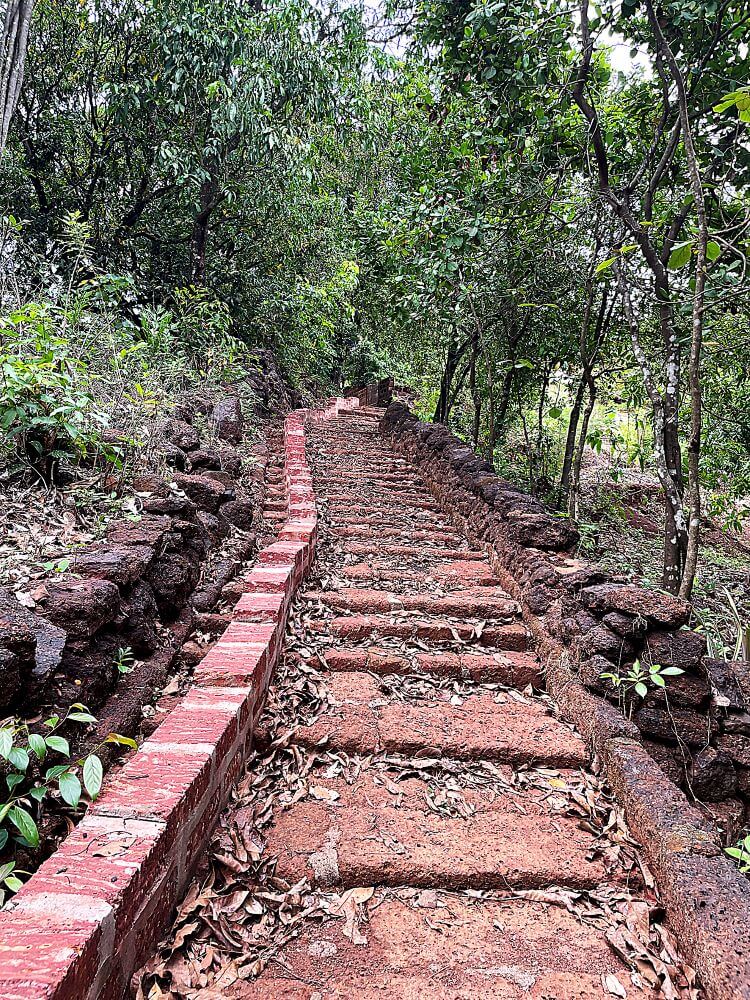
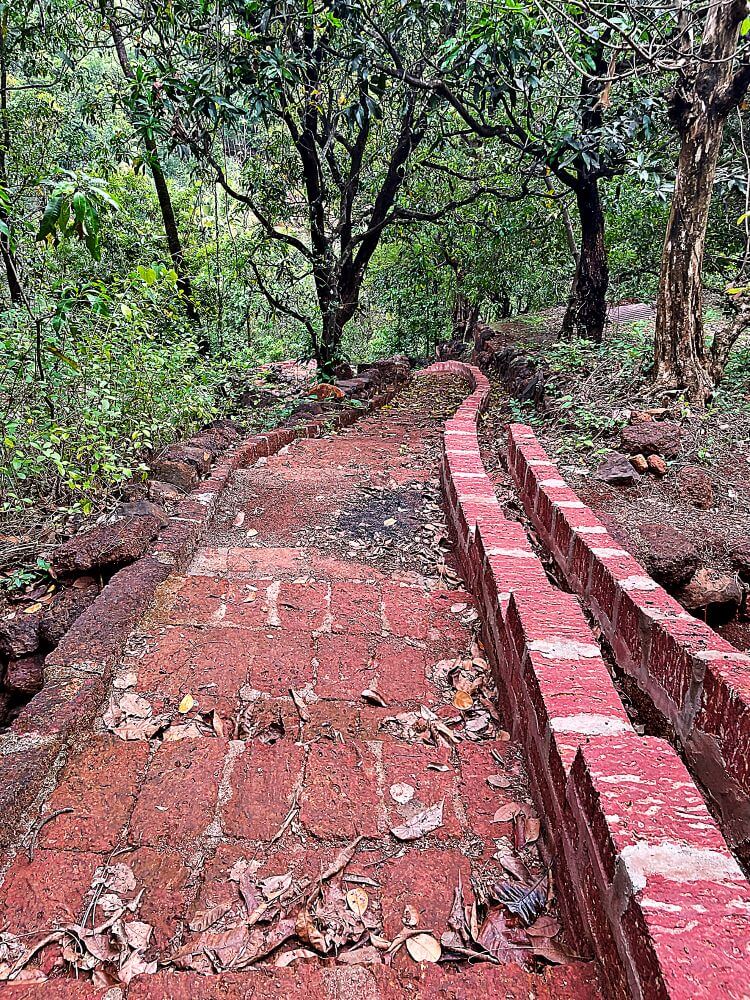
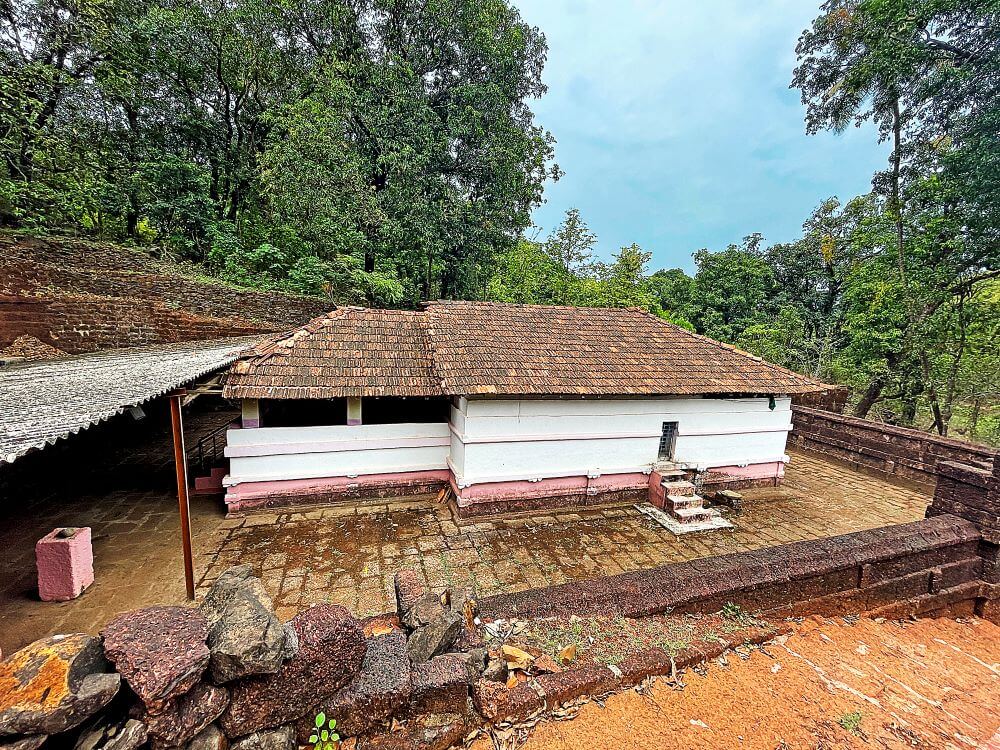
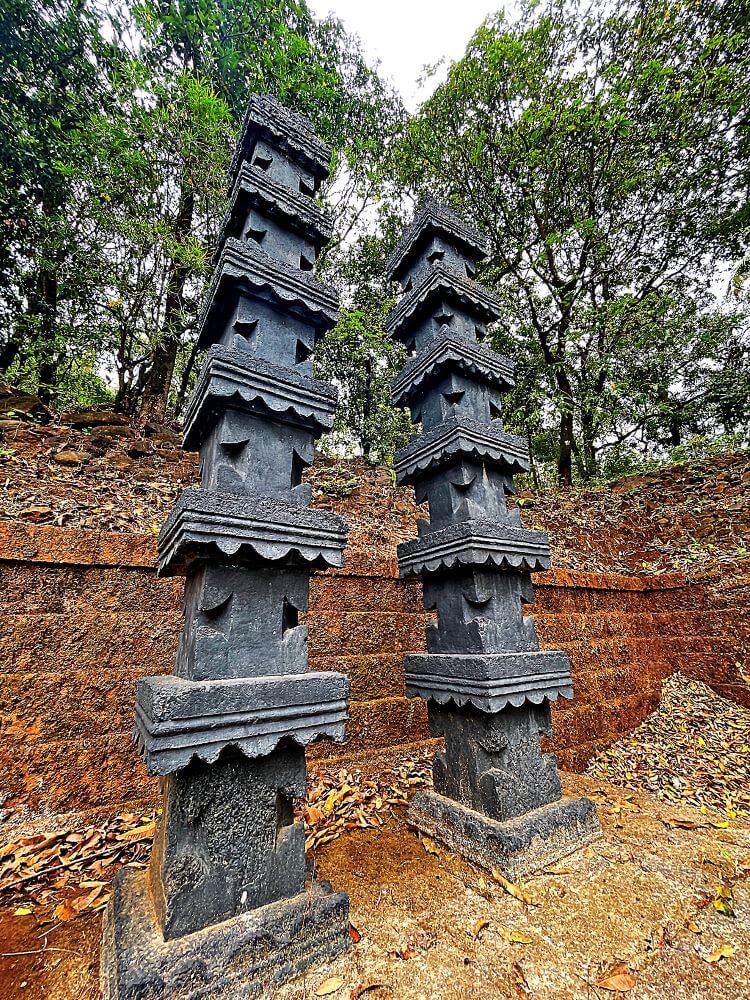
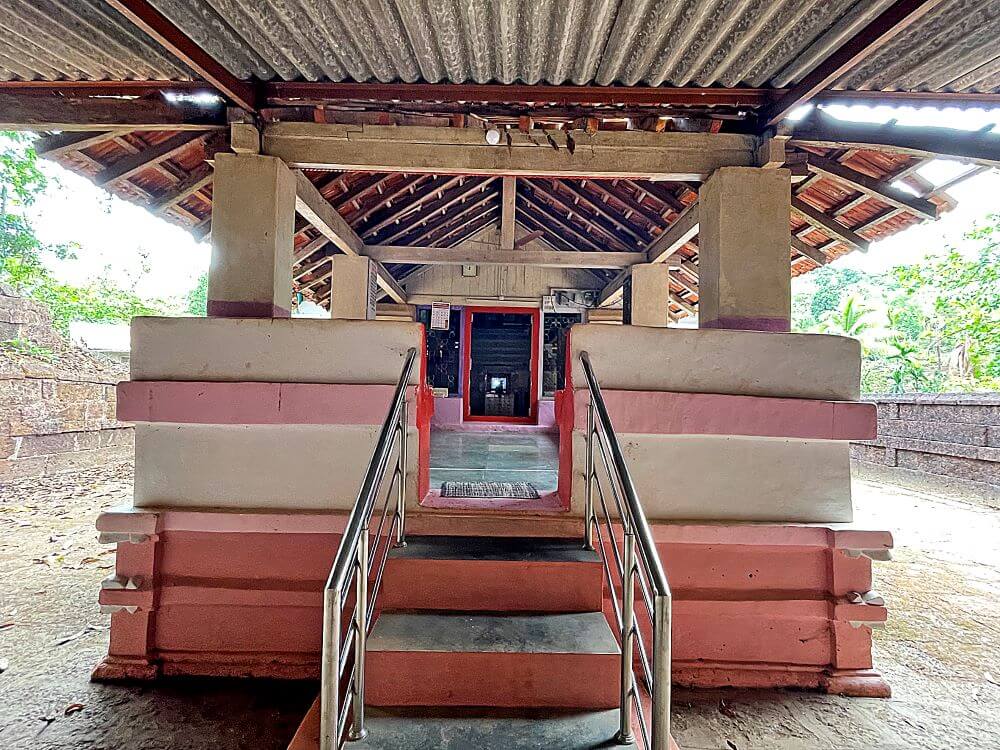
The temple of Ratneshwar, the family deity of the Shitu family, is situated on the mountain slope here. There is a paved path made of laterite stones to reach this temple. Built with a solid embankment on the slope, this temple is enclosed by a fortification of laterite stones. A unique feature here is that the stones (laterite) of this fortification are one and a half to three feet wide, and small shrines have been carved directly into them. The temple The temple features a sprawling courtyard. This tiled-roof temple, comprising a Sabhamandapa (main hall), Antarala (vestibule), and Garbhagriha (sanctum sanctorum), is situated on a plinth approximately three feet high. Near the entrance of the temple stand two ancient Deepmalas (lamp towers). A tin shed has been erected from there up to the Sabhamandapa for the convenience of the devotees. The Sabhamandapa is of the Ardhamandapa style, with stone benches (Kakshasanas) provided on all three sides for devotees to sit. In the Antarala, in front of the Garbhagriha, there is a beautiful idol of Nandi on a raised platform, and a small Shiva Linga in front of it. Adjacent to the door frame of the Garbhagriha, there is an idol of Ganesha on the left side, and a brass idol of a serpent near a pillar on the right side. Inside the Garbhagriha, there is a Swayambhu (self-manifested) Shiva Linga carved from a single stone. Behind it, in a niche in the wall, is an ancient idol of Mahishasuramardini.
It is said that the Lakshmi Trivikrama temple here is also about 450 years old. There is a record of a woman with the surname Dhape making arrangements for water here in 1611. From this, it is understood that the temple existed even before that time. 30 years ago, this The temple had undergone renovation. Situated in the midst of coconut and areca nut groves, this temple is enclosed by stone fortifications. Within the temple premises, there is an idol of Garuda and an idol of Hanuman nearby. The architecture of this temple is similar to that of the Ratneshwar Temple. The assembly hall here also features stone benches for devotees to sit. In the inner sanctum, adjacent to the hall, there is a Shiva Linga in the niche on the left side, and an idol of Lord Ganesha in the niche on the right.
In the sanctum sanctorum, there is an idol of Lakshmi-Trivikrama carved in white marble. Lord Vishnu, mounted on Garuda, holds the lotus, conch, mace, and discus in His hands. Goddess Lakshmi is seated on His left side, and beneath this idol is Sheshnaga. It is said that this idol was brought from Rajasthan in exchange for three gold coins. A festival is held at this temple for three days, from the tenth to the twelfth day of the bright fortnight of Kartik. During the festival, Mahapuja, Aarti, and Bhajans are performed. On this occasion, the traditional dance known as Bhovtya is presented here by the villagers. On the final day of the festival, there is a Mahaprasad.
The Tameshwar-Vishweshwar temple in the village is also enclosed by a fortification wall made of laterite stone. The construction of the Tameshwar temple, as well as its main interior pillars, is made of stone. The dome of this temple resembles that of a mosque. Inside the temple, there is an idol of Nandi carved from a single piece of stone. In the sanctum sanctorum of the Tameshwar temple, there is a Shiva Linga and behind it, a Shiva face. One can enter the Vishweshwar temple through a small door adjacent to this temple. In this temple, also made of laterite stone, there is a Shiva Linga and a Shiva face with a serpent hood. Outside the temple, there is also an elegant idol of Lord Ganesha.
The temple of the village deity, Ravalnath, is also four hundred years old. Within the premises of this tiled-roof temple, which is enclosed by a laterite stone wall, stand two lamp towers and a Tulsi Vrindavan. The construction of the assembly hall makes extensive use of wood, and the pillars here are adorned with exquisite craftsmanship. On a central platform, there are idols of Ravalnath in the middle, flanked by the three-faced Waghjai, Chandika, and Adishti goddesses. Festivals such as Narali Purnima, Holi, and Dev Diwali are celebrated here. During these festivities, processions of the deities are carried out in palanquins.
The village of Jambhrun is known as the village of water channels and stone pathways. It is said that these pathways (stepped walkways made of laterite stone) have existed since the village was first established. Many years ago, the villagers diverted water from a mountain spring into the village. From this perennial spring, 21 water channels were created. The water from these channels flows alongside many houses in the village and even passes beneath some of them. This water is used for both agriculture and drinking. The petroglyphs in this village, which is included in the tentative list of UNESCO World Heritage Sites, hold great historical significance. Here, approximately 50 figures are carved onto a rock surface measuring 25 meters by 25 meters. Among these, there are human figures at eight locations, while the others represent aquatic and four-legged animals. At one spot, there are nine human figures; one of them is eight feet tall, while the others are five feet tall. Some of the animals and birds carved here are no longer found in the Konkan region. They have distinct circular shapes on their heads. There are eight wells in the area where the petroglyphs are located, which leads to the estimation that a human settlement must have existed there in the past.
This sacred temple stands as a testament to deep spiritual devotion, ancient architectural grandeur, and rich local cultural traditions.
The sanctum sanctorum houses the divine idol consecrated according to ancient Vedic traditions, surrounded by serene courtyards and traditional temple architecture.
Navratri, Maha Shivratri, Annual Temple Jatra & Deepotsav
Compare and book flights, secure top-rated local hotels near the temple, hire reliable guides, and rent cars instantly.
Extend your pilgrimage by visiting other highly sacred temples located nearby.


Add ₹999 more to unlock FREE SHIPPING!
Your sacred cart is currently empty.
Shop Photo FramesFill in your delivery details below to place your order.
Add comment