
Add ₹999 more to unlock FREE SHIPPING!
Your sacred cart is currently empty.
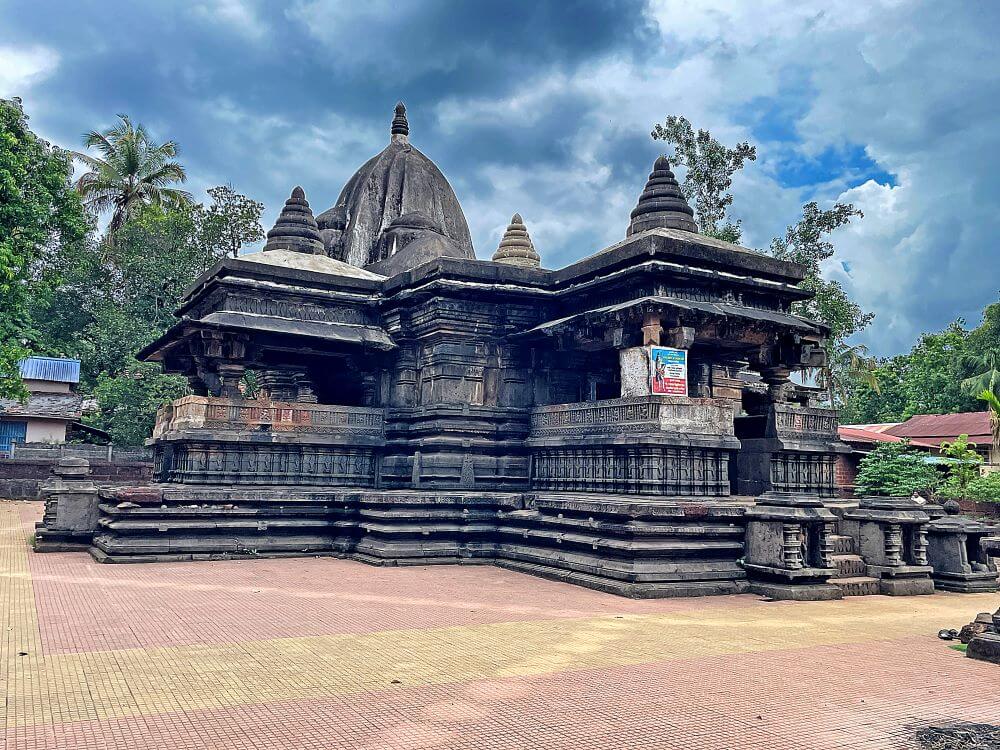
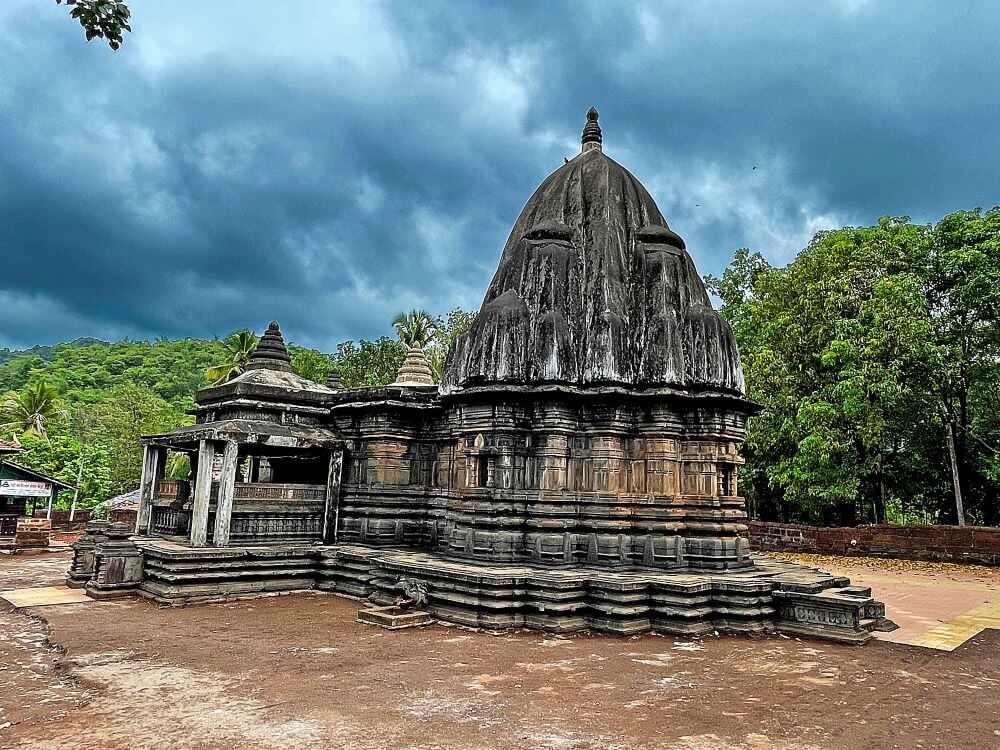
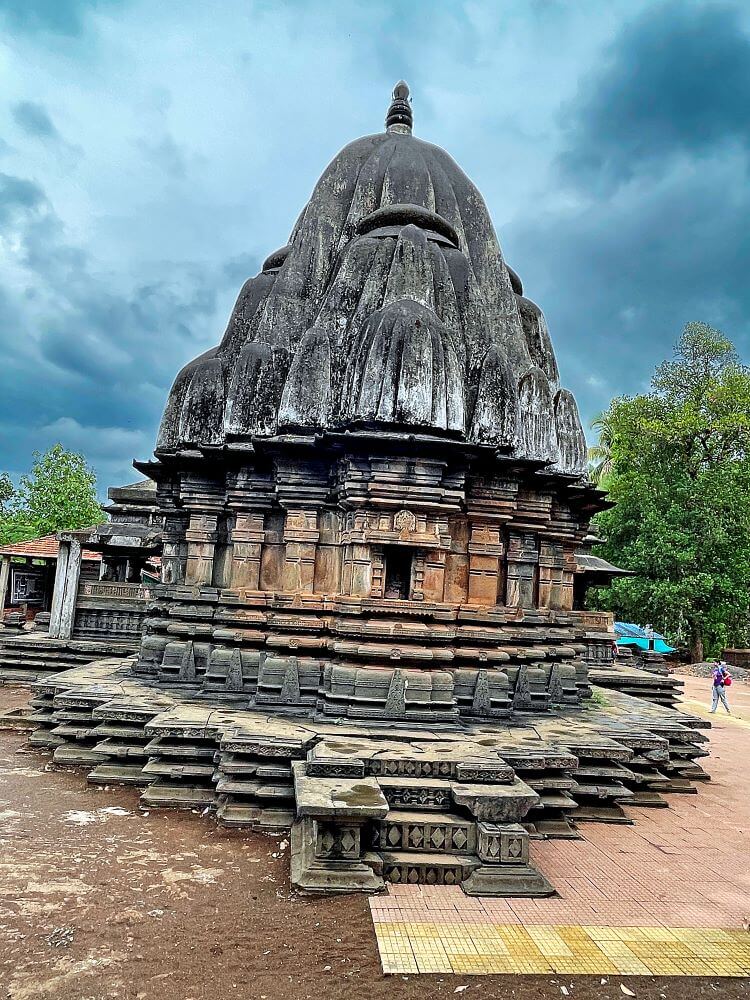
Shop Photo FramesSangameshwar is situated in the Ratnagiri district of Konkan at the confluence of the Alaknanda, Varuna, and Shastri rivers. The Karneshwar Temple, located near this confluence, is counted among the famous religious sites of the state. It is said that between 1075 and 1095 AD, King Karnadeva of the Chalukya dynasty had his capital at Sangameshwar. During his reign, a massive fortification was built around the village, and many temples and palaces were erected. As King Karna built this temple, it became famous as the Karneshwar Temple. In 2012, this temple was declared a state-protected monument by the Archaeological Department.
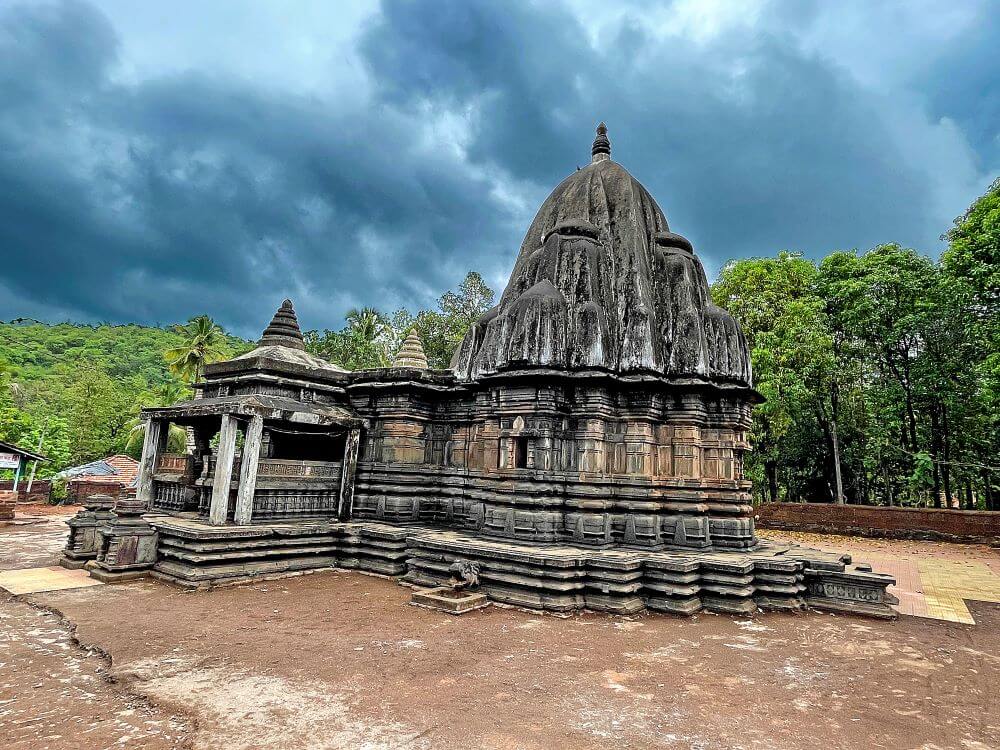
According to historical records, before the era of Chhatrapati Shivaji Maharaj, Sangameshwar was famous throughout the country as a ‘Ramkshetra’ (a sacred place of Lord Rama) and a ‘Vidyanagari’ (city of knowledge). In the nearby village of Shringarpur, there was the largest center of learning in the country at that time. Many saints, sages, and students from across the nation would come here for their studies. The Sahyadri Khand also mentions this region as a Ramkshetra. It is said that in ancient times, there were over 350 temples in this area; now, only 30 remain. While some believe King Karna of the Chalukya dynasty built this temple, others believe the Pandavas built it in a single night during their exile, naming it after their eldest brother, Karna. Because the Pandavas had to leave the place before sunrise, the work on the temple’s shikhara (spire) remained incomplete.
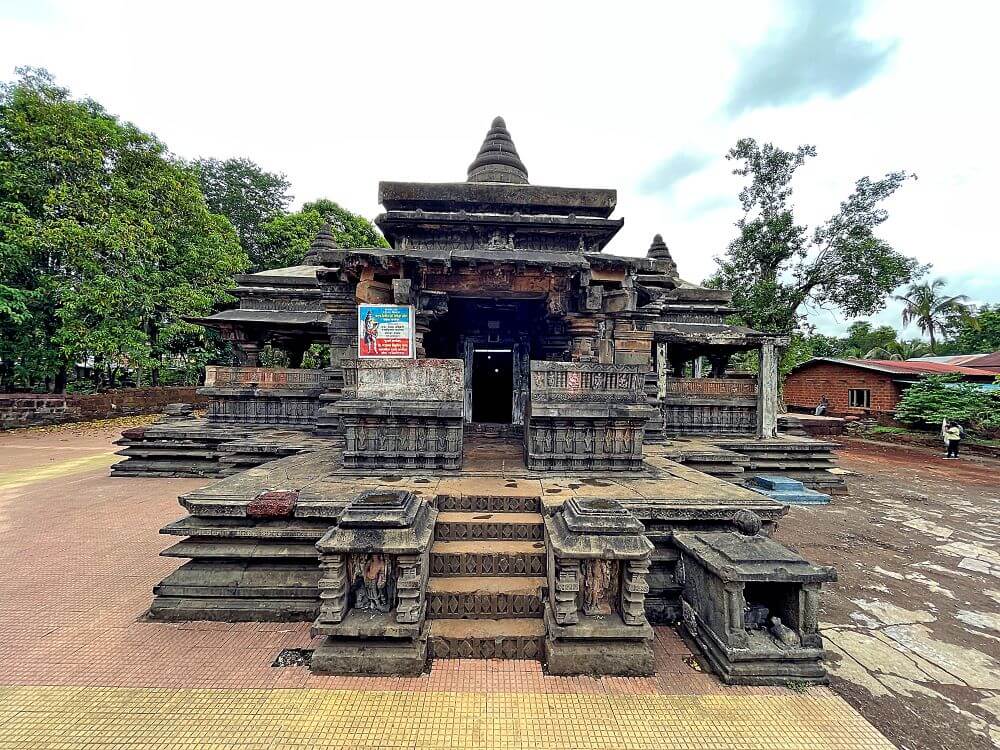
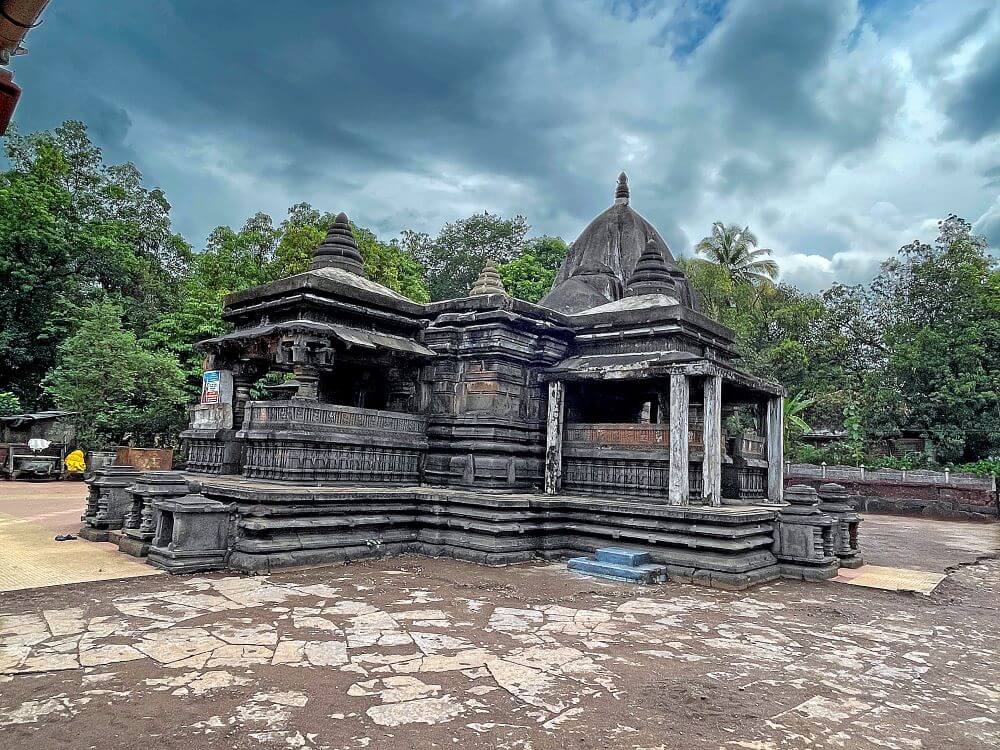
The Karneshwar Temple is surrounded by a strong fortification with entrances on the east and west sides. The east-facing temple stands on a three-foot-high plinth. Along this plinth is a two-meter-wide path for circumambulation (pradakshina). The temple, which features a 16-cornered spire with five domes, has three main halls (mukhamandapas) and entrances on three sides. Below the steps of the eastern mukhamandapa, there are two small shrines housing idols of Ganpati and Nritya-Parvati. Ascending five steps from there, one enters the main mukhamandapa. On both sides of the hall are ‘kakshasanas’ (stone benches) about five feet high, flanked by ‘vaman-stambhas’ (half-pillars). The outer sides of the kakshasanas are carved with small sculptures, including deities as well as musicians and dancers. In the center of the ceiling, a stone chandelier is carved, surrounded by depictions of the Samudra Manthan (churning of the ocean) and the Dashavatara. The pillars, door frames, and walls of the mukhamandapa are also intricately carved.
The sabhamandapa (assembly hall) contains an idol of Nandi carved from a single stone, and the circular pillars are adorned with carvings. Uniquely, instead of the commonly seen load-bearing Yakshas, the tops of these pillars feature sculptures of Shiva and Ganesha. A yantra is carved onto the ceiling of the sabhamandapa. It is said that in the past, an echo of mantras could be heard from this yantra, though this phenomenon has since ceased. Brahma and Vishnu are carved on both sides of the sanctum sanctorum (garbhagriha). On the path from the sabhamandapa to the garbhagriha, a beautiful rangoli is carved into the stone floor. From there, one enters the antarala (vestibule). Above the entrance to the garbhagriha in the antarala, there is a replica of spires with Sheshashayi Vishnu in the center. The garbhagriha houses the Linga of Karneshwar and an idol of Parvati.
On the exterior of the temple, there is a ‘magarmukh’ (crocodile-faced spout) for the drainage of water from the sanctum. In front of the temple, on a high platform, stands a stone lamp pillar (deepstambha) and a small shrine. Behind the temple is a Sun Temple. The idol of the Sun God in this small shrine is in a standing position, with the zodiac signs carved into the halo (prabhaval) surrounding the idol. Directly in front of it is a Ganpati temple with an idol reminiscent of the Ganpati of Wai. This Ganpati idol is four and a half feet tall, four-armed, and painted with oil colors. In one of the right hands, the deity holds a parshu (axe), while the other hand rests on the knee. In the upper left hand is an ankusha (goad), and in the lower left hand is a modak, which the trunk is shown lifting. Both legs of this Ganesha are bent at the knees.
Located 50 meters from the Karneshwar Temple is the Shri Laxmi-Nrusimha Temple, which is mentioned in the ‘Sangameshwar Mahatmya’ text. The idol of Nrusimha here is four-armed and seated in a cross-legged position. Goddess Laxmi is seated on his left thigh; Nrusimha’s left hand is on her back, while his other left hand holds a conch. His upper right hand holds a discus (chakra), and his lower right hand rests on his right knee. A grand festival for Nrusimha Jayanti is celebrated here on Vaishakh Shukla Chaturdashi.
This sacred temple stands as a testament to deep spiritual devotion, ancient architectural grandeur, and rich local cultural traditions.
The sanctum sanctorum houses the divine idol consecrated according to ancient Vedic traditions, surrounded by serene courtyards and traditional temple architecture.
Navratri, Maha Shivratri, Annual Temple Jatra & Deepotsav
Compare and book flights, secure top-rated local hotels near the temple, hire reliable guides, and rent cars instantly.
Extend your pilgrimage by visiting other highly sacred temples located nearby.


Add ₹999 more to unlock FREE SHIPPING!
Your sacred cart is currently empty.
Shop Photo FramesFill in your delivery details below to place your order.
Add comment