
Add ₹999 more to unlock FREE SHIPPING!
Your sacred cart is currently empty.
Shop Photo FramesThe Naikba Temple, situated on a hill in Banpuri within the Patan taluka, is a revered place of faith for countless devotees from Maharashtra and Karnataka. Naikba is considered an avatar of Lord Mahadeva. Renowned as a deity who is ever-vigilant and grants the wishes of devotees, the annual fair held on Gudi Padwa is one of the largest in the district, attracting two and a half to three lakh devotees for darshan. Recognizing the deep faith of the people and the significant number of pilgrims visiting the shrine, the state government has honored the temple by granting it ‘B’ grade pilgrimage site status.
The legend of Lord Naikba states that at the foothills of Banpuri village lies a village named Janugadewadi. A shepherd girl named Krishnamai from that village was a devoted follower of Lord Naikba. Every day, after letting the cattle graze on the hill, she would become immersed in devotion to Naikba. Once, she noticed that a cow from the herd would wander away into the hills. As this happened repeatedly, Krishnamai followed the cow and saw it releasing a stream of milk over a stone. Seeing a cow that had never calved releasing milk, Krishnamai became convinced that the Divine resided there. She prayed to the Lord, “O Lord, please grant me your darshan.” Following her earnest request, Lord Naikba manifested from that stone, blessed her, and told her, “Keep walking forward without looking back, and you shall attain salvation.”
After walking some distance, Krishnamai felt a large stone rolling towards her from the hill behind. Just as the stone was about to hit her, she invoked the name of Naikba and touched the stone, causing it to stop instantly; however, because she looked back, Krishnamai vanished into that very stone. Today, her temple stands where she disappeared. The large stone over which the cow poured milk is kept in the sanctum sanctorum of the Naikba Temple as a symbol of the Lord. It is customary to have darshan of Krishnamai at the foothills before proceeding for the darshan of Naikba.
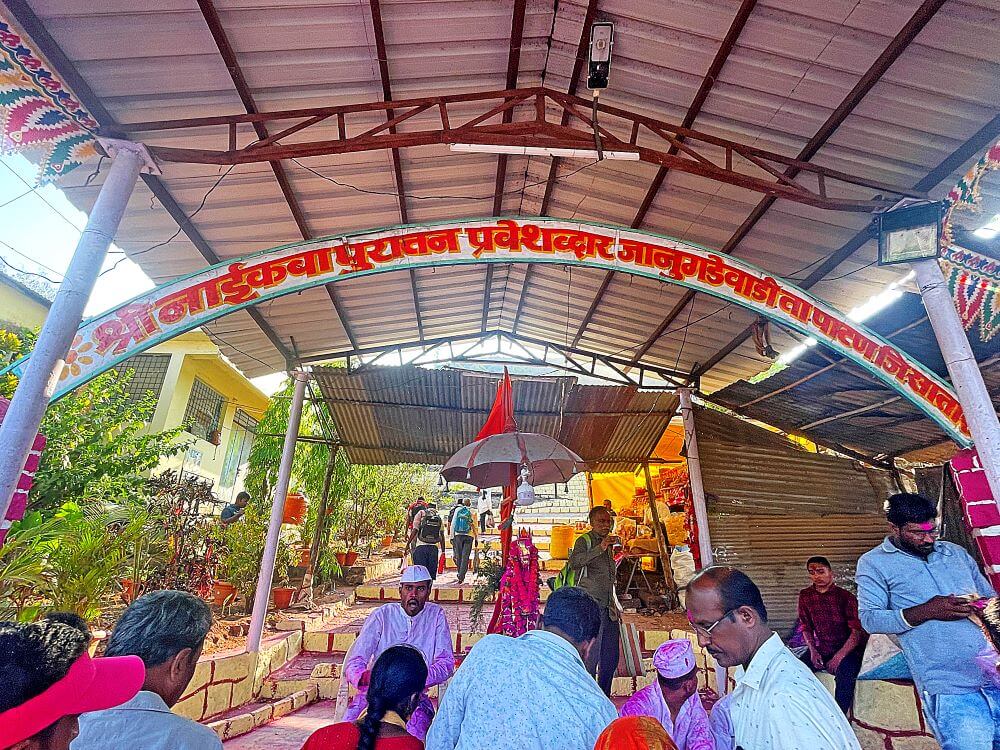
There are two ways to reach the Naikba Temple: the old stairway path and a newly constructed asphalt road. The stairway path begins from Janugadewadi village. There is an entrance arch, beneath which stands a brass horse of Lord Naikba. About 50 meters from there is the temple of Krishnamai. Here, the idol of Krishnamai is placed in front of a large stone on which an image of Krishnamai is etched. It is said that the darshan of Naikba is incomplete without first seeking the blessings of Krishnamai. A little further from the Krishnamai temple, on the stairway path, lies the temple of Jiveshwar Maharaj. It is believed that he was created from the tongue of Lord Mahadeva. Jiveshwar Maharaj is the family deity (Kuldaivat) for many families of the Sali community here. A short distance from this temple is an ancient Naikba temple, where some rocks smeared with vermilion are worshipped as symbols of Naikba.
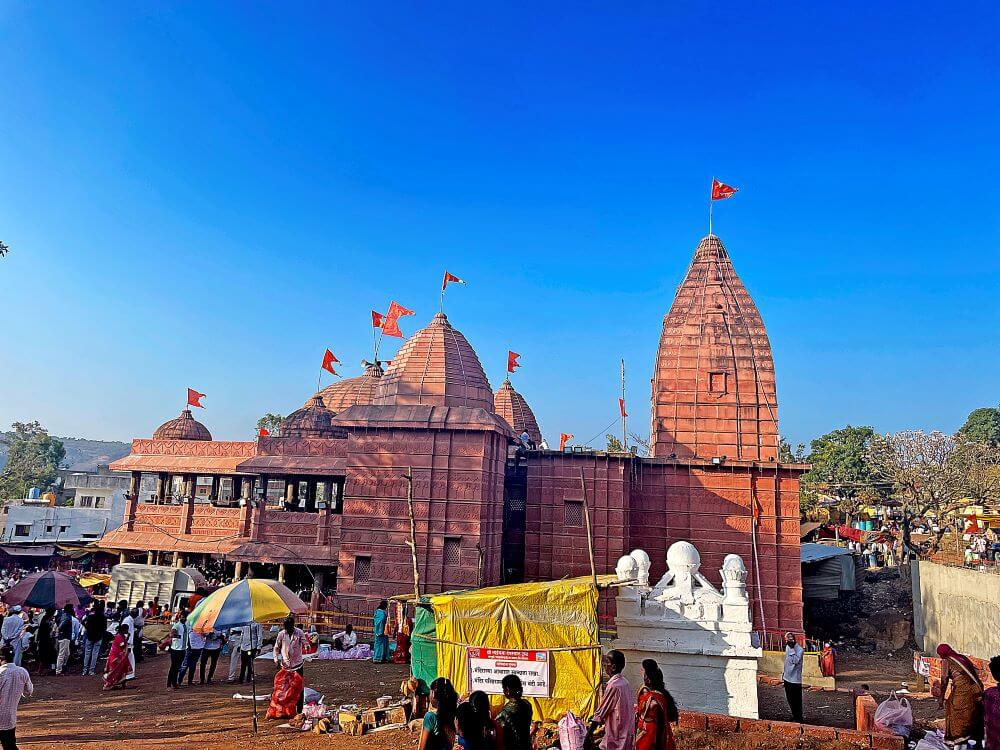
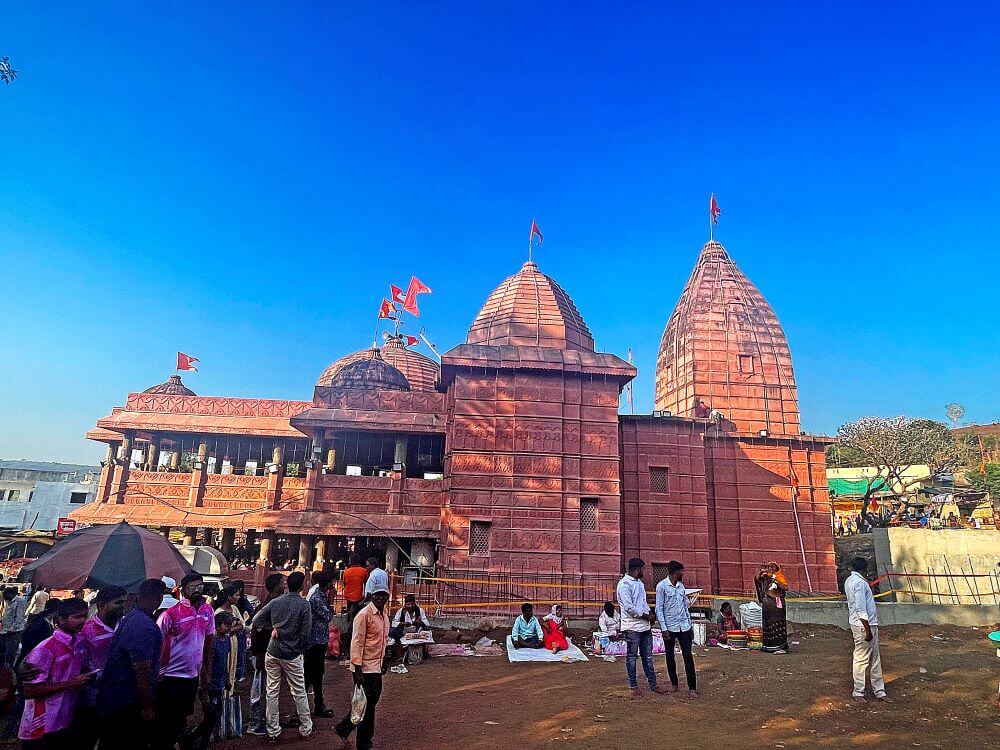
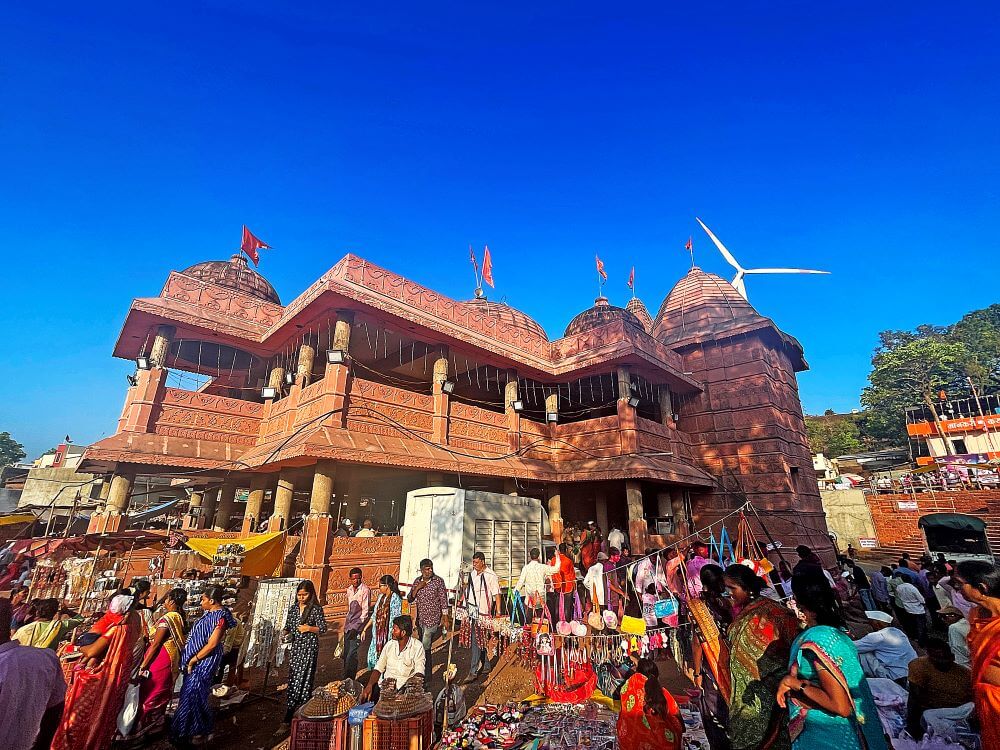
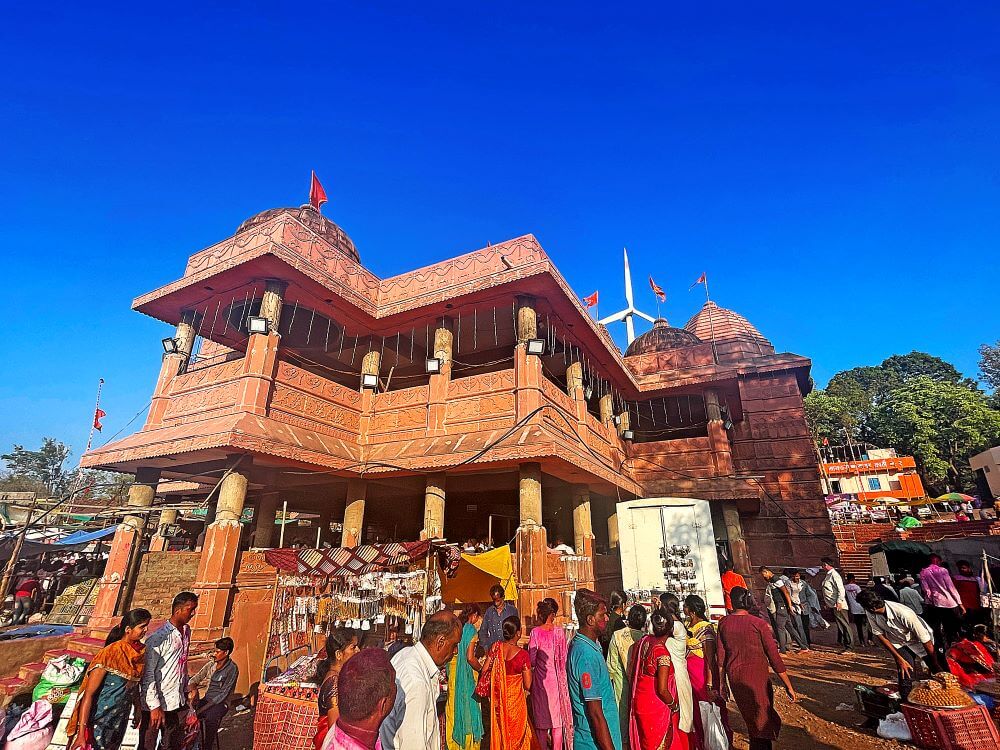
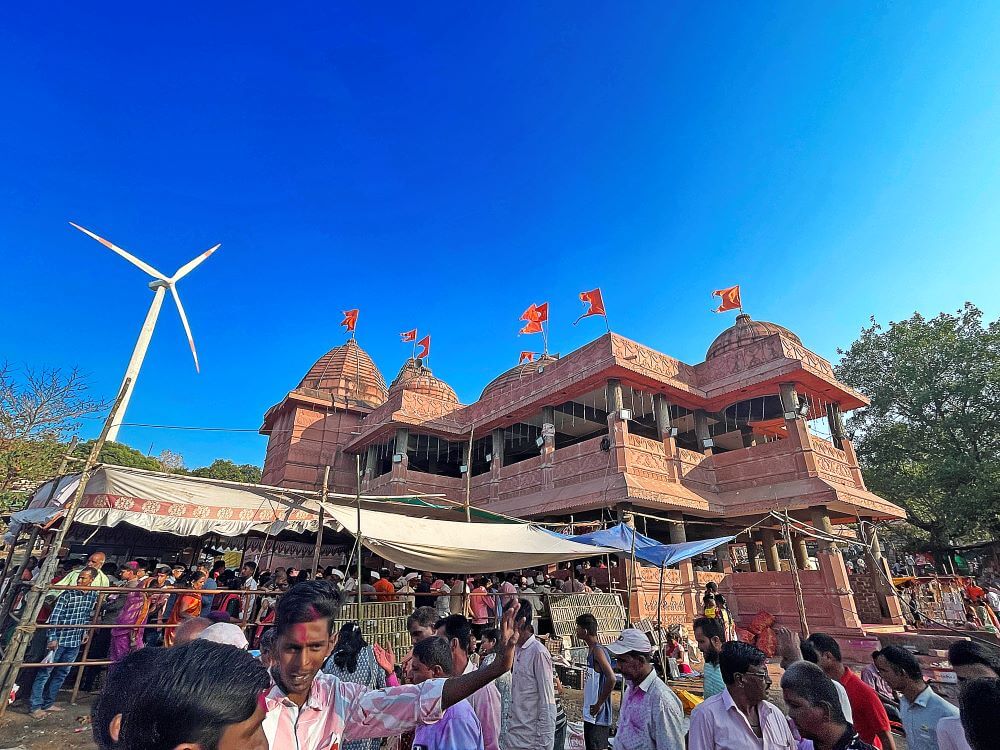
The main Naikba Temple is located on the hilltop of Banpuri, which is why this area is famous as Naikba Nagar. While approaching the temple, one finds many shops selling worship materials on both sides of the road. After a renovation carried out a few years ago, the temple attained its current form. The temple is large and two-storied, constructed using reddish Rajasthani stone. There is an arrangement for a darshan queue in front of the temple, which is utilized during festivals, the fair, and the month of Shravan. The temple complex consists of a Darshan Mandap, a Sabha Mandap, and a Garbhagriha (sanctum sanctorum). The Darshan Mandap houses an idol of Nandi made of black stone. The Sabha Mandap is organized for the darshan queue. From the second floor of the Sabha Mandap, there is a facility for Mukh-darshan (viewing the idol of Naikba in the sanctum below). The entrance to the sanctum is made of teak wood with intricate carvings on the door frame. There is an arch-shaped design above the door frame, and a tortoise sculpture is carved on the threshold. In the sanctum, a self-manifested (Swayambhu) rock placed within a large marble throne is worshipped as the symbol of Naikba.
The two-day fair begins on Chaitra Padwa. On this occasion, the honorary Sasan-kathi (ceremonial staff) of Kaka Shinde from Karad arrives at the residence of Vilasrao Janugade-Patil, the President of the Naikba Devasthan Trust, in Janugadewadi. After performing worship there, this staff departs for the Naikba hill in Banpuri, followed by Sasan-kathis from many other villages. This includes 40 to 50 Sasan-kathis and palanquins from Kolhapur, Sangli, and the Kurundwad region. Amidst the chants of ‘Naikba chya navan changbhala…’, the Chhabina (palanquin procession) of Naikba emerges in the presence of lakhs of devotees. The wrestling matches (Kusti) held on the first day of the fair are famous. Renowned wrestlers from many states participate to showcase their skills. During the fair, the state transport (GSRTC) provides special bus services to the Naikba Temple from various locations in Satara district. Special fair buses are operated from Patan and Karad every 10 minutes.
This sacred temple stands as a testament to deep spiritual devotion, ancient architectural grandeur, and rich local cultural traditions.
The sanctum sanctorum houses the divine idol consecrated according to ancient Vedic traditions, surrounded by serene courtyards and traditional temple architecture.
Navratri, Maha Shivratri, Annual Temple Jatra & Deepotsav
Compare and book flights, secure top-rated local hotels near the temple, hire reliable guides, and rent cars instantly.
Extend your pilgrimage by visiting other highly sacred temples located nearby.


Add ₹999 more to unlock FREE SHIPPING!
Your sacred cart is currently empty.
Shop Photo FramesFill in your delivery details below to place your order.
Add comment