
Add ₹999 more to unlock FREE SHIPPING!
Your sacred cart is currently empty.
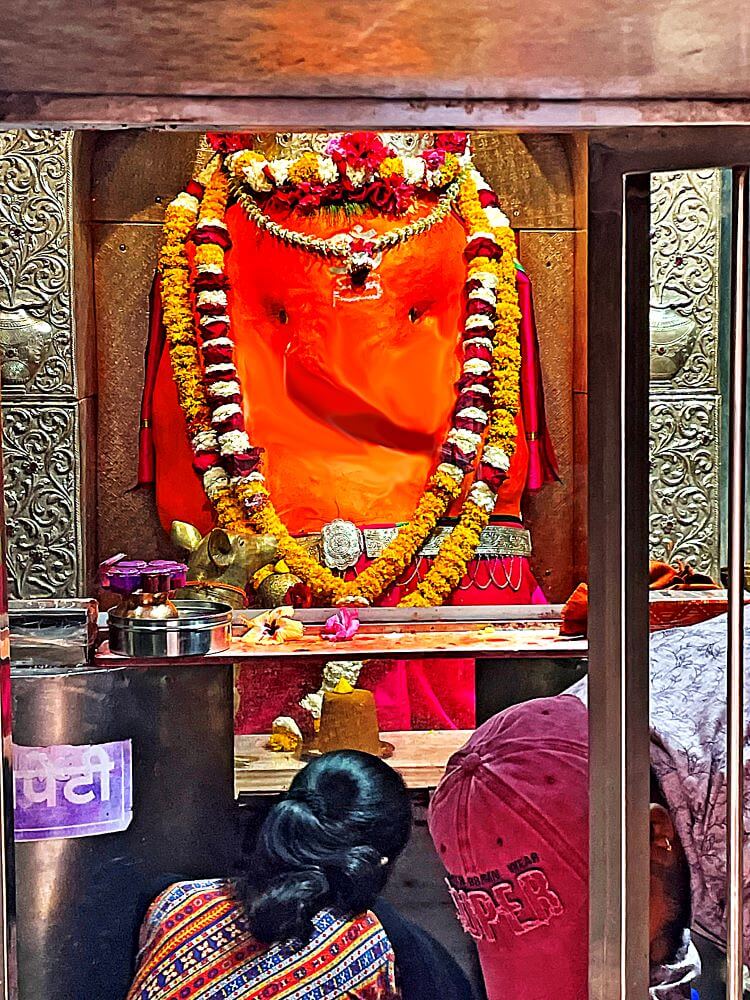
Shop Photo FramesThe Shri Chintamani Ganesh Temple in Kalamb, one of the twenty-one renowned Ganesh shrines in Maharashtra and a revered Ashtavinayak site in Vidarbha, is a sacred pilgrimage destination for millions of devotees. This magnificent idol of Shri Ganesh, standing four and a half feet tall, is enshrined in a sanctum sanctorum thirty-three feet deep. According to mentions in the Mudgala Purana and Ganesha Purana, the idol of Shri Chintamani Ganesh here was installed by Devraj Indra. It is said that every twelve years, the Ganga manifests in the pond in front of the Ganesh idol, filling the temple’s sanctum with water. After touching the feet of Shri Ganesh, the water recedes.
The legend of the temple recounts that Sage Gautam cursed Indra for his transgression with the sage’s wife, causing a thousand yoni marks to appear on Indra’s body. Terrified, Indra hid himself in the stalk of a lotus. Upon learning this, all the deities approached Sage Gautam and pleaded for Indra’s forgiveness. The enraged Sage Gautam firmly told the deities that the deceitful and thoughtless Indra would not be forgiven. However, due to the deities’ earnest prayers, he also stated that Indra would find salvation if he performed penance to Shri Gajanana. Accordingly, Brihaspati brought Indra out of the lotus stalk and instructed him to bathe in the Chintamani lake here. After bathing in this lake, the yoni marks on his body transformed into eyes.
After performing penance for one thousand years, Shri Ganesh manifested and created a pond here. After bathing in the waters of this pond, Indra’s body was restored to its original state. Thereafter, Indra installed Shri Ganesh here and, to consecrate the deity, invoked the Ganga from Svarga, commanding her to descend to Earth every twelve years and touch the feet of Shri Ganesh. The idol installed by Indra is none other than the present-day idol of Shri Chintamani Ganesh. As this idol was situated beneath a Kadamba tree, the village came to be known as Kalamb, derived from Kadamba. Records from nineteen hundred and eighteen onwards indicate that the Ganga manifested here in this manner in nineteen hundred and eighteen, nineteen hundred and thirty-three, nineteen hundred and forty-eight, nineteen hundred and fifty-eight, nineteen hundred and seventy, nineteen hundred and eighty-three, and nineteen hundred and ninety-five, and the water receded after touching the sacred feet in the sanctum. Devotees believe that bathing in the waters of this pond purifies one from sins.
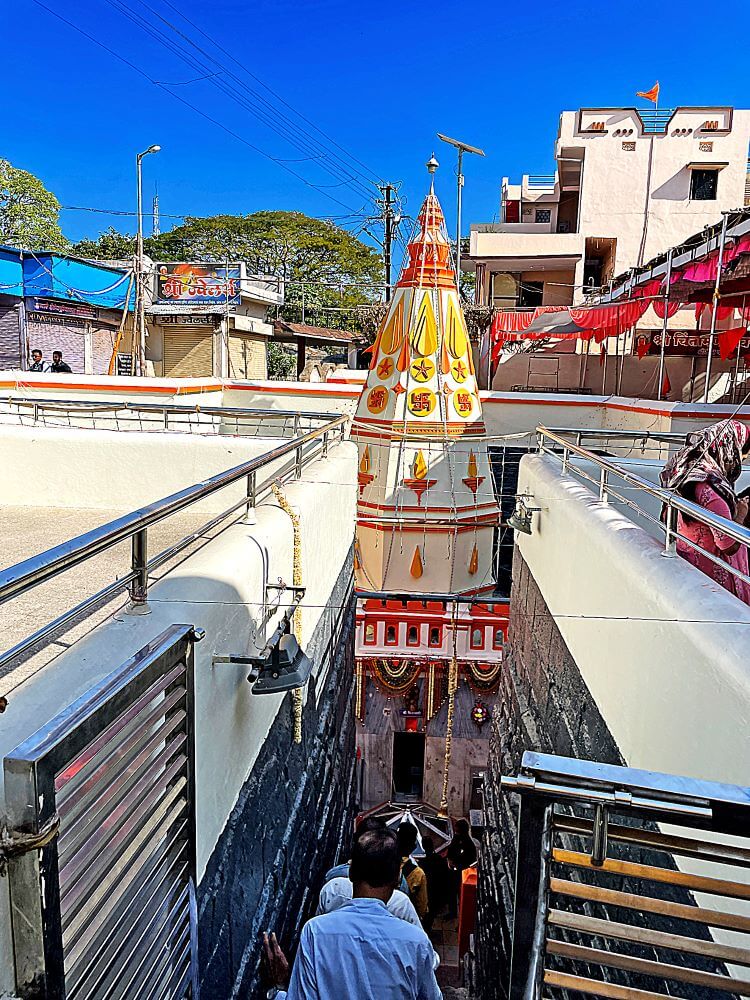
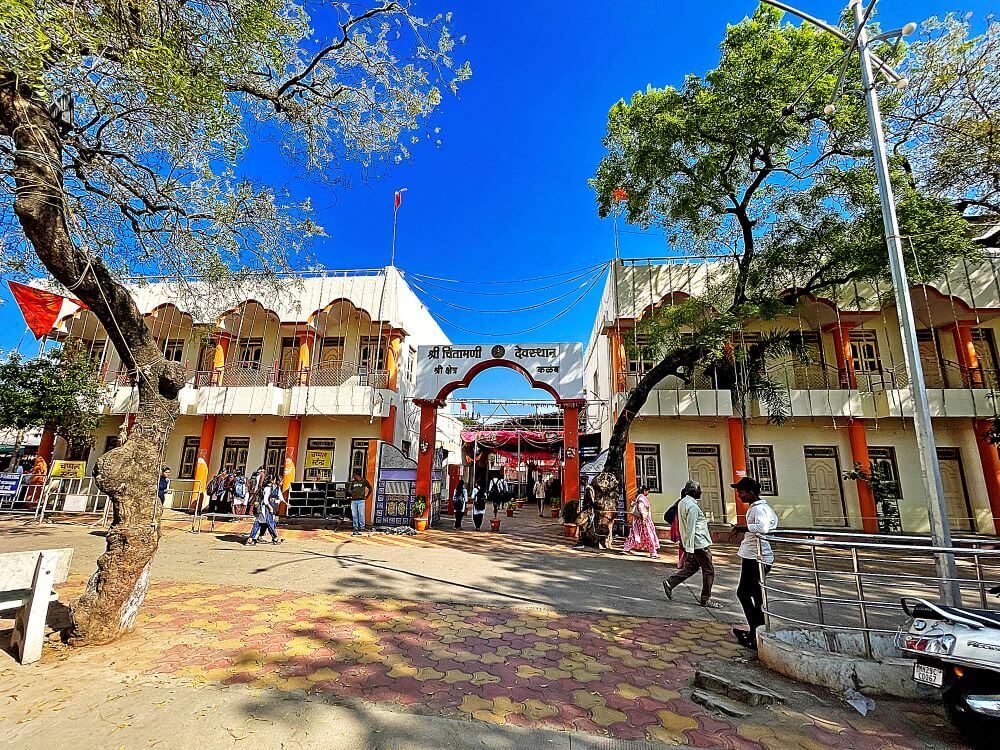
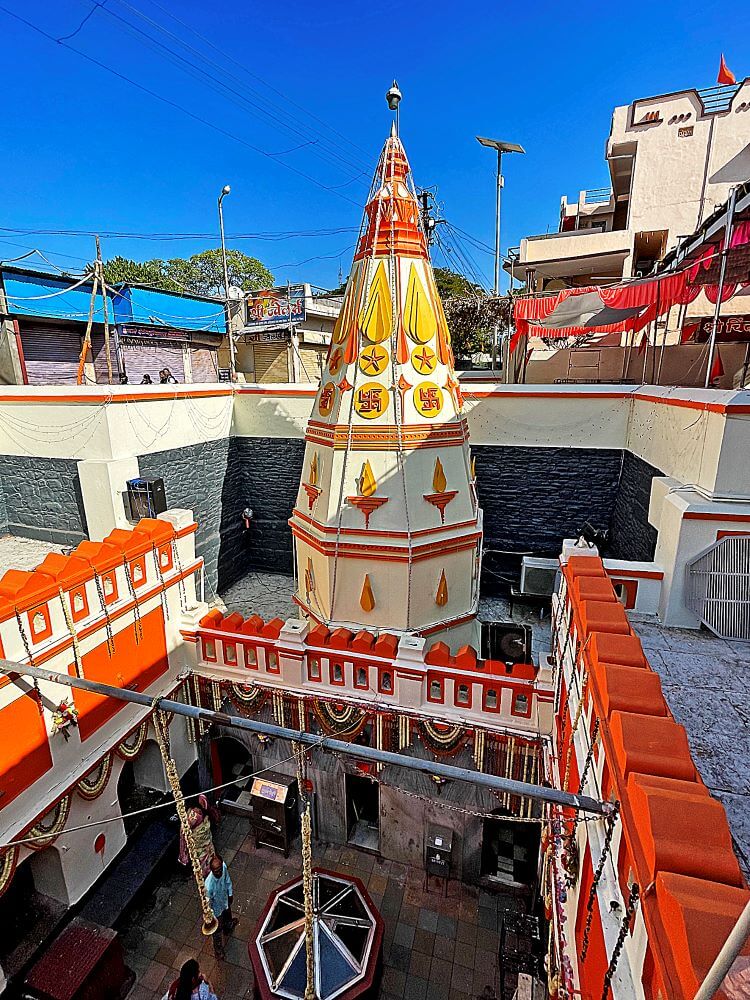
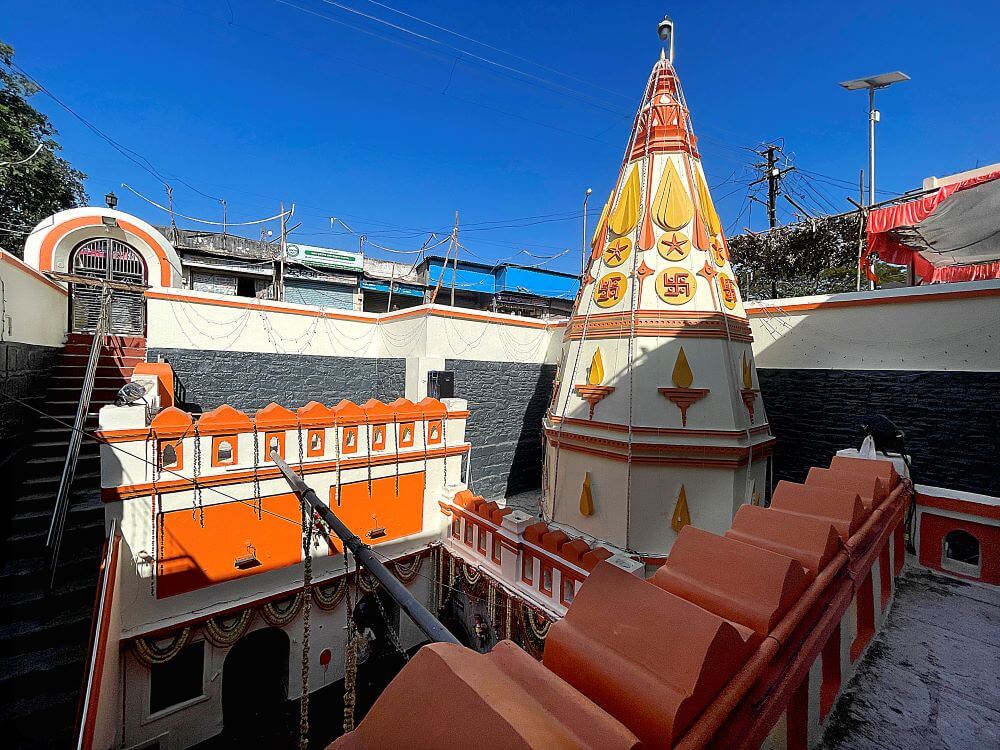
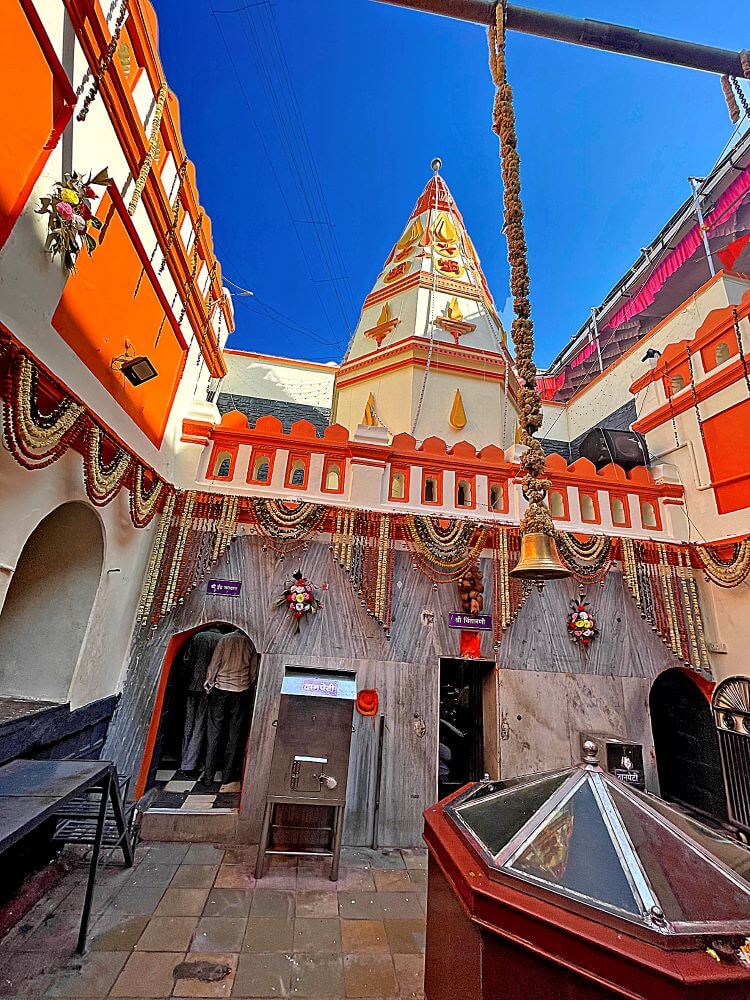
The ancient temple of Shri Chintamani Ganesh is located in Kalamb, a taluka headquarters on the Yavatmal-Nagpur highway. Kalamb (formerly known as Kadamba) was once under the rule of the Gond kings. It is said that long ago, there was a lake at the site of this temple, and the temple was built on that very spot. This temple has entrances on three sides. At the main entrance, there is a four-faced Ganesh idol carved from a single stone. The temple’s construction is simple, without elaborate artistry. There are three paths to reach this south-facing temple. Descending twenty-nine steps of dressed stone from the temple’s sabhamandap leads to an octagonal pond, and in the garbhagriha (sanctum sanctorum) in front of it, there is a large idol of Shri Chintamani Ganesh.
An annual fair is held here from Magh Shuddha Pratipada to Magh Shuddha Shashthi. Previously, only religious festivals were celebrated during this period; however, the fair itself commenced in nineteen hundred and seventy-seven. The credit for initiating this fair goes to the then Sarpanch of Kalamb, Firozuddin Qazi. Since then, the responsibility for the fair rests with the Gram Panchayat. During this festival, on the first day, Magh Shuddha Pratipada, after the Kalash Sthapana, the Janmotsav (birth celebration) begins. The recitation of the Ganesha Purana also commences on the first day. Until Magh Shuddha Tritiya, discourses, kirtans, and Haripath are held daily. On Chaturthi, at twelve o’clock in the afternoon, the Janmotsav of Shri Chintamani Ganesh is celebrated. On this day, the recitation of the Ganesha Purana concludes. On Panchami, Mahaprasad is offered. On Shashthi, there are programs such as Gopalkala, kirtan, and Dahi Handi. On this day, a procession of Shri Chintamani Ganesh takes place, accompanied by Lezim troupes and bhajan mandals. Muslim devotees also participate in this procession. Every year during this festival, one hundred and twenty-five to one hundred and fifty dindis (pilgrim groups) arrive from surrounding villages.
In addition, a festival also begins here on Ganesh Chaturthi in Bhadrapada, continuing until Anant Chaturdashi. Mahapujas are performed here on every Sankashti and Vinayak Chaturthi. Daily, in the morning and evening, a grand aarti of Shri Ganesh is performed. From eleven o’clock in the morning to two o’clock in the afternoon, Mahaprasad is distributed to visiting devotees by the temple committee. Devotees can have darshan of Shri Chintamani Ganesh here from five o’clock in the morning until ten o’clock at night.
Besides the Chintamani Temple, scholars have found numerous pieces of evidence suggesting that Kalamb village was once a significant religious site. Furthermore, Kalamb holds historical importance. Since ancient times, it has been known as the village of ‘fourteen Chavadyas and thirty-two Mahals’. Some mythological tales mention that Maharshi Gritsamada Rishi discovered cotton in this very Kalamb. Acharya Vinoba Bhave also referred to him as the ‘Pioneer Cotton Researcher’ in his writings. During Aurangzeb’s reign, this area was under the rule of Chand Bibi. Records also indicate that in eighteen hundred and forty-nine, the Bhosales of Nagpur harassed the British by utilizing the valleys and ravines of the Kalamb region. It is said that when the revolutionary Rajguru was underground for some time, he held a secret meeting of revolutionary youths from Yavatmal district at the Chintamani Ganesh Temple.
This sacred temple stands as a testament to deep spiritual devotion, ancient architectural grandeur, and rich local cultural traditions.
The sanctum sanctorum houses the divine idol consecrated according to ancient Vedic traditions, surrounded by serene courtyards and traditional temple architecture.
Navratri, Maha Shivratri, Annual Temple Jatra & Deepotsav
Compare and book flights, secure top-rated local hotels near the temple, hire reliable guides, and rent cars instantly.
Extend your pilgrimage by visiting other highly sacred temples located nearby.


Add ₹999 more to unlock FREE SHIPPING!
Your sacred cart is currently empty.
Shop Photo FramesFill in your delivery details below to place your order.
Add comment