
Add ₹999 more to unlock FREE SHIPPING!
Your sacred cart is currently empty.
Shop Photo FramesNestled on the banks of the Vishwaganga River in Kothali, Motala Taluka, Buldhana District, the Chintamani Mahadev and Shaligram Mahadev are two ancient Shiva temples considered an invaluable legacy of thirteenth-century Yadava-era architecture. Here, one can experience a confluence of nature and science. Astronomical precision is a distinguishing feature of these temples. On certain days of the year, the sun’s rays fall upon Shaligram Mahadev in the morning and upon the pindi of Chintamani Mahadev in the evening. These temples still bear witness to the advanced architecture of medieval India.
Motala Taluka, nestled in the lap of Buldhana District, is exceptionally rich in historical and cultural heritage. Situated on the border of Vidarbha and Khandesh, this land has witnessed a beautiful fusion of both cultures, the influence of which is evident from its local dialect to its customs. Kothali, a village close to Motala, is renowned in Vidarbha for the ancient temple sculptures found here.
In ancient times, this region was part of the routes leading to the Ajanta Caves and other important trade centers, which suggests that villages like Kothali must have held special significance then, a fact made clear by these temples. It is said that these temples were built in the thirteenth century during the reign of King Ramdevraya of Devagiri, by his prime minister and architect, Hemadri Pandit. One of these temples is located outside the village, on the banks of the Vishwaganga River. This Shiva temple is famous as the Chintamani Mahadev Temple.
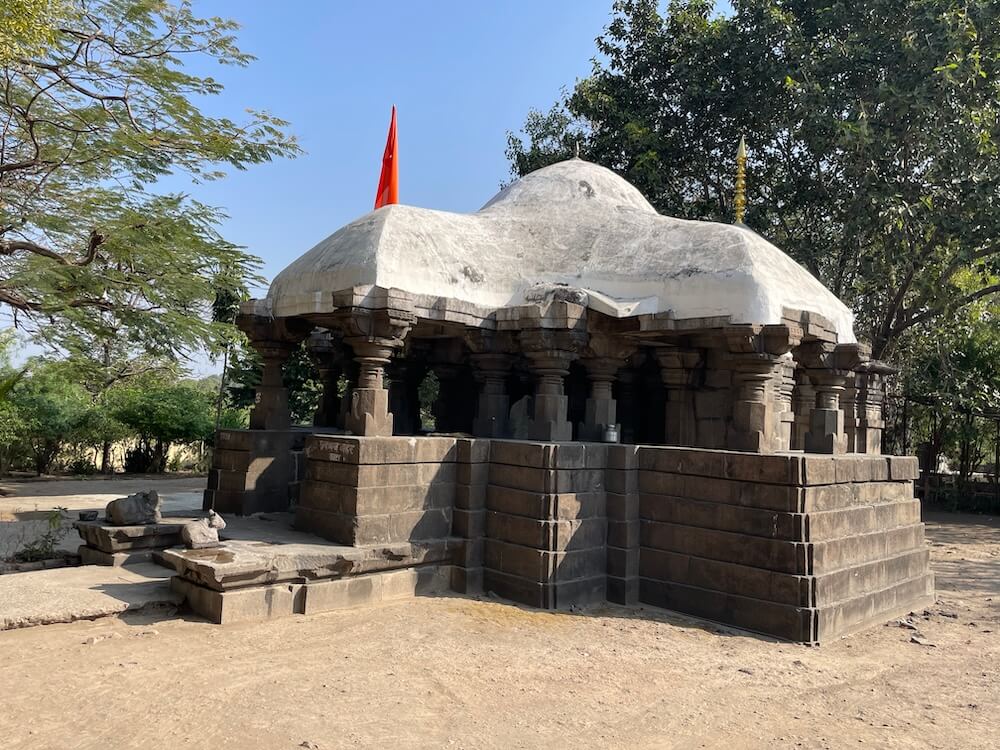
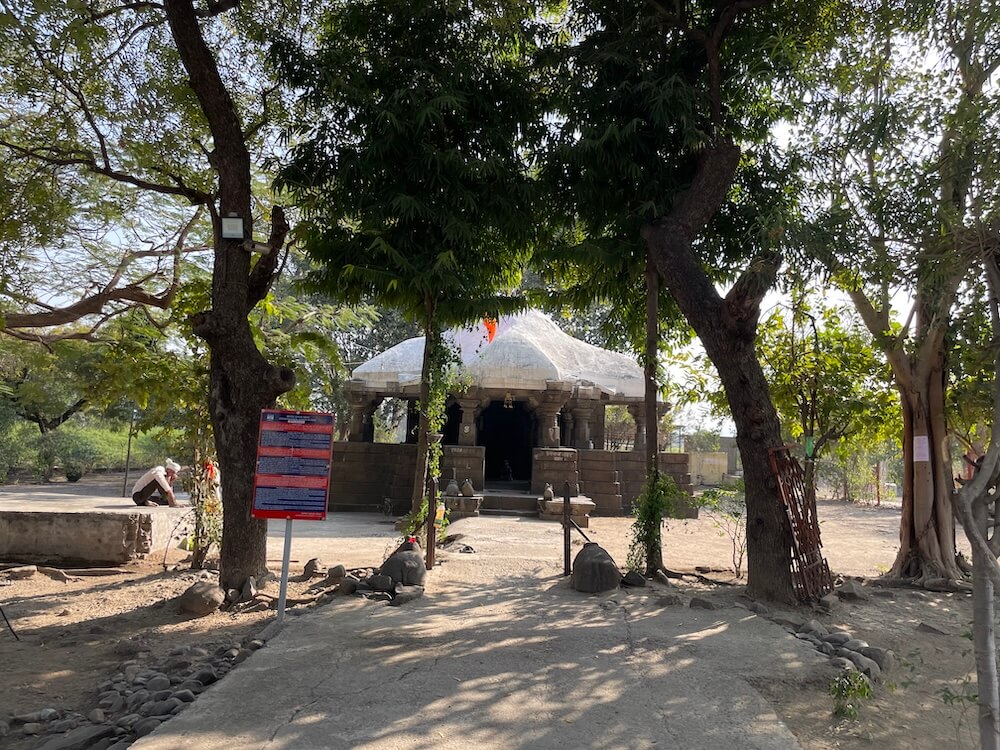
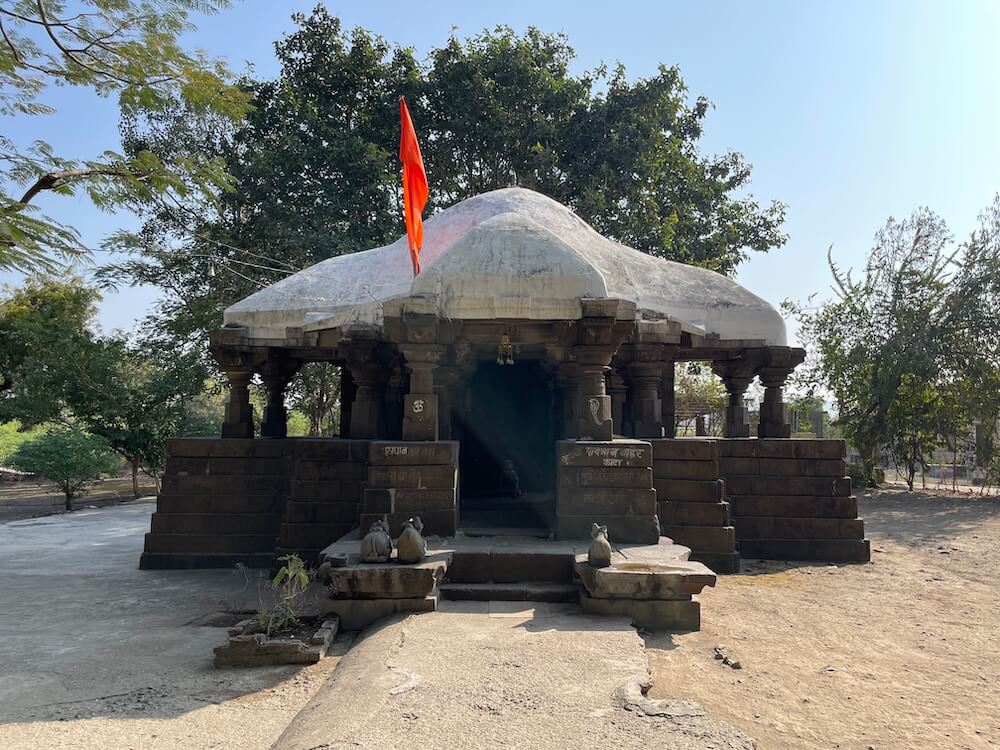
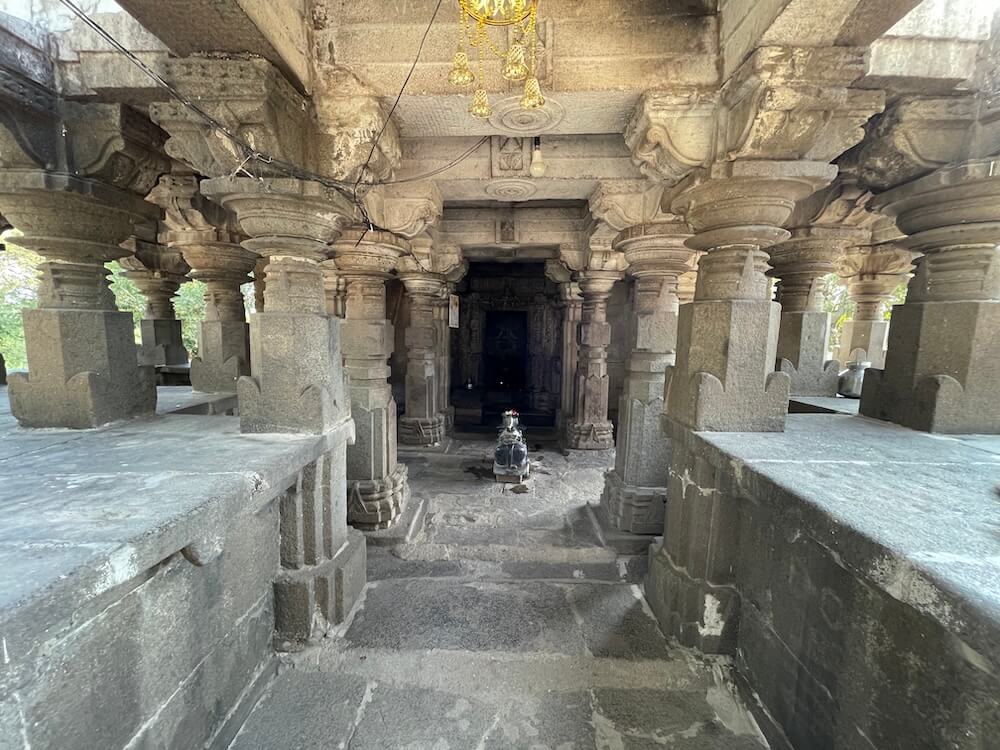
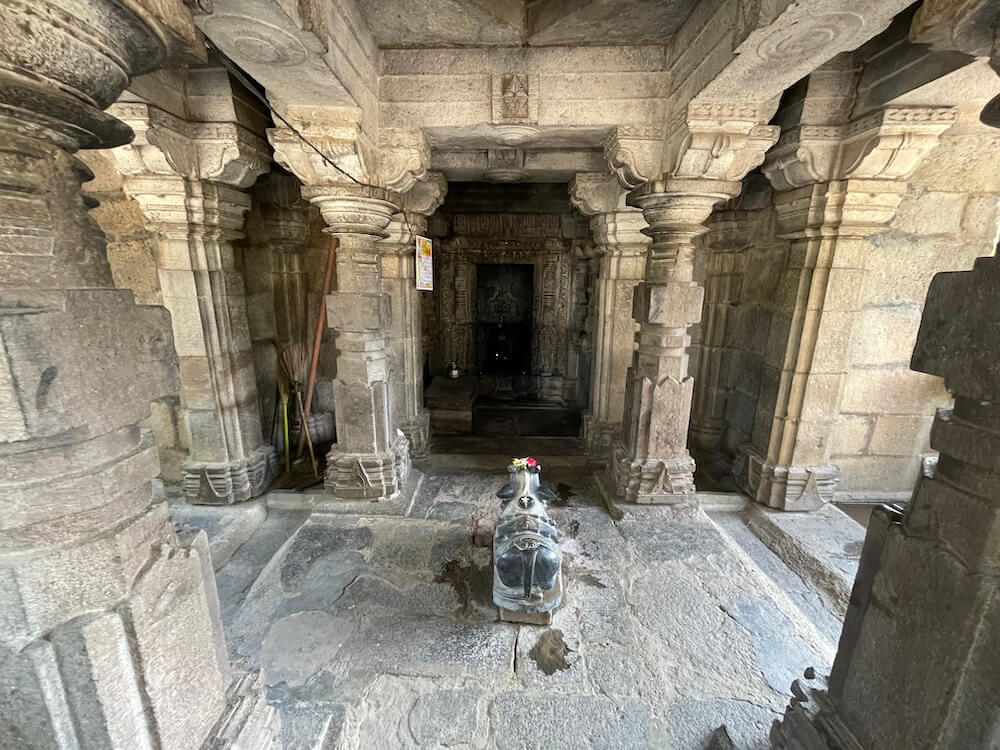
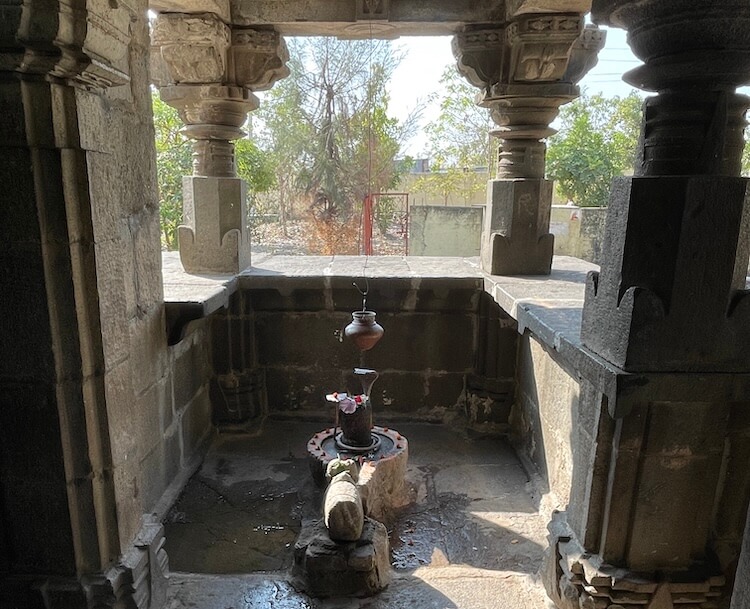
This temple, situated on the riverbank, is surrounded by a compound wall. Through its entrance, one enters the temple courtyard. Within the courtyard, there is a concrete path from this entrance to the temple. Many ancient trees grace this courtyard. The temple’s structure comprises a Darshan Mandap (viewing hall), a Sabha Mandap (assembly hall), two subsidiary sanctums, an Antarala (vestibule), and beyond that, the main Garbhagriha (sanctum sanctorum). The entire temple is constructed of stone. Near the entrance of the Darshan Mandap, on stone platforms, there are three ancient idols of Nandi. The Darshan Mandap here has stone benches for devotees to sit. From here, one enters the Sabha Mandap. This semi-open Sabha Mandap features numerous stone pillars. Their bases are intricately carved, and the shafts above are of various shapes. In the center of the Sabha Mandap is a carved idol of Nandi, fashioned from a single stone. In the subsidiary sanctum to the right in the Sabha Mandap, there is a Shivpindi, while the sanctum to the left is empty. The doorframes of the main Garbhagriha’s entrance here feature extremely delicate and distinctive carvings. These include creeper patterns, geometric designs, and human figures on various levels. A sculpture of Ganesha adorns the lintel (Lalatabimba) of the entrance. Above it, on the Uttaranga, there are many small niches (Devakoshthakas) containing idols of various deities. On the lower parts of these same doorframes, guardian figures (Dwarapalas) are carved, accompanied by Ganga and Yamuna. Descending a few steps from here, one enters the Garbhagriha of the temple. In the center of this Garbhagriha is the Chintamani Mahadev Pindi, carved from a single stone. From a hanging Galantika (a vessel for dripping water) in the ceiling above the Pindi, Abhishek (ritual bathing) is performed on the Pindi. From the outside, the construction of this Garbhagriha is star-shaped. The Garbhagriha is topped with a dome-shaped Shikhara (spire) and a brass Kalasha (finial).
A temple with a similar structure is located in the center of this village. It is famous as Shaligram Mahadev. In front of this temple, there is a stone platform. Climbing a few steps from there, one enters the Mandap of this temple. Here, six partially broken pillars remain from the old temple’s ruins. Scholars estimate that this was once a grand Sabha Mandap. Beyond it, the temple’s structure comprises a Sabha Mandap and three Garbhagrihas. The Sabha Mandap and Garbhagrihas here are structured similarly to the Chintamani Temple. The Garbhagrihas contain sculptures of Surasundaris (celestial nymphs) and Yakshas. On the doorframes of the main Garbhagriha’s entrance, as well as in the upper part, sculptures of Shri Vishnu and Lakshmi, along with other deities, are carved. Ganesha occupies the central position on the door lintel. Inside the Garbhagriha, at an elevated position, is the Shaligram Mahadev Pindi. Below it, an idol of Garuda, the vehicle of Shri Vishnu, is carved. Additionally, the other two Garbhagrihas contain Shivpindis. All four sides of this temple feature beautiful sculptures and distinctive carvings on the stones.
Of the two temples in this village, on a specific day of the year, the rays of the rising sun perform Abhishek on the Shivalinga of Shaligram Mahadev, while on the same day, the rays of the setting sun fall upon the Pindi of Chintamani Mahadev; these temples have been designed in such a manner. Both these temples exhibit unique and attractive craftsmanship. These two Shiva temples, excellent examples of ancient architectural style, are attracting not only devotees but also scholars and students of archaeology. Both these Shiva temples have been declared state-protected monuments by the State Archaeology Department.
This sacred temple stands as a testament to deep spiritual devotion, ancient architectural grandeur, and rich local cultural traditions.
The sanctum sanctorum houses the divine idol consecrated according to ancient Vedic traditions, surrounded by serene courtyards and traditional temple architecture.
Navratri, Maha Shivratri, Annual Temple Jatra & Deepotsav
Compare and book flights, secure top-rated local hotels near the temple, hire reliable guides, and rent cars instantly.
Extend your pilgrimage by visiting other highly sacred temples located nearby.


Add ₹999 more to unlock FREE SHIPPING!
Your sacred cart is currently empty.
Shop Photo FramesFill in your delivery details below to place your order.
Add comment