
Add ₹999 more to unlock FREE SHIPPING!
Your sacred cart is currently empty.
Shop Photo FramesVrindavan in North India is sanctified by the presence of Shri Krishna. Along with it, there is a place in Phaltan taluka of Satara district where Shri Krishna once ‘mortgaged’ (Girvi) himself for the sake of his devotee. The Gopalkrishna temple in the village of Girvi is a place of deep faith for devotees. The idol of Gopalkrishna here is unique and offers a vision of the unity of Hari and Hara (Vishnu and Shiva). The throne upon which Gopalkrishna is seated is in the shape of a Shiva Linga. It is said to be the only such idol of Shri Krishna in the state.
The legend of this temple states that about 500 years ago, a Krishna devotee named Baburao Deshpande lived here. He was constantly absorbed in the devotion of Krishna. Once, while in a state of meditation, Gopalkrishna appeared to him in a vision and revealed a spot where a Shaligram was hidden. He instructed him to carve an idol from that Shaligram. Following the vision, excavations at that spot led to the discovery of the Shaligram. He began searching for artisans to carve the idol from it, but even after many days, he could not find any. Finally, Baburao prayed fervently to Krishna, seeking his help.
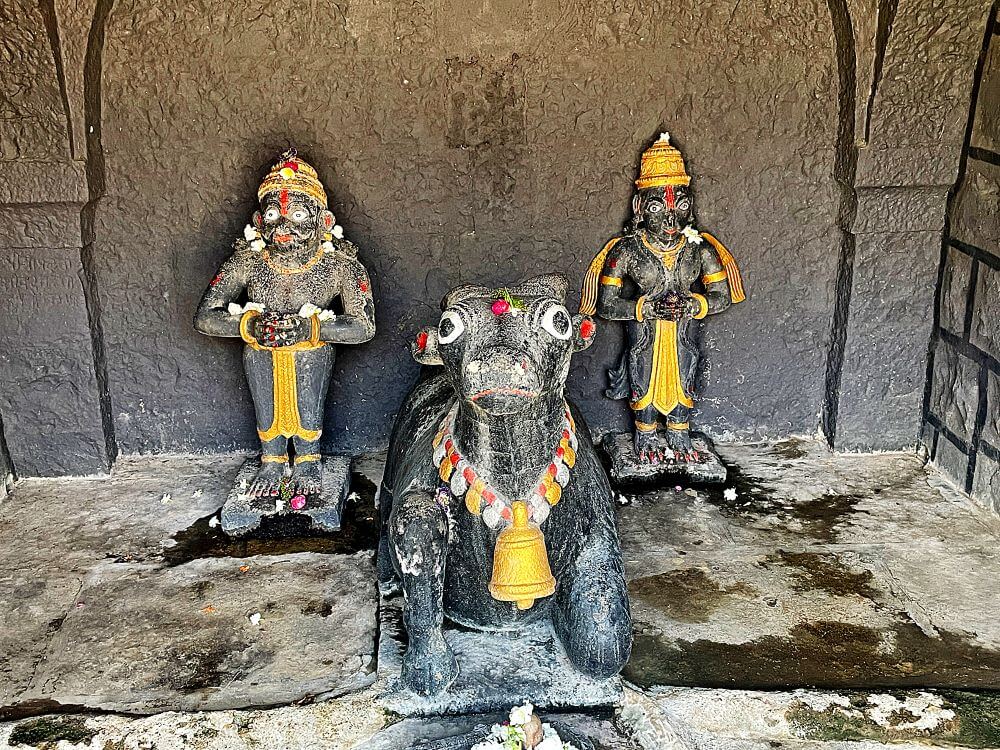
The very next morning, two men named Jai and Vijay arrived at his house, claiming they had come to carve the idol. Of these two artisans, one was lame and the other was blind, which made Baburao somewhat skeptical. However, they insisted they could carve the idol exactly as he desired. With no other option, Baburao entrusted them with the task. Curious about how they would work given their physical challenges, he offered them help, but they refused, locking themselves in the room where the Shaligram was kept. During this time, they did not even accept food from outside, preparing their own meals within the locked room. After a few days, they opened the door, and upon seeing the idol, Baburao beheld the form of Lord Vishnu, just as he had seen in his vision. He gazed at the idol, mesmerized, for a long time. When he finally regained his composure, he thanked the artisans and invited them to his home for a meal. They replied that they would come after bathing at the nearby well, but they vanished near the well.
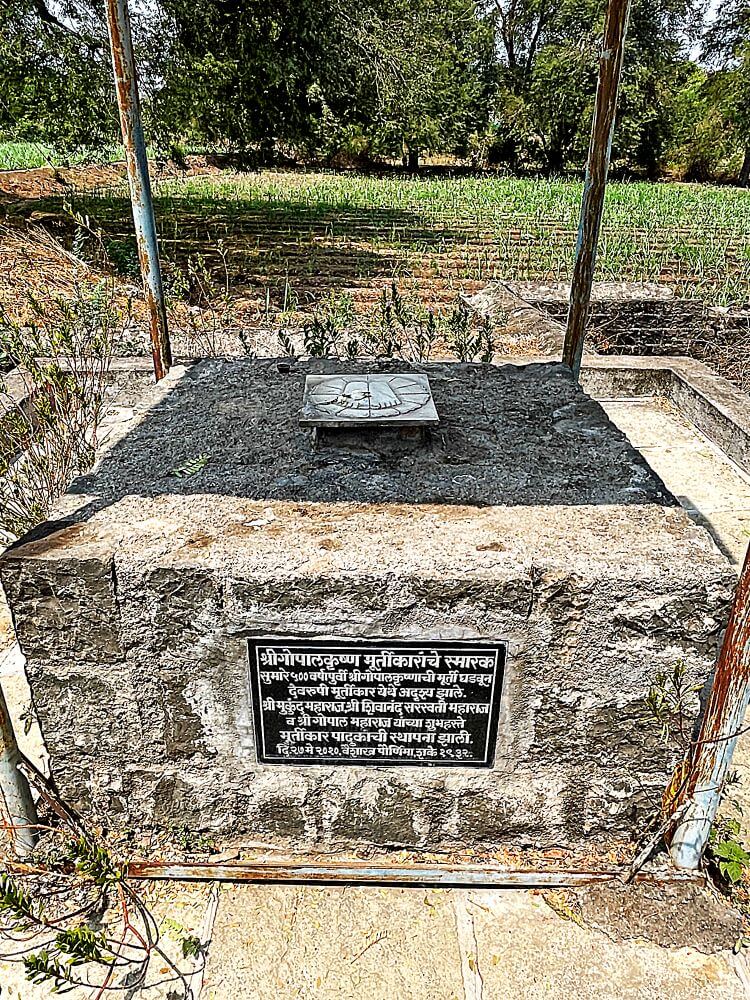
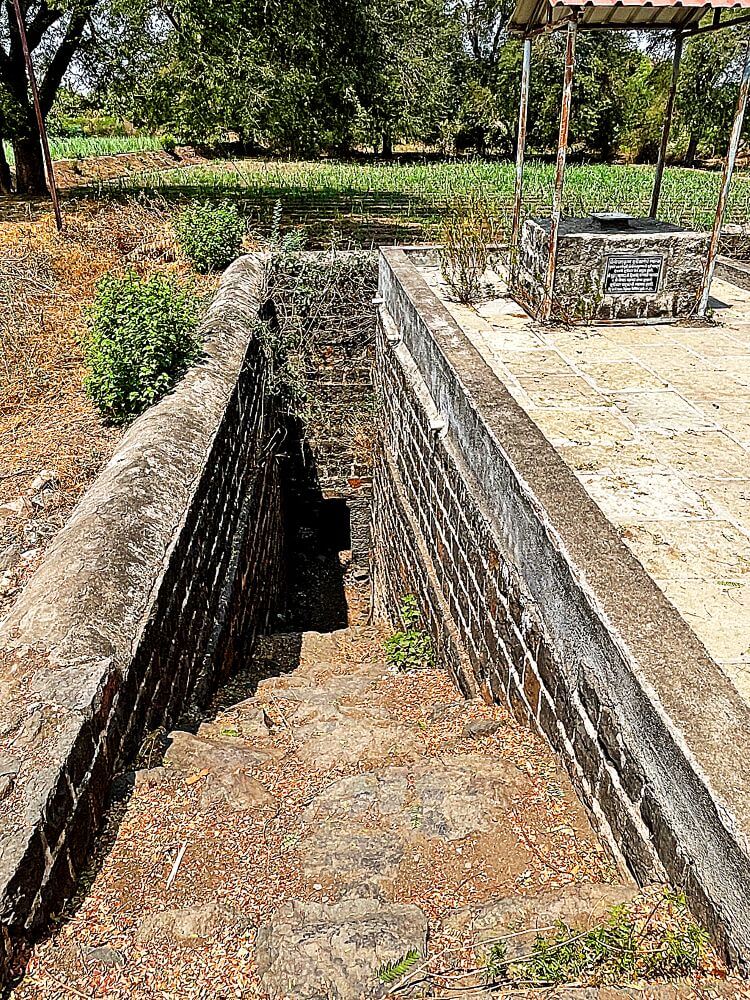
Baburao realized that Lord Vishnu and Lord Shiva themselves had descended in the form of Jai and Vijay to carve this Hari-Hara idol. Even today, the well and a memorial to these artisans exist behind the temple. Baburao Maharaj built the temple, performed the rituals on an auspicious day, and consecrated the idol of Gopalkrishna. After setting the rules for all festivals and services and handing over the temple’s management to the next generation, he took Sanjeevan Samadhi within a year of the consecration. His Samadhi is located in the basement beneath the Gopalkrishna temple.
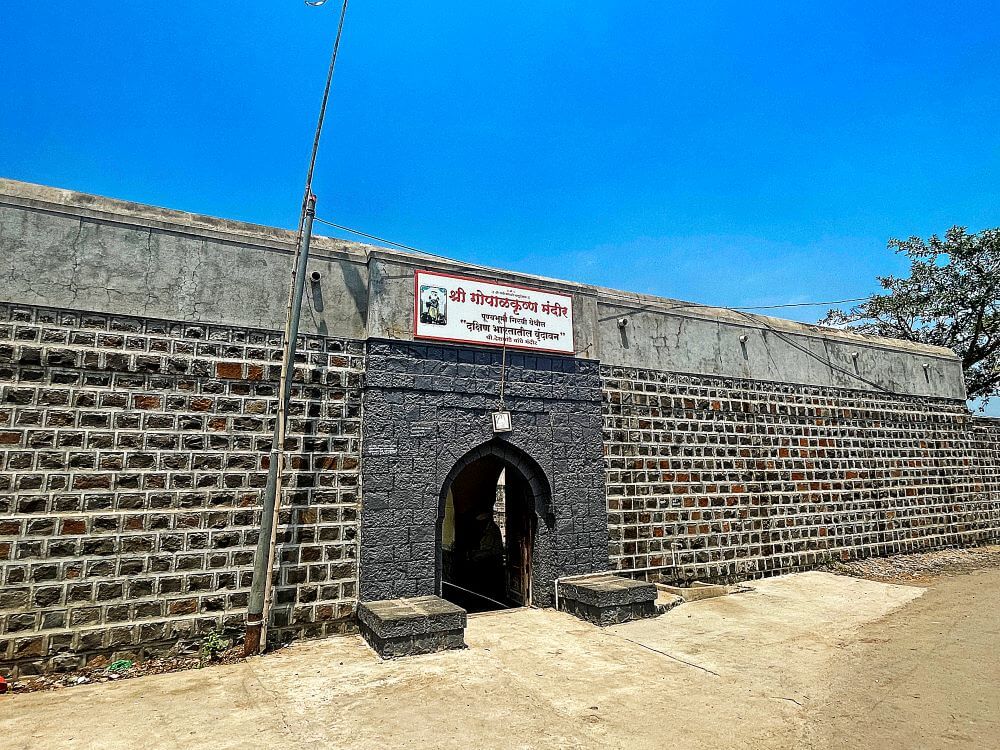
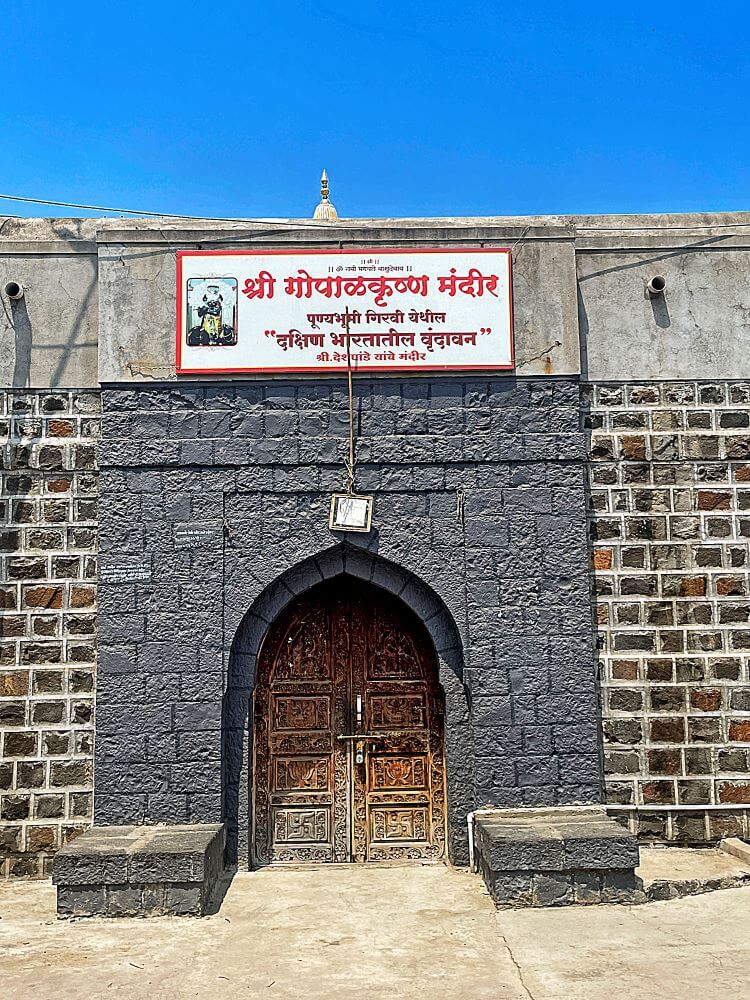
The Gopalkrishna temple at Girvi is renowned as the ‘Vrindavan of South India.’ The temple is surrounded by a 15 to 18-foot-high fortification, and one enters the temple premises through a gate in this wall. Inside the fortification are cloisters (ovaris) that provide accommodation for devotees. Many devotees sit here and recite the Vishnu Sahasranama. The temple is constructed of stone, while lime and bricks appear to have been used for the spire (kalash). The temple attained its current form after renovations carried out between 2005 and 2010.
This Hemadpanti-style temple consists of a Sabha Mandap (assembly hall) and a Garbhagriha (sanctum sanctorum). The Sabha Mandap is open-style, supported only by stone pillars, and is open on all sides. The Garbhagriha is situated at a higher level than the Sabha Mandap. On a pedestal within the Garbhagriha stands the four-foot-tall, monolithic stone idol of Gopalkrishna. Krishna is depicted standing on one leg, with the other leg crossed and resting only on the toe. The craftsmanship of the idol is highly distinctive. The face radiates a serene expression, with large eyes and stone-carved ornaments. Both hands are positioned as if playing the flute on the right side. A testament to the sculptor’s skill is that even the veins on Gopalkrishna’s hands are clearly visible. Near Krishna’s feet are two cows, their faces reflecting their absorption in the music of the flute. Another unique feature of this idol is the vision of Hari-Hara it provides; the throne on which Gopalkrishna is seated is shaped like a Shiva Linga.
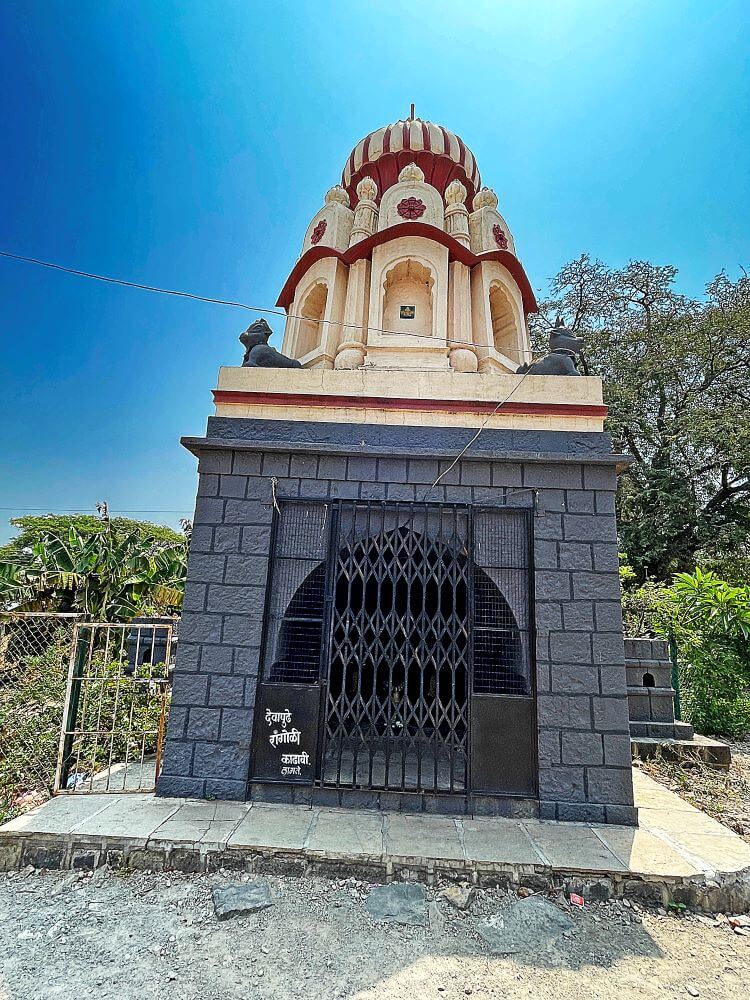
There are many sculptures in the niches on the temple spire. Along with the main spire, there are several smaller spires. Adjacent to the main temple, along the fortification, is a Ganesha temple. The festival of Janmashtami is celebrated here on a grand scale every year. During Ashadhi and Kartiki Ekadashi, a procession of Gopalkrishna’s image and his padukas (footprints) is carried out. On Vaishakh Vadya Pratipada, an Abhishek is performed on the Samadhi of Baburao Maharaj.
This sacred temple stands as a testament to deep spiritual devotion, ancient architectural grandeur, and rich local cultural traditions.
The sanctum sanctorum houses the divine idol consecrated according to ancient Vedic traditions, surrounded by serene courtyards and traditional temple architecture.
Navratri, Maha Shivratri, Annual Temple Jatra & Deepotsav
Compare and book flights, secure top-rated local hotels near the temple, hire reliable guides, and rent cars instantly.
Extend your pilgrimage by visiting other highly sacred temples located nearby.


Add ₹999 more to unlock FREE SHIPPING!
Your sacred cart is currently empty.
Shop Photo FramesFill in your delivery details below to place your order.
Add comment