
Add ₹999 more to unlock FREE SHIPPING!
Your sacred cart is currently empty.
Shop Photo FramesThe Satosha temple, the presiding deity of the Dhangar community in Maharashtra, Karnataka, Andhra Pradesh, Telangana, and Goa, is situated on a high mountain in Takewadi, in the Man taluka of Satara district. Devotees seek the divine counsel of Lord Satosha to fulfill their heart’s desires. As this is a place of faith for lakhs of devotees, it remains crowded throughout the year. A grand fair is held here every year on the day after Dussehra. Satoshagad is renowned for being a mountain taller than the Shambhu Mahadev mountain at Shikhar Shingnapur.
The legend regarding the Satosha temple is that once, Lord Mahadeva and his devotee, Satosha, were wandering through the mountain paths. While roaming in this region, Lord Mahadeva felt drawn to the site of Shikhar Shinganapur and decided to reside there. They did not wish to part ways; however, since Satosha was a non-vegetarian, he could not stay there. Therefore, he… He decided to reside on the high mountain at Takewadi, located right in front of Shinganapur, so that he could have the darshan of Mahadeva from there every day. The unique feature here is that every morning, the shadow of the Satosha mountain falls upon the Shikhar Shinganapur mountain, while in the evening, the shadow of the Shikhar Shinganapur mountain falls upon the Satoshagad at Takewadi.
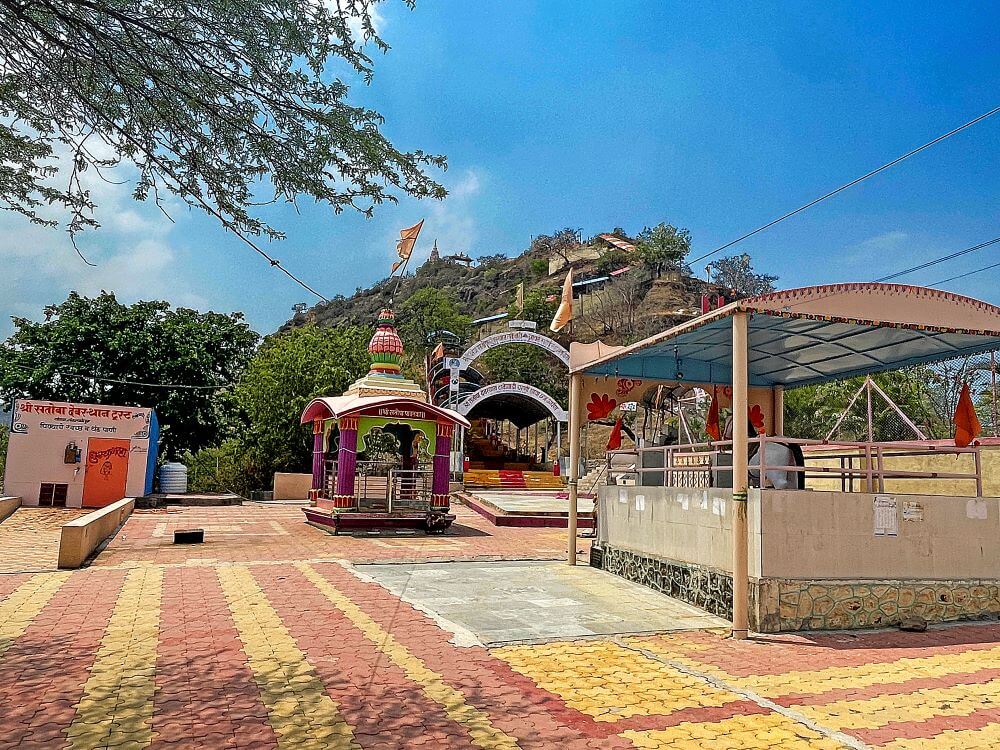
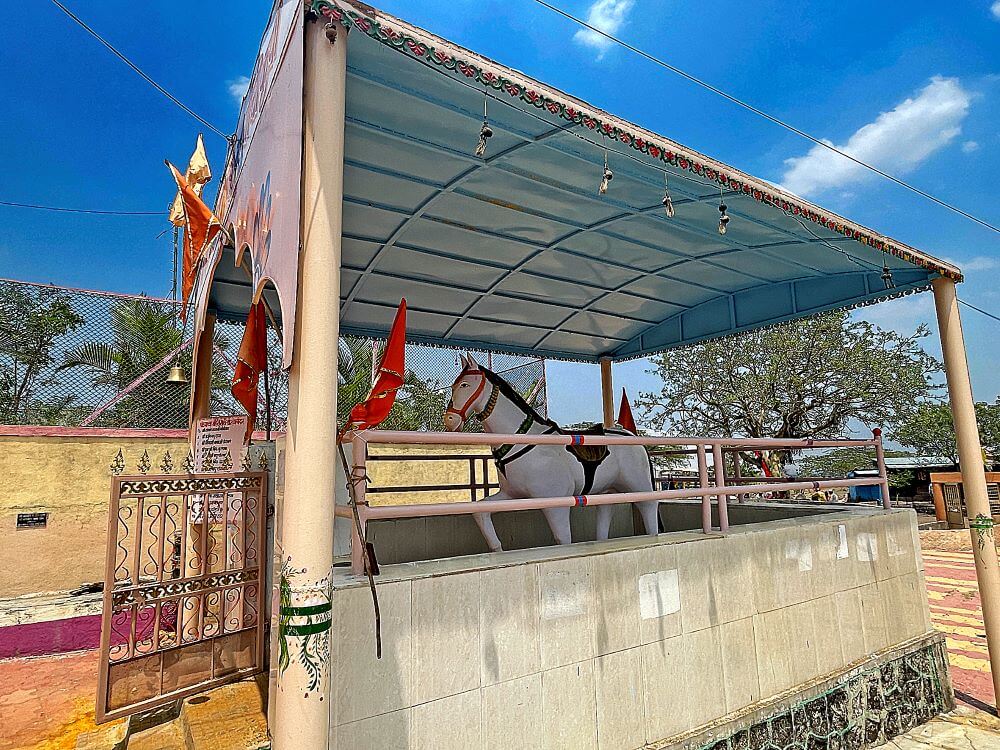
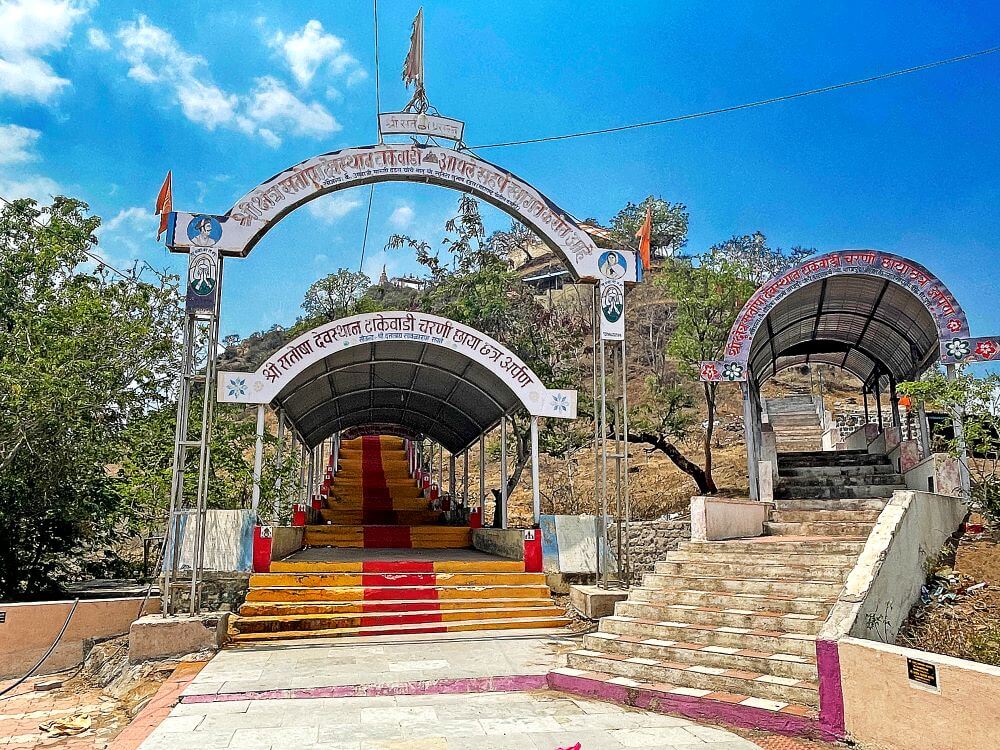
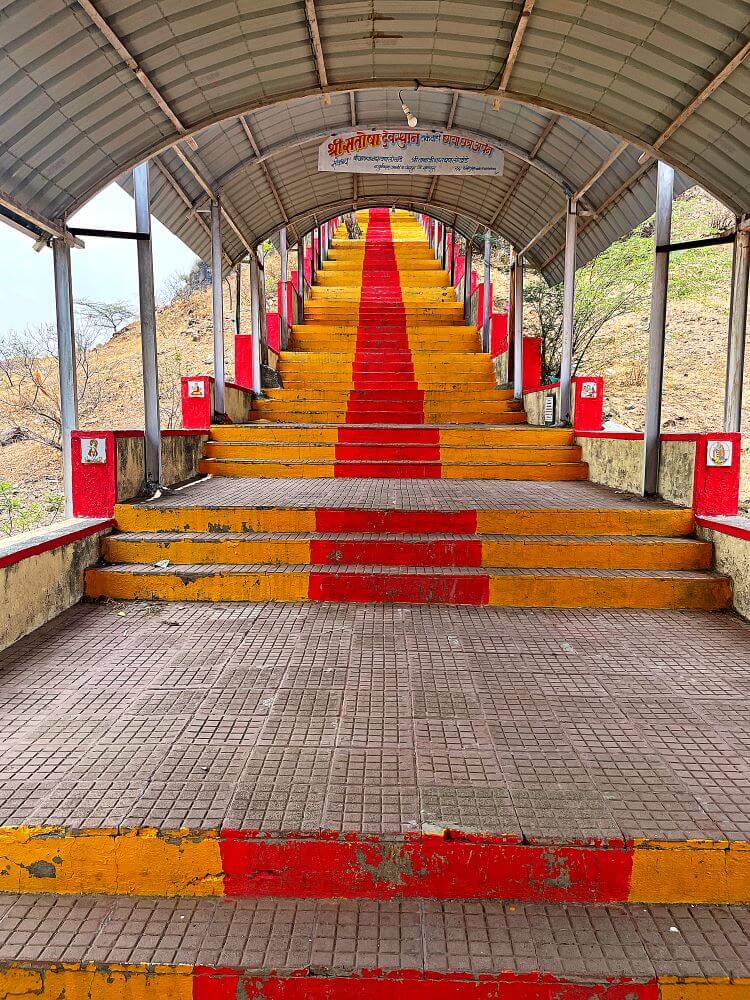
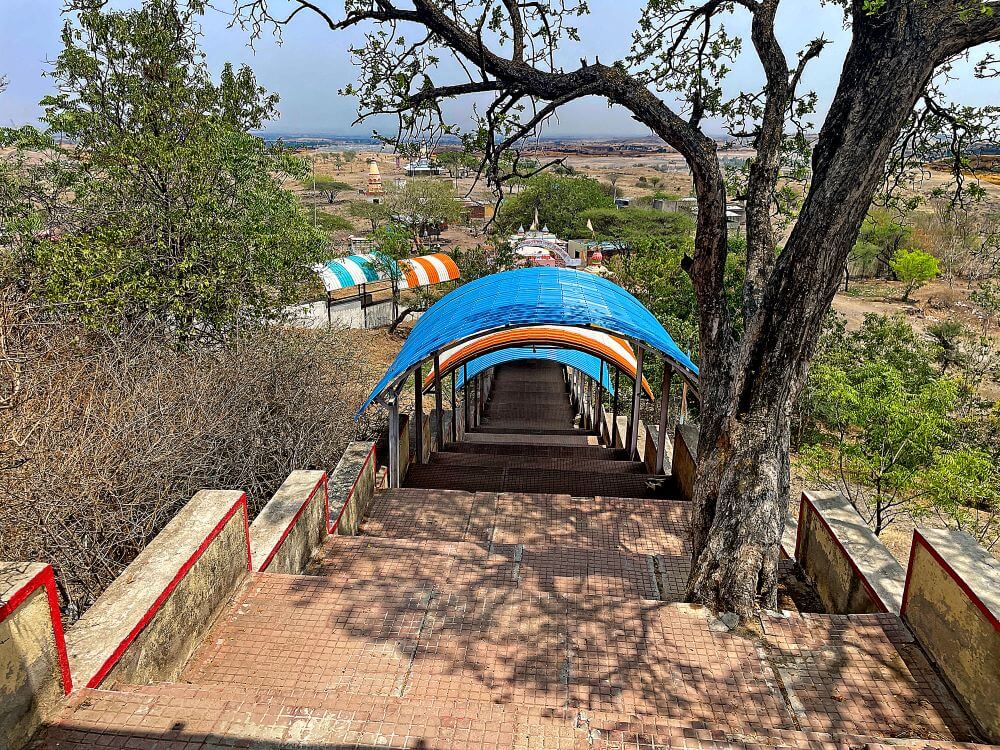
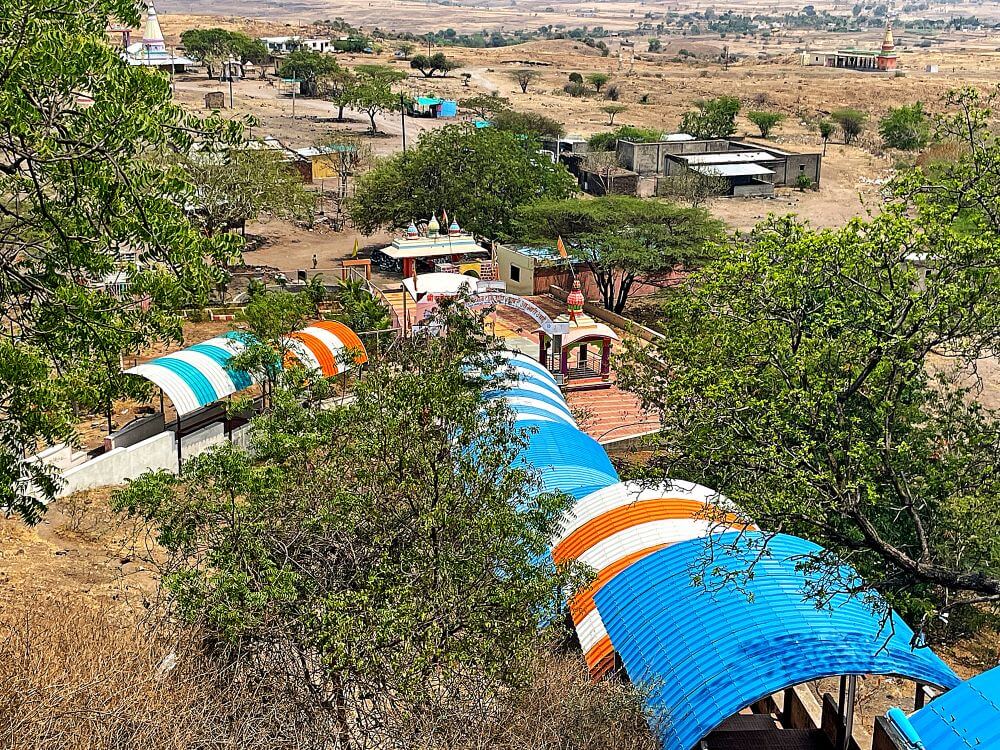
The shrine of Lord Satosha is situated on a hill located on the border of Tondale and Takewadi villages in Man Taluka of Satara district. Before proceeding towards the main temple on the hill, there is an idol of the horse, the vehicle of the deity, and a temple dedicated to Kamabai, the consort of Satosha, at the foothills. From there, the stairway begins to ascend towards the temple. One can reach the main temple atop the hill by climbing approximately 500 steps. Metal sheds have been installed along this path to protect devotees from the sun and rain. Various sculptures can be seen carved onto the newly renovated temple. From there, climbing eight to ten steps leads to the main temple’s One enters the main assembly hall. The temple is structured with an assembly hall and a sanctum sanctorum, and the assembly hall here is open on all three sides. The entire construction of this temple is made of stone. From the assembly hall, one can also have a divine view of the Shikhar Shingnapur fort located in front.
In front of the main assembly hall, there are artistic sculptures of a horse and its foal. Near this horse and throughout the temple premises, hundreds of mirrors and brass bells can be seen hanging. It is a tradition for devotees to offer mirrors and bells here after their vows are fulfilled. Inside the temple, a mattress and a cot have been placed for the deity’s rest. The sanctum sanctorum is small in size, and in front of its entrance stands a large, vermilion-anointed idol of Lord Satosha. A turban is tied on this deity every day. Additionally, the idol is decorated with neem leaves, which are used to outline the features of the deity’s face. Below the idol, on the left and right sides, there are two small pits. Devotees place betel nuts in these pits to seek the deity’s divine guidance, known as Kaul, to resolve their problems. Accordingly, these consultations are held here every day. Devotees have unwavering faith in this deity, and once the Kaul given by Lord Satosha is fulfilled, they offer non-vegetarian food as Naivedya to the deity.
On the day following Dashara, the grand pilgrimage of Satosha takes place. At that time, a sea of devotees can be seen from the foothills all the way to the peak of the mountain. During this pilgrimage, devotees from the states of Karnataka, Andhra Pradesh, Telangana, and Goa also arrive here for darshan. Chanting “Dongaracha Haricha Changbhala, Satosha-Birobacha Changbhala…” and showering turmeric powder (bhandara), thousands of devotees participate in the pilgrimage. There is a large number of vendors selling traditional woollen blankets (ghongadi) at this fair. During this time, devotees become immersed in Dhangari ovis (folk songs), Gaji dance, Sumbaran, and Bhakanuk (prophetic utterances). Throughout the duration of the pilgrimage, thousands of roosters and goats are offered as a mark of respect to the deity Satosha.
The temple of Lord Biroba is located at Pangari, which is adjacent to Takewadi. The Biroba Yatra takes place on the day following the Satosha Yatra. At the Satosha temple, the deity’s Aarti is performed every morning and evening. The priests serving this temple also belong to the Dhangar community.
This sacred temple stands as a testament to deep spiritual devotion, ancient architectural grandeur, and rich local cultural traditions.
The sanctum sanctorum houses the divine idol consecrated according to ancient Vedic traditions, surrounded by serene courtyards and traditional temple architecture.
Navratri, Maha Shivratri, Annual Temple Jatra & Deepotsav
Compare and book flights, secure top-rated local hotels near the temple, hire reliable guides, and rent cars instantly.
Extend your pilgrimage by visiting other highly sacred temples located nearby.


Add ₹999 more to unlock FREE SHIPPING!
Your sacred cart is currently empty.
Shop Photo FramesFill in your delivery details below to place your order.
Add comment