
Add ₹999 more to unlock FREE SHIPPING!
Your sacred cart is currently empty.
Shop Photo FramesThe village of Bhuinj is situated on the banks of the sacred Krishna River, which originates in Mahabaleshwar, within the Wai taluka known as the Dakshin Kashi (Varanasi of the South). This village is home to two renowned sacred sites: the Samadhi shrine of Bhrigu Rishi—one of the Saptarishis (seven great sages) and the author of the Bhrigu Samhita—and the temple of his daughter, Mahalakshmi. The ten-day grand festival (Yatra) held here during Navaratri is widely famous. A unique tradition of this place is that the Ghatasthapana (invocation of the Goddess in a sacred pot) in village households is performed only after it is completed in this temple.
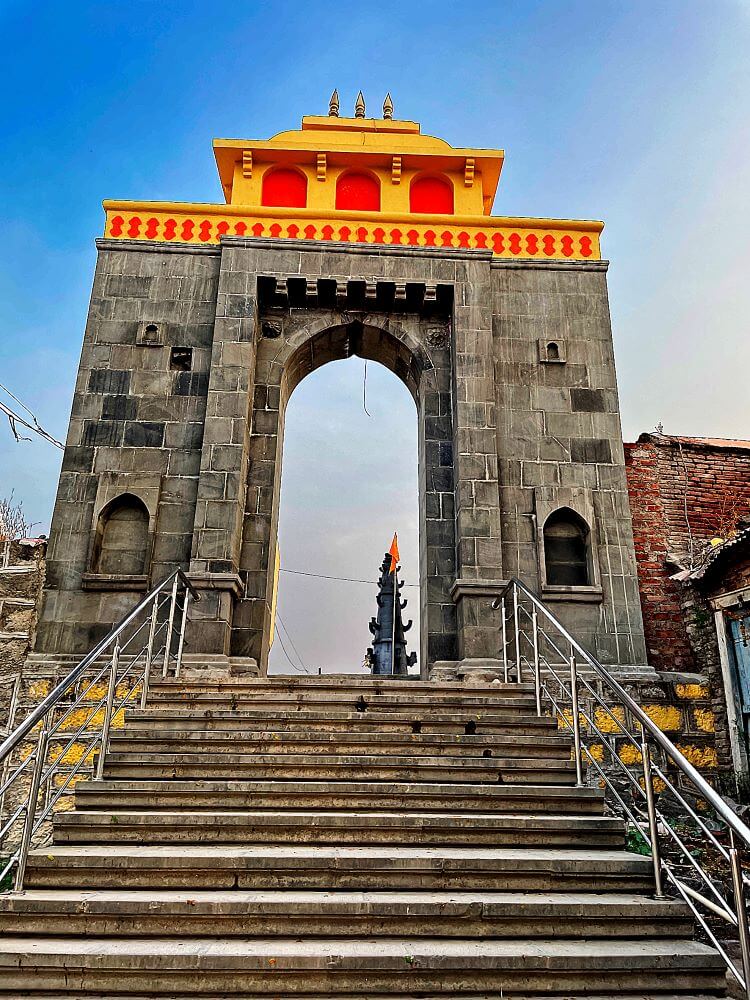
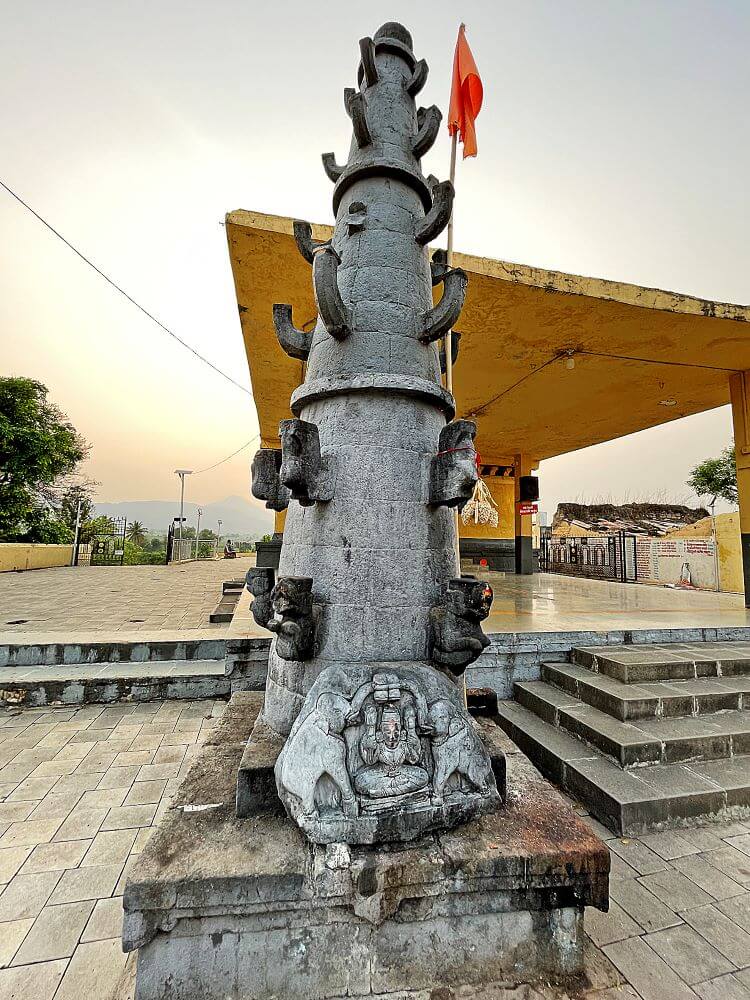
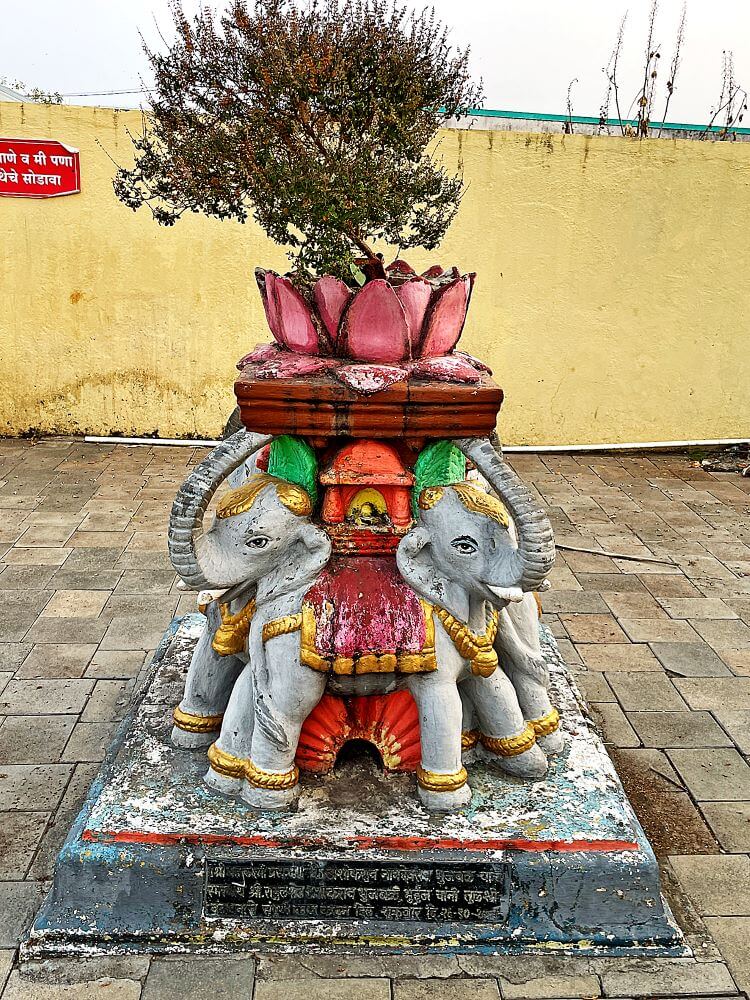
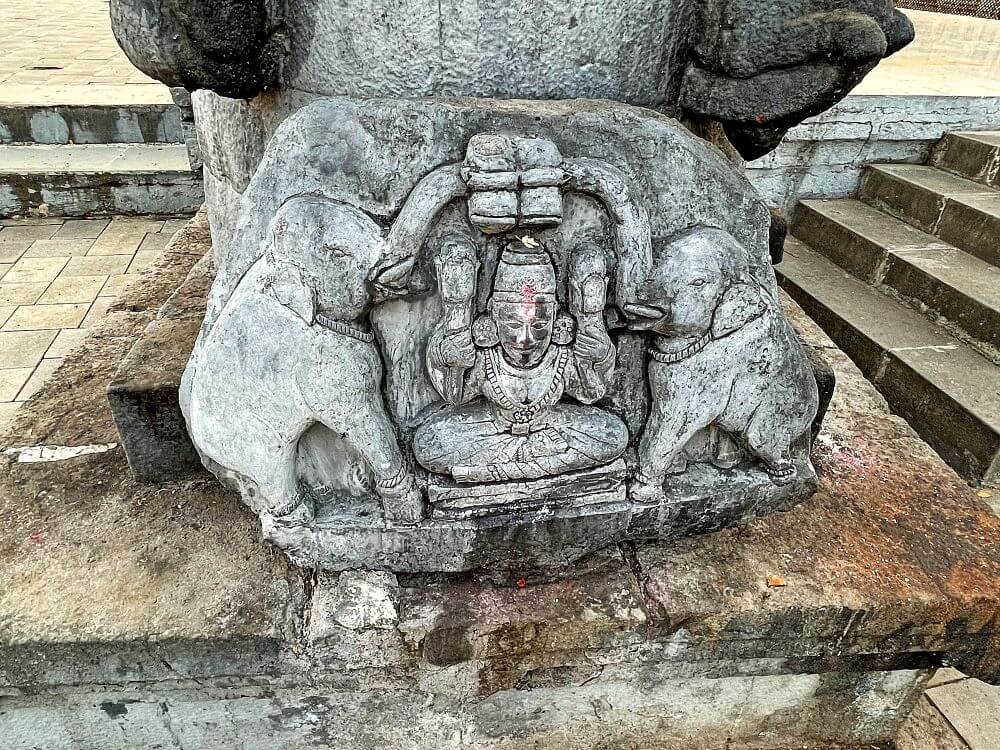
Bhuinj is located at a short distance from the town of Wai on the Satara-Pune National Highway. The Mahalakshmi Temple here is ancient and is said to date back to the pre-Shiva era (or pre-Shivaji era). Built in the traditional Hemadpanti architectural style, the temple is enclosed by a fortification wall on all sides, with the main entrance situated in the eastern wall. Located on an elevated platform eight to ten feet above the ground level, the temple complex is accessed by climbing a flight of ten steps. In the temple courtyard and in front of the Sabhamandapa (assembly hall), there is a stone Deepmala (lamp tower) and a distinctive Tulsi Vrindavan. The exquisite craftsmanship depicts this Tulsi Vrindavan being supported by four elephants.
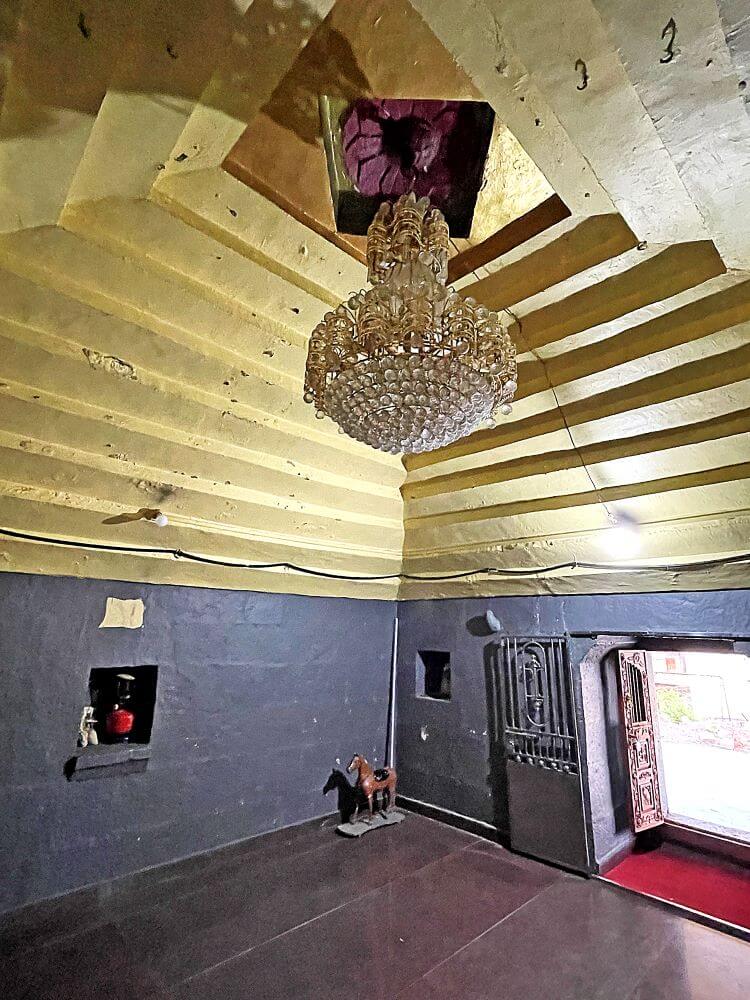
A newly constructed mandapa is noticeable right in front of the original temple. This mandapa is open on three sides. The temple layout comprises a Sabhamandapa and a Garbhagriha (sanctum sanctorum). The entire temple structure is made of stone, and a large chandelier adorns the ceiling of the Sabhamandapa. Inside the Garbhagriha, upon a high pedestal and within a silver shrine (Makhar), stands a beautiful three-foot-tall black stone idol of Goddess Mahalakshmi. The entire wall adjacent to this idol is adorned with intricate silver foil artwork, making the sanctum glow brilliantly. For a few days in the month of Phalguna, the morning sun rays fall directly upon the Mahalakshmi idol.
The prime attraction of the Mahalakshmi Temple is the ten-day Yatra held here during Navaratri. It is considered one of the major festivals in the Satara district. The original seat (Thana) of Goddess Mahalakshmi is located nearby at Bhirdachi Wadi. A day before the commencement of Navaratri, the villagers take out a Palkhi (palanquin) to the Goddess’s original seat at Bhirdachi Wadi to bring Her home. After completing the sacred rituals there, the Palkhi proceeds toward Bhuinj. At this time, thousands of devotees wait eagerly at the village square (Naka) for the Palkhi’s arrival. Accompanied by traditional music and celebrations, the Palkhi then proceeds from the square toward the temple. Although the Palkhi route is illuminated with modern lights, as per a centuries-old tradition, traditional mashals (torches) and kerosene lanterns are still carried alongside the Palkhi procession.
Following the rituals on the day of Ghatasthapana, sacred pots are installed within the temple. Only after the Ghatasthapana is completed in the temple do the villagers proceed to install Ghats in their respective homes. There is another silver idol of Goddess Mahalakshmi, approximately three feet tall, which is kept in a bank locker year-round for security reasons. On the third day of Navaratri, this idol is brought from the bank locker to the village square. There, it is adorned with various ornaments and subsequently brought in a procession to the temple. Thousands of married women and devotees line both sides of the road just to catch a glimpse of the Goddess’s captivating form and to store the divine vision in their eyes. Married women eagerly gather to perform Ovaluani (waving of lamps) for the Goddess. During Navaratri, the Palkhi of the Goddess goes on a daily circumambulation of the village (Grampradakshina).
On Dashami (Dussehra), which marks the final day of the Yatra, women gather in large numbers to offer Naivedya (food offering) to the Goddess. Long queues form for the Darshan. Around afternoon, the Goddess’s traditional shawl (Shalu) is brought in a musical procession from the Thana at the village square to the temple. Following the elaborate rituals, the Goddess’s Palkhi emerges from the temple in the evening amidst resounding chants of “Har Bola Har…”. Vibrant rangolis are drawn all along the Palkhi route. When the Palkhi reaches the village square amidst joyous celebrations, a spectacular display of fireworks lights up the sky. The procession continues throughout the night. Devotees immerse themselves in devotion, dancing to the beats of traditional instruments and joyfully showering Gulal (colored powder). The ten-day Yatra concludes in the early hours of the morning when the Palkhi finally returns to the temple. During this Yatra, state-level Kabaddi tournaments are organized in Bhuinj. Additionally, Volleyball competitions and Dandiya dance performances are also arranged.
Located about one hundred meters to the north of the Mahalakshmi Temple is the Samadhi shrine of Bhrigu Rishi, the author of the prophetic scripture ‘Bhrigu Samhita’. The Samadhi shrine acquired its present structure following a renovation carried out in nineteen eighty-nine. The sacred Padukas (footprints) of Bhrigu Rishi have been installed on the Samadhi slab. Directly beneath this slab lies his place of deep meditation and his Samadhi. In front of the Samadhi temple lies an assembly hall, surrounded by shrines and idols of Lord Dattatreya, Lord Ganesha, and a Shiva Linga. It is believed that the village was named Bhuinj due to the prolonged stay and presence of Bhrigu Rishi here. Following the Nashik Kumbh Mela every twelve years, a large number of Naga Sadhus visit this temple for Darshan. Special arrangements have been made in the vicinity for the accommodation of the Naga Sadhus. A Ghat has been constructed on the Krishna River near this temple. Altogether, eight such Ghats have been built along the river within the village.
This sacred temple stands as a testament to deep spiritual devotion, ancient architectural grandeur, and rich local cultural traditions.
The sanctum sanctorum houses the divine idol consecrated according to ancient Vedic traditions, surrounded by serene courtyards and traditional temple architecture.
Navratri, Maha Shivratri, Annual Temple Jatra & Deepotsav
Compare and book flights, secure top-rated local hotels near the temple, hire reliable guides, and rent cars instantly.
Extend your pilgrimage by visiting other highly sacred temples located nearby.


Add ₹999 more to unlock FREE SHIPPING!
Your sacred cart is currently empty.
Shop Photo FramesFill in your delivery details below to place your order.
Add comment