
Add ₹999 more to unlock FREE SHIPPING!
Your sacred cart is currently empty.
Shop Photo FramesThe Ramvaradayini Devi Temple in Majre-Dadar, located in the Chiplun taluka, is a symbol of the victory of the warrior-clan chieftains and stands as one of the most renowned temples in the Ratnagiri district. As the family deity (Kulaswamini) of the Shinde dynasty and the presiding deity of the villages in the Daspati region, this temple is a symbol of the local culture and traditional identity. Built on a vast plateau, a short distance from the confluence of the Vaitarna and Panchganga rivers, this temple spans approximately four acres and serves as a place of deep faith for many. During the annual fair held on Chaitra Purnima, lakhs of devotees visit to seek the Goddess’s blessings.
The legend of the temple states that after Ravana abducted Sita, Mother Parvati wished to test Lord Rama, who was distraught and searching for her. She appeared before Lord Rama in the form of Sita and asked why he was searching for her when she was right there. However, when Lord Rama recognized Mother Parvati through his divine intuition, she revealed her true form. She granted a boon to Lord Rama, saying, “Sita is pure, and it is by your hand that Ravana will be slain and his kingdom destroyed.” Because she granted this boon to Lord Rama, the Goddess came to be known as Ramvaradayini.
According to another legend, the ancestors of the Shinde family, Somajirao and Sidojirao, were on their way to launch an expedition against the Bararao Kolis when they met a sage. He took an idol of the Goddess from his satchel and gave it to them, blessing them with success and prosperity in their mission. Somajirao and Sidojirao vowed that if they succeeded, they would install the idol and worship her as their family deity. After achieving victory, they fulfilled their vow.
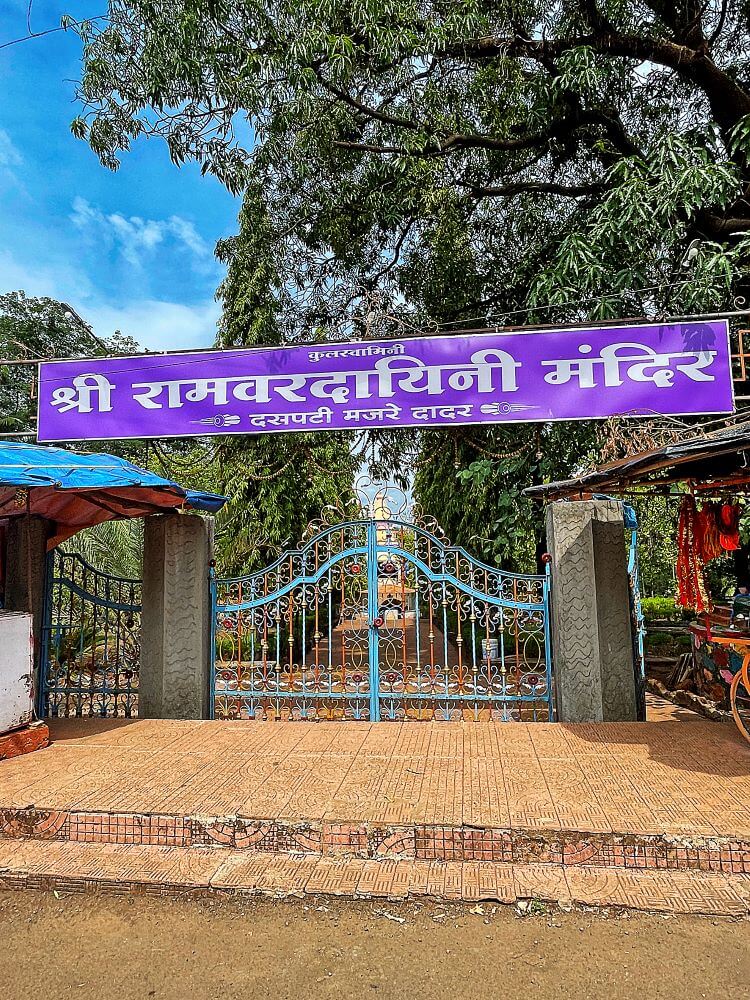
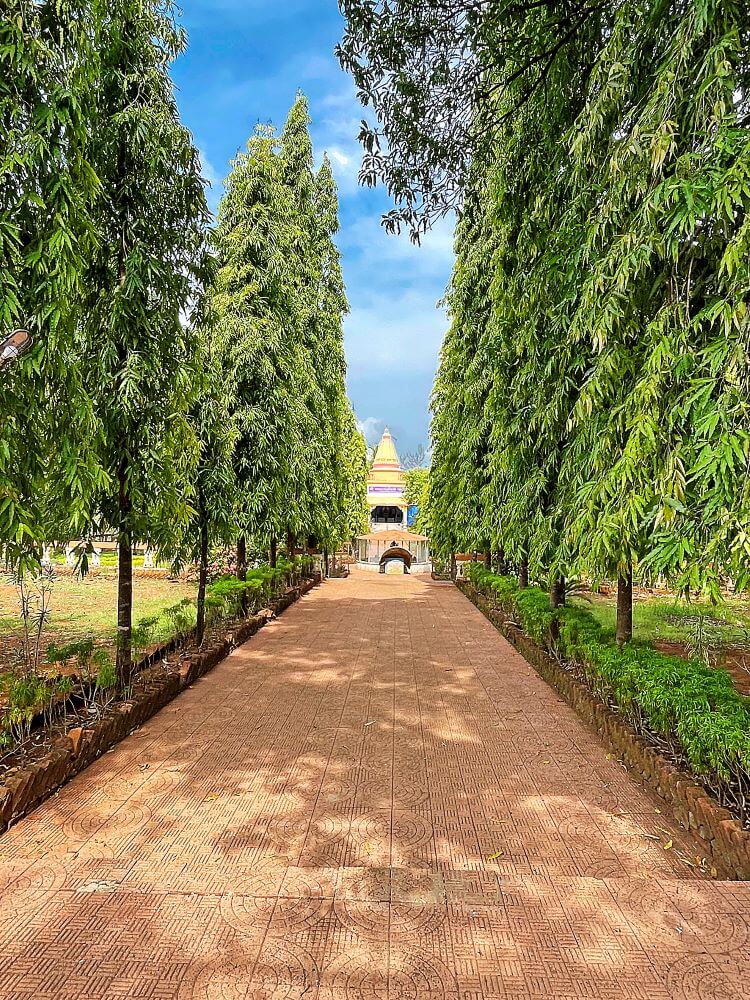
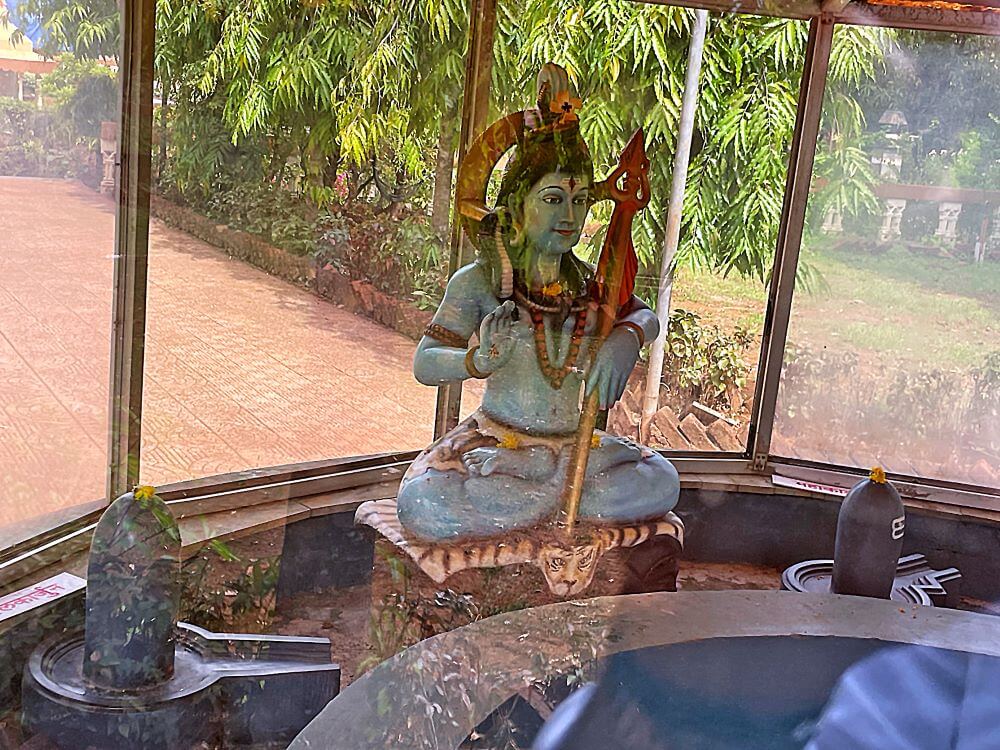
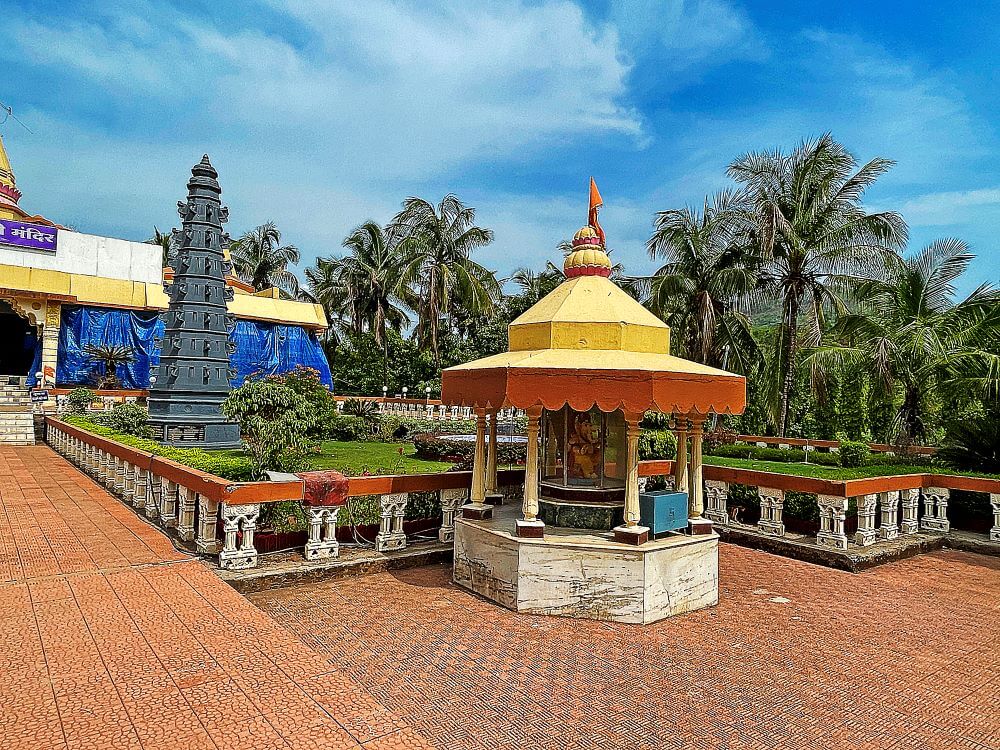
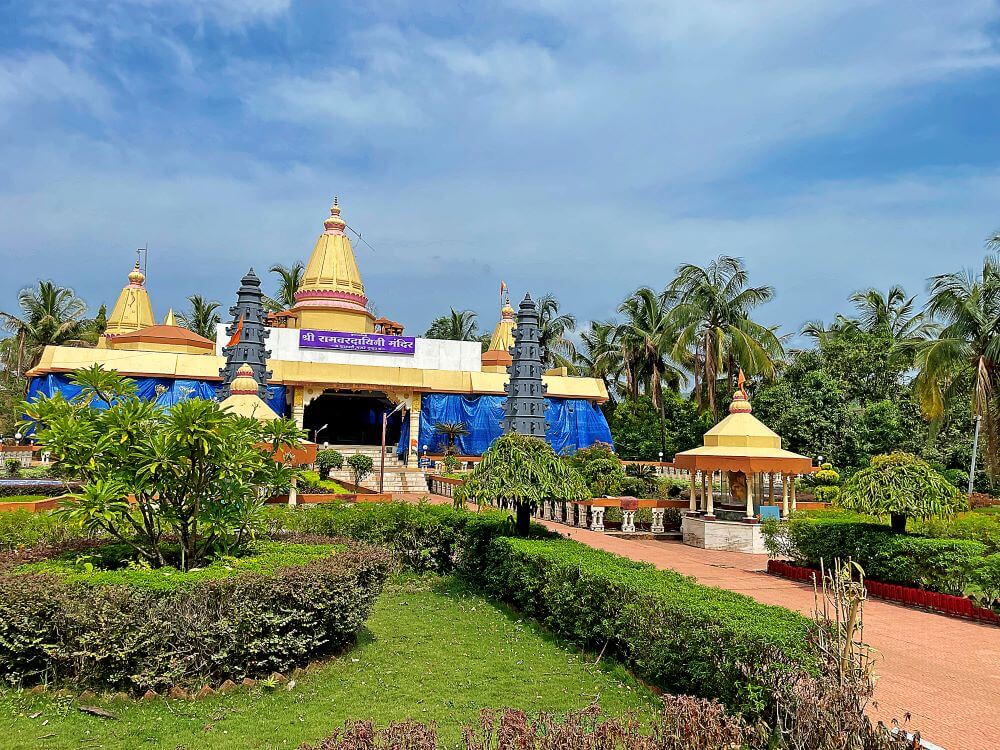
The road leading to the Ramvaradayini Temple turns east from Kanhe-Pimpli village on the Chiplun-Karad road. The temple faces east and is situated in Majre-Dadar, the central point of the Daspati region. The temple attained its current form following restoration and renovation in the year 2001. At that time, the old idol of the Goddess was replaced with a new marble one. Upon entering the courtyard through the main gate of the walled temple complex, one walks along a paved path leading to the temple. Further along this path, in a glass-enclosed area, there is an idol of Lord Shiva and replicas of the 12 Jyotirlingas. A short distance away are the temples of Ganpati and Saibaba. A beautiful garden has been developed throughout the temple premises, and the various ornamental and flowering plants enhance the beauty of the temple.
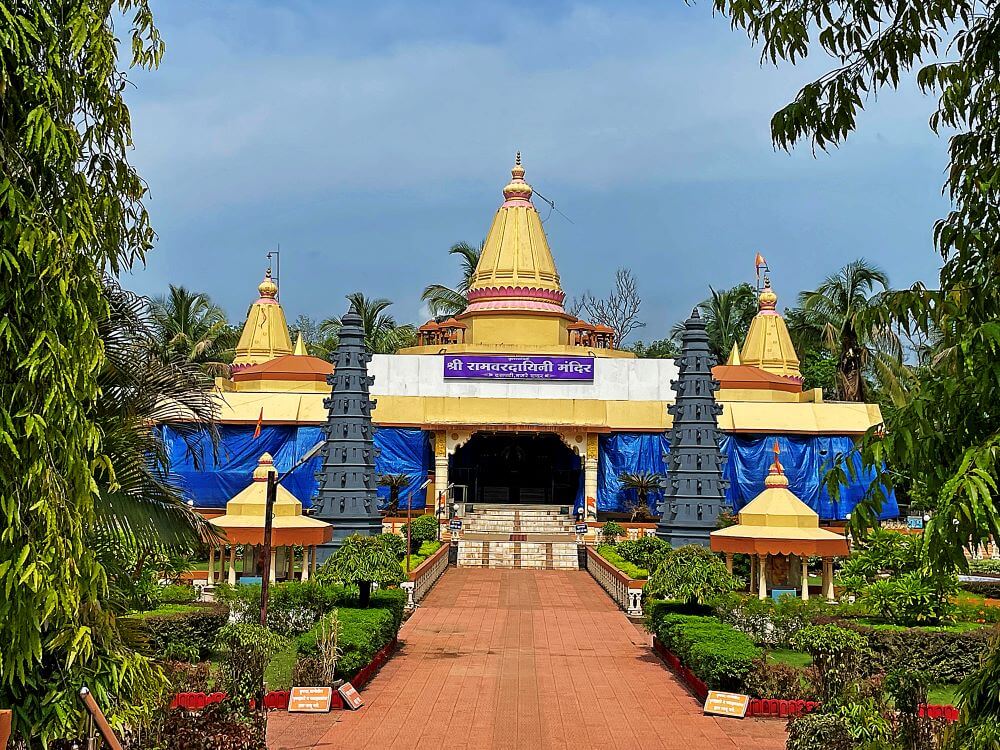
In front of the main temple, there are tall lamp towers (Deepmalas) on both sides. There are ten steps leading up to the assembly hall (Sabhamandap) of the temple, which stands on a four-foot-high plinth. The temple structure consists of an assembly hall and three sanctums (Garbhagrihas). The assembly hall features attractive carvings and seating arrangements for devotees. The beautiful chandeliers on the ceiling catch the eye. The sanctum on the right side of the assembly hall houses the idol of Mahishasurmardini, and the one on the left houses the idols of Waghjai-Trimbakidevi. The 13 pillars surrounding the main sanctum of Ramvaradayini, the 13 spears on each part of the sanctum’s entrance, the 13 small entrances to the temple, and the 13 domes on the temple spire represent the honor bestowed upon the 13 villages of Daspati. In the main sanctum, there is a beautiful idol of Ramvaradayini seated on a silver chariot drawn by five horses with a charioteer. The crowned Goddess, adorned in garments and various ornaments, wears a gentle smile. Behind the Goddess, there is exquisite silver craftsmanship.
Along with various annual festivals, the Ramvaradayini fair held on Chaitra Purnima is the largest and most prominent event here. On this occasion, the Goddess is adorned, and her lap is filled with a saree and blouse piece (Oti). At night, the palanquin of Zholai, the village deity of Kalkavane and sister to the Goddess, the basket (Pardi) of Kalbhairav, the village deity of Kadwad, and the standard (Nishan) of Kalbhairav, the family deity of the Nandivasekar Shindes who host the fair, arrive here. The meeting of the two sisters is celebrated amidst the sound of various musical instruments. Sports competitions are also organized during the fair. Devotees can have the darshan of Ramvaradayini Devi every day from 6:00 in the morning to 8:00 at night.
Although this region is called Daspati as a group of ten villages in the pre-Shivaji era Konkan region of Dabhol-Anjanvel-Chiplun, there are actually 13 villages here. The villages are divided between the Shinde family (11 villages) and the Kadam family (2 villages). The village of Majre-Dadar was granted as an Inam to the people of Daspati for the Goddess between 1520-22. Subsequently, Chhatrapati Shivaji Maharaj, Chhatrapati Sambhaji Maharaj, Maharani Tarabai, and Shahu Chhatrapati issued royal decrees (Sanads) for this temple. This area is a witness to the historical events, upheavals, and fluctuations of Maharashtra over five centuries and is the workplace of capable and astute warriors and heroes.
This sacred temple stands as a testament to deep spiritual devotion, ancient architectural grandeur, and rich local cultural traditions.
The sanctum sanctorum houses the divine idol consecrated according to ancient Vedic traditions, surrounded by serene courtyards and traditional temple architecture.
Navratri, Maha Shivratri, Annual Temple Jatra & Deepotsav
Compare and book flights, secure top-rated local hotels near the temple, hire reliable guides, and rent cars instantly.
Extend your pilgrimage by visiting other highly sacred temples located nearby.


Add ₹999 more to unlock FREE SHIPPING!
Your sacred cart is currently empty.
Shop Photo FramesFill in your delivery details below to place your order.
Add comment