
Add ₹999 more to unlock FREE SHIPPING!
Your sacred cart is currently empty.
Shop Photo FramesAmong the ancient temples of Vidarbha, the Markandeya Temple in Gadchiroli district is metaphorically called the ‘Chakravarti’ (Emperor), while the Balaji Temple in Chimur of Chandrapur district is called the ‘Samrat’ (Supreme Emperor). Gandhiji’s ‘Quit India’ movement had originated from this very Chimur. Therefore, Chimur in Vidarbha is considered a historically and religiously important place. There are many temples in Chimur dating back to the 12th and 13th centuries. Among these, the ancient Mahadeva Temple at Neri in Chimur taluka and the Parvati Mata Temple located a short distance away are considered the glory of this taluka.
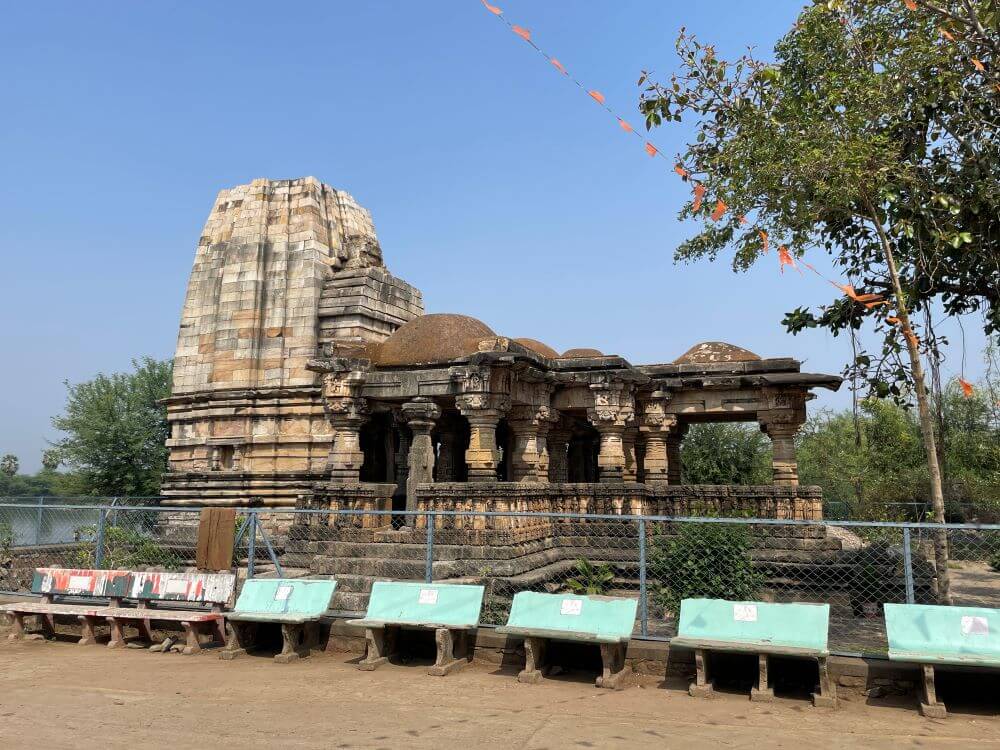
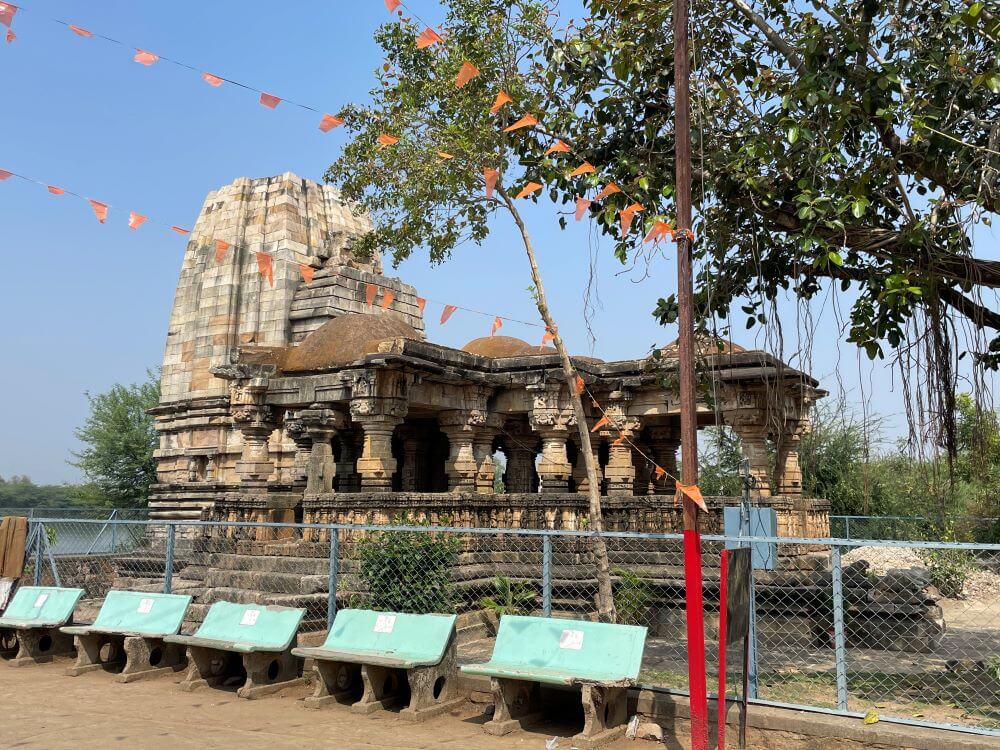
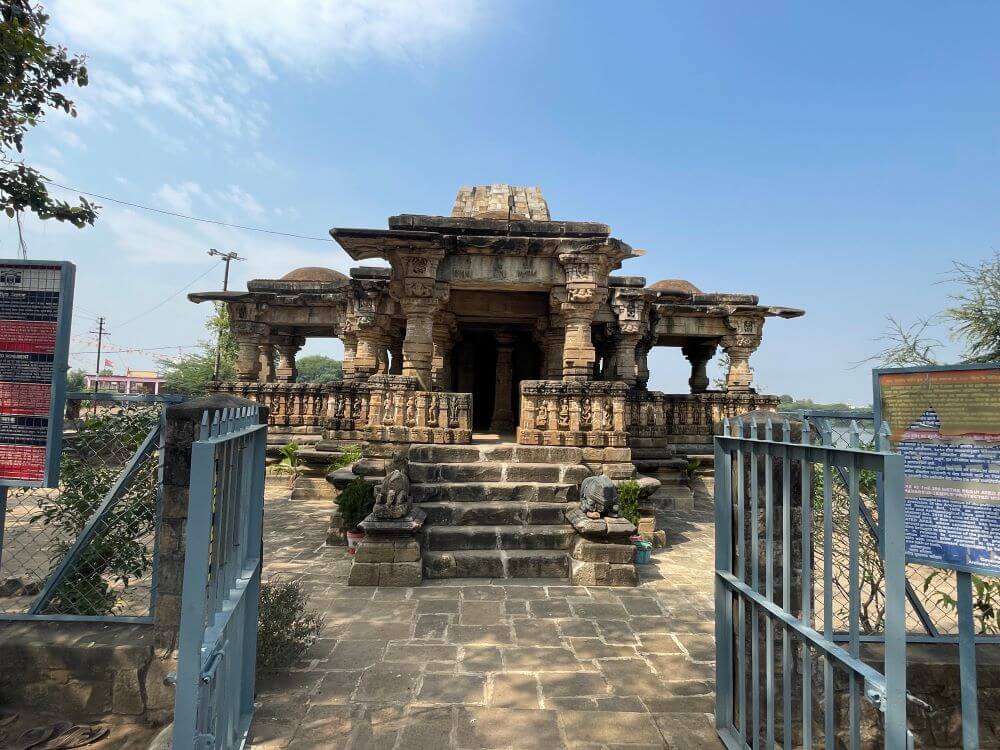
The village of Neri is situated on the Chimur-Navargaon road in Chimur taluka. The twelfth-century Mahadeva Temple located in the old Neri area of this place has been described by Henry Cousens in his writings. Henry was a British archaeologist who worked with the Archaeological Survey of India in the early twentieth century. In his writings, he has elaborated on the architectural style of this temple. Although the style of this temple is Hemadpanti, he has noted that it bears the influence of the Chalukyan architectural style. Facing east, the layout of this temple consists of a mukhamandapa, ardhamandapa, sabhamandapa, antarala, and garbhagriha. There is a similarity in the architectural design between the ancient Shiva temple at Mahadwadi in Chimur taluka and this temple.
There are 4 stone pillars in the mukhamandapa of the temple. In the sabhamandapa, there are 16 pillars, out of which 4 pillars are in the center while the remaining 12 pillars are in the side sections. Numerous sculptures are carved on these pillars from all four sides up to the top. To the right and left of the sabhamandapa, there are 2 more upamandapas. There are pathways leading outside from both of these upamandapas. The sabhamandapa and the upamandapas here feature half-walls with platforms on them. While proceeding from the sabhamandapa towards the antarala, there is a Nandi at the entrance of the antarala, and there are devakoshtakas (niches for deities) in the walls on both sides of the antarala.
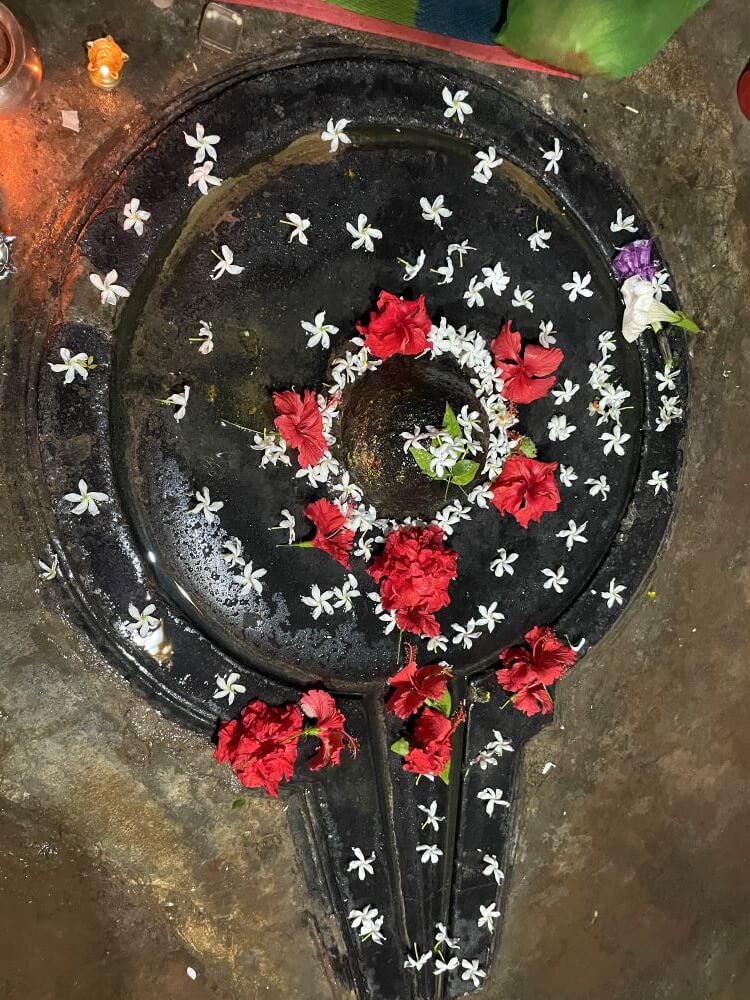
The sanctum sanctorum here is set somewhat deeper than the inner hall, and one has to descend 3 steps to enter it. There is a Shivling in the sanctum sanctorum. In the divine niche behind the Shivling, there are idols of Mother Annapurna, and by her side, idols of Lord Ganesha and a serpent sculpture. The spire of this temple was renovated at a later period. It is said that in ancient times there was a room within this peak, and sages or seers would sit there and perform penance and meditation.
On the outer walls of the temple’s mukhamandapa and ardhamandapas, hundreds of sculptures are carved, including Lord Brahma, avatars of Lord Vishnu, Vamana, idols of Lord Shiva, Arjuna’s feat of concentration, Nataraja, Nritya Ganesha, Goddess Saraswati, Goddess Parvati, Lord Garuda, Lord Hanuman, Muralidhar, Bhairava, Mahishasuramardini, Chamunda, various deities, diverse Apsaras, veena players, flute players, mridangam players, Surasundaris, a scene of a wrestling match, a mother and child, and some mithuna sculptures. Due to these sculptures, the exterior of this temple appears distinctive. Currently, this temple is under the jurisdiction of the Archaeological Department, and a wire fence has been erected around the temple by the department. Devotees can visit and have darshan at this temple from six in the morning to seven in the evening.
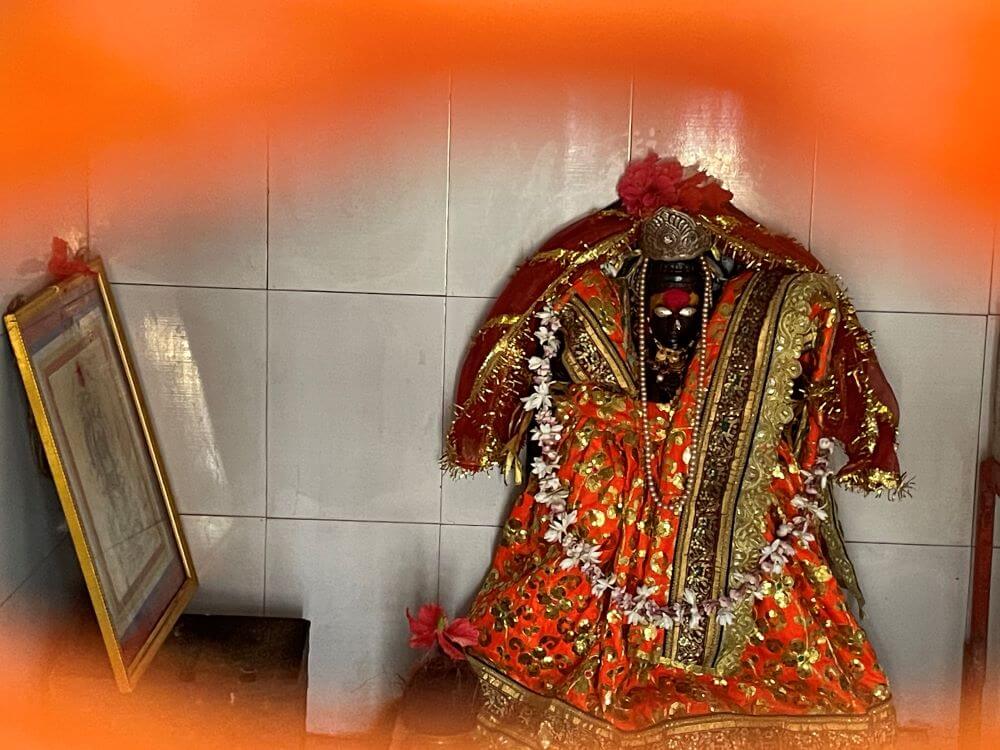
About 100 meters away from this temple is the temple of Goddess Parvati. During excavation at the very same spot where the temple stands today, an idol of Mother Parvati was found buried in the ground. At that very location, in the year 1965, the consecration (Pran Pratishtha) of the idol of Mother Parvati was performed at the hands of Rashtra Sant Tukdoji Maharaj, and a temple was built around it.
The idol of Goddess Parvati in the sanctum sanctorum of the temple is made of black stone, and its height is 2 feet 4 inches and width is 1 foot 3 inches.
Of the four hands of this Chaturbhuj idol, one of the upper two hands holds a Shiva Lingam within a lotus, and the other holds an image of Lord Ganesha. The lower two hands hold a Japa Mala (rosary) and a Kamandalu.
There is a crown on the head, earrings in the ears, and a halo (prabhaval) behind the idol. At the feet of this idol are $३$ female attendants, and a lion is seated near the left foot. Kartikeya Swami, mounted on a peacock, is carved in the upper section above the lion.
It is said that this idol also dates back to the 12th century. The Navaratri festival is celebrated on a grand scale every year in this Parvati temple.
This sacred temple stands as a testament to deep spiritual devotion, ancient architectural grandeur, and rich local cultural traditions.
The sanctum sanctorum houses the divine idol consecrated according to ancient Vedic traditions, surrounded by serene courtyards and traditional temple architecture.
Navratri, Maha Shivratri, Annual Temple Jatra & Deepotsav
Compare and book flights, secure top-rated local hotels near the temple, hire reliable guides, and rent cars instantly.
Extend your pilgrimage by visiting other highly sacred temples located nearby.


Add ₹999 more to unlock FREE SHIPPING!
Your sacred cart is currently empty.
Shop Photo FramesFill in your delivery details below to place your order.
Add comment