
Add ₹999 more to unlock FREE SHIPPING!
Your sacred cart is currently empty.
Shop Photo FramesThe village of Bhisi in Chimur Taluka is renowned for its ancient Bhonsle-era Mahadev Temple and Vitthal-Rukhmini Temple. Both temples are situated within the same complex, and the seven-day Yatra (fair) held here at the Mahadev Temple starting from Rangpanchami is one of the major Yatras in Chimur. A unique feature of this Yatra is that numerous generous devotees donate so much money and food grains that even after serving meals to all the visiting devotees during the festival, more than half of the grain remains unused. Taking into account the religious significance of this temple and the deep devotion of the pilgrims, the state government allocated substantial funds in २०२३ for the development of the temple premises.
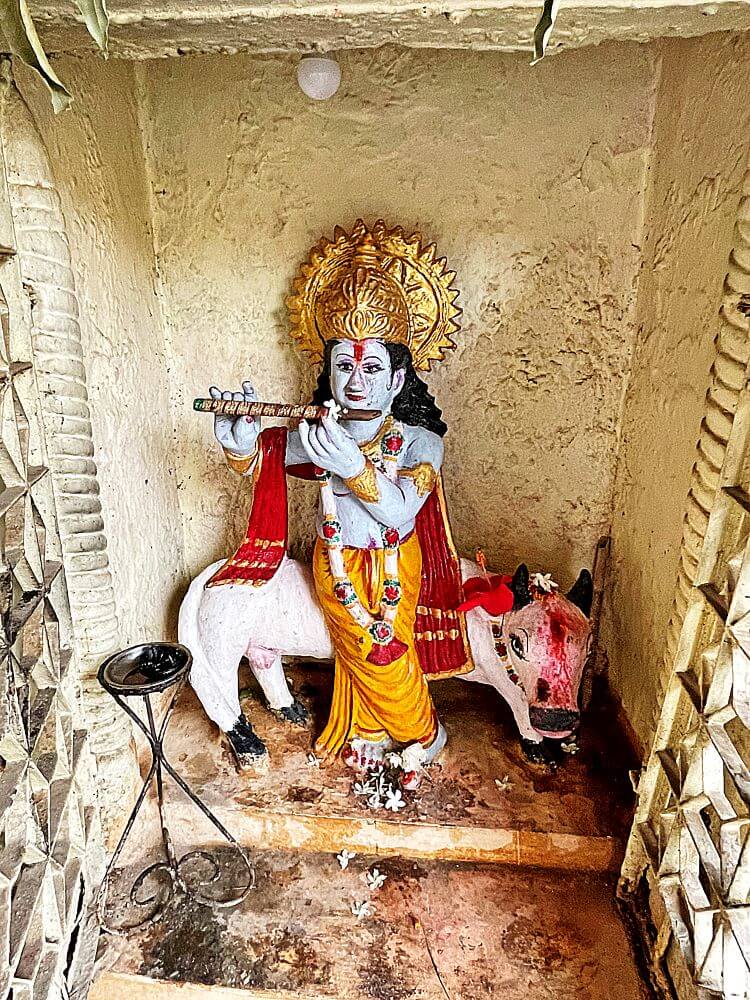
These two temples come under the purview of the Vitthal-Rukhmini Devasthan of Bhisi. In this region, this temple is famously known as an “Ughdaughadi” (open-air style) temple. Apart from these two large temples, there are also shrines dedicated to Lord Vishnu, Lord Hanuman, Sant Dnyaneshwar, Sant Eknath, Sant Tukaram, Sant Tukdoji, and Garuda. The architecture of the Mahadev Temple here is distinctive, built upon a plinth standing about ४ feet above the ground level. The temple layout comprises the Sabhamandap (assembly hall), Antarala (vestibule), and Garbhagriha (sanctum sanctorum). The initial section of the Sabhamandap features four stone pillars, from where five steps lead up into the assembly hall. Near the entrance of the Sabhamandap, sculptures of Narasimha, Surya, Vishnu, and other divine figures are carved. This Sabhamandap contains six pillars, with load-bearing Yaksha figures carved on their upper portions. The Sabhamandap is open and lacks outer walls.
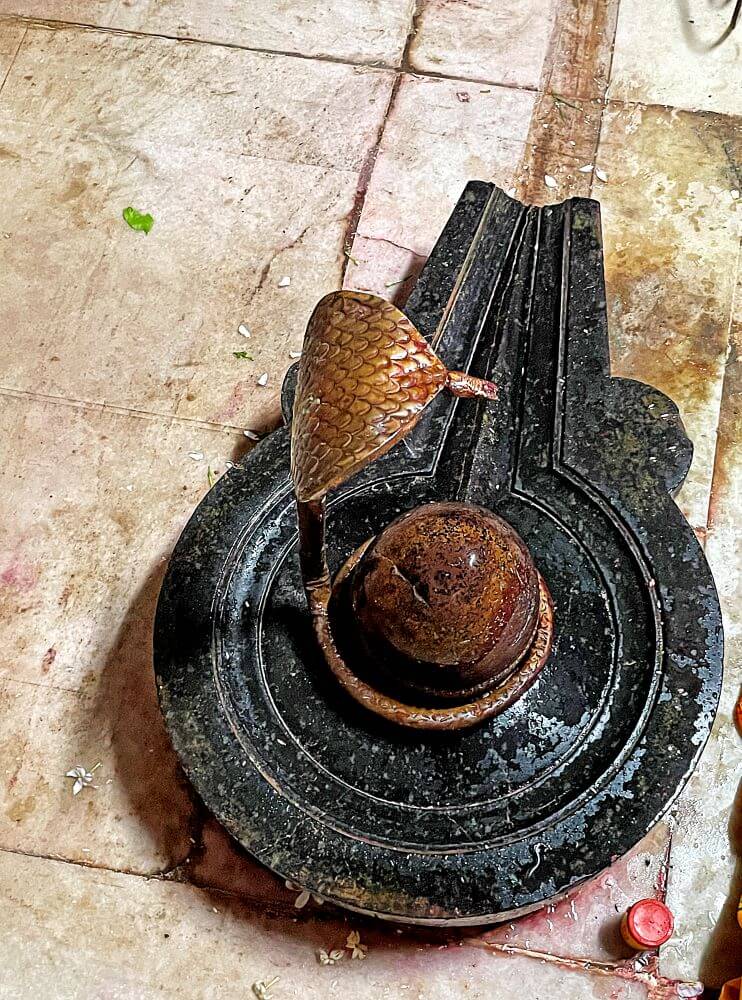
The entrance to the Antarala is arched, adorned with sculptures of Dvarapalas (gatekeepers) on both sides of the doorframe and intricate carvings above. The Antarala houses Nandi, while the Garbhagriha enshrines an ancient Shiva Linga. In front of this Shiva Linga are an idol of Lord Ganesha and two other family deity idols. It is said that someone once struck this Shiva Linga with an axe, the scars of which are still visible on it.
Numerous sculptures are engraved on the exterior walls of the temple. Among these, a distinctive sculpture depicts Ravana with ten heads and twenty arms. There is also a sculptural depiction of the battle between Rama and Ravana, in which Ravana is similarly shown with ten heads and twenty arms. Additionally, there is a carving of two people and a charioteer in a chariot drawn by two horses. A tall Shikhara (spire) crowns the Garbhagriha of the temple, featuring a distinctive architectural design. A grand seven-day festival is celebrated at the Mahadev Temple starting from Rangpanchami, during which a grand Yatra is held. A Bhandara (Mahaprasad and communal meal) is organized during this festival. To fulfill their vows, many devotees donate food grains for this Bhandara. In addition, numerous generous devotees offer monetary donations and grains. The quantity of grain collected here is so vast that even after the Bhandara, more than half of the grain is left over. The temple committee subsequently sells this surplus grain. It is said that during the Bhonsle period, when this village was a Malguzari (revenue estate), the local Gandhi family would send Naivedya (food offering) to this temple every day. Adjoining the Mahadev Temple is the Vitthal-Rukhmini Temple.
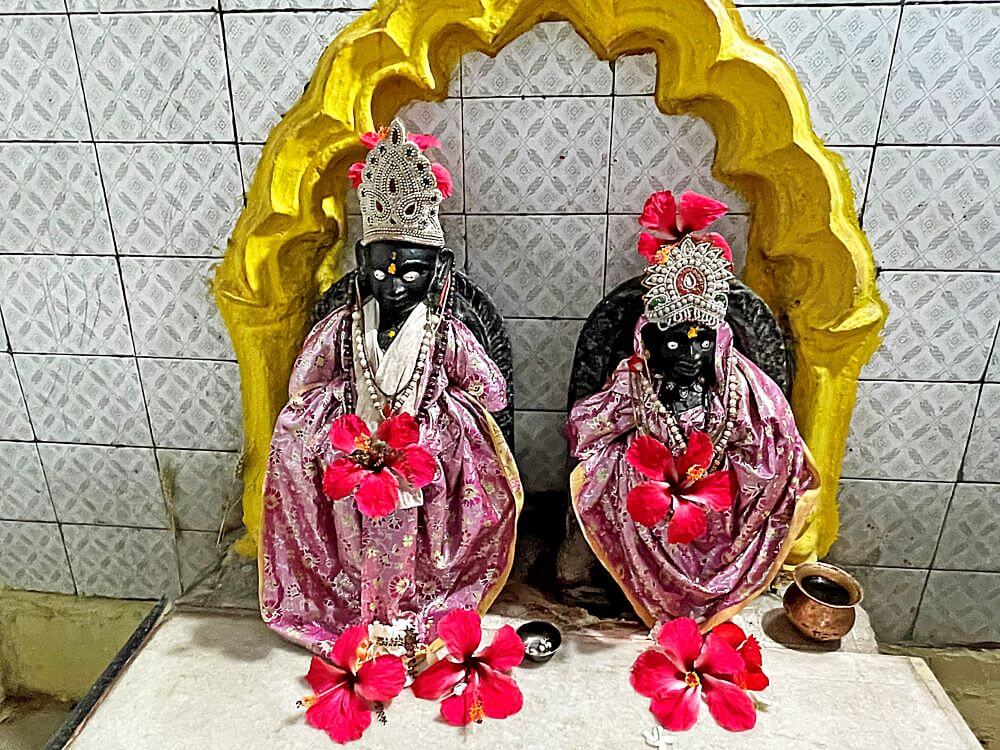
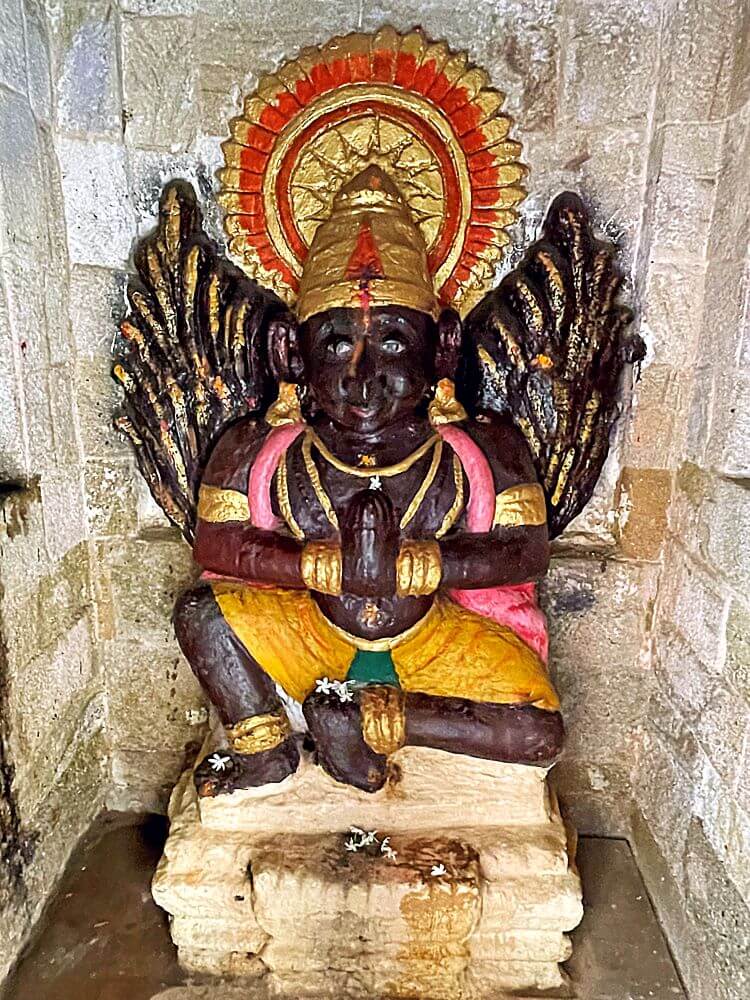
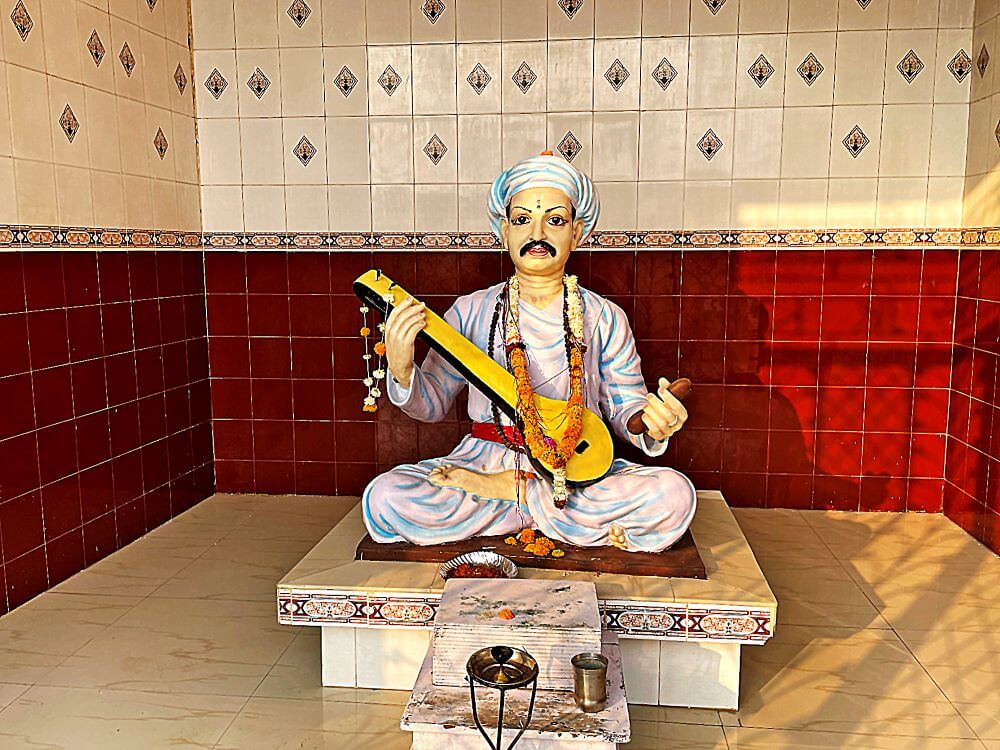
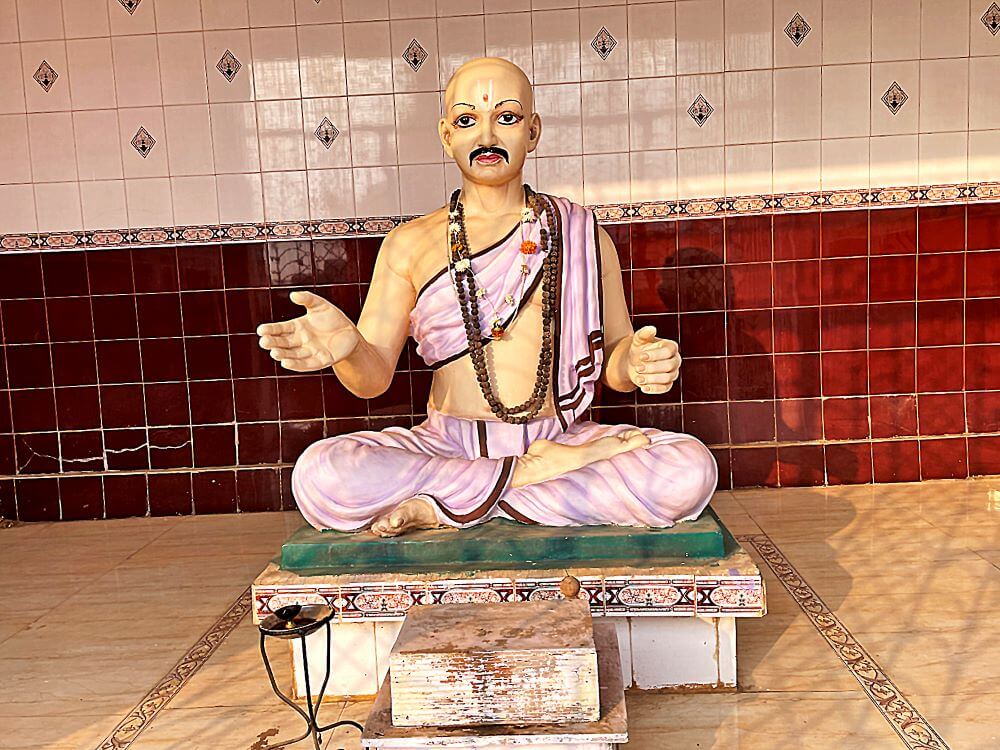
In front of this temple, inside a small shrine (Devali), sits a distinctive idol of the deity Garuda in a cross-legged posture. The Sabhamandap of the Vitthal-Rukhmini Temple is also open, and the Garbhagriha houses striking black stone idols of Vitthal and Rukhmini placed within a Makhara (decorated alcove) on a raised platform. Both idols have intricately carved stone backings (Pathshila). Adorned with silver crowns, silver eyes, various necklaces, and beautiful garments, these idols look resplendent. It is said that this Vitthal Temple was built three hundred years ago by a Kasar (metal merchant). Adjacent to the temple are sanctums containing large idols of Gajanan Maharaj, Sant Eknath, Sant Tukaram, and Sant Dnyaneshwar. Every year, the Eknathi Bhagavata Saptaha is organized in this temple. Around ५०,००० devotees attend the concluding ceremony of this Saptaha, and Mahaprasad is served to all of them by the temple committee.
In a small shrine within the complex stands an idol of Santoshi Mata, with an idol of Bhavani Mata nearby. It is said that previously there was a temple of Bhavani Mata here, but its idol was relocated to the Bhimadevi Temple in Bhivapur. Consequently, a new idol of Bhavani Mata was crafted and consecrated in the Santoshi Mata Temple.
This sacred temple stands as a testament to deep spiritual devotion, ancient architectural grandeur, and rich local cultural traditions.
The sanctum sanctorum houses the divine idol consecrated according to ancient Vedic traditions, surrounded by serene courtyards and traditional temple architecture.
Navratri, Maha Shivratri, Annual Temple Jatra & Deepotsav
Compare and book flights, secure top-rated local hotels near the temple, hire reliable guides, and rent cars instantly.
Extend your pilgrimage by visiting other highly sacred temples located nearby.


Add ₹999 more to unlock FREE SHIPPING!
Your sacred cart is currently empty.
Shop Photo FramesFill in your delivery details below to place your order.
Add comment