
Add ₹999 more to unlock FREE SHIPPING!
Your sacred cart is currently empty.
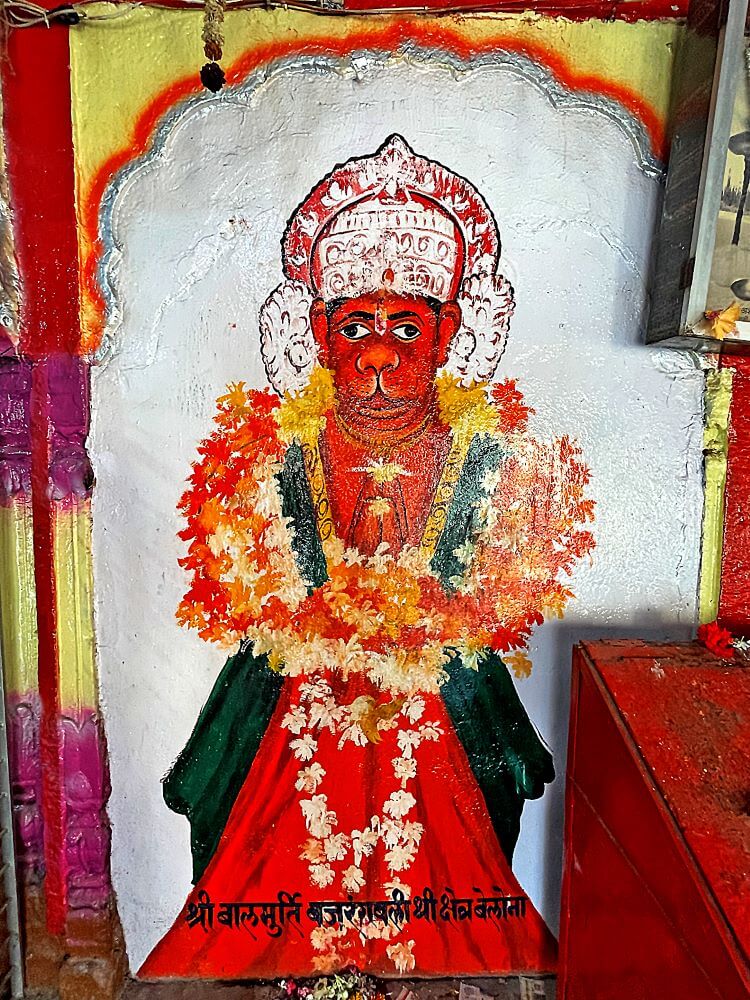
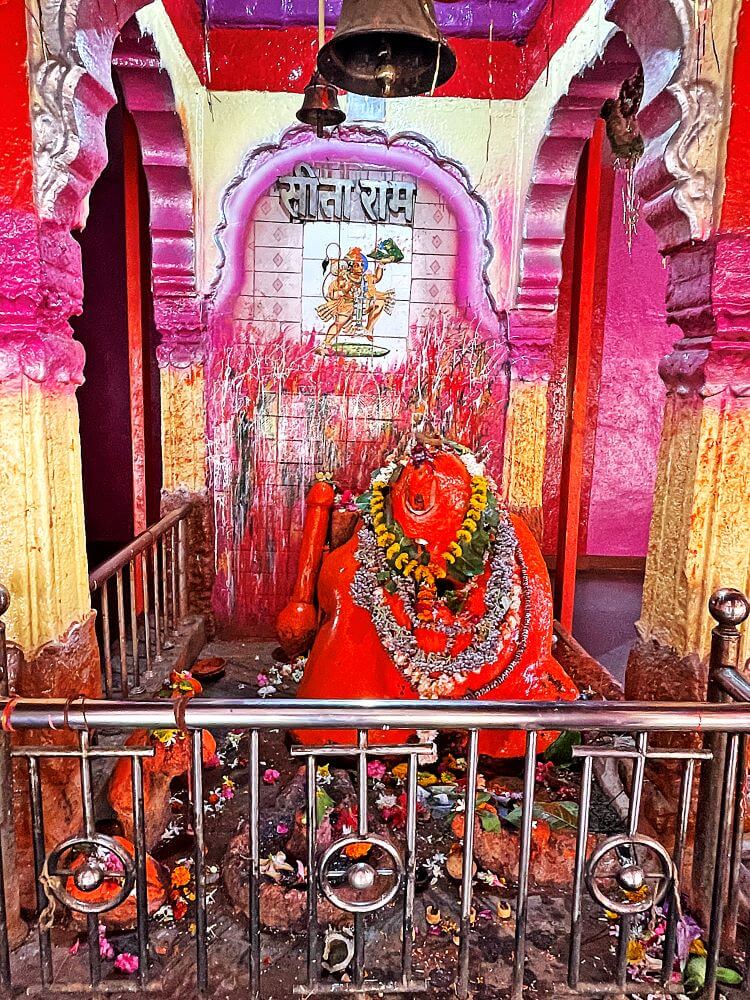
Shop Photo FramesWhen the Lord of Lanka, Ravana, attempted to imprison Hanuman and commanded that His tail be set ablaze, Hanuman ji wrought destruction upon Lanka. While this Puranic tale is widely known, there is a village in Belona, Nagpur District, where Hanuman is kept in confinement throughout the year, and is brought out for worship for only two and a half days annually. Thus, the Hanuman here is renowned as ‘Bandi Hanuman’ (Imprisoned Hanuman) and is enshrined in the local Vitthal Temple.
The legend of Bandi Hanuman tells of a gentleman named Narahari Joshi who resided in Belona village. Being adept in Vedic scriptures, everyone addressed him as Guruji. The villagers would undertake no auspicious task without consulting this Guruji. One day, a cowshed in the village suddenly caught fire. Everyone in the village began to strive to extinguish the blaze. Through their efforts, the fire gradually came under control; however, at that very moment, sounds began to emanate from beneath the earth at the site of the fire.
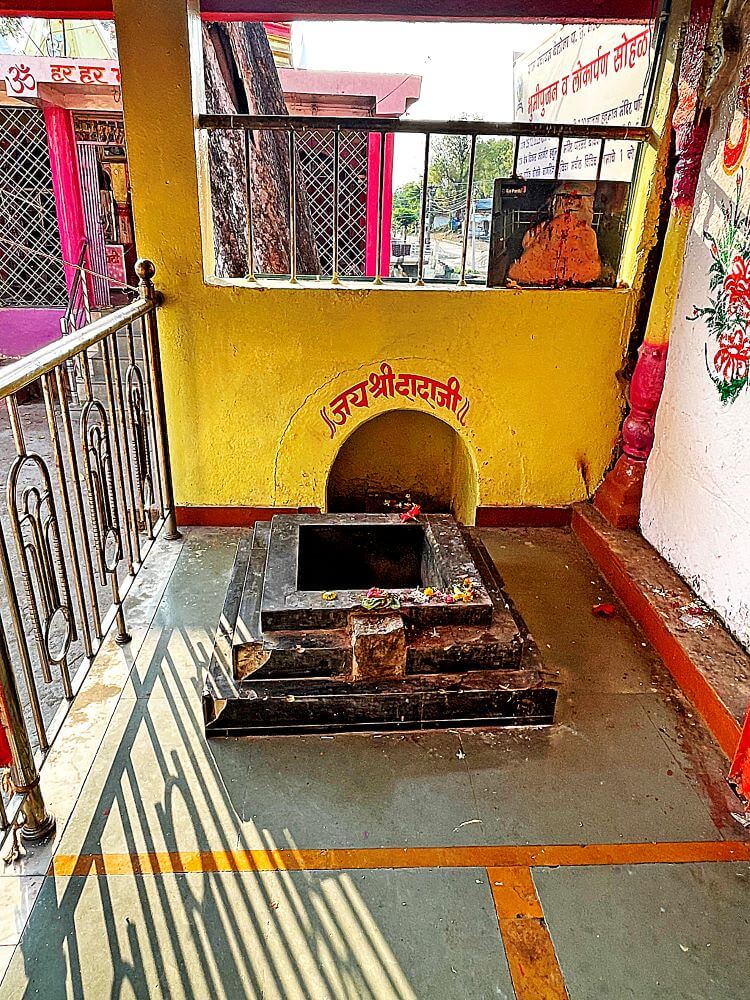
The villagers were astonished by the sounds from underground and sought a solution from Guruji. Guruji, through His inner wisdom, perceived that there was an idol of Bal Hanuman (Child Hanuman) beneath the earth. As they began to dig, the villagers discovered a box. As they tried to retrieve it, the box began to sink further into the ground. Guruji prayed to Hanuman and sought forgiveness if any unwitting mistake had been made. Then, a voice emerged from the box, saying, “I will come up, but only for two and a half days! Thereafter, I will return to My abode.” At that time, Guruji reverently implored Hanuman, “If it is Your wish, then come out for only two and a half days, but for the safety of the villagers, please reside here permanently.” Hanuman accepted Guruji’s plea, and the box gently rose above the ground. Upon opening the box, they found an idol of Bal Hanuman in a posture of salutation. The villagers performed the prescribed rituals of worship for this idol and consecrated it in the village’s Vitthal Temple. Since then, the manifestation ceremony (Prakatdin Sohala) of Hanuman has been celebrated here. This festival has a tradition spanning over two hundred and sixty years.
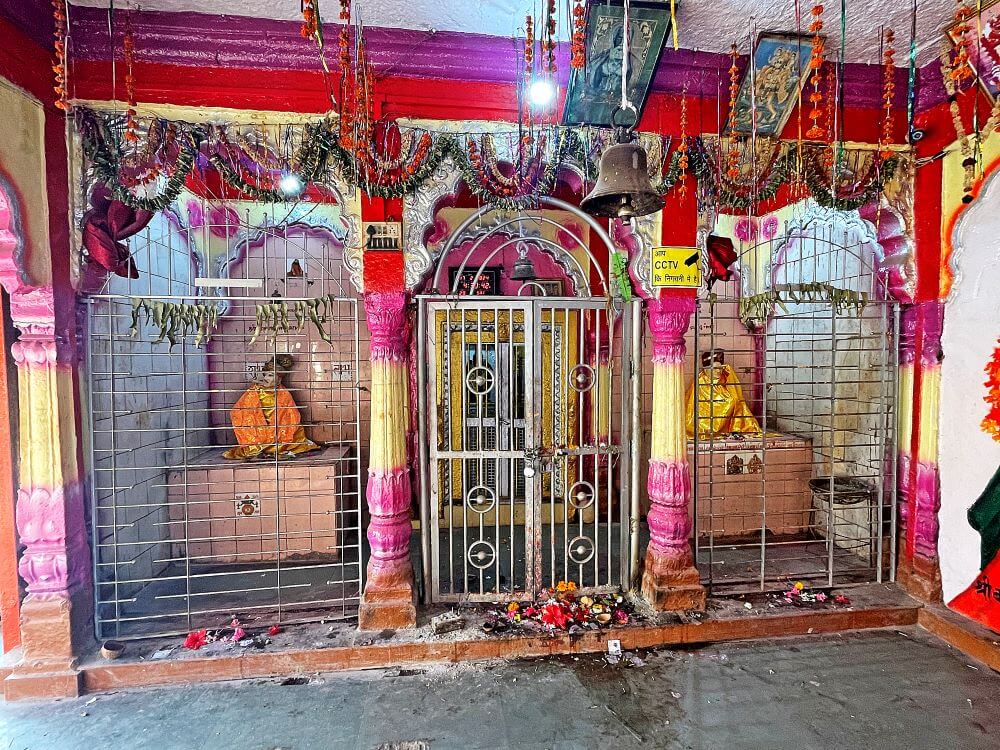
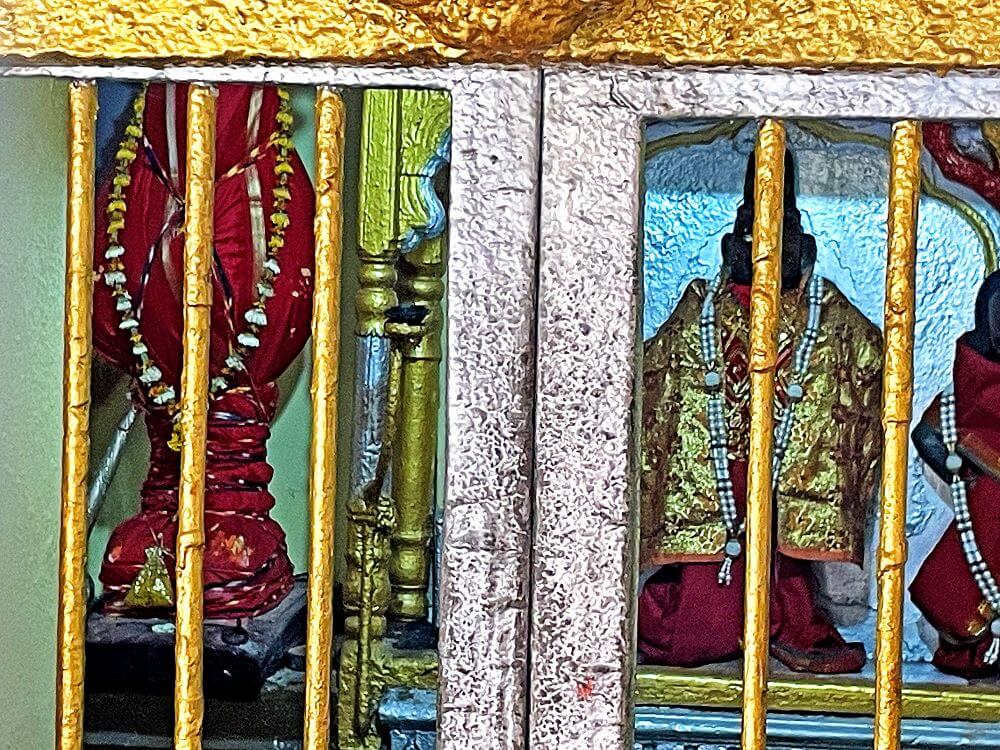
In the heart of Belona village, in Narkhed Taluka of Nagpur, stands an ancient Vitthal Temple. While the principal deities in the sanctum sanctorum of this temple are Vitthal and Rukmini, the Hanuman idol, wrapped in red silk cloth, beside them, and the chariot procession (Rath Yatra) celebrating Hanuman’s manifestation, are major attractions here. This Bajrangbali remains confined in this Vitthal Temple throughout the year; however, when He emerges for two and a half days, the village is filled with a festive atmosphere.
The idol of Hanuman in the original Vitthal-Rukmini Temple is not in His usual powerful form, but in His child form. This idol stands with folded hands. During the two-and-a-half-day manifestation festival, on Margashirsha Chaturthi, this idol, wrapped in cloth, is worshipped with due rites. On this day, the idol is placed before the Vitthal-Rukmini idols in the sanctum for the devotees’ darshan. Thereafter, in the evening, the idol is placed in a chariot, and a Rath Yatra is taken out. This Rath Yatra also boasts a tradition of approximately two hundred and sixty years. Rangolis are drawn along the route of the Rath Yatra and in front of every home. The entire village, including the temple, is illuminated. The whole village is thronged by thousands of devotees at this time. Late at night, this Rath Yatra returns to the temple.
On the second day, an Abhishek (ritual bathing) is performed for Hanuman’s idol, while on the third day, that is, on Pratipada, Hanuman returns to His confined state in the Vitthal Temple here. It is said that Hanuman’s expressions appear different on all three days of the festival. On the first day, He has a smiling countenance, on the second day, He is serene, and on the third day, He appears in a fierce form.
Although Hanuman’s idol is brought out for only two and a half days, the villagers celebrate this event for a full week. According to local records, two to two and a half lakh devotees visit for this festival. Villagers who reside elsewhere for work or business make it a point to return at this time. It is said that Sant Tukadoji Maharaj and Sant Gulabbaba also participated in this Rath Yatra. Devotees believe that this Bal Hanuman fulfills vows and grants wishes. A large number of devotees make vows to Bal Hanuman for the blessing of children. This temple also houses shrines dedicated to Narmadamata and Mahadev.
Although it is not our custom to keep a deity confined or covered after any religious festival, this idol remains confined for three hundred and sixty-two days of the year. This is the unique aspect of this temple. Due to the devotees’ faith in this temple and the number of devotees who visit throughout the year, the state government has included this temple in the ‘C’ category list of pilgrimage sites.
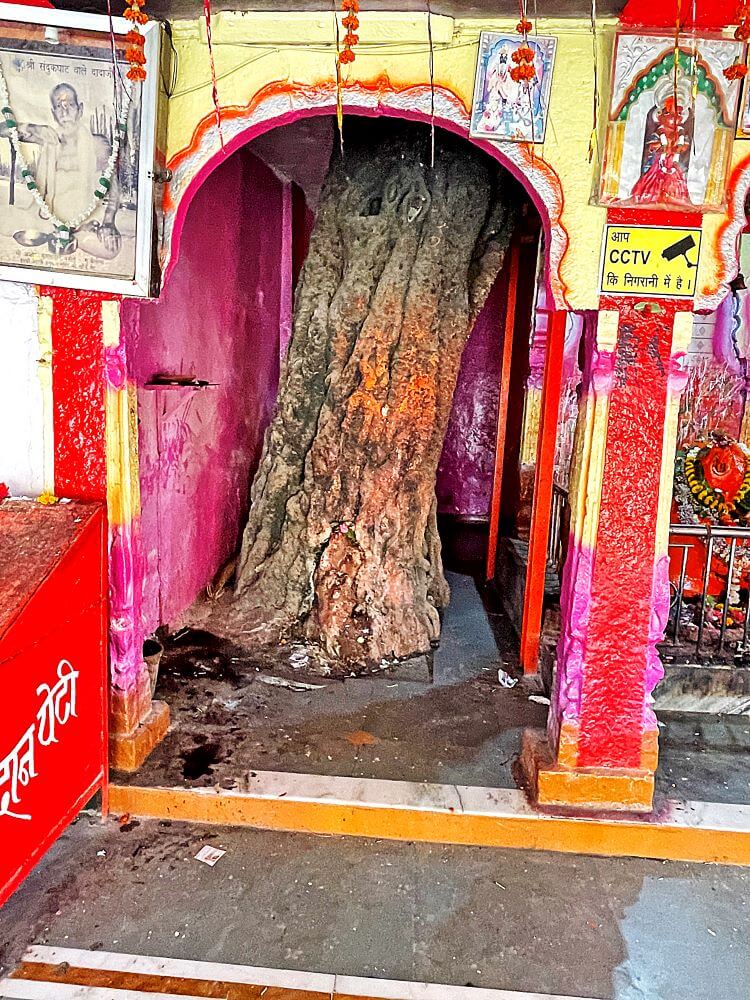
This sacred temple stands as a testament to deep spiritual devotion, ancient architectural grandeur, and rich local cultural traditions.
The sanctum sanctorum houses the divine idol consecrated according to ancient Vedic traditions, surrounded by serene courtyards and traditional temple architecture.
Navratri, Maha Shivratri, Annual Temple Jatra & Deepotsav
Compare and book flights, secure top-rated local hotels near the temple, hire reliable guides, and rent cars instantly.
Extend your pilgrimage by visiting other highly sacred temples located nearby.


Add ₹999 more to unlock FREE SHIPPING!
Your sacred cart is currently empty.
Shop Photo FramesFill in your delivery details below to place your order.
Add comment