
Add ₹999 more to unlock FREE SHIPPING!
Your sacred cart is currently empty.
Shop Photo FramesThe Sankat Mochan Bade Hanuman Temple at Telangkhedi in Nagpur is one of the most famous ancient temples in Nagpur and the Vidarbha region. It is said that this temple dates back to the pre-Bhonsle era. Being located in Telangkhedi village, it is popularly known as ‘Telangkhedi Hanuman’. Devotees believe that the Hanuman here is ‘Jagrut’ (awakened) and grants boons, fulfilling the heartfelt prayers of his followers. Along with the Hanuman temple, the Kalyaneshwar Shiva Temple in Telangkhedi is also famous and serves as a place of deep faith for many devotees in Vidarbha.
This Hanuman temple is situated on a hill between Futala Lake and Seminary Hill. The idol of Hanuman here is ‘Swayambhu’ (self-manifested), and while there is no precise information about when it appeared, scholars believe the temple predates the Bhonsle reign. It is said that about 300 years ago, the site where the temple stands today was a dense forest. At that time, this land was famous as a ‘Tapobhumi’ (land of penance) for sages. Many Naga Sadhus used to perform Homa-Havan here. The ‘Dhuni’ (sacred fire) from that era can still be seen in the temple premises today. Additionally, the ‘Samadhis’ of the Mahants who served this temple are also located here. It is believed that Lord Shriram resided on this hill for some time during the Satya Yuga.
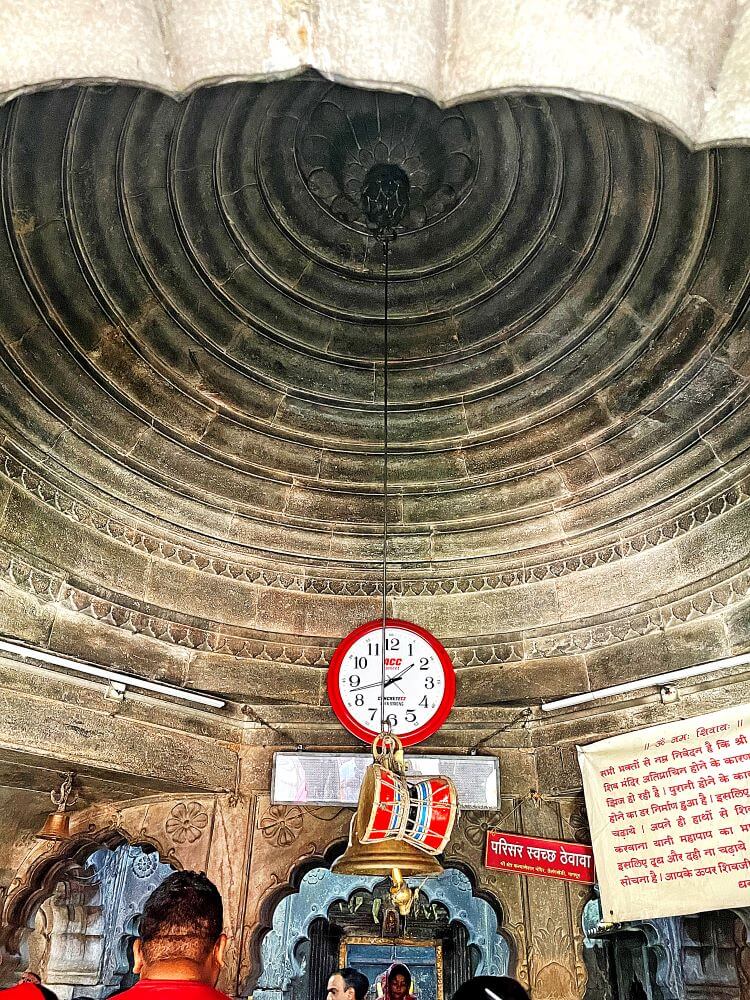
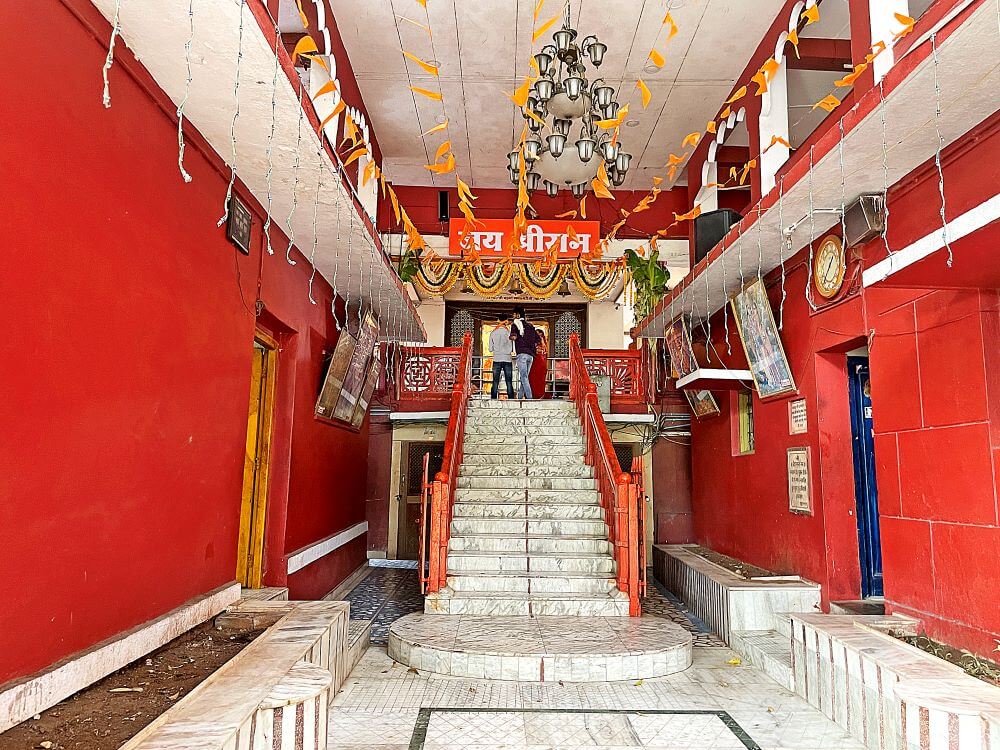
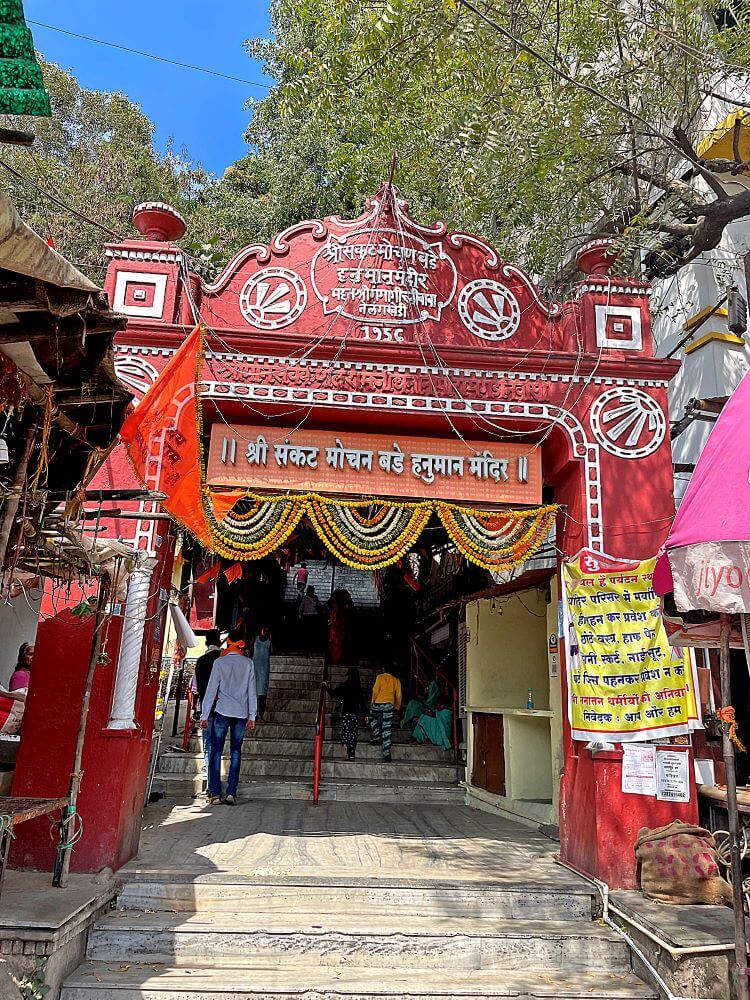
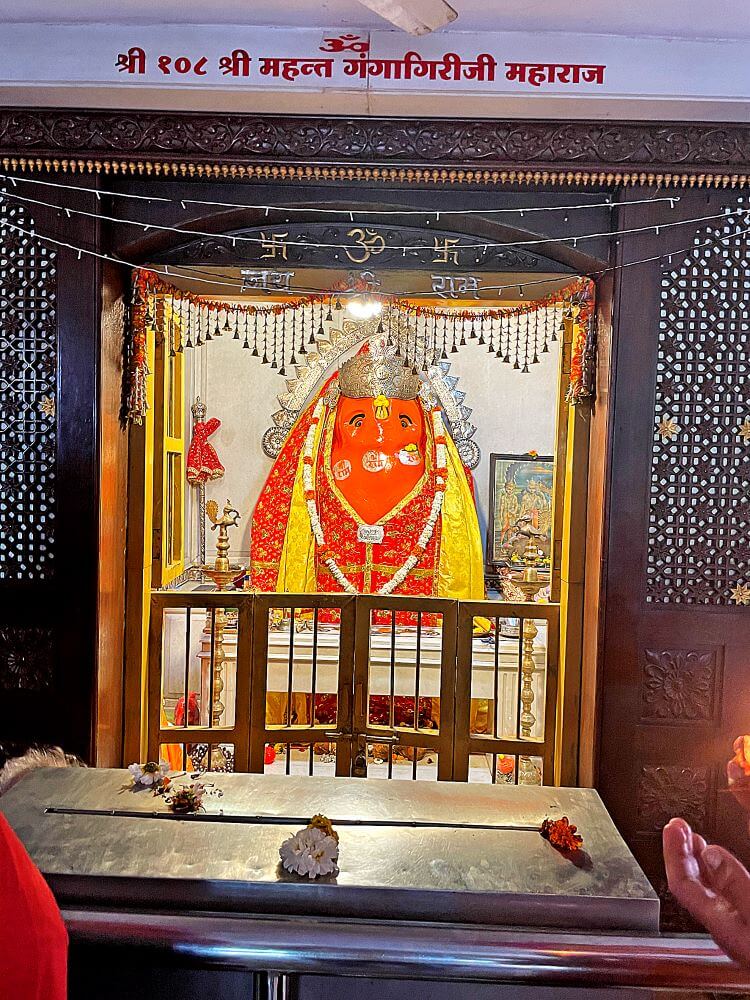
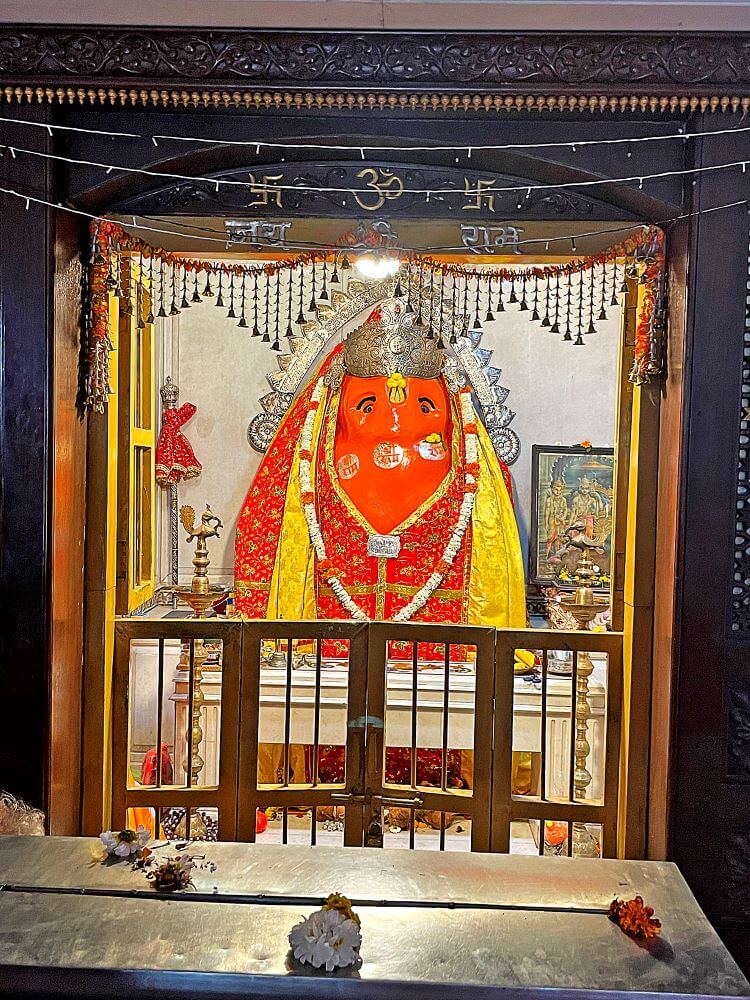
The arched entrance of this temple is located along the main road near Seminary Hill on the outskirts of Nagpur city. There are about 50 to 60 shops selling worship materials here. To reach the temple situated on the height, there are about 60 steps. These marble steps have a divider, and separate paths have been created for devotees to go up and come down. Ancient banyan trees stand along this staircase, and there are some vermilion-smeared idols here as well. Before the main temple, there is the Samadhi of Gangagiri Maharaj. In the sanctum sanctorum located within the grand assembly hall of the main temple, there is a 6-foot-tall Swayambhu vermilion-smeared idol of Hanuman on a pedestal. Hanuman wears a crown on his head, and behind it is a uniquely designed ‘Prabhaval’ (halo). Around the main sanctum are temples dedicated to Shri Ganesha, Shri Dattatreya, Ram-Lakshman-Sita, Saraswati Mata, Gayatri Devi, Shri Vishnu-Lakshmi, Gauri Shankar, Kapil Muni, Lord Parashurama, Trimukhi Kartik Swami, Panchmukhi Hanuman, Mahadev, Radha-Krishna, and Durga Mata.
The temple premises are spacious, and there is a large assembly hall for religious programs. Thousands of devotees come for Darshan on Tuesdays and Saturdays. A grand festival is celebrated here on Hanuman Jayanti. At dawn, the Hanuman idol is anointed with Abhisheka. This is followed by Aarti and the recitation of Hanuman Chalisa. Throughout the day, various religious programs are organized in the temple, including Akhand Ramayan Path, Bhajans, and Kirtans. The temple committee runs a Yoga school and a Goshala (cow shelter) here. Devotees can have Darshan of Hanuman at this temple from 6 in the morning to 7 in the evening.
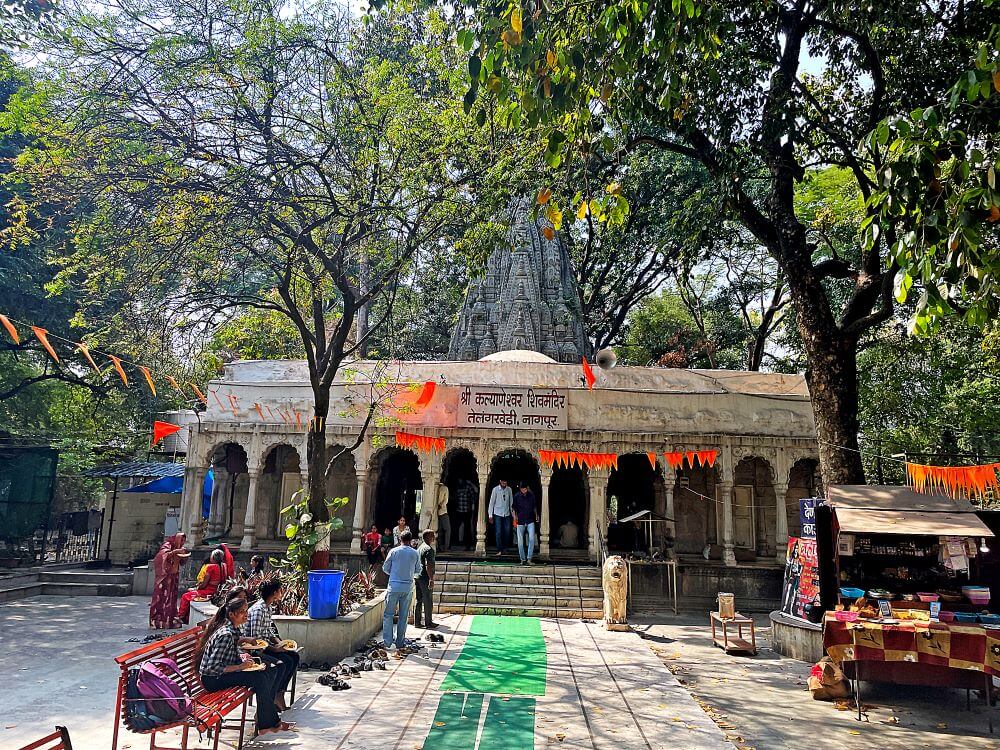
The Kalyaneshwar Shiva Temple, located approximately 1.5 to 2 kilometers from the Telangkhedi Hanuman Temple, is also considered a famous and ancient religious site in Nagpur. According to historical records, this east-facing Shiva temple was built in 1794 by Chimabai, the mother of the second Raghuji and wife of Mudhoji. Therefore, this temple is over 230 years old. The temple has two entrances, one from the north and one from the south. The structure of the temple consists of an assembly hall (Sabhamandap), an intermediate chamber (Antaral), and a sanctum sanctorum (Garbhagriha). There are 12 pillars at the entrance of the assembly hall, connected to each other by 11 arched vaults at the top. The assembly hall has 32 pillars, and there are three half-pillars at each end of the intermediate chamber. Additionally, some pillars are embedded in the walls. This is the only ancient temple in the city that has a total of 97 pillars. A large idol of Nandi is placed between the intermediate chamber and the assembly hall.
Of the two niches in the intermediate chamber, one contains a two-foot-tall brass idol of Ganesha. Although there is no special carving on the entrance of the sanctum sanctorum, there are ‘Dwarapalas’ (gatekeepers) on both sides and an idol of Ganesha on the lintel. Inside the sanctum, there is a large Shiva Linga covered in brass. It is said that this temple was the family deity of the Bhonsle dynasty since ancient times. During the month of Shravan, the Bhonsle family used to perform worship here. In 1925, all of the Bhonsle family’s property here was taken over by the court, but this temple remained with the descendants of the Bhonsle family. Currently, this temple is included in the list of World Heritage sites. Being a famous temple in Nagpur, many devotees visit here daily. There is a huge crowd of thousands of devotees here on Shravani Mondays. It is recorded that about one lakh devotees visit for Darshan on the day of the Mahashivratri festival. Devotees can have Darshan of Kalyaneshwar at this temple from 5:30 in the morning to 10 at night.
This sacred temple stands as a testament to deep spiritual devotion, ancient architectural grandeur, and rich local cultural traditions.
The sanctum sanctorum houses the divine idol consecrated according to ancient Vedic traditions, surrounded by serene courtyards and traditional temple architecture.
Navratri, Maha Shivratri, Annual Temple Jatra & Deepotsav
Compare and book flights, secure top-rated local hotels near the temple, hire reliable guides, and rent cars instantly.
Extend your pilgrimage by visiting other highly sacred temples located nearby.


Add ₹999 more to unlock FREE SHIPPING!
Your sacred cart is currently empty.
Shop Photo FramesFill in your delivery details below to place your order.
Add comment