
Add ₹999 more to unlock FREE SHIPPING!
Your sacred cart is currently empty.
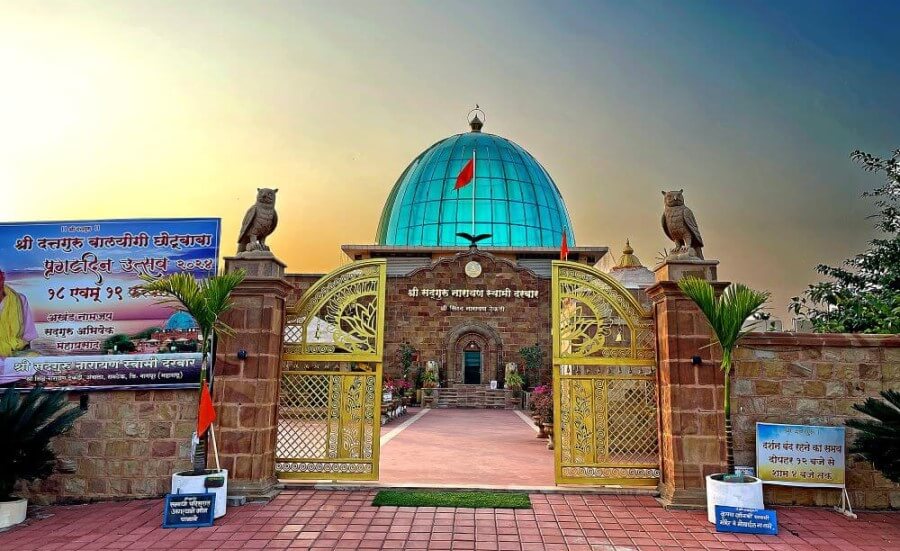
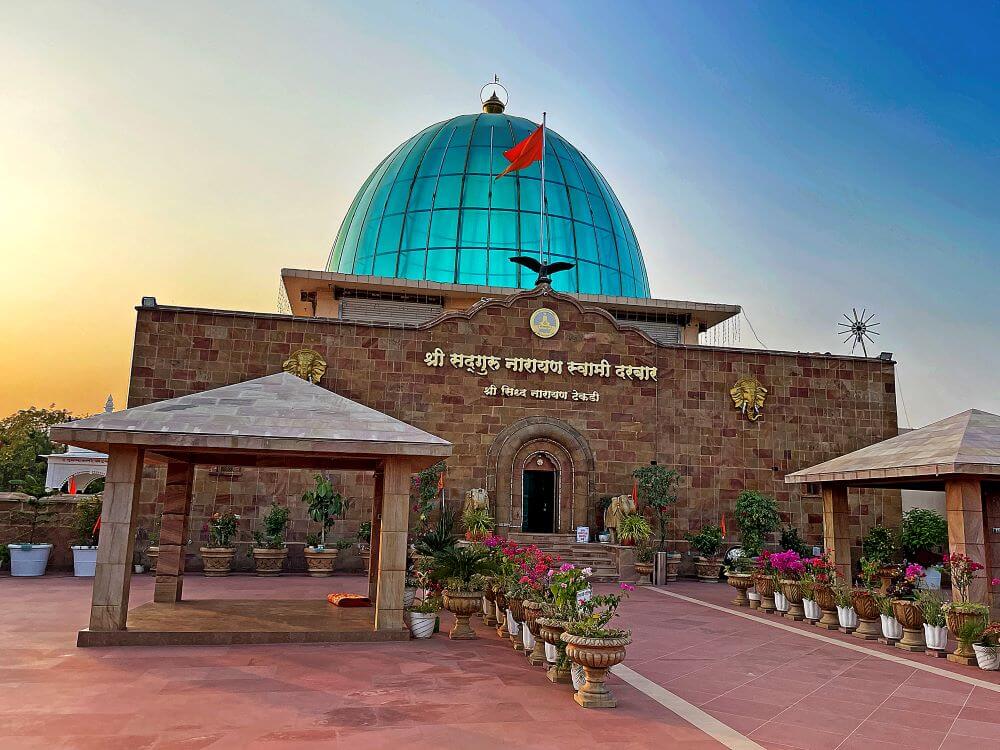
Shop Photo FramesThe magnificent Narayan Swami Darbar, situated on Narayan Tekdi adjacent to the pilgrimage site of Ambala near Ramtek city, has been renowned as a land of saints since ancient times. It was here that Shri Sadguru Narayan Swami Maharaj attained Sanjeevan Samadhi five hundred years ago. A unique feature of this place is that the flame lit by Sadguru Narayan Swami himself at the time of his living Samadhi has remained continuously burning for five hundred years. For this reason, this Darbar is also known as the Jyotiswaroop Sadguru Darbar.
The lake naturally formed at the foothills of the Ramtek mountain ranges is known as Ambala Lake. The perimeter of this lake is one lakh thirty-three thousand five hundred square meters. On the banks of the lake are many hermitages of sages, ancient temples, and monuments. These include an ancient two-story Shiva temple, a Surya temple, a Chandramouli temple, and the Samadhi of Chimabai Bhosale, wife of the Maratha Sardar Mudhoji Bhosale, along with thirty-three temples and monuments in total. Many of these temples date back to the Gond and Bhosale eras, while some are from later periods. Since ancient times, funeral rites have been performed near this lake. Similar to Nashik, the priests here also possess the genealogical records of many families. Ambala Lake and its surrounding area have been considered an important pilgrimage site and a place of faith since the Yadava era. Boating facilities are also available in this lake. The state government has granted the ‘C’ grade status of a pilgrimage site to the Ambala Lake area.
The Sanjeevan Samadhi of Sadguru Narayan Swami Maharaj is located on Narayan Tekdi, which is adjacent to Ambala Lake. It is said that about five hundred years ago, Narayan Swami Maharaj performed penance here. Goddess Mahalakshmi herself appeared before Narayan Swami, granted him a vision, and blessed him, saying, “I shall reside on this hill in a hidden form.” Before attaining Samadhi, Sadguru Narayan Baba had merged his life force into the Shesha. Therefore, devotees believe that even today, Narayan Swami in the form of Shesha and Mahalakshmi in a hidden form reside on this hill.
According to mentions in various scriptures, the great saint Tukdoji Maharaj performed penance at this place for twelve years. Additionally, Yogiraj Swami Sitaramdas Maharaj, Mataji Gaurishankar Maharaj, and Saint Damodardas Maharaj also stayed on Narayan Tekdi and performed penance for many years. For their spiritual practice, these saints chose this naturally rich mountain site (the present-day Narayan Tekdi) located between the Shri Ram temple on the Ramtek fort and the Nagarjun Swami temple.
The credit for developing Narayan Tekdi on all sides goes to Shri Dattaguru Balayogi Chhotubaba. He transformed this Narayan Tekdi and built a magnificent temple here. Chhotubaba was born in the Ambala area of Ramtek. He arrived at this place in the year nineteen eighty-six. He sat in one spot and performed penance for three and a half years. It was then that Sadguru Narayan Swami appeared and granted him a vision. Following the instructions given by Narayan Swami, Chhotubaba began celebrating the Punyatithi Mahotsav of Narayan Baba here from the eighteenth to the twenty-sixth of December. During this period, the continuous chanting of the great mantra ‘Om Namo Narayanaya’ is performed here. In addition, ritualistic worship, Abhishekam, Bhajans, Kirtans, and discourses are held. During these nine days, Mahaprasad is provided daily to the visiting devotees. This is the major festival here, and for this, thousands of devotees from Vidarbha, as well as Maharashtra, Chhattisgarh, and Madhya Pradesh, gather here.
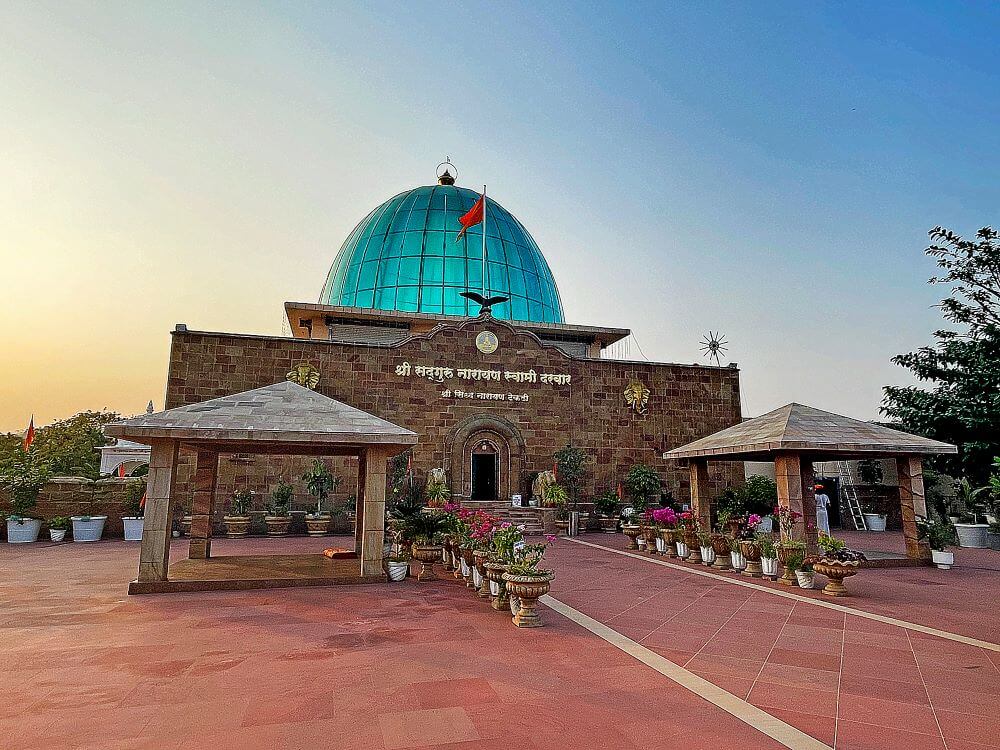
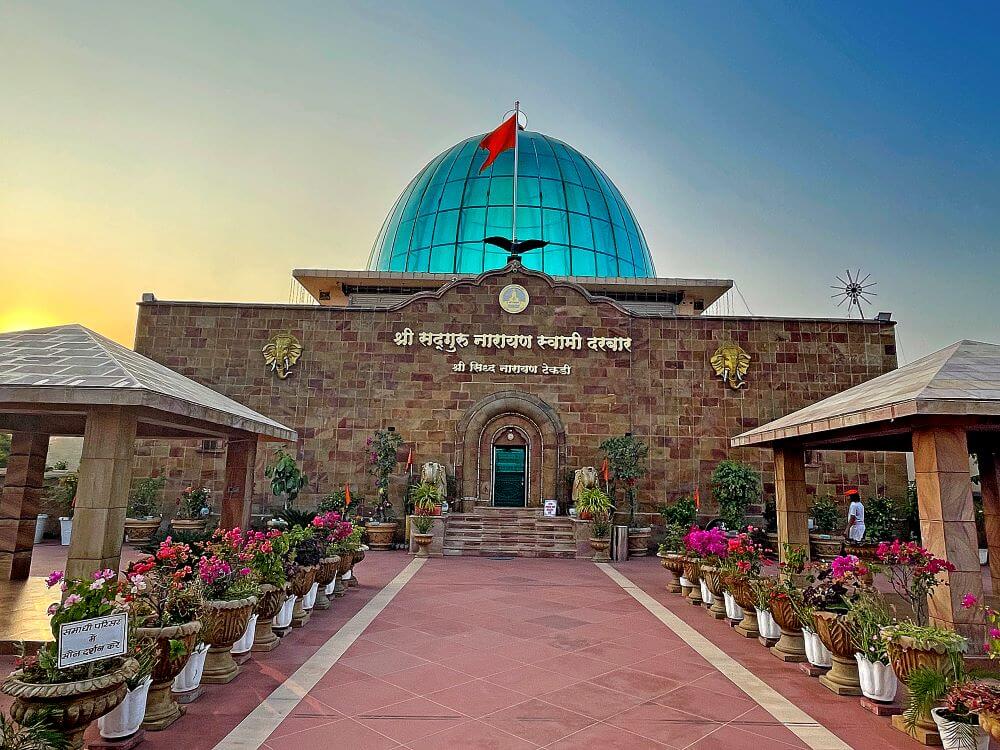
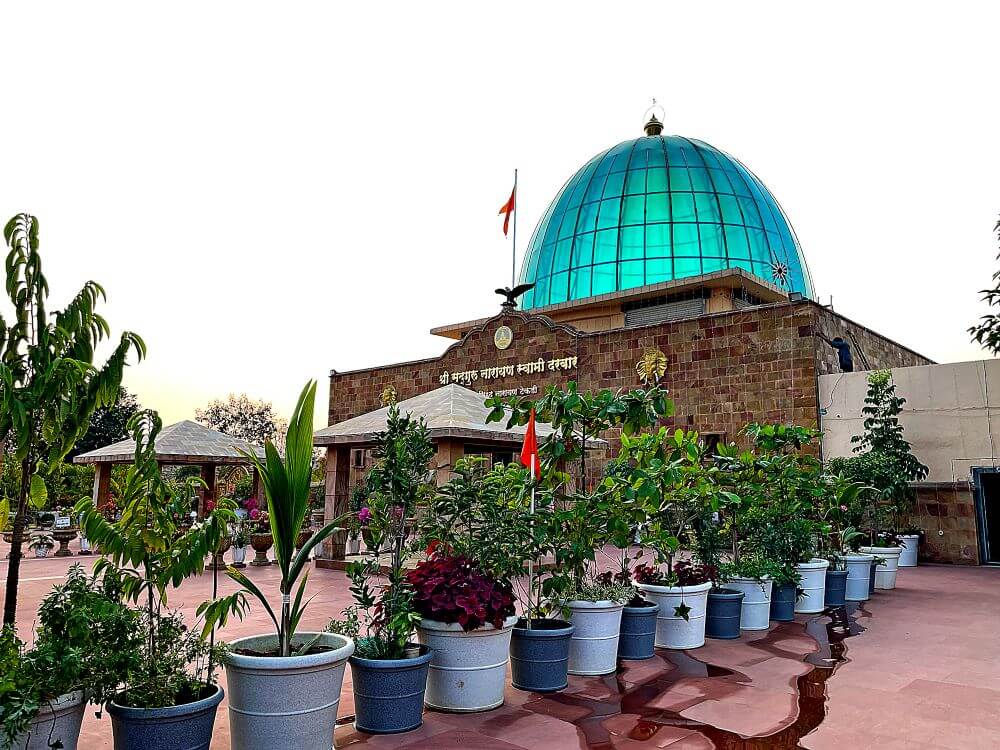
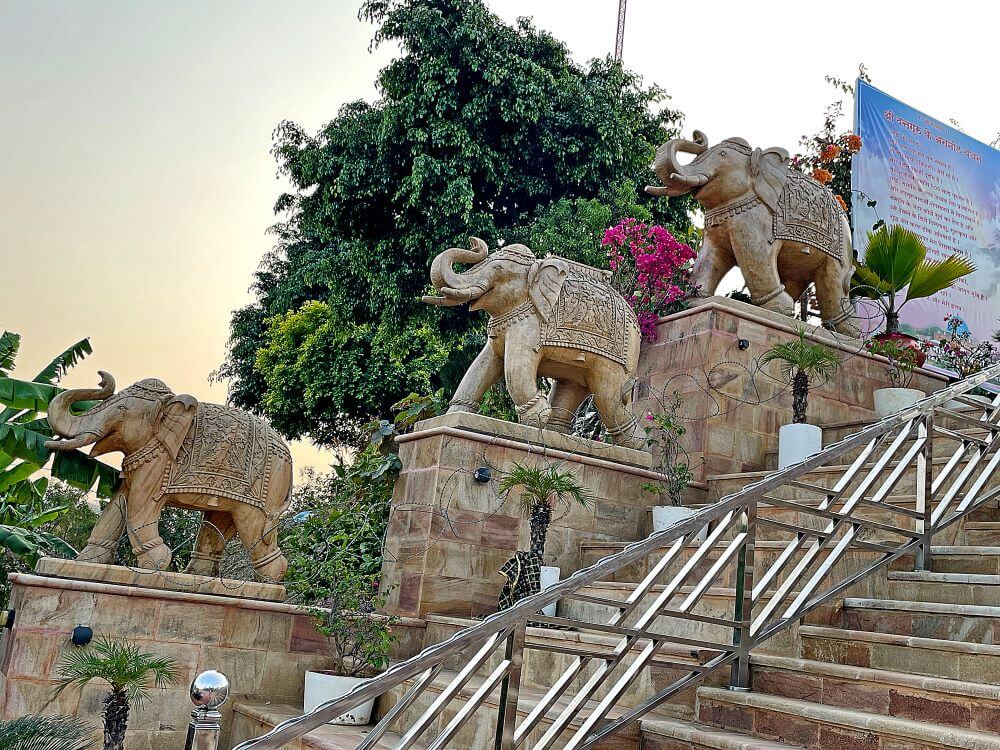
There is a stairway and a road to reach Narayan Tekdi, which is adjacent to Ambala Lake. On the stairway along the lake, there is a distinctive arch featuring a magnificent Garuda sculpture. The main temple on Narayan Tekdi is spacious and has been constructed using modern methods. Rajasthani reddish stone and marble have been used in its construction. Furthermore, the spire of the temple is made entirely of blue, transparent glass. As a result, bluish light falls through this glass onto the Samadhi in the sanctum sanctorum throughout the day. The entire temple premises have been paved, and a beautiful garden has been developed there. The entire area looks vibrant due to the ornamental and flowering plants placed in large pots in front of the temple.
Balayogi Chhotubaba attained Brahmaleen on the sixth of December, two thousand eight. Chhotubaba’s Samadhi temple is located next to the Narayan Swami Darbar temple. Festivals such as the Balayogi Chhotubaba Prakatdin Mahotsav on the nineteenth of February, followed by the Guru Purnima Mahotsav and the Narayan Baba Punyatithi Mahotsav from the eighteenth to the twenty-sixth of December, are celebrated here.
Devotees can visit the Samadhi at Narayan Swami Darbar from six in the morning to twelve in the afternoon and from four in the evening to nine at night. On Thursdays, Abhishekam is performed on the Swami’s Samadhi between eight and nine in the morning. Additionally, there is a facility for Mahaprasad for visiting devotees every day from ten in the morning to one in the afternoon.
This sacred temple stands as a testament to deep spiritual devotion, ancient architectural grandeur, and rich local cultural traditions.
The sanctum sanctorum houses the divine idol consecrated according to ancient Vedic traditions, surrounded by serene courtyards and traditional temple architecture.
Navratri, Maha Shivratri, Annual Temple Jatra & Deepotsav
Compare and book flights, secure top-rated local hotels near the temple, hire reliable guides, and rent cars instantly.
Extend your pilgrimage by visiting other highly sacred temples located nearby.


Add ₹999 more to unlock FREE SHIPPING!
Your sacred cart is currently empty.
Shop Photo FramesFill in your delivery details below to place your order.
Add comment