
Add ₹999 more to unlock FREE SHIPPING!
Your sacred cart is currently empty.
Shop Photo FramesThe three major holy places located in Nagpur district include Shri Kshetra Ramtek, Shami Vighnesh at Adasa, and the Mahalaxmi Jagadamba Mata Temple at Koradi. Spread over an area of about 150 acres, the grand and beautiful temple of Mahalaxmi Jagadamba is a place of deep faith for lakhs of devotees. The Goddess is renowned as the Kulswamini (patron deity) of Vidarbha. It is recorded that during the Navratri festival, 15 to 20 lakh devotees visit to seek the blessings of the Goddess.
The legend of the temple states that thousands of years ago, there was a kingdom named Jakhapur in this region, ruled by King Jholan. This mighty and wise king had seven sons, but he longed for a daughter. For this purpose, the king performed intense penance to Lord Brahma and pleased Him. Lord Brahma granted him a boon that Goddess Mahalaxmi Herself would be born as his daughter. A few days later, King Jholan’s wife gave birth to a beautiful baby girl. As ordained by Lord Brahma, she was named Mahalaxmi. As days passed, Mahalaxmi grew up. Once, the kingdom of Jakhapur was suddenly attacked by a neighboring kingdom. At this time, Mahalaxmi insisted that her father take her to the battlefield as well. Unable to refuse his beloved daughter’s persistent request, the king took her to the battlefield. During the fierce battle, the king employed tactics suggested by Mahalaxmi and emerged victorious in the war.
After achieving victory, while returning to Jakhapur with Princess Mahalaxmi, Mahalaxmi told King Jholan that she would stop and reside at whichever place the sun set during their journey, and would not proceed further. Accordingly, when they reached Koradi, the sun set, and Goddess Mahalaxmi stopped there and vanished from sight. At the exact spot where Goddess Mahalaxmi vanished, a Swayambhu (self-manifested) idol of Goddess Mahalaxmi emerged. That very Swayambhu idol is consecrated today in the Mahalaxmi Temple at Koradi.
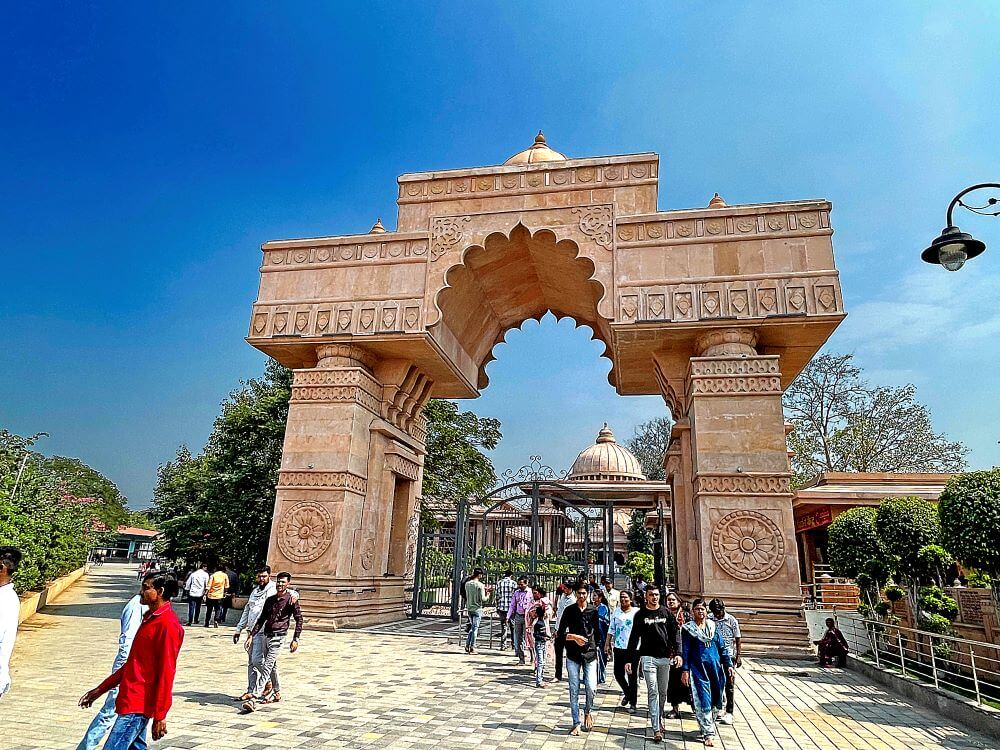
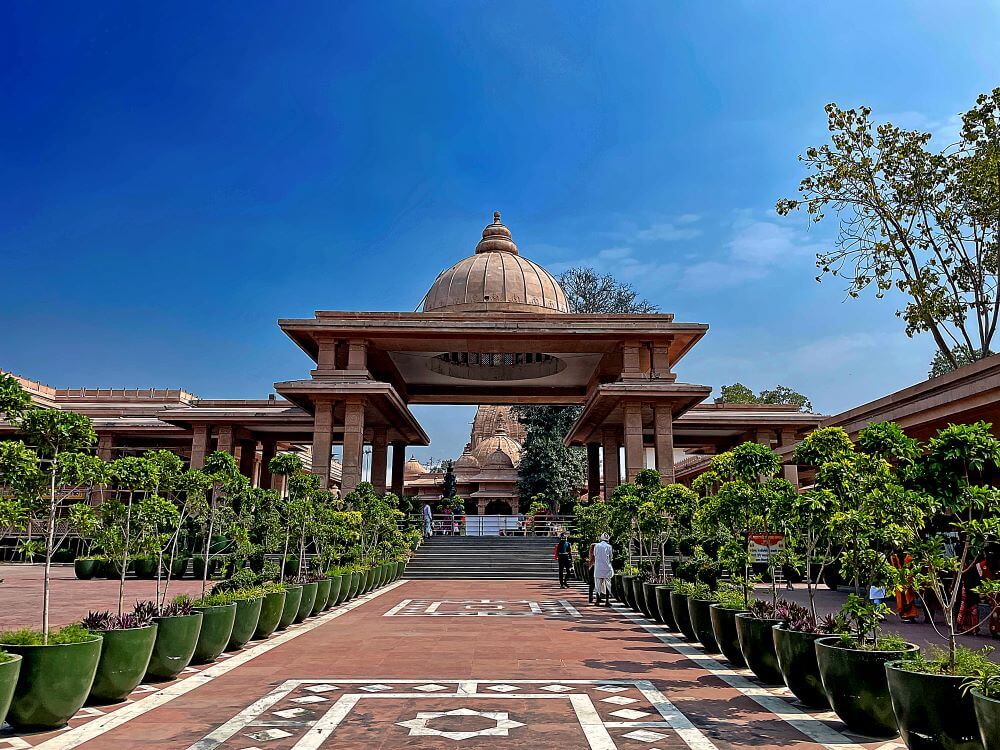
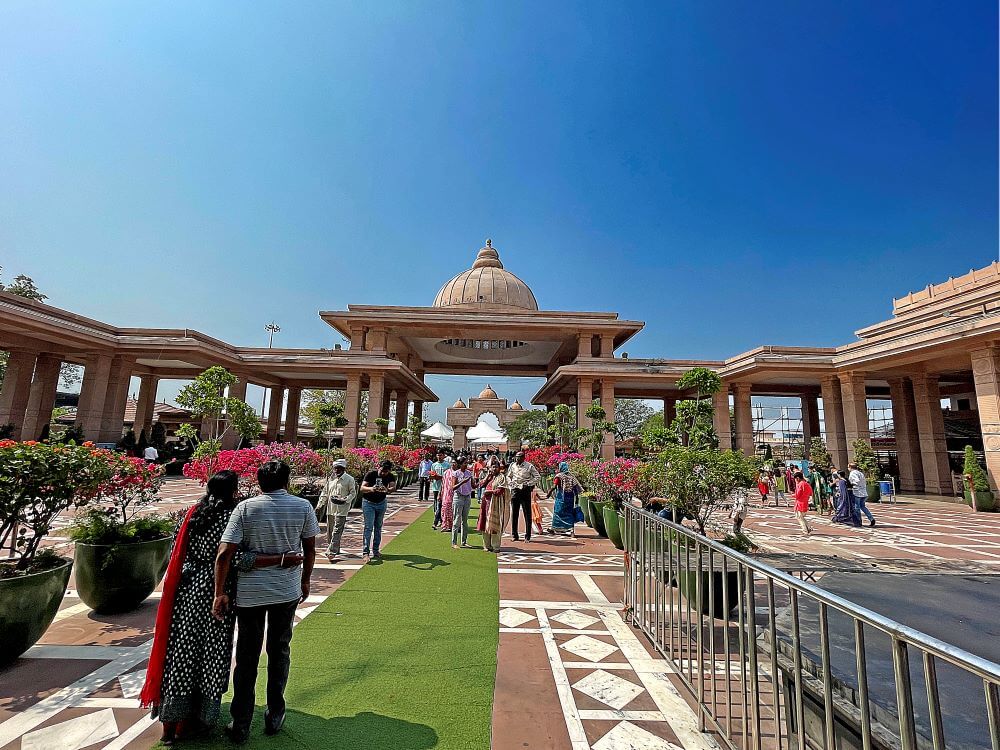
This temple is located at Koradi in Kamthi Taluka of Nagpur district. In the 17th century, the temple came under the jurisdiction of the Maratha royal house of Shrimant Bhosales of Nagpur, and it is recorded that they renovated the temple. The temple premises are spacious, and the parking lot can accommodate thousands of vehicles at a time. Along the path from the parking area to the main entrance arch of the temple, there are hundreds of shops selling puja items. The rangoli of Koradi is famous in Vidarbha, and rangoli colors and designs are sold at hundreds of shops in the temple complex. Special vehicle facilities are provided by the Temple Trust to assist the elderly and differently-abled in reaching the temple. The main entrance gate of the temple is grand and distinctive. Upon entering the temple premises through the entrance gate, one can see a beautifully developed garden there. It features numerous ornamental plants and flowering plants, and as the entire premises are paved, the area presents a unique look. At night, the entire temple along with the complex is beautifully illuminated.
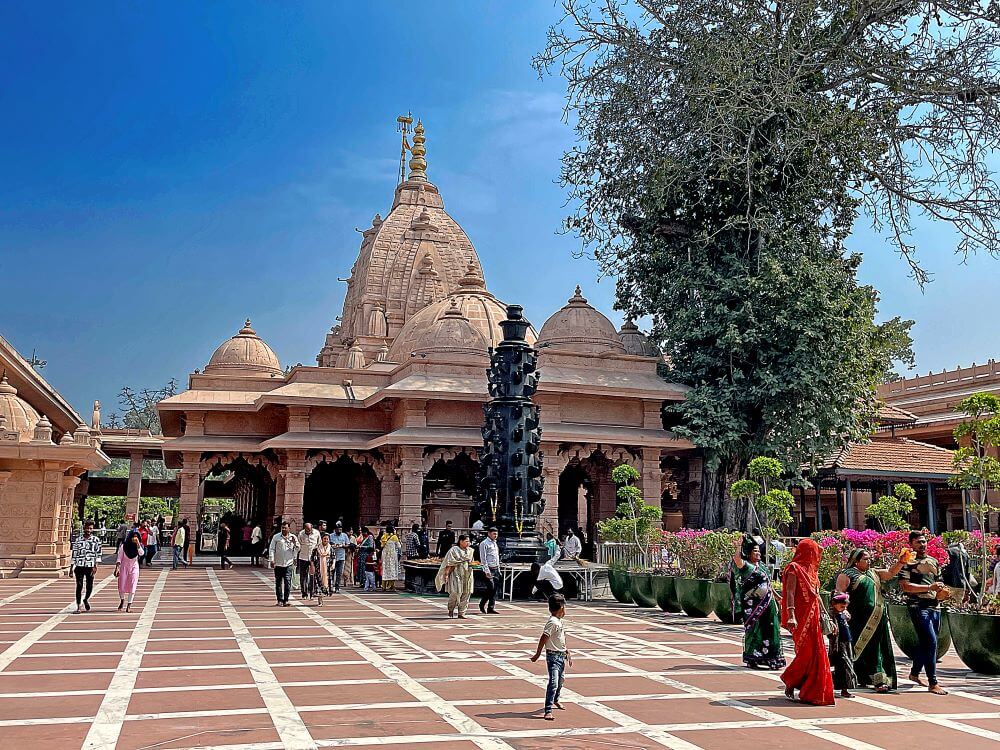
The entire temple architecture is built in the Hemadpanthi style, adorned with unique artistic craftsmanship. The pillars inside the temple are intricately carved. The temple architecture consists of a Darshan Mandap (viewing hall), a Sabha Mandap (assembly hall), and a Garbhagriha (sanctum sanctorum). The divine seat of the Goddess is located inside the sanctum sanctorum at the center of the grand Sabha Mandap. This sanctum sanctorum features silver decorations, and the idol of the Goddess is seated within a silver Makhar (shrine canopy). This idol is 3 feet tall. The idol is Chaturbhuja (four-armed), holding a Trishula (trident), Khadga (sword), Damaru (drum), and Dhanushya (bow) in Her hands. A silver mask (Mukhavata) is placed on the idol; however, devotees believe that when looking at the face of the original stone idol, She appears as a young girl in the morning, as a youth in the afternoon, and as an elderly woman in the evening. During the days of Navratri, devotees are blessed with the darshan of the Goddess in Her original form. On a hill located 1 km away from this temple lies the temple of Her brother, Dattasur.
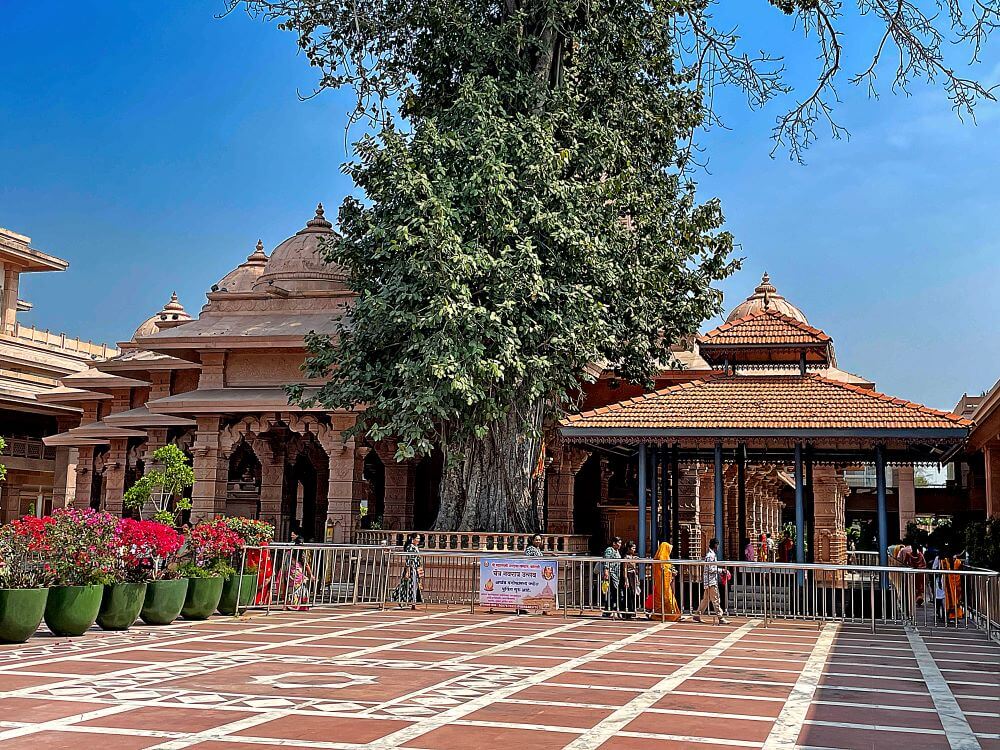
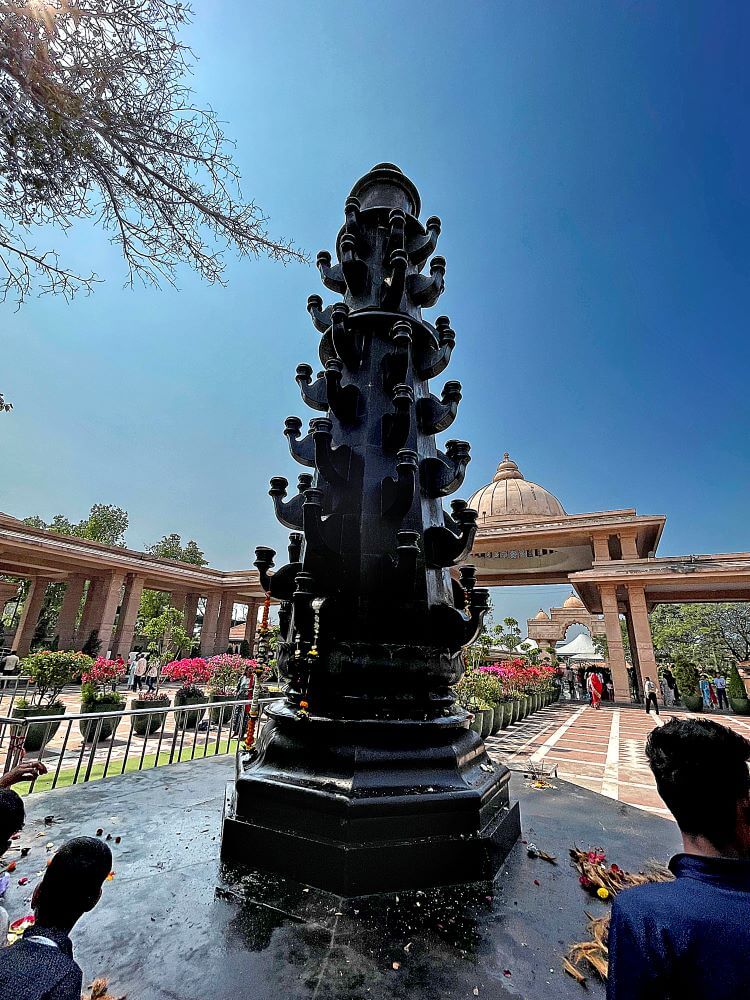
In the temple premises, there is a tall Deepmal (lamp-tower) along with idols of Shiva-Parvati, Nandi, Lord Ganesha, and Dakshinmukhi Hanuman. Right in front of the temple stands a massive Audumbar tree. The Navratri festival of the Goddess is celebrated here for 10 days starting from Ashwin Shuddha Pratipada. On this occasion, numerous Ghats (earthen pots) are consecrated before the Goddess, atop which Manokamna Deepjyotis (wish-fulfilling oil lamps) are lit. Their number is around 10,000. It is a tradition here to light such Akhand Deepjyotis (uninterrupted lamps) to fulfill vows. In this ritual, wheat or grains are sown in soil or sand, an earthen pot is placed over it, and a wick is lit. The temple management takes responsibility for keeping these lamps burning continuously for nine days by adding water to the Ghat and oil to the pot daily. For this reason, oil is added to these pots every day. Advance registration at the temple is required for this Akhand Manokamna Jyoti, and there is a waiting list of 2 to 3 years for it.
Devotees believe that this Goddess is Jaagrut (a living divine presence) and answers all prayers and vows. During the Navratri festival, devotees from across Vidarbha, Maharashtra, Chhattisgarh, and Madhya Pradesh come to seek darshan of the Goddess. The temple is also crowded for darshan every Tuesday and Sunday. Daily Mahaprasad is served to devotees at the Annachhatra Bhavan from 11:00 AM to 2:00 PM and from 6:00 PM to 9:00 PM.
The State Government has accorded ‘B’ Grade Pilgrimage Centre status to this temple. (A holy place that receives over 4 lakh devotees annually for darshan is granted ‘B’ Grade Pilgrimage status by the State Government. According to this classification, government funds are sanctioned periodically to enhance facilities for visiting devotees.)
Apart from the Mahalaxmi Temple, the village of Koradi in Nagpur is also famous for its thermal power station. The thermal power station here is one of the major thermal power plants in Maharashtra.
This sacred temple stands as a testament to deep spiritual devotion, ancient architectural grandeur, and rich local cultural traditions.
The sanctum sanctorum houses the divine idol consecrated according to ancient Vedic traditions, surrounded by serene courtyards and traditional temple architecture.
Navratri, Maha Shivratri, Annual Temple Jatra & Deepotsav
Compare and book flights, secure top-rated local hotels near the temple, hire reliable guides, and rent cars instantly.
Extend your pilgrimage by visiting other highly sacred temples located nearby.


Add ₹999 more to unlock FREE SHIPPING!
Your sacred cart is currently empty.
Shop Photo FramesFill in your delivery details below to place your order.
Add comment