
Add ₹999 more to unlock FREE SHIPPING!
Your sacred cart is currently empty.
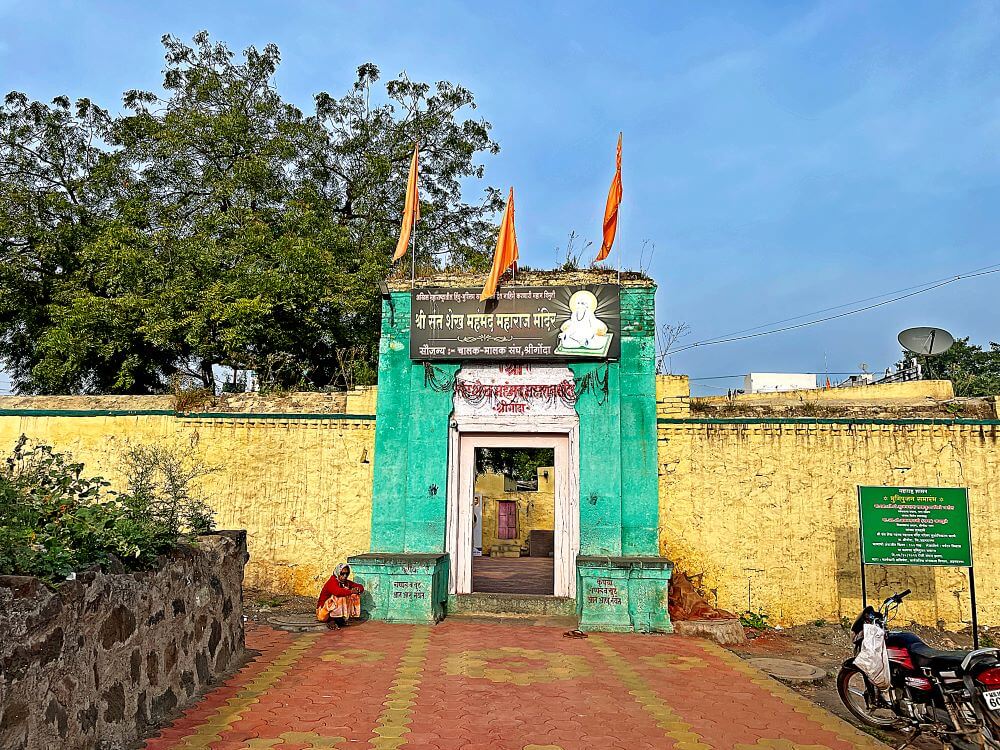
Shop Photo FramesIt is rare for the shrine of a Muslim saint to be recognized as the presiding deity of a city; however, the temple of Saint Sheikh Mohammad Maharaj is famous as the presiding deity of Shrigonda taluka in Ahilyanagar and is a place of reverence for the Warkari sect. This temple in Shrigonda is known as a symbol of Hindu-Muslim unity. History records that Shrimant Malojiraje Bhosale, the grandfather of Chhatrapati Shivaji Maharaj, brought Sheikh Mohammad Maharaj to Shrigonda and gifted him some land as a reward for his noble work.
Sheikh Mahammad Maharaj is recognized as a great saint of the Warkari tradition and a contemporary of the supreme saint Tukaram Maharaj. According to historians, the Maharaj was influenced by the four traditions of Warkari, Datta, Nath, and Sufi. He was the first Qadri Sufi to arrive in India from the Qadri order. Thus, Mohammad Gaus is considered the guru. Following him, the guru lineage continues as Raj Mohammad-Qadri Chand Saheb (Chandrabhat alias Chand Bodhale), Qadri Mohammad Saheb, and then Sheikh Mohammad. Chand Bodhale had two disciples: Janardan Swami and Sheikh Mohammad. Therefore, these two saints are known as spiritual brothers. The guru lineage is renowned for Janardan Swami’s disciple being Eknath Maharaj.
That was the era of Islamic rule. The Mughal Empire of Delhi, the Adil Shahi of Bijapur, the Nizam Shahi of Ahmednagar, and the Portuguese, along with many other small kingdoms, were in existence. The common people were being crushed in the constant battles fought to establish individual dominance. Ignorance, superstition, ritualism, caste discrimination, and religious prejudice had reached an extreme level in society. In most parts of the country, there was Muslim rule, while the majority of the population was Hindu. There were differences in worship, lifestyle, and customs between the two religions. Hindus were idolaters, while Muslims believed in Allah. A debate over superiority and inferiority was flourishing between both religions. At such a time, a social reformer who would provide equal treatment It is said that the need for a great soul was fulfilled in the form of Saint Sheikh Muhammad Maharaj.
Sheikh Muhammad was born to the couple Rajmahamad and Phulai in the village of Vahira, located in the Ashti taluka of Beed district. Rajmahamad served as a Havaldar at the fort of Dharur under the Emperor. Due to the tradition of gurus and the religious atmosphere in his home, Sheikh Muhammad received an excellent education from a very young age. Sheikh Muhammad had observed the social and political conditions closely. He witnessed with his own eyes the inequality in society, the hatred between castes and religions, the Chaturvarna system, and a society victimized by these circumstances; the seeds of an ideological revolution were sown in him during his childhood. Later, after arriving in Shrigonda, Sheikh Muhammad was drawn to the egalitarian, inclusive, and straightforward devotion of the Warkari Sampradaya, and he became deeply immersed in it. Verses such as ‘Vishnumay jag Vaishnavancha dharma. Bheda bheda bhrama amangala॥’ (The world is filled with Vishnu, this is the religion of the Vaishnavas. Differentiation and duality are illusions and inauspicious) or ‘Yare yare lahan thora. Yati bhalati nari nara. Karava vichara. Nalage chinta kavanashi॥’ (Come, come, young and old, of any caste, woman or man. Think about it, there is no need to worry for anyone) and Through such abhangas of theirs, they worked until their last breath to convey the philosophy of the Warkari tradition to society.
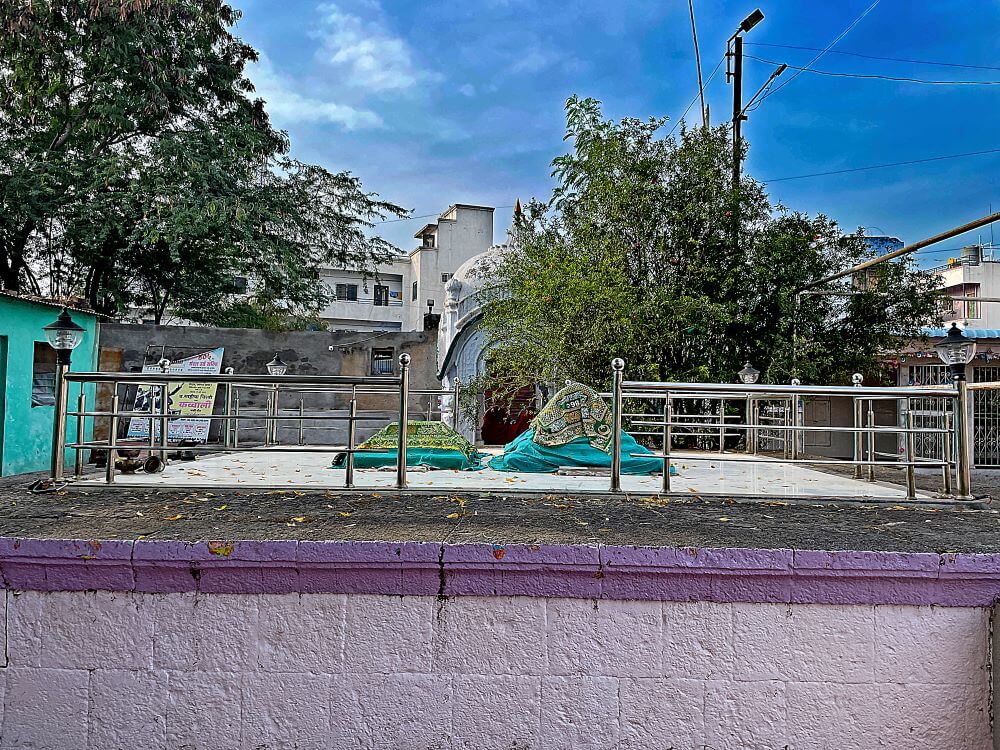
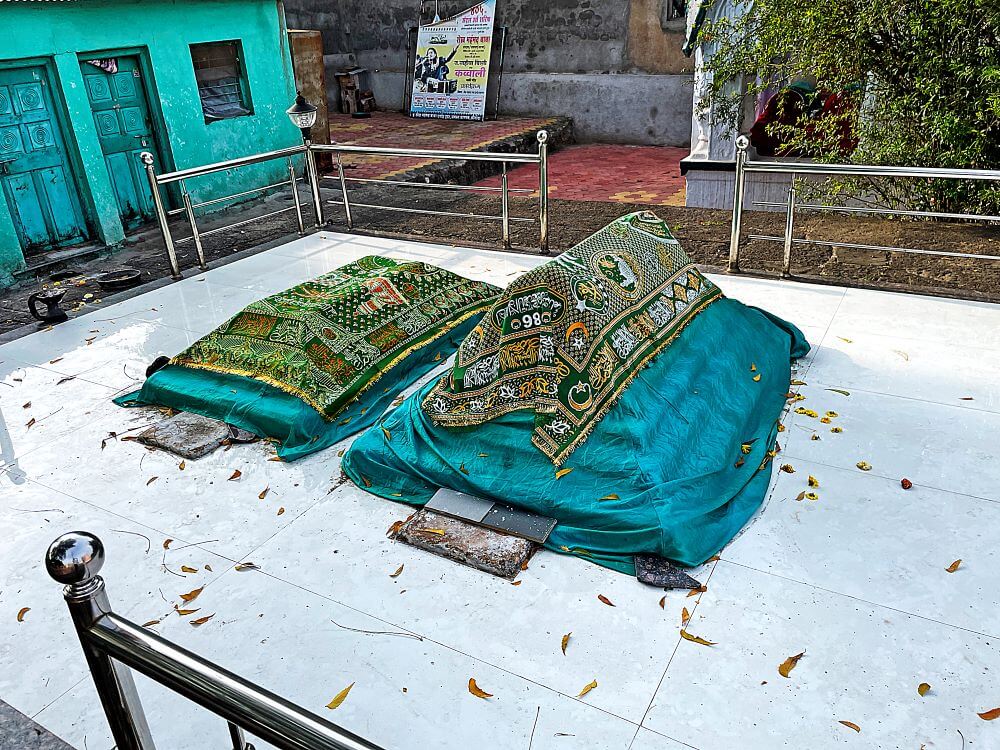
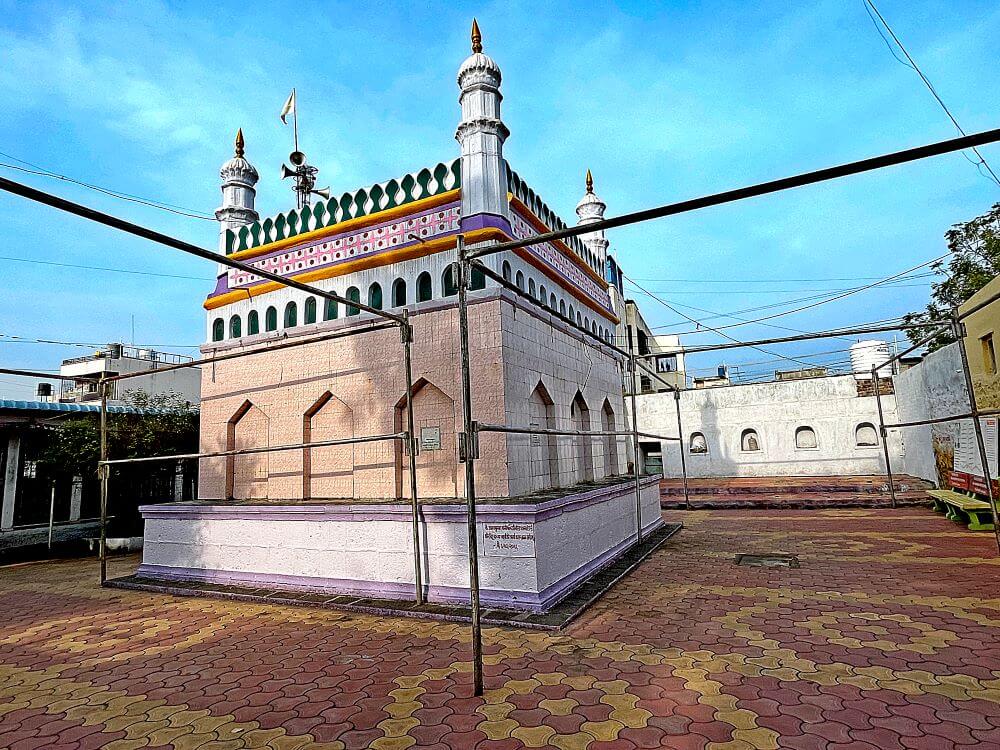
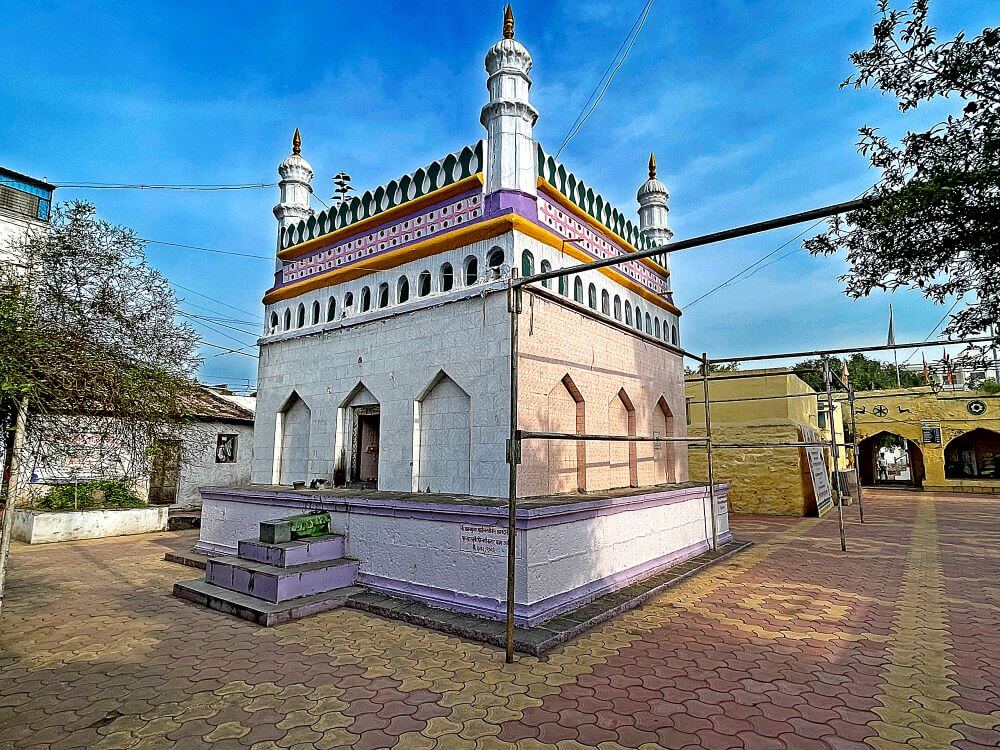
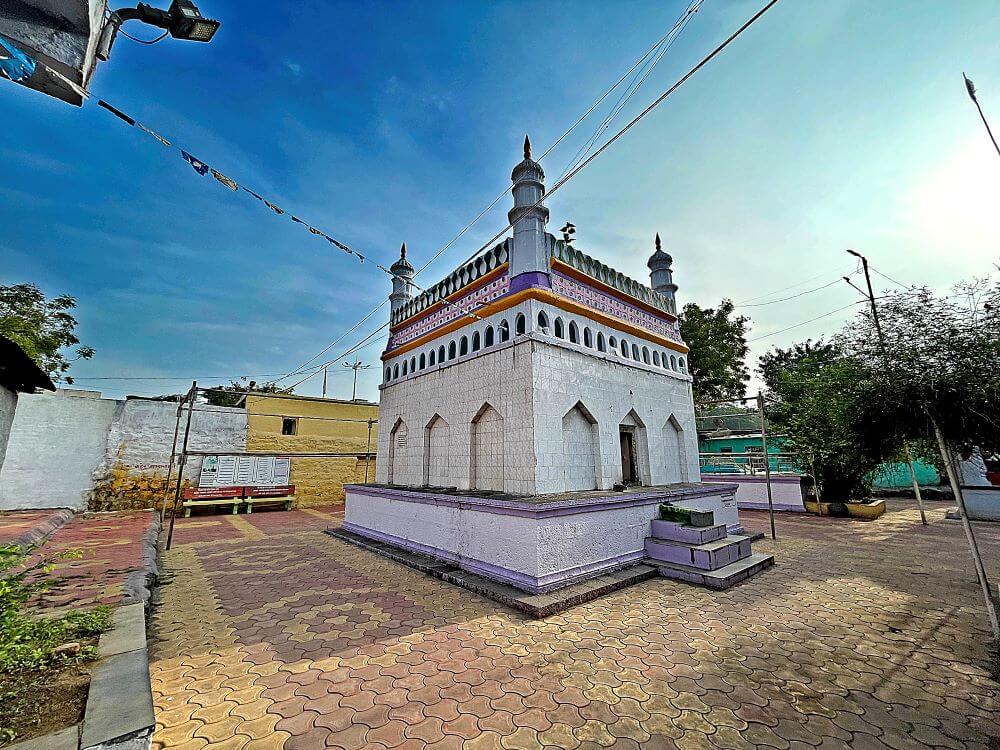
The temple of Saint Sheikh Muhammad Maharaj is situated in the central part of Shrigonda city. The temple premises are enclosed by a fortification wall, and the temple itself is built of stone in a square architectural style. There are four minarets on the upper side of the temple. The structure follows the style of a monastery from the Nizamshahi period. At the entrance of the temple, there is an idol of Lord Ganesha, and a Shiva Linga is placed in front of it. Just as there is the Namdev Payari at the Pandurang temple in Pandharpur, there is a step here named after Modoba Teli, a devotee of Sheikh Maharaj. He breathed his last on this step, and in his memory, this step is known by his name. In this temple, which is slightly elevated from the ground, are the Samadhis of Saint Sheikh Muhammad Maharaj and his wife, Fatimabi.
Behind this Samadhi temple, there is an underground chamber covered by a large stone slab. It is said that Baba and his wife, Fatimabi, entered this chamber to attain Samadhi. A grand pilgrimage festival is held here on Phalguna Shuddha Navami to commemorate the death anniversary of Saint Sheikh Maharaj Mahammad. Before the pilgrimage, an Akhand Harinam Saptah is organized. Both Hindus and Muslims participate in this two-day pilgrimage festival. On the day of the pilgrimage, the Samadhi of the Maharaj is bathed and anointed with a sandalwood paste. Following this, the Chhabina procession takes place in the evening. The Padukas of Baba are ceremoniously installed in the palanquin. The festival concludes on the second day with wrestling competitions. Thousands of devotees are present for this pilgrimage festival.
The Samadhi of the Maharaja is anointed with sandalwood paste five times a year, specifically on Gudi Padwa, Ashadhi Ekadashi, Vijaya Dashami (Dussehra), Mahashivratri, and Phalguna Shuddha Navami, which marks the Punyatithi of the Maharaja. During the application of the sandalwood paste, devotees from the Hindu community stand on one side of the Samadhi, while devotees from the Muslim community stand on the other. Together, devotees from both communities apply this paste to the Samadhi. Many devotees in Shrigonda begin their day with the Darshan of the Maharaja. It is the firm belief of the devotees who come here that if any wish is expressed, the Maharaja fulfills it. Every Thursday, a large number of devotees visit for Darshan. One can visit the temple and have Darshan of Sheikh Muhammad Maharaja from 9 in the morning until 9 in the evening.
This sacred temple stands as a testament to deep spiritual devotion, ancient architectural grandeur, and rich local cultural traditions.
The sanctum sanctorum houses the divine idol consecrated according to ancient Vedic traditions, surrounded by serene courtyards and traditional temple architecture.
Navratri, Maha Shivratri, Annual Temple Jatra & Deepotsav
Compare and book flights, secure top-rated local hotels near the temple, hire reliable guides, and rent cars instantly.
Extend your pilgrimage by visiting other highly sacred temples located nearby.


Add ₹999 more to unlock FREE SHIPPING!
Your sacred cart is currently empty.
Shop Photo FramesFill in your delivery details below to place your order.
Add comment