
Add ₹999 more to unlock FREE SHIPPING!
Your sacred cart is currently empty.
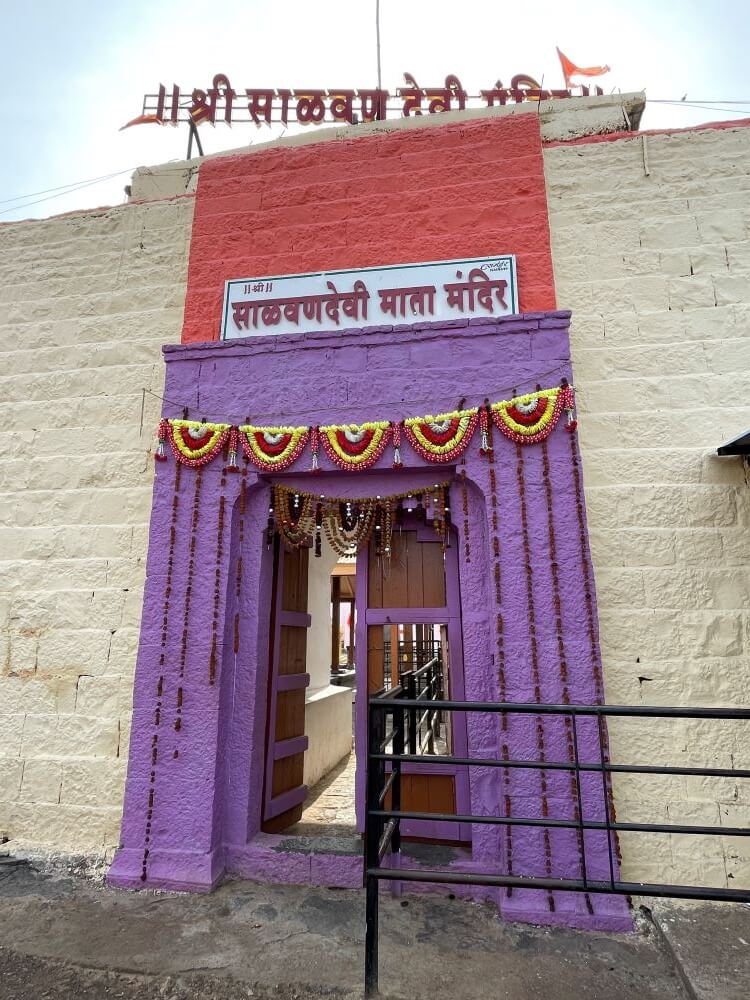
Shop Photo FramesRenuka Devi of Mahurgad, one of the three and a half Shakti Peethas of the Goddess, has many temples across the state. The Goddess has resided in many places for the sake of her devotees. The ancient temple of Salavan Devi, considered an incarnation of Renuka Devi, is located at the taluka headquarters of Shrigonda in Ahilyanagar district. It is said that the ancient stone wheel in the temple premises belongs to the chariot of Renuka Devi, and the Goddess chose to reside here after the wheel got stuck in the ground while she was traveling from Mahurgad to Shrigonda. This place is famous as the presiding deity (Gramadaivat) of Shrigonda city.
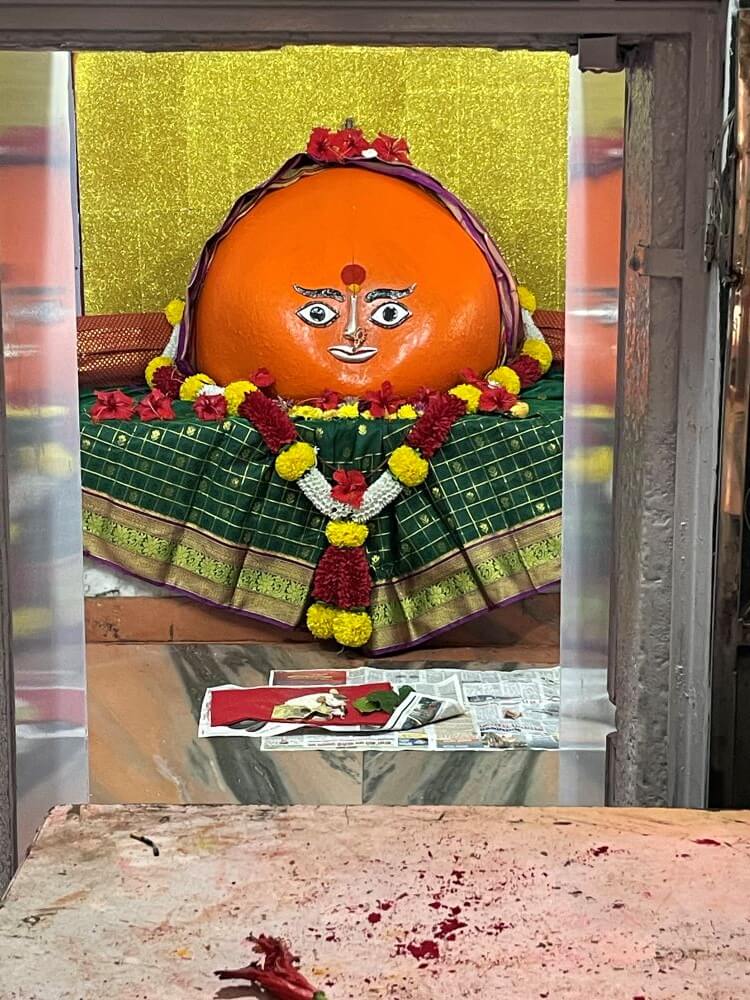
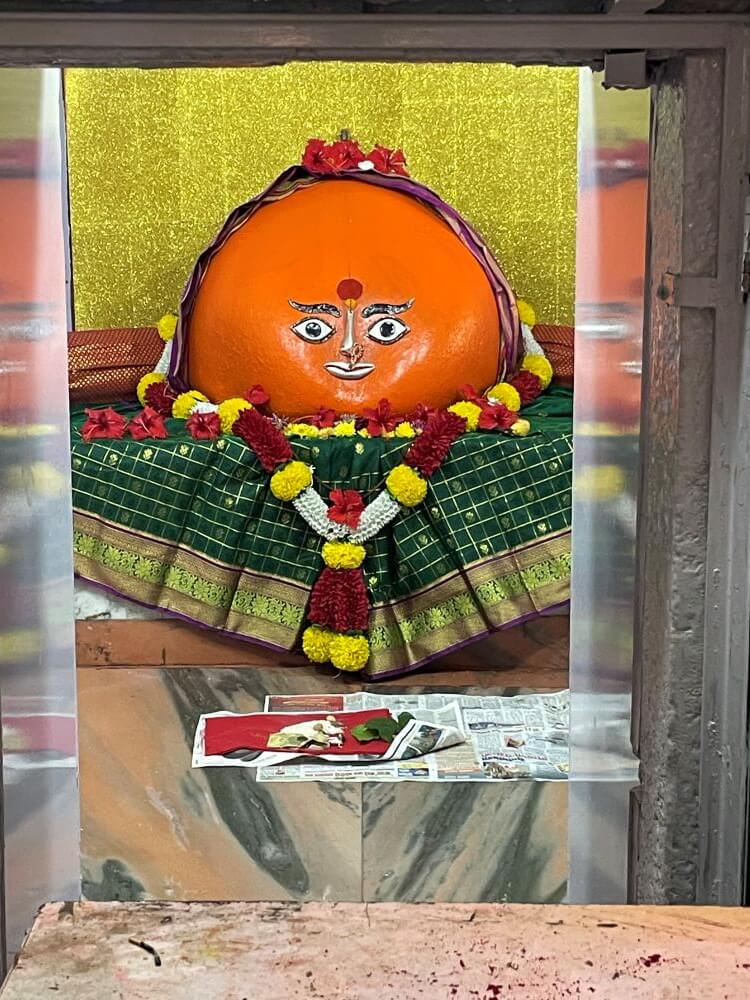
The legend of the temple states that a young man from Shrigonda was a devout follower of Renuka Devi of Mahur. Every Ashwin Purnima, he would go to Mahurgad for the Goddess’s darshan. Seeing his devotion, the Goddess was pleased and asked him to seek a boon. Instead of asking for wealth or prosperity, the devotee requested the Goddess to come to his village so that he could worship her daily. The Goddess immediately accepted his request and began to follow him, but on the condition that he must not look back until they reached the village. The devotee agreed, and the journey began with the devotee in front and the Goddess’s chariot behind. Upon reaching Shrigonda, the chariot’s wheel got stuck in the ground, and the chariot stopped there. When the sound of the chariot ceased, the devotee looked back, and the Goddess vanished right there. A few days later, the Goddess appeared in his dream and told him, “Search for me in the forest of Sali where I vanished, bring me to the village, and install me.” Following this, he found the idol of the Goddess in the form of a Tandala (a mask-like idol without hands, feet, or limbs). Years later, the villagers built a temple for the Goddess on this very spot. This is the Salavan Devi. She was named Salavan Devi because she was found in the forest of Sali.
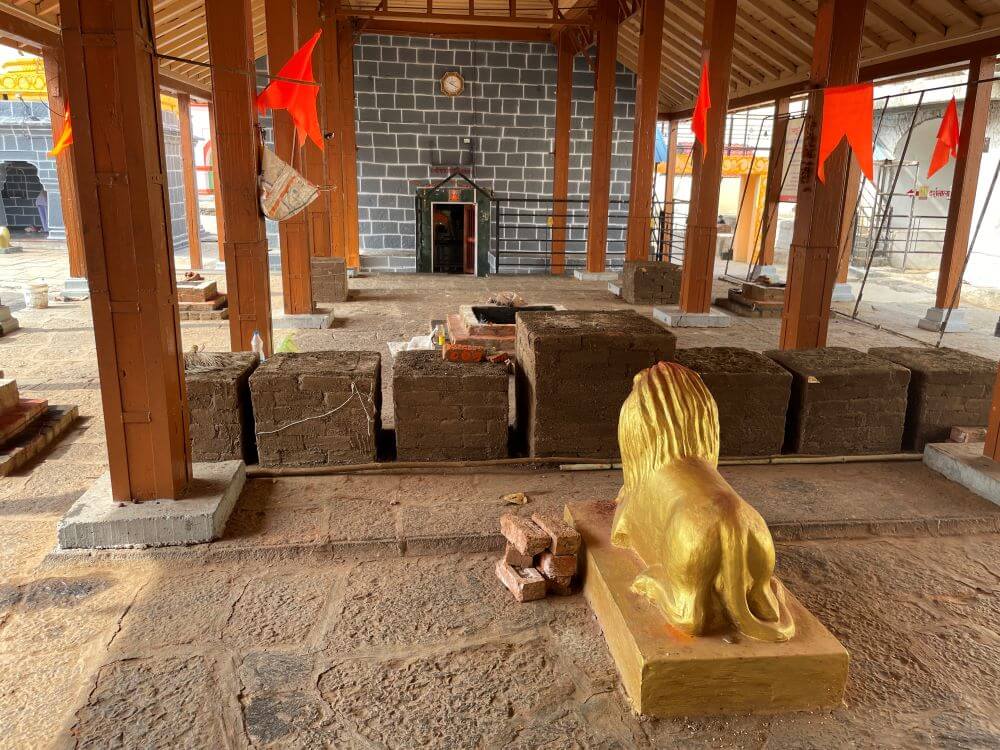
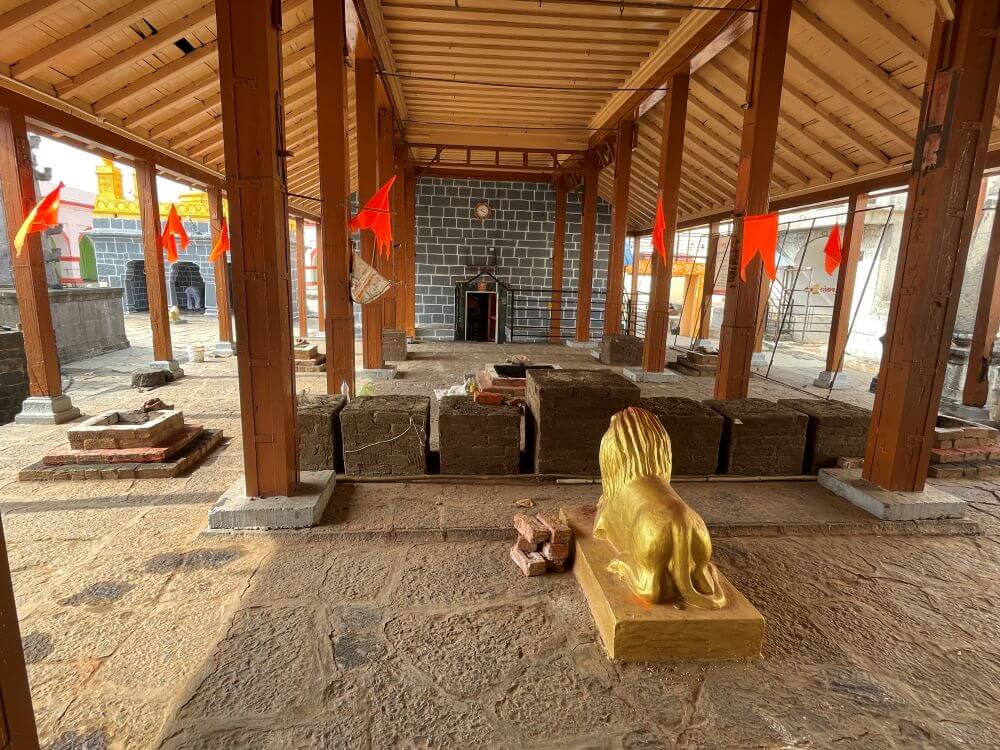
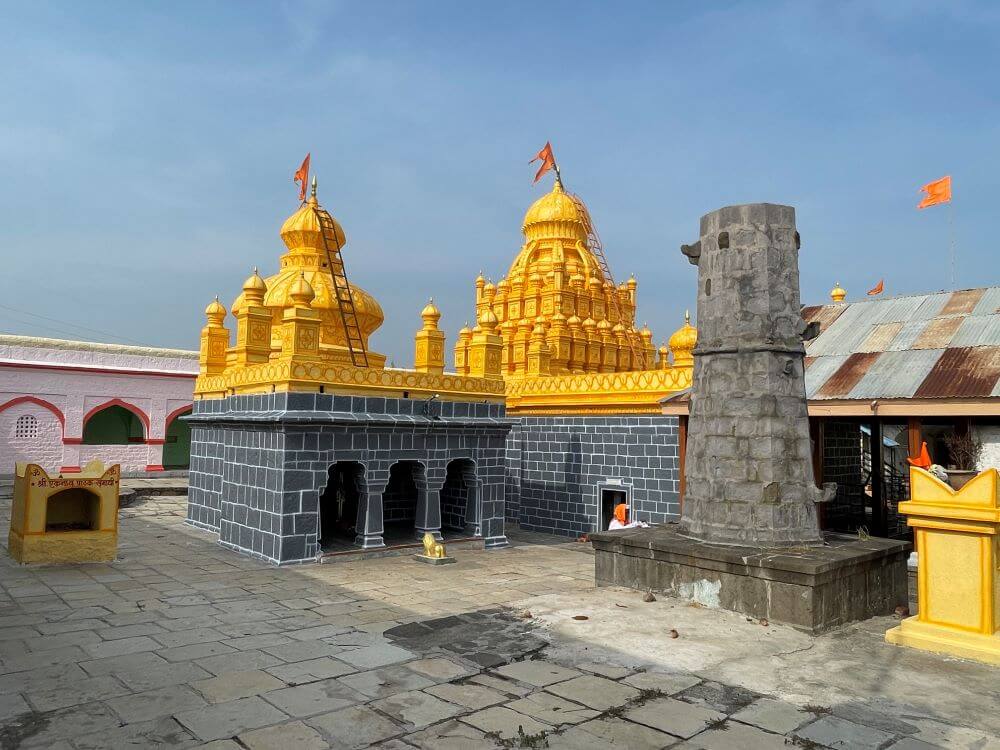
This temple of Salavan Devi, located on the outskirts of Shrigonda city, dates back to the 12th century. The temple is surrounded by a fortification wall about 20 to 25 feet high, with small chambers (ovaryas) built into the walls on the inside. Devotees perform various religious rituals in these chambers. The main temple of Salavan Devi consists of a Sabha Mandap (assembly hall) and a Gabhara (sanctum sanctorum). In the center of the Sabha Mandap, which is open on three sides, there is an idol of a lion, the vehicle of the Goddess, and a Havan Kund (sacrificial fire pit). It appears that this Sabha Mandap was added to the original temple at a later date. The entire temple is constructed of stone. In the sanctum, the Tandala of Salavan Devi is installed on a pedestal. This vermilion-smeared idol of Salavan Devi is adorned with various ornaments daily. One can enter the adjacent Renukamata temple from the sanctum of this temple. There, too, the Tandala of Renuka Devi is present in the sanctum. These two adjacent temples are ancient and are known as a spiritually awakened place (Jagrut Sthan). Devotees believe that the Goddess fulfills all the desires of their hearts.
There is a stepwell (Barav) in the temple premises, and a lamp pillar (Deepmal) stands beside it. It is said that in 1977, the Goddess appeared in a vision to Nanasaheb Mohite Patil. Thereafter, he started the Palkhi Utsav (palanquin festival) on the day of Dussehra by carrying the Goddess’s palanquin. This tradition continues to this day. On the afternoon of Dussehra, Pithla-Bhakri, and in the evening, a Mahaprasad of Lapshi, rice, and dal is served to the devotees. At night, a procession of the Goddess’s palanquin takes place. During this time, devotees offer sarees and blouses to the Goddess. During the 9 days of Navratri, many religious rituals are performed here by devotees to fulfill their vows.
This sacred temple stands as a testament to deep spiritual devotion, ancient architectural grandeur, and rich local cultural traditions.
The sanctum sanctorum houses the divine idol consecrated according to ancient Vedic traditions, surrounded by serene courtyards and traditional temple architecture.
Navratri, Maha Shivratri, Annual Temple Jatra & Deepotsav
Compare and book flights, secure top-rated local hotels near the temple, hire reliable guides, and rent cars instantly.
Extend your pilgrimage by visiting other highly sacred temples located nearby.


Add ₹999 more to unlock FREE SHIPPING!
Your sacred cart is currently empty.
Shop Photo FramesFill in your delivery details below to place your order.
Add comment