
Add ₹999 more to unlock FREE SHIPPING!
Your sacred cart is currently empty.
Shop Photo FramesThe Ahilyanagar district of Maharashtra is renowned for its many unique and extraordinary temples. In Pathardi Taluka here, there is actually a temple dedicated to a demon (Daitya), while in Agadgaon of Ahilyanagar Taluka, it is believed that a fair of spirits (Bhuts) is held at the Kaal Bhairavnath Temple. In this very league lies another unique temple dedicated to Duryodhana in Durgaon village of Karjat Taluka. The village owes its name ‘Durgaon’ to this temple, and it is said to be the only temple dedicated to Duryodhana in all of Maharashtra.
Duryodhana, the eldest and mighty king among the Kaurava brothers, is portrayed as a villain in the Mahabharata. However, he possessed many noble qualities as well. Owing to these virtues, he is worshipped at several places across India. Besides, there are also a few temples dedicated to him in the country. (Among these, the Kaurava temples in Dehradun and the Duryodhana Temple in Edakkad, Kerala, are well-known.) Durgaon is a small village situated near Kuldharan village, close to Rashin. Just as everyone holds faith in the shrine of their locality, the Duryodhana Temple is a revered place of faith for the villagers of Durgaon. The festival held here every 3 years during the Adhik Maas (intercalary month) is famous and counted among the important festivals of the district.
According to the legend of the temple, after the battle between the Kauravas and Pandavas in the Mahabharata, an injured Duryodhana hid underwater in a lake out of fear of Bhima. Bhima approached the lake and invoked the Jaldevta (water deity) to send Duryodhana out. Accordingly, the Jaldevta asked him to come out. A duel then ensued between Bhima and Duryodhana. Before his death, Duryodhana went to the Mahadev Temple in Durgaon and worshipped Lord Mahadev. Pleased with his devotion, Lord Mahadev granted Duryodhana a place to hide for a while within the Kalash (spire) of His temple. It is believed that Duryodhana has resided here ever since.
Since the Jaldevta did not give him refuge in the water, Duryodhana harbours anger towards water bodies and rain-bearing clouds. If Duryodhana’s gaze falls upon the clouds, they pass away without raining, bringing drought conditions to the region. However, whenever such a situation arises, the idol of Duryodhana is enclosed within the temple, which then brings rain—such is the firm belief of the villagers in the surrounding region.
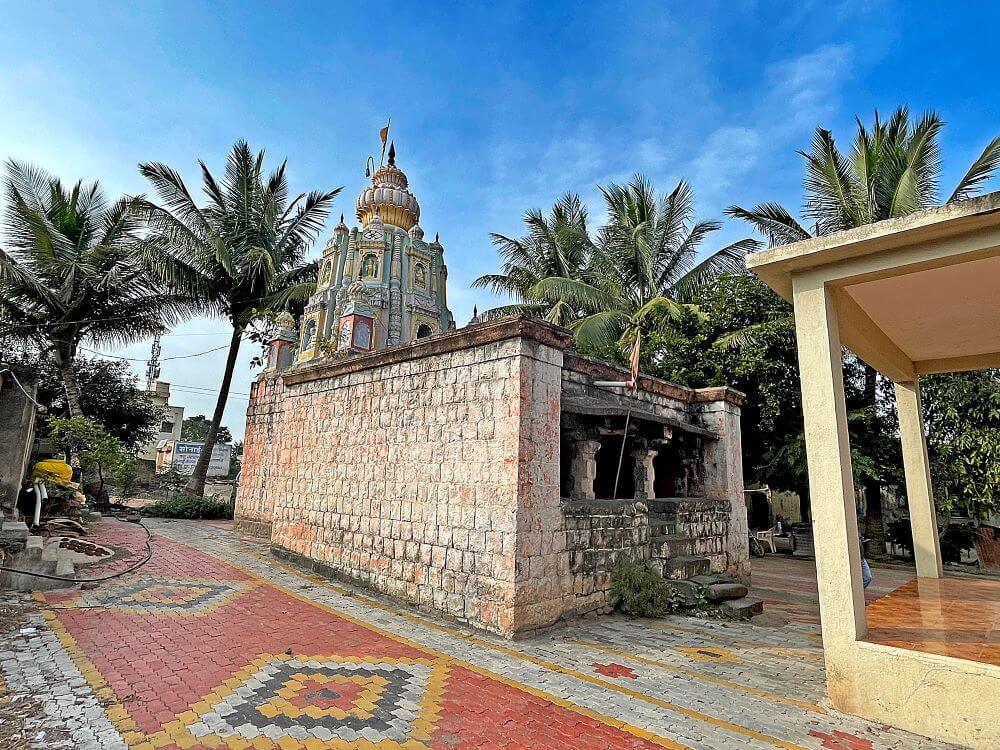
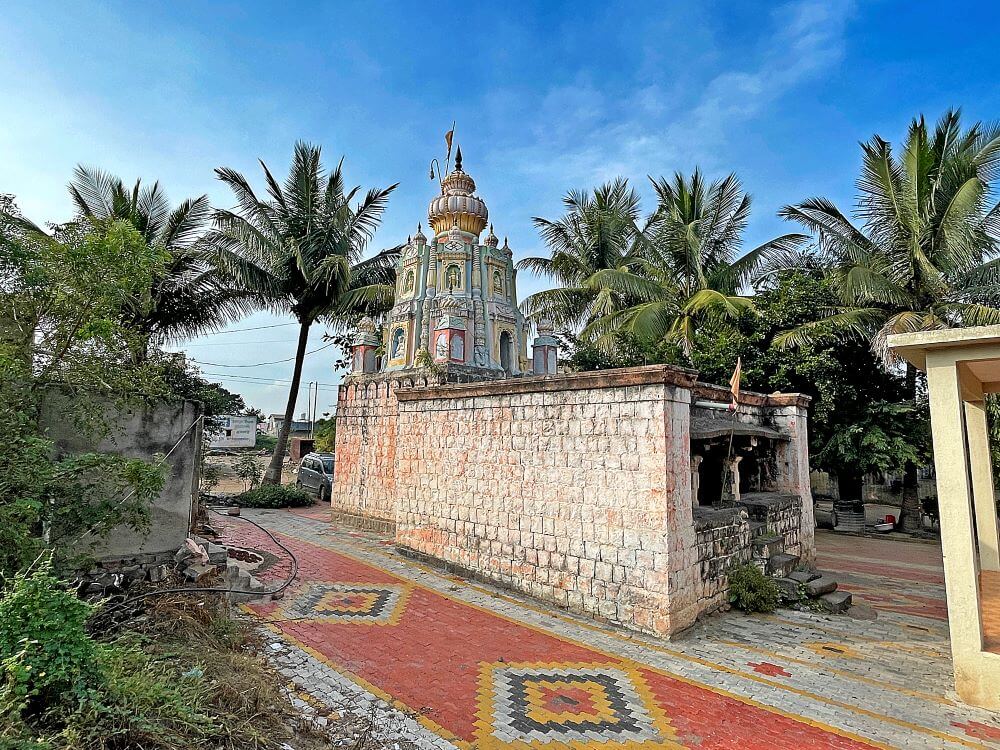
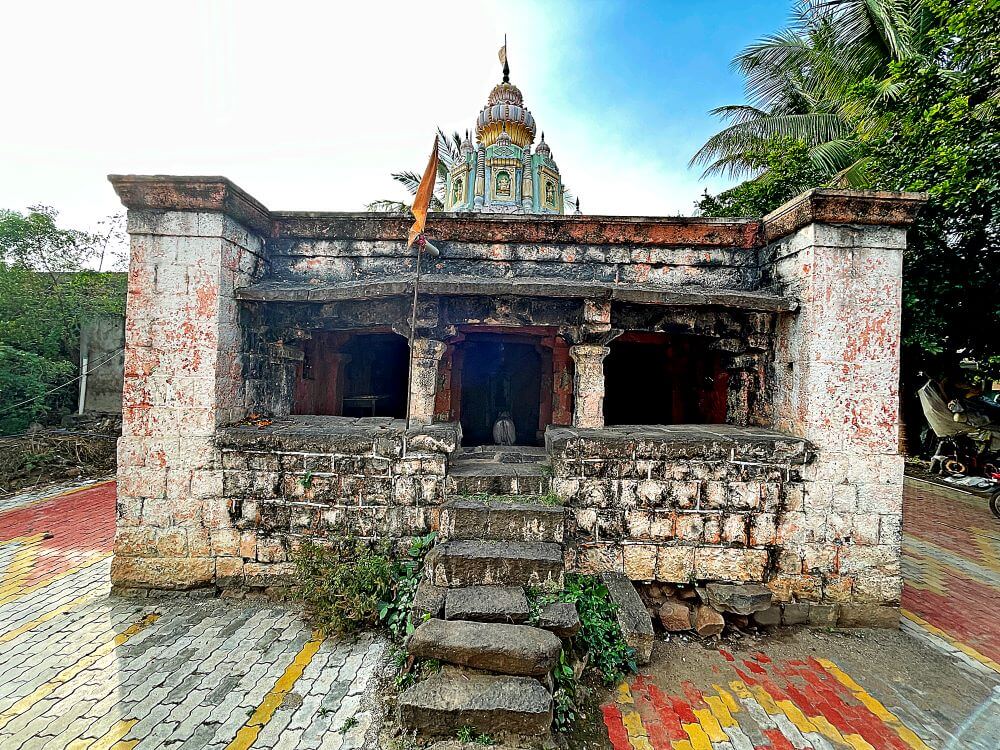
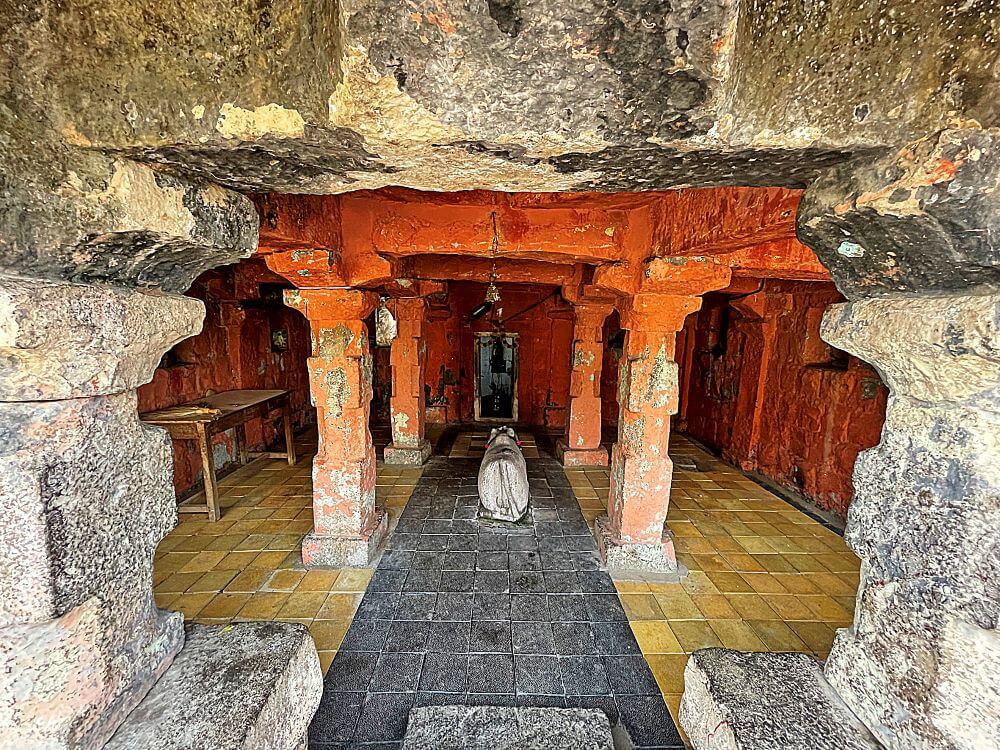
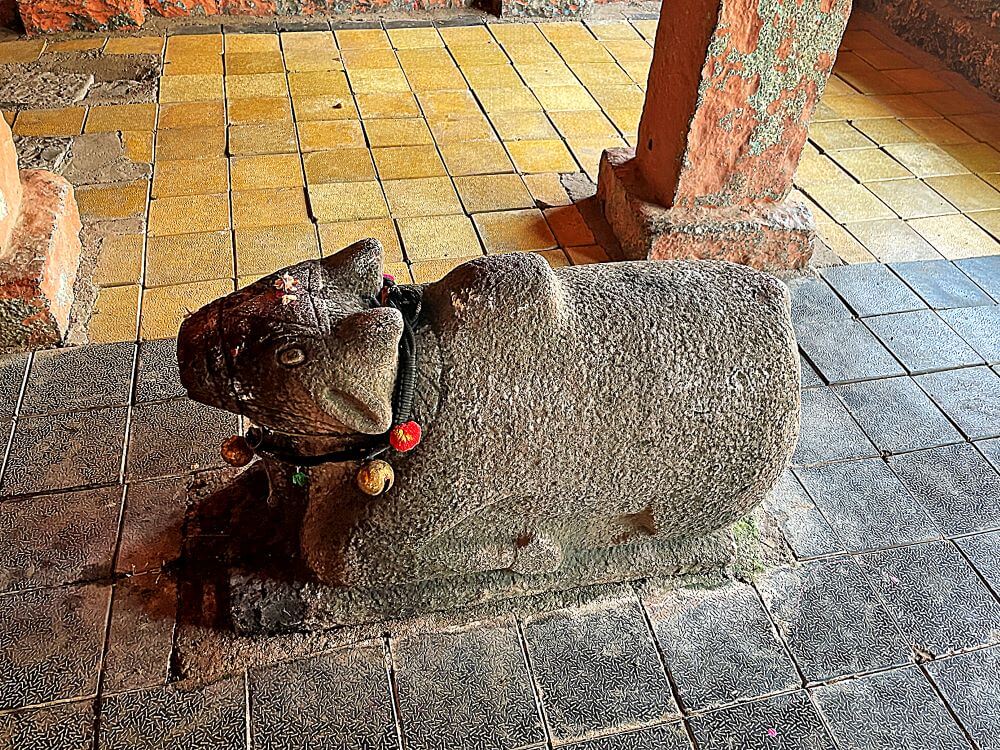
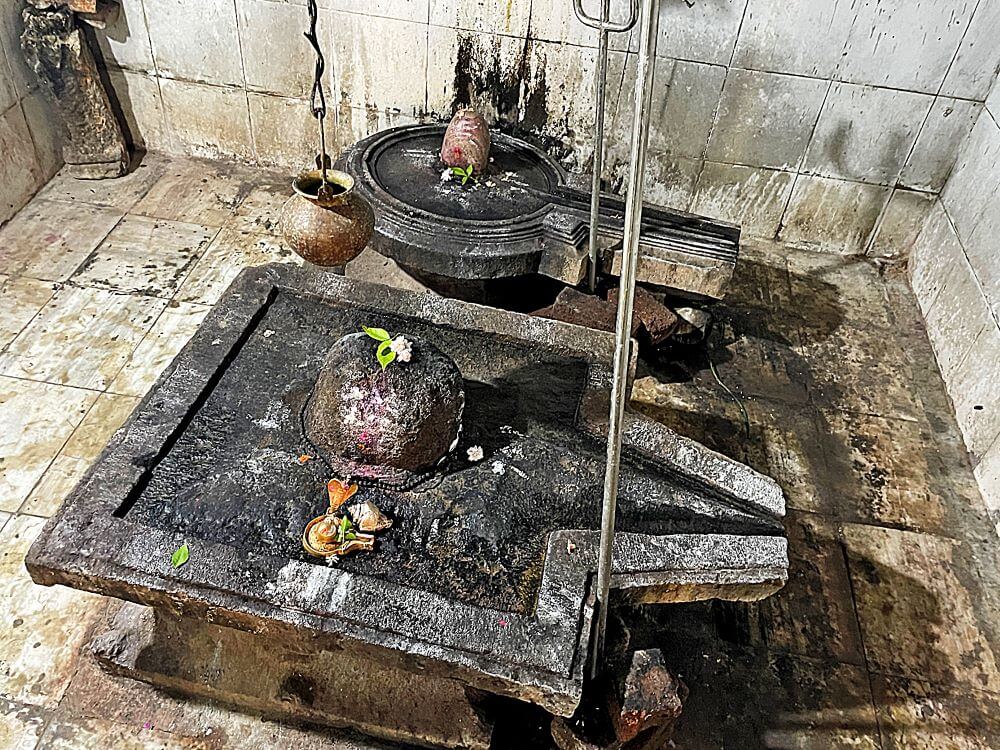
This temple is situated on the outskirts of the village amidst scenic surroundings. Although it is known as the Duryodhana Temple, the primary shrine is dedicated to Lord Mahadev. Built entirely of stone, it stands on a raised platform (Jagati/plinth) about 4 to 5 feet high. The structure of the temple comprises a Sabhamandap (assembly hall) and a Garbhagriha (sanctum sanctorum). A spacious new Mandap was constructed in front of the temple a few years ago. Ascending 4 steps leads into the temple’s Sabhamandap. There is a Nandi in the Sabhamandap, and the Garbhagriha houses 2 Shivpindis (Shiva Lingas)—one square and the other circular. It is said that in ancient times, there was an underground passage from this sanctum that led to the ancient Chintamani Temple located at the village entrance.
Along the side of the temple, there is a staircase leading up to the Kalash (spire). Near the Kalash, there is a door to enter inside. Within the hollow space of the Kalash sits an idol of Duryodhana in the Padmasana (lotus pose) posture. A festival is celebrated at this temple on every Shravani Somvar (Monday of the Shravan month) and Mahashivratri. During these occasions, thousands of devotees visit, transforming the surrounding area into a bustling fairground. A grand procession of Duryodhana is taken out here during the Adhik Maas (extra month) that occurs every 3 years. The villagers describe Adhik Maas as the ‘Aagau’ (extra/mischievous) month. According to the villagers, since Duryodhana was ‘aagau’ (headstrong), his procession is taken out during this month. Devotees participate in large numbers in this festival. Additionally, an 8-day Akhand Harinam Saptah (continuous chanting of the Lord’s name) is organized here during the Adhik Maas.
The State Government has accorded this holy place a ‘C’ grade pilgrimage status. (A shrine that receives more than 1 lakh and less than 4 lakh devotees annually for Darshan is granted ‘C’ grade pilgrimage status by the State Government.) Devotees can take Darshan at this temple from 6:00 AM to 6:00 PM. The daily Aarti takes place here at 7:00 AM.
This sacred temple stands as a testament to deep spiritual devotion, ancient architectural grandeur, and rich local cultural traditions.
The sanctum sanctorum houses the divine idol consecrated according to ancient Vedic traditions, surrounded by serene courtyards and traditional temple architecture.
Navratri, Maha Shivratri, Annual Temple Jatra & Deepotsav
Compare and book flights, secure top-rated local hotels near the temple, hire reliable guides, and rent cars instantly.
Extend your pilgrimage by visiting other highly sacred temples located nearby.


Add ₹999 more to unlock FREE SHIPPING!
Your sacred cart is currently empty.
Shop Photo FramesFill in your delivery details below to place your order.
Add comment