
Add ₹999 more to unlock FREE SHIPPING!
Your sacred cart is currently empty.
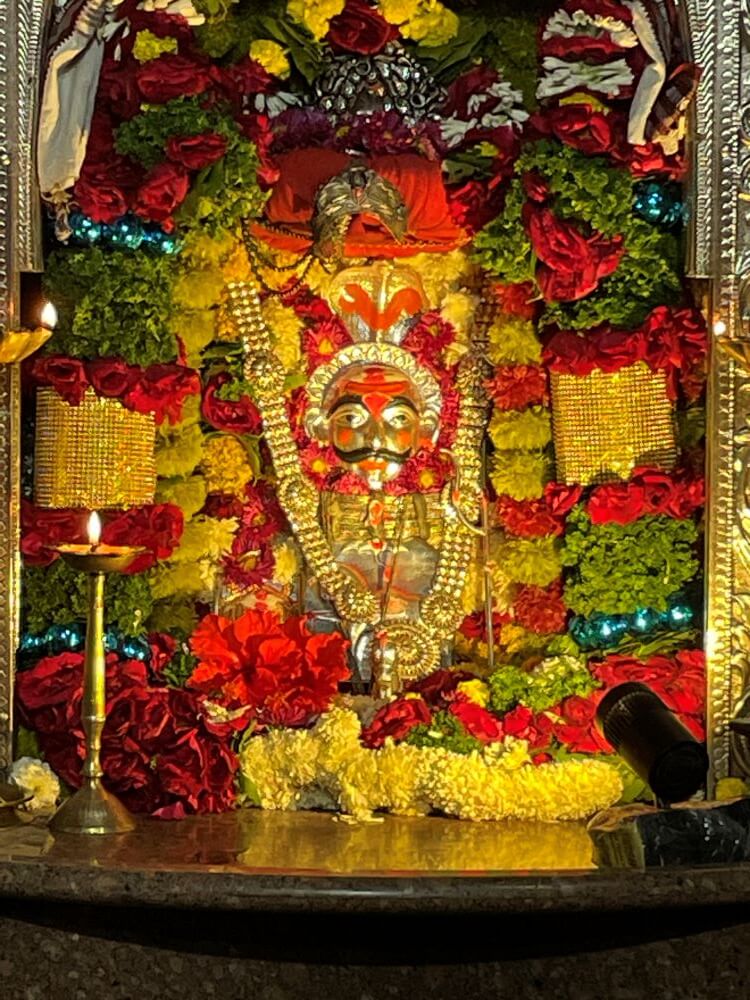
Shop Photo FramesThe village of Valavane in Parner taluka, located on the Ahilyanagar-Pune highway, is famous for its ancient Kalbhairavnath Temple. This sacred site, which has been a place of deep faith for thousands of devotees for centuries, is believed to be a *Jagrut Devasthan* (an awakened or spiritually vibrant shrine). The annual fair held on *Chaitra Vadya Pratipada* is considered one of the major pilgrimages in the Ahilyanagar district. Because the villagers believe that Kalbhairavnath protects them, he is also addressed as the ‘Kshetrapal’ (Guardian of the region).
The legend of the temple states that Kalbhairavnath set out from Kamargaon, near Valavane, riding his chariot for a tour. He stopped for a while to rest in a scenic area on the border of Valavane and Kamargaon. At that time, a young shepherd girl from the village arrived in the area with her cattle. She immediately recognized Kalbhairavnath and bowed to him with pure devotion. Seeing the devotion of that young girl, the deity was pleased and asked her to seek a boon. The girl replied, “O God, I do not want anything; just come with me to my village, Valavane, and stay there so that I can have your *darshan* every day.” Hearing the girl’s wish, the deity agreed to accompany her to the village. The deity took her into his chariot, and they both set off for Valavane.
As they were traveling toward the village in the deity’s chariot, the axle (the part connecting both wheels that bears the weight of the entire chariot) bent after covering some distance. A natural spring of water exists today at the spot where this axle bent. A little further on, the same axle broke, and the chariot wheel fell off. That place is known today as Biroba-cha-Maal. The villagers have preserved the wheel that fell off at this spot to this day.
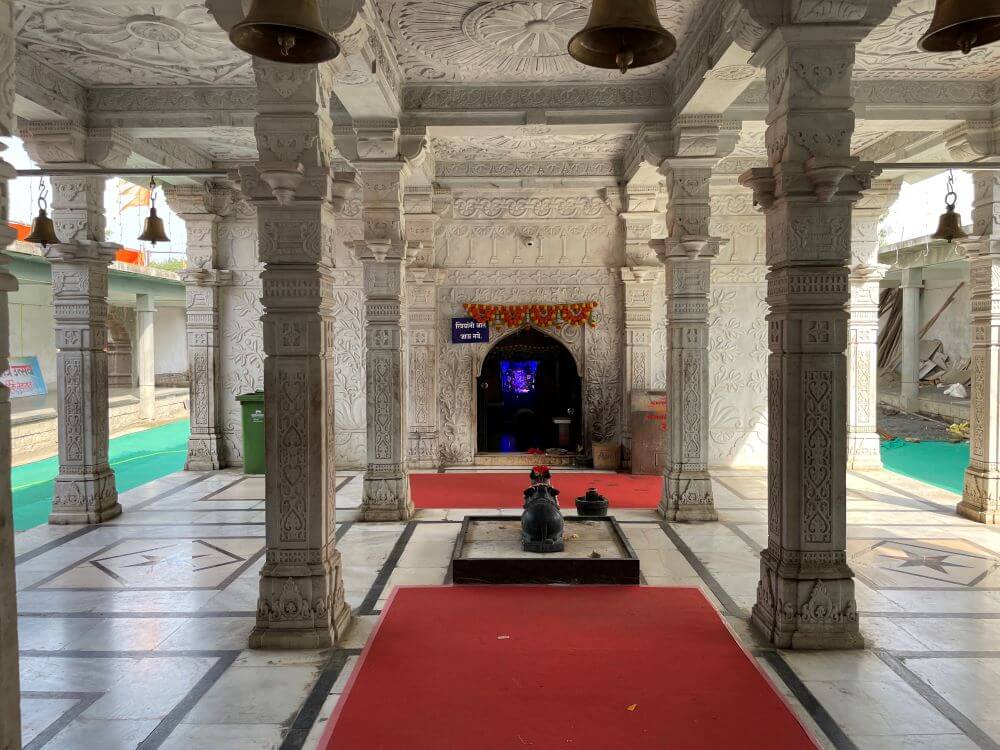
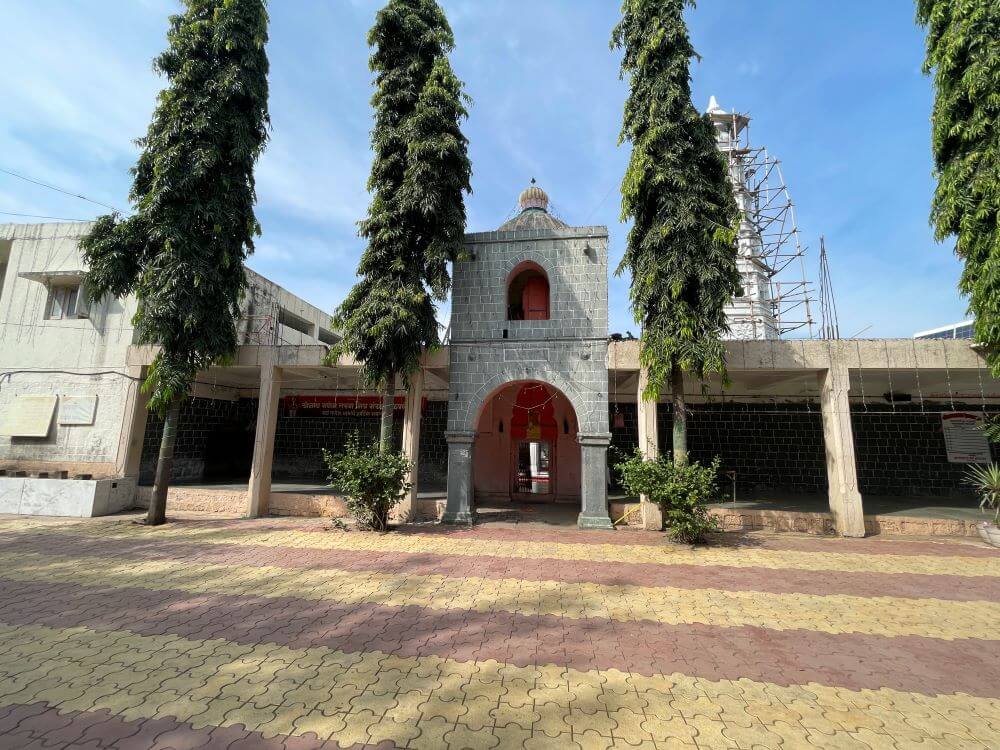
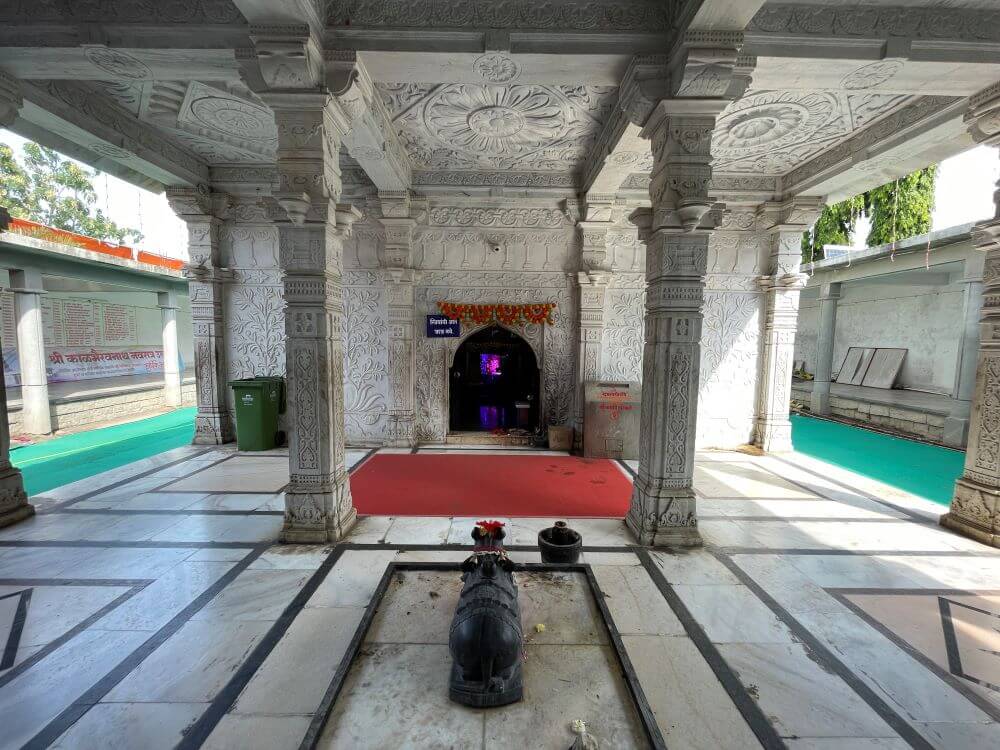
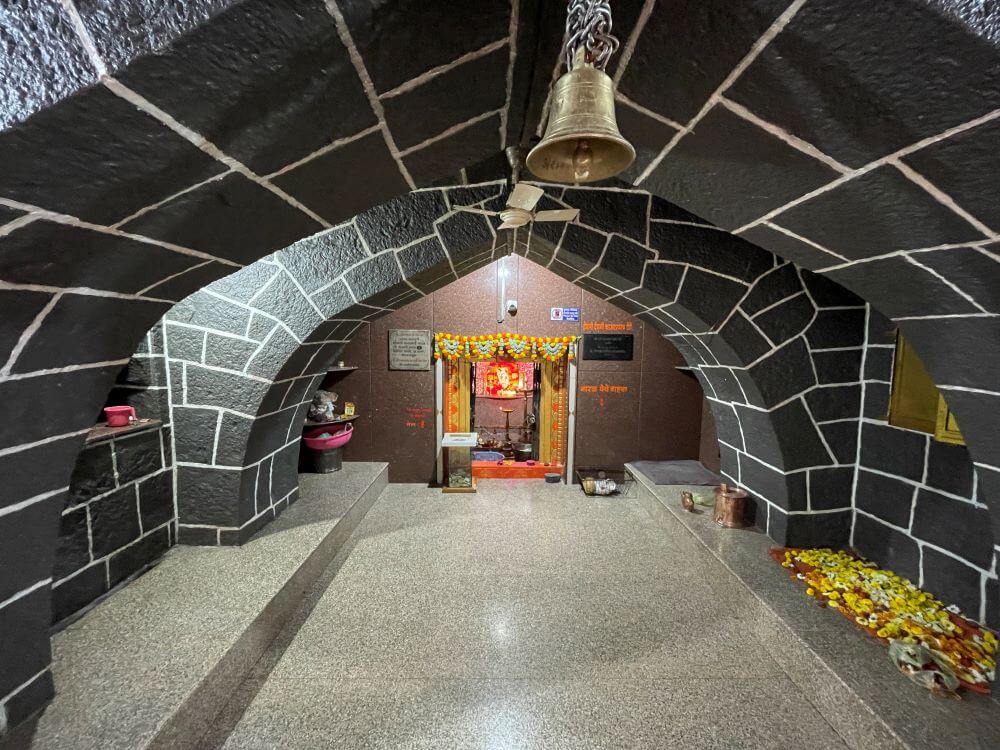
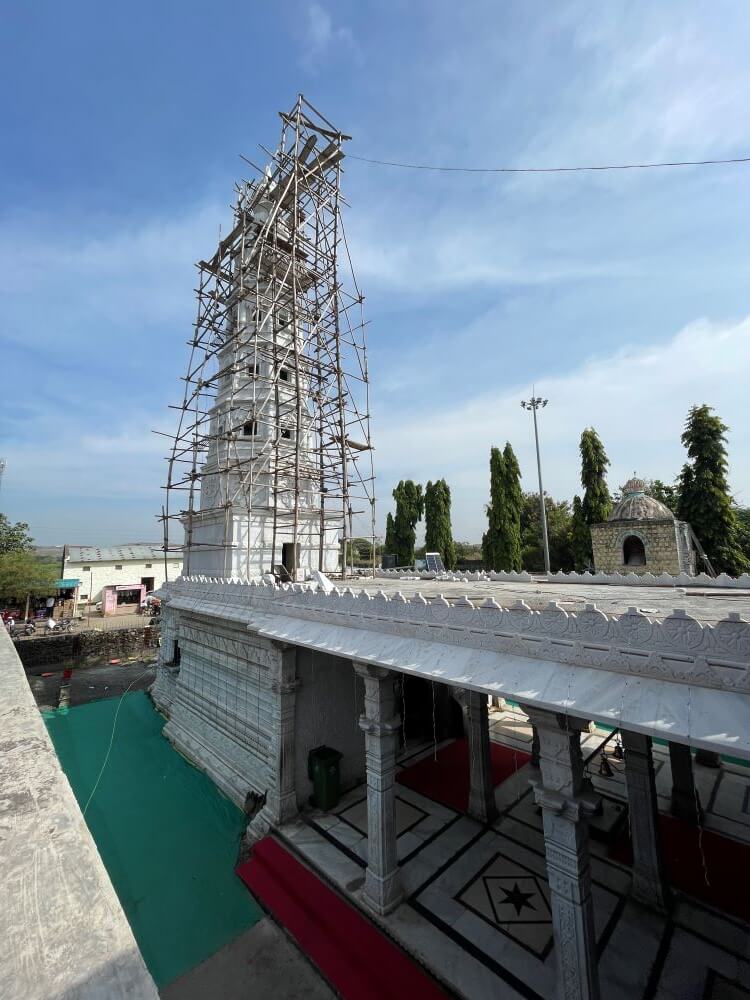
Although the original temple dates back to the 10th century, it has undergone changes over time. The temple acquired its current form after renovations by the villagers in 1971, which cost approximately 20 million rupees. It is said that the original temple consisted only of a *Garbhagriha* (sanctum sanctorum) housing the idol of Kalbhairavnath. Subsequently, an *Antarala* (vestibule) and a *Sabhamandap* (assembly hall) were added in stages. Additionally, a grand assembly hall was built in the temple courtyard for religious programs. Adjacent to the temple are shrines dedicated to Vitthal-Rukmini, Shri Dattatreya, and Tulja Bhavani.
The annual fair begins on *Chaitra Vadya Pratipada*. For the fair, villagers go to the Pravara Sangam to bring sacred water in *Kavadis*. The festival commences after performing an *Abhishek* (ritual bathing) of Bhairavnath with this water in the morning. At midnight, the *Chhabina* (procession of the deity’s palanquin) takes place. Before the procession begins, the deity’s *Kaul* (divine consent) is sought. For this, 11 devotees must come together to lift a medium-sized stone (locally called ‘Goti’) using only one finger each. If they are able to lift it, it is believed that the deity has given his consent, and the *Chhabina* proceeds. The procession continues throughout the night amidst chants of “Bhairavnathanchya Navan Changbhala!”
On the second day of the fair, a wrestling tournament (*Akhada*) is held, in which renowned wrestlers participate. The birth anniversary of Kalbhairavnath is also celebrated with great enthusiasm on *Margashirsha Krishna Ashtami*, during which a 7-day *Akhand Harinam Saptah*, *Bhajans*, and *Kirtans* are organized. Records indicate that over 200,000 devotees visit for the *darshan* of Kalbhairavnath during these two days.
A special feature here is the practice of seeking the deity’s *Kaul* using flowers. Devotees place flowers on the right and left sides of the idol while holding a wish in their hearts. If the flower on the right side falls, it is believed that the deity has granted his consent. Daily *Aarti* of Kalbhairavnath is performed at the temple at sunrise and sunset. This shrine has been included in the state government’s ‘C’ grade list of pilgrimage sites. (A pilgrimage site that receives between 100,000 and 400,000 devotees annually is granted ‘C’ grade status by the state government.)
This sacred temple stands as a testament to deep spiritual devotion, ancient architectural grandeur, and rich local cultural traditions.
The sanctum sanctorum houses the divine idol consecrated according to ancient Vedic traditions, surrounded by serene courtyards and traditional temple architecture.
Navratri, Maha Shivratri, Annual Temple Jatra & Deepotsav
Compare and book flights, secure top-rated local hotels near the temple, hire reliable guides, and rent cars instantly.
Extend your pilgrimage by visiting other highly sacred temples located nearby.


Add ₹999 more to unlock FREE SHIPPING!
Your sacred cart is currently empty.
Shop Photo FramesFill in your delivery details below to place your order.
Add comment