
Add ₹999 more to unlock FREE SHIPPING!
Your sacred cart is currently empty.
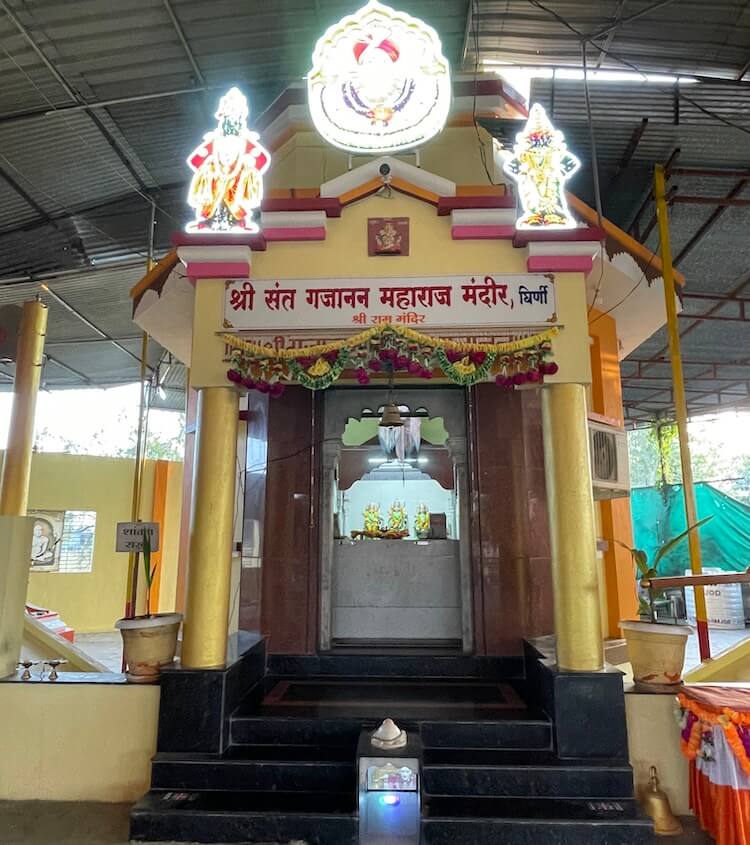
Shop Photo FramesAlthough Shegaon is the main Samadhi site of Gajanan Maharaj, his devotees and followers have built temples in various places to carry forward the legacy of the Maharaj’s thoughts and work. One such temple is the Gajanan Maharaj Temple in Ghirni, located in the Malkapur taluka of Buldana district, which has gained fame as ‘Prati-Shegaon’ (a replica of Shegaon) in a short span of time due to the faith of thousands of devotees. The eternal flame and disciplined daily worship in this temple give devotees the same experience of divine consciousness as in Shegaon. During festivals like Prakat Din, Rishi Panchami, and Ram Navami, the temple is filled with a multitude of devotees. The state government has honored this site by granting it the status of a ‘C’ grade pilgrimage center.
Driven by the sentiment that there should be a Gajanan Maharaj temple in their own village just like in Shegaon, the villagers built this temple in 2019 through public contributions. There are many similarities between this temple, which became famous in a short time, and the original Gajanan Maharaj temple in Shegaon. Like the Shegaon temple, this octagonal temple is built on agricultural land, and similar to the Shegaon temple, the land survey number is 41. Just like in Shegaon, there are three roads in front of this temple, and the shape of the space in front of the temple resembles a traditional blouse piece (choli-khan). The Kalinka River flows beside the temple. Similar to the temple in Shegaon, the height of the idol here is 2.5 feet, and the orientation of the idol is also the same. Like Shegaon, there is also a Ram Mandir here. Furthermore, an eternal flame burns here as well, and daily rituals such as bhajans, aarti, and Annadan (offering of food) are performed just as they are in Shegaon. Every Thursday, a Maha-Aarti and Annadan are held here.
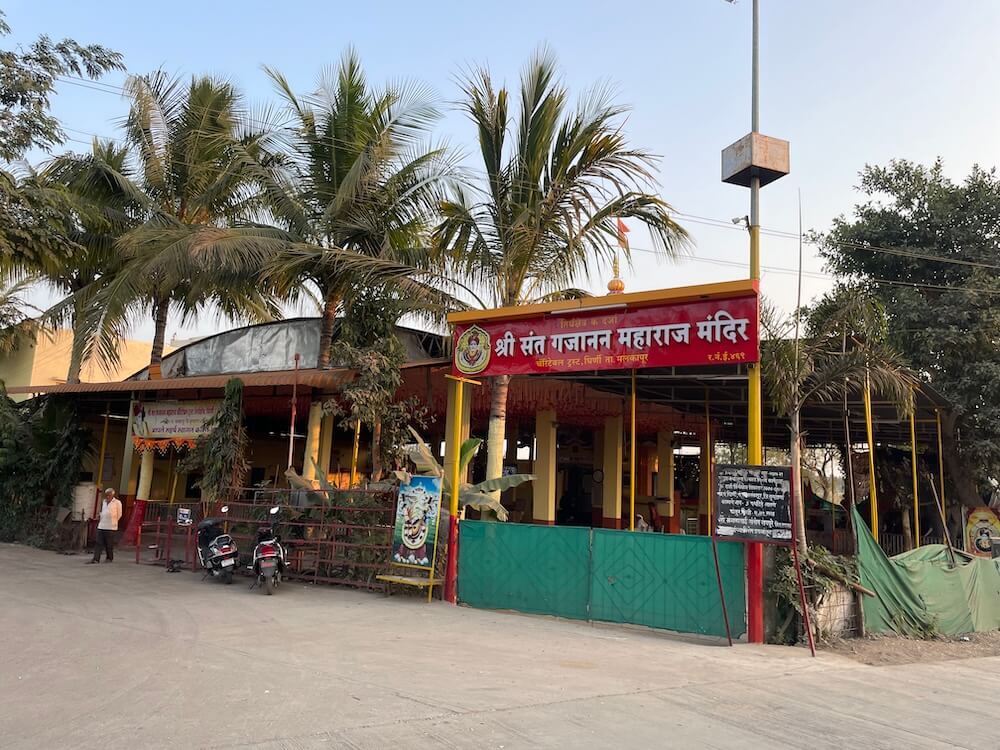
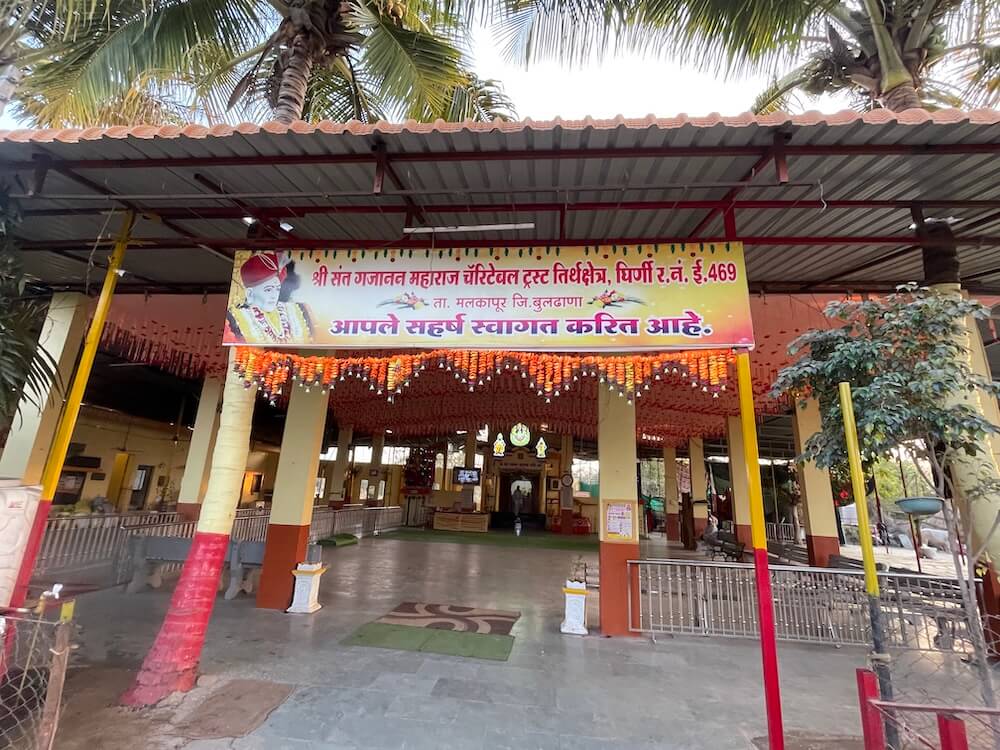
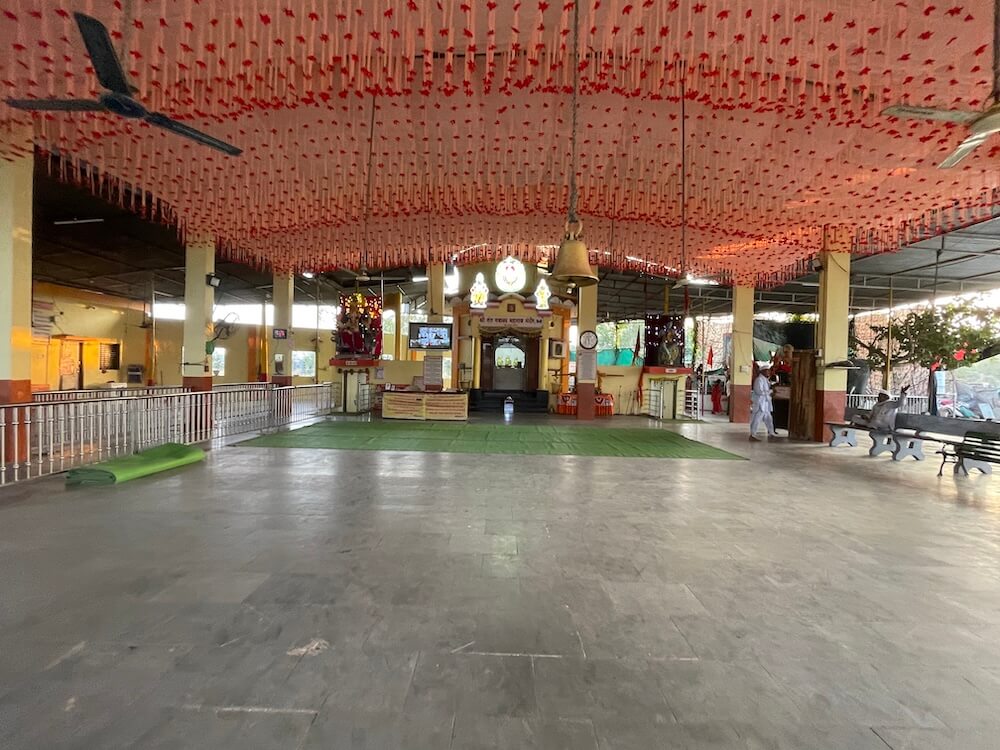
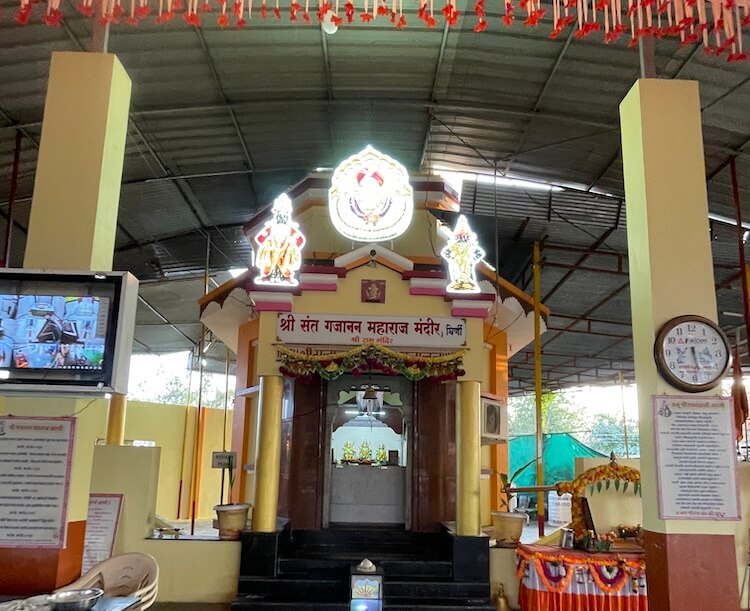
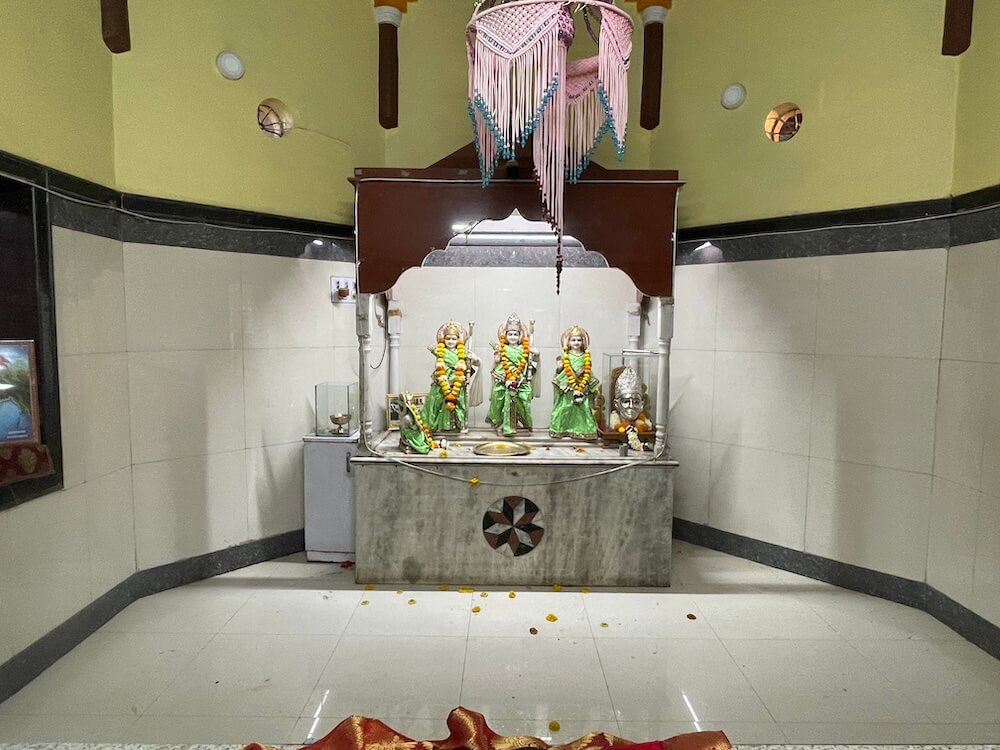
The temple is located about six kilometers east of Malkapur. There are banana and coconut trees outside the temple. There is an open pavilion (mandap) in front of the temple, which has a tin roof for the convenience of the devotees. Seating arrangements for devotees and queue management during festivals are organized in this pavilion. On the front side of the pavilion, the sanctum sanctorum (Garbhagriha) is built on a high pedestal. In this sanctum, there are the wooden padukas (footwear) of the Maharaj, and on a Vajrapitha (throne), marble idols of Shri Ram, Lakshman, Sita, and Maruti are seated. In a glass case next to these idols is a silver idol of Gajanan Maharaj. To reach the Samadhi path located on the ground floor of this sanctum, one has to descend about 15 steps. Above the entrance of this darshan path, there is a large idol of Ganesha. In this Samadhi temple, the Maharaj’s padukas are on a Vajrapitha, and behind them, in a marble arch, is a marble idol of Gajanan Maharaj. This idol is adorned with a beautifully crafted silver crown. In front of the idol is a smaller marble idol of Gajanan Maharaj. To its left are idols of Hanuman, and to the right are Panchadhatu (five-metal) idols of Balakrishna. The ceiling of the sanctum is intricately carved. After coming out of the sanctum, one can return to the pavilion via another staircase. Above the exit door, there is an idol of Lord Shiva.
On the right side of this temple, there is a sculpture of Gajraj (an elephant). To the right of this sculpture, on another elephant sculpture, an idol of Ganesha is seated, with Riddhi and Siddhi on both sides of Ganesha. The area containing this idol is enclosed by stainless steel railings on all four sides. Under a nearby Audumbar tree, images of Shri Dattatreya, Gajanan Maharaj, Swami Samarth, and Sai Baba have been placed on all four sides. There are tiger sculptures on both sides of this tree. In the vicinity, there is a shrine to Someshwar Mahadev, featuring a Shiva Linga on a pedestal with an idol of Nandi in front of it.
In the left corner of the pavilion is the seat (Gadi) and Parayan site of Gajanan Maharaj. In the large hall here, the padukas are placed on Gajanan Maharaj’s seat. Behind the seat are large images of Gajanan Maharaj, Swami Samarth, and Sai Baba. On one of the walls of the pavilion, a sculpture of Gajanan Maharaj sitting under a banyan tree is carved. This pavilion also houses the Palkhi (palanquin) of Gajanan Maharaj. Many images describing the miracles of Gajanan Maharaj are displayed on the walls here. The temple has a tall spire (shikhara) topped with a two-tiered Amalaka and a Kalash.
Many devotees from the surrounding five-village radius come here for darshan. Annadan is performed every Thursday afternoon. In the evening, after the Maha-Aarti, a Palkhi procession of Gajanan Maharaj is taken out in the temple premises. Various festivals, including Ram Navami and Guru Purnima, are celebrated here. On the day of Ram Navami, Abhishek and worship are performed on the idols of Shri Ram-Sita-Lakshman as well as the Gajanan Maharaj idol in the sanctum. A Homa-Havan is also performed on this day. On Gajanan Maharaj Prakat Din, early morning Kakada Aarti, Gajanan Yaga, and Abhishek on the idol of Gajanan Maharaj are performed. In the afternoon, Maha-Prasad is distributed to the devotees. In the evening, a Palkhi procession is taken out through the premises. A Maha-Aarti is held at night. Throughout this day, bhajans and kirtans continue. On the occasion of the Prakat Din festival, a Shiva Mahapuran Saptah is also organized. On the day of Rishi Panchami, various programs are held to mark the death anniversary (Punyatithi) of Gajanan Maharaj. On this morning, milk Abhishek is performed on the idol of Gajanan Maharaj, followed by a Palkhi procession through the village. In the evening, Maha-Prasad is distributed to the devotees. During these festivals, Ghirni takes on the appearance of a pilgrimage site. Many Palkhis and foot processions (Dindis) heading to Shegaon make it a point to rest at Ghirni.
This sacred temple stands as a testament to deep spiritual devotion, ancient architectural grandeur, and rich local cultural traditions.
The sanctum sanctorum houses the divine idol consecrated according to ancient Vedic traditions, surrounded by serene courtyards and traditional temple architecture.
Navratri, Maha Shivratri, Annual Temple Jatra & Deepotsav
Compare and book flights, secure top-rated local hotels near the temple, hire reliable guides, and rent cars instantly.
Extend your pilgrimage by visiting other highly sacred temples located nearby.


Add ₹999 more to unlock FREE SHIPPING!
Your sacred cart is currently empty.
Shop Photo FramesFill in your delivery details below to place your order.
Add comment