
Add ₹999 more to unlock FREE SHIPPING!
Your sacred cart is currently empty.
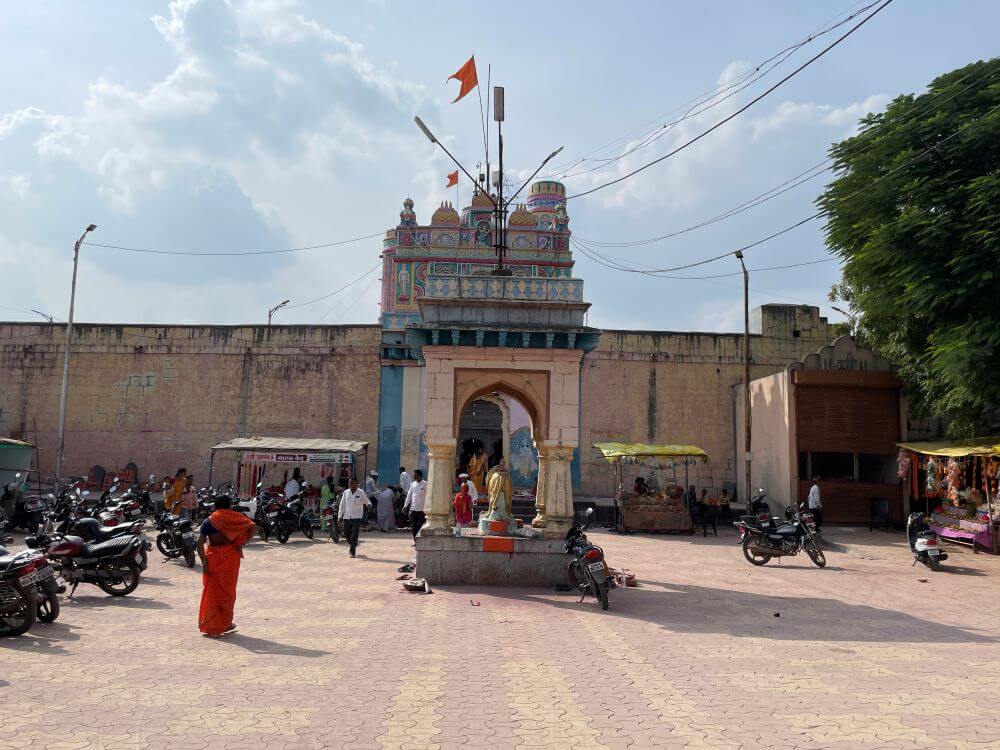
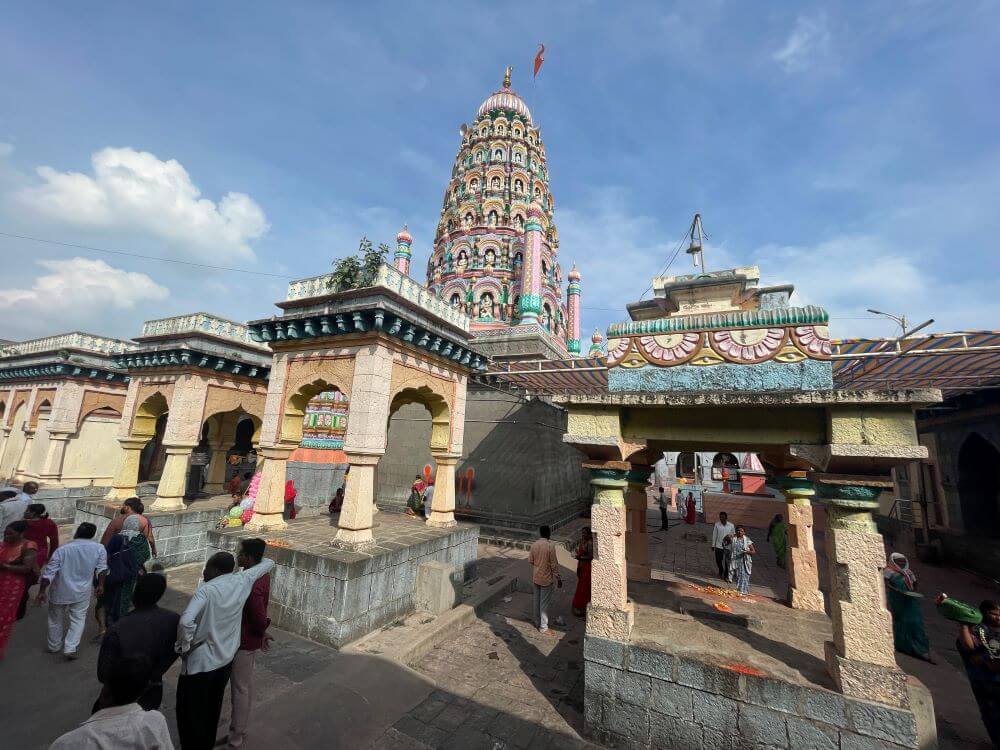
Shop Photo FramesLocated in the village of Rashin in Karjat Taluka, at the confluence of the districts of Ahilyanagar, Solapur, and Pune, lies the 7th-century abode of the Ashtabhuja (eight-armed) Jagadamba Mata. The temple of Jagadamba here is considered a symbol of Rashin’s religious, historical, and glorious heritage. Jagadamba Mata is the family deity (Kuldaivat) of thousands of families in this region. She is also widely known as Yamai Devi. The Rath Utsav (palanquin procession) of the Goddess, celebrated on the day of Vijayadashami, is famous, and thousands of devotees gather to participate in this procession, which lasts for more than 24 hours. A grand fair (yatra) of Jagadamba is held on this very day.
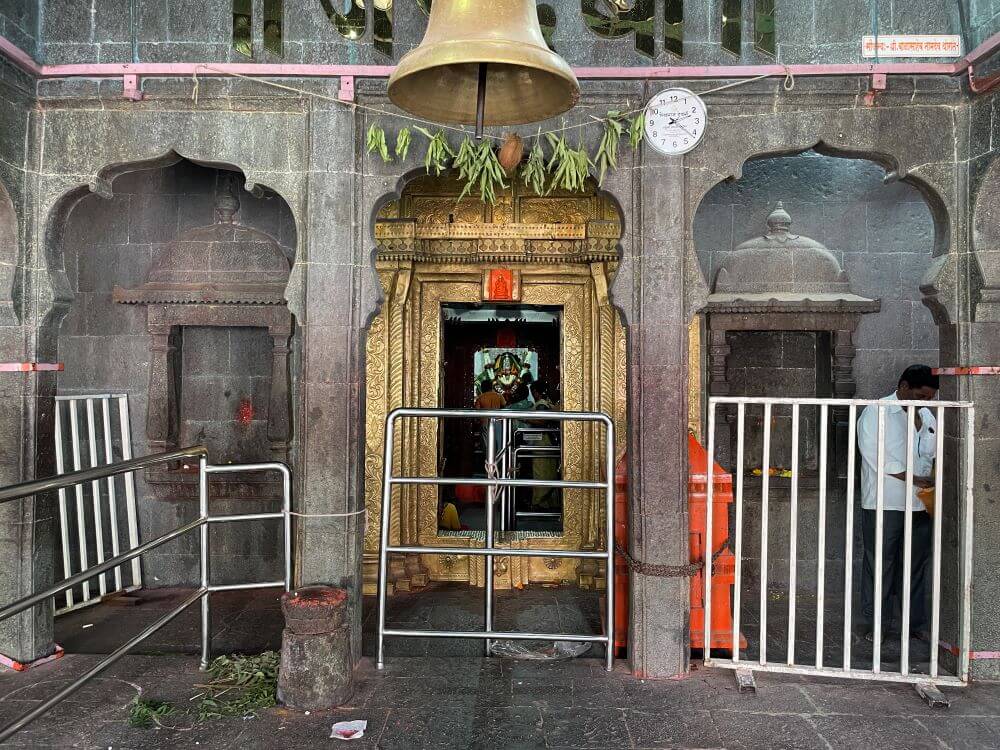
Rashin village is renowned as a religious site. Along with the ancient Jagadamba temple, there is also a Kashi Vishweshwar temple built in the Hemadpanti style. A unique feature of this temple is its massive brass bell; when rung, its sound can be heard for several kilometers. The Vishnu temple here is also famous. According to a legend, the Goddess fought Mahishasura for nine days before slaying him here. At that time, the bodies of thousands of demons lay in heaps (rashi) in this area. It is from these heaps that the village derived its name, ‘Rashin’.
The legend behind all these temples in Rashin is that a man named Bhujangappa Shete-Jangam, who lived in this area, once found a pot filled with gold coins. He hid it in a wall. Later, Jagadamba Devi appeared in a dream to his son, Akkappa, and instructed him to build a temple. With his father’s help, Akkappa built a magnificent temple for Jagadamba Devi in Rashin. Although the site of the Goddess is ancient, the current temple was constructed in 1690. Along with this temple, Akkappa also built the Kashi Vishweshwar and Vishnu temples.
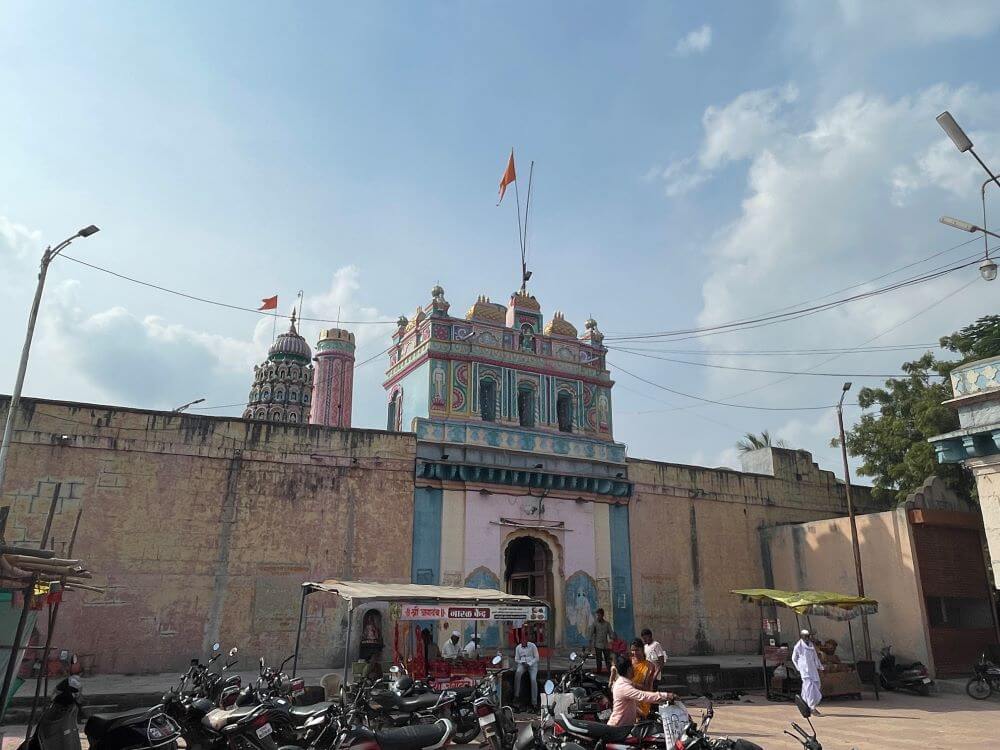
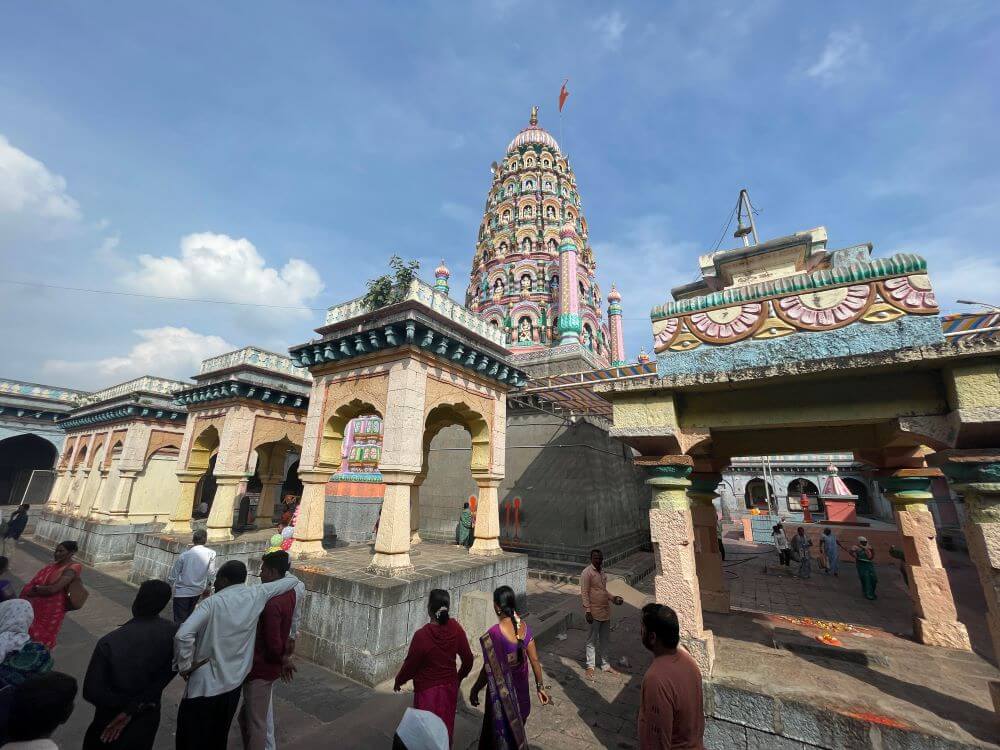
The Jagadamba temple is surrounded by high fortifications. Upon entering through the gate in the fortification, one finds a paved courtyard, a well, and cloisters (ovaryas) along the inner side of the walls. An inscription here mentions that these were built by the famous Peshwa-era diplomat and Sardar, Antaji Mankeshwar Gandhe. These cloisters feature intricately carved sculptures. If one observes the floral carvings on the cloisters closely, while all the flowers may appear similar at first glance, the artisans have imbued each flower with a unique character. These cloisters are used by devotees for religious rituals and rest.
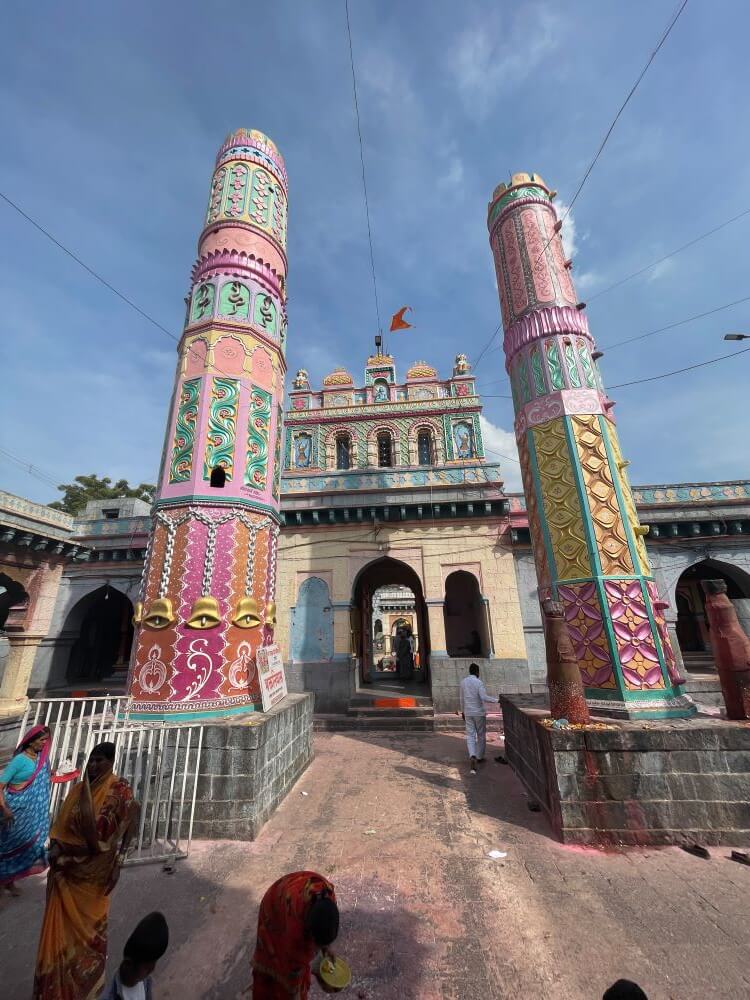
In front of the temple stand two tall and distinctive lamp towers (Deepmalas). Their construction consists of stone at the base and bricks at the top. One of these lamp towers has stairs on the outside to reach the top, while the other has internal stairs. Upon reaching the top of these towers, one finds a horizontal wooden beam. When held and swayed, these lamp towers begin to oscillate. Many devotees who come for darshan climb to the top of these towers to enjoy the experience of these swaying structures.
The temple complex houses shrines dedicated to Shri Ganesh, Kalbhairav, Shayaneshwar, Shri Jamadagni, and Vitthal-Rukmini, as well as a site for Narasimha and the Kallol Tirtha. It is said that after slaying Mahishasura, the Goddess submerged him in this very Kallol Tirtha. The original temple of Jagadamba is built of black stone. The structure of the temple consists of a Singh-mandap (Lion Pavilion), Sabha-mandap (Assembly Hall), Antaral (vestibule), and Garbhagriha (sanctum sanctorum). Just as there is a Nandi-mandap in front of a Shiva temple, there is a Singh-mandap in front of this temple. A brass statue of a lion is installed in this pavilion. In the Sabha-mandap, arrangements have been made for a queue for the convenience of devotees. The main idol of the eight-armed Jagadamba Mata is in the sanctum. Beside this idol are the idols of Tukai and Chatushringi Devi.
The Dussehra festival at the Jagadamba Mata temple is famous. Thousands of devotees attend the palanquin procession held at this time. This celebration continues until the evening of the following day. This festival is also known as the ‘Rath Utsav’. Devotees can have darshan of Jagadamba Mata in the temple every day from 6:00 AM to 6:00 PM. This Jagadamba is renowned as a Goddess who fulfills the vows (navas) of her devotees.
This sacred temple stands as a testament to deep spiritual devotion, ancient architectural grandeur, and rich local cultural traditions.
The sanctum sanctorum houses the divine idol consecrated according to ancient Vedic traditions, surrounded by serene courtyards and traditional temple architecture.
Navratri, Maha Shivratri, Annual Temple Jatra & Deepotsav
Compare and book flights, secure top-rated local hotels near the temple, hire reliable guides, and rent cars instantly.
Extend your pilgrimage by visiting other highly sacred temples located nearby.


Add ₹999 more to unlock FREE SHIPPING!
Your sacred cart is currently empty.
Shop Photo FramesFill in your delivery details below to place your order.
Add comment