
Add ₹999 more to unlock FREE SHIPPING!
Your sacred cart is currently empty.
Shop Photo FramesNashik, sanctified by the presence of Shri Ram, Lakshman, and Sita, is home to many temples dedicated to Shri Ram. Among them, the Kalaram Temple is the most renowned. Similar to Kalaram, there are also the Goraram and Goreram temples here. The Goraram Temple is situated on the banks of the Godavari, while the Goreram Temple is located just a 2-minute walk from the Kalaram Temple. It is widely known as the ‘Muthe’s Goreram Temple’. Additionally, there is a Goreram (Parnakuti) temple near the Sita Gumpha here.
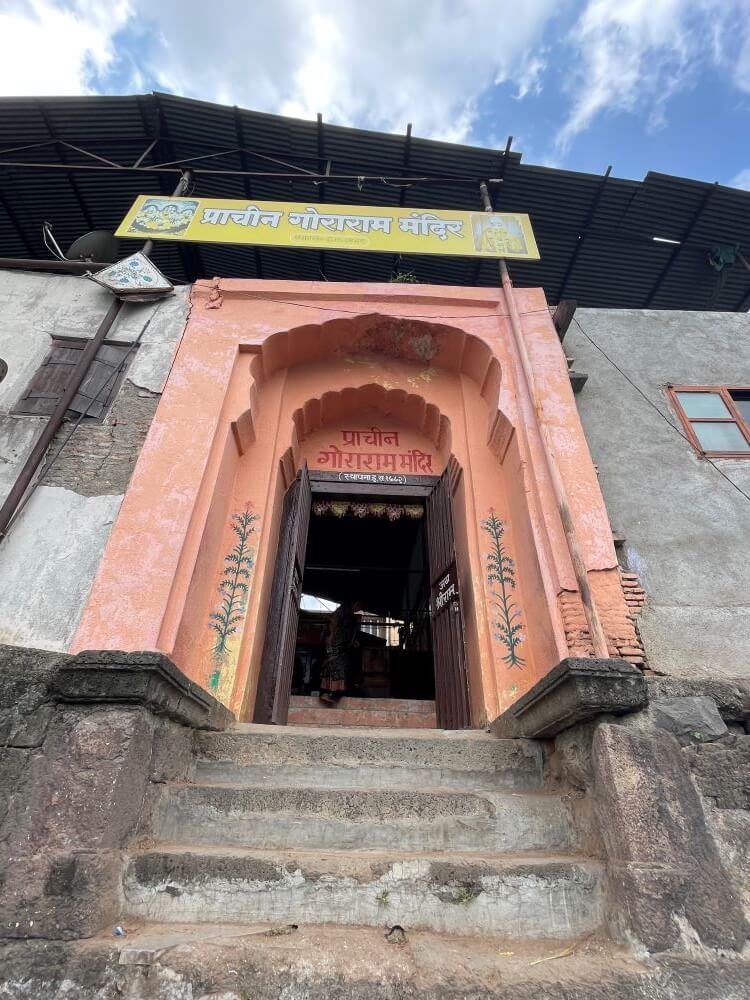
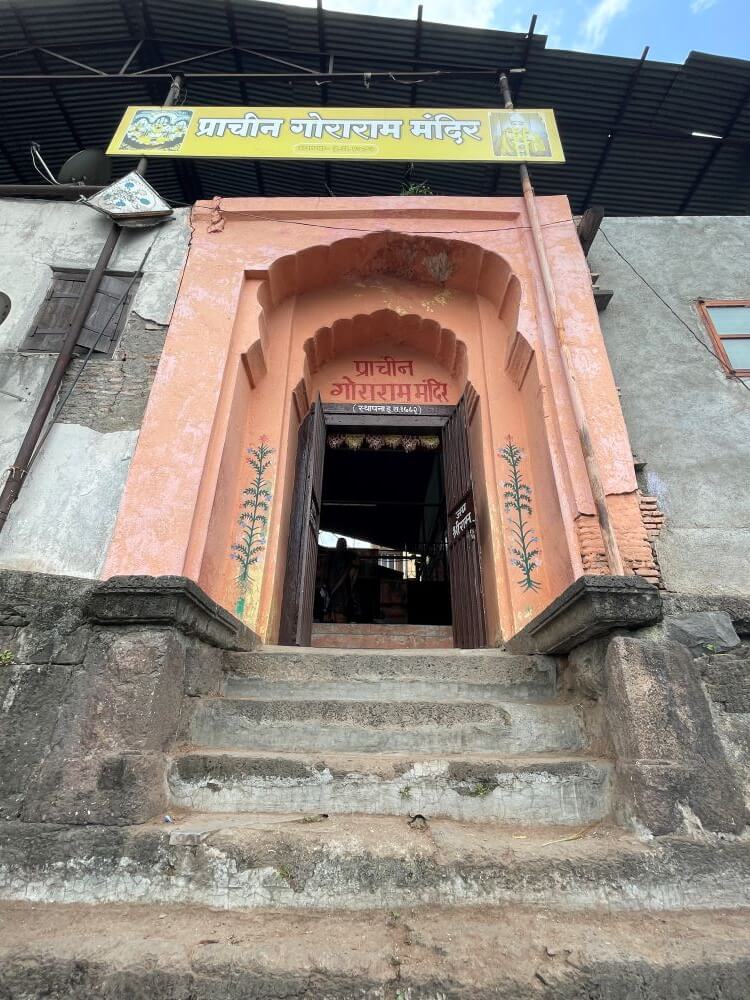
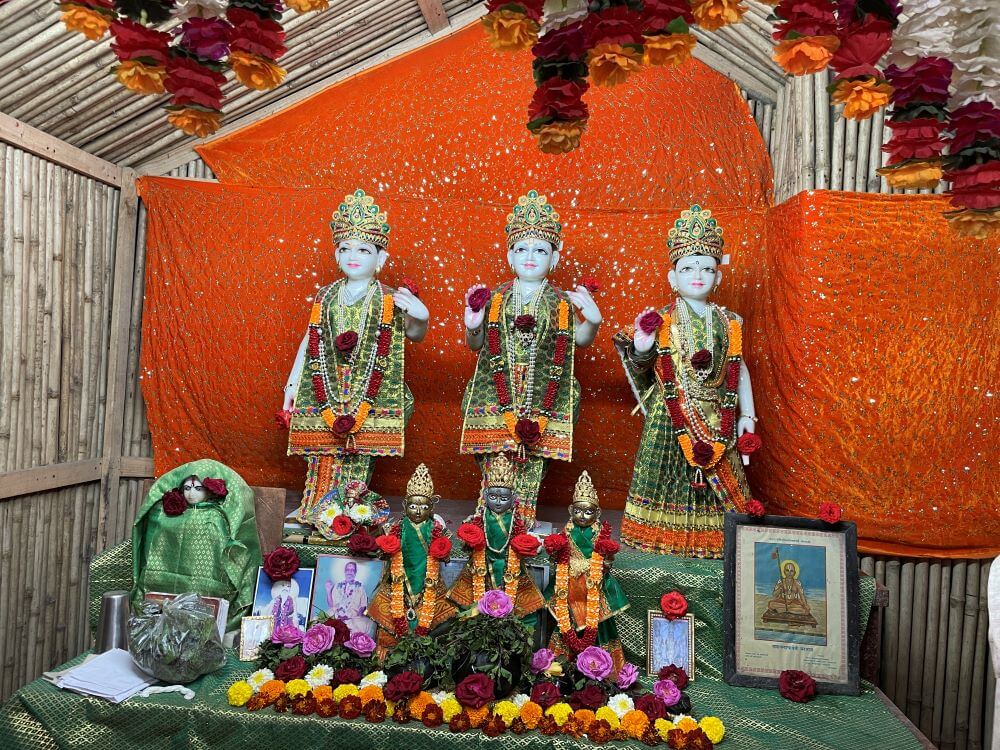
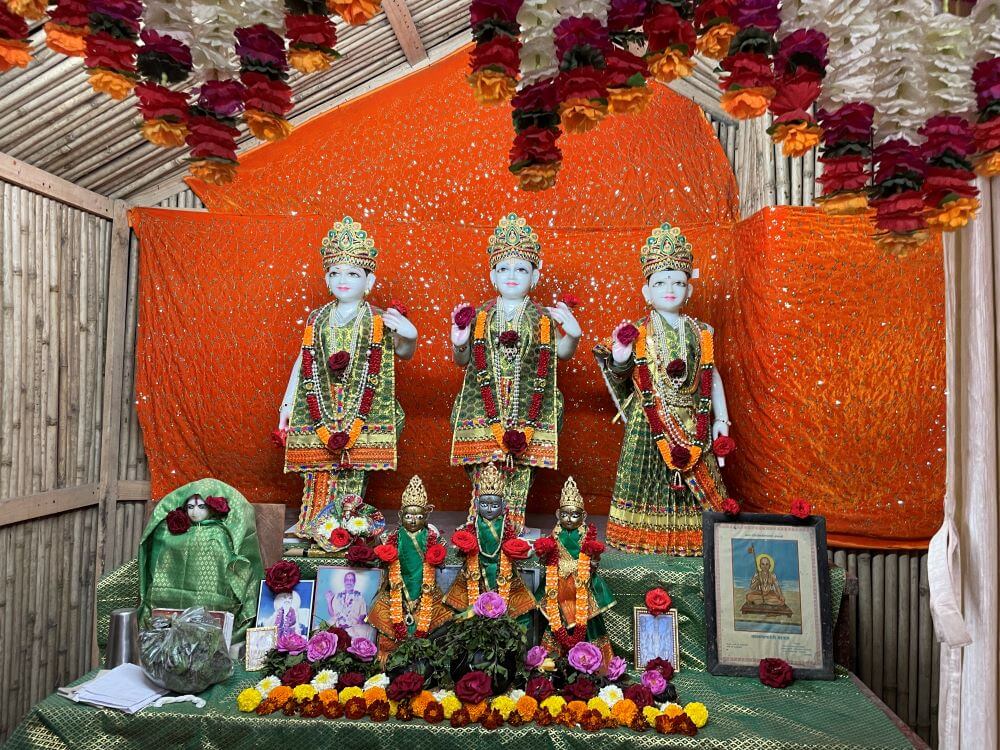
The similarity between the Goraram and Goreram temples is that both were built during the Peshwa era. Records indicate that Sardar Madhavrao Hingne of Madhavrao Peshwa’s court built the Goraram Temple in 1782, while the Goreram Temple was built by the Peshwa-era nobleman Shrimant Muthe. To reach the ancient Goraram Temple, located next to the Nilkantheshwar Temple on the banks of the Godavari, one must climb 35 to 40 steps. From the entrance of this temple, the Godavari Ghat and its many surrounding temples come into view. This wooden-structured temple is designed with a Sabhamandap (assembly hall) and a Garbhagriha (sanctum sanctorum). The Sabhamandap houses an idol of Maruti (Hanuman), while the Garbhagriha contains the idols of Shri Ram, Sita, and Lakshman. It is said that the temple is named ‘Goraram’ because these idols in the sanctum are made of pristine white marble.
At the entrance of the Goraram Temple, a shloka containing the essence of the Ramayana is inscribed:
Adau Rama tapovanadi gamanam, hatva mrigam kanchanam.
Vaidehi haranam Jatayu maranam, Sugriva sambhashanam.
Bali nigrahanam samudra taranam, Lanka puri dahanam.
Pashchad Ravana Kumbhakarna hananam, etaddhi Ramayanam.
(Meaning: During his exile, Shri Ram came to the Tapovan (Nashik) and killed the golden deer after chasing it. During this time, Sita was abducted by Ravana, and Jatayu lost his life trying to save her. It was here that Shri Ram befriended Sugriva and killed his brother Bali. After building a bridge across the sea, Shri Ram killed the King of Lanka, Ravana, and Kumbhakarna.) Devotees believe that reciting this single shloka grants the merit of reciting the entire Ramayana. Consequently, many devotees sit in the courtyard in front of the Goraram Temple’s Sabhamandap to recite this ‘Ek-Shloki Ramayana’.
On the road from Sita Gumpha in Panchavati to the Kalaram Temple stands the Goreram Temple of the Peshwa’s nobleman, Shrimant Muthe. During the Peshwa period, many noblemen built family temples along the Godavari Ghat. This is the temple of the Shrimant Muthe family. The temple is a grand two-story mansion (wada) adjacent to the road. With its stone foundation, teak wood, ochre-colored walls, high windows, wall niches, wooden pegs on the inner walls, and a sturdy teak entrance, the mansion bears witness to its Peshwa-era origins at first glance.
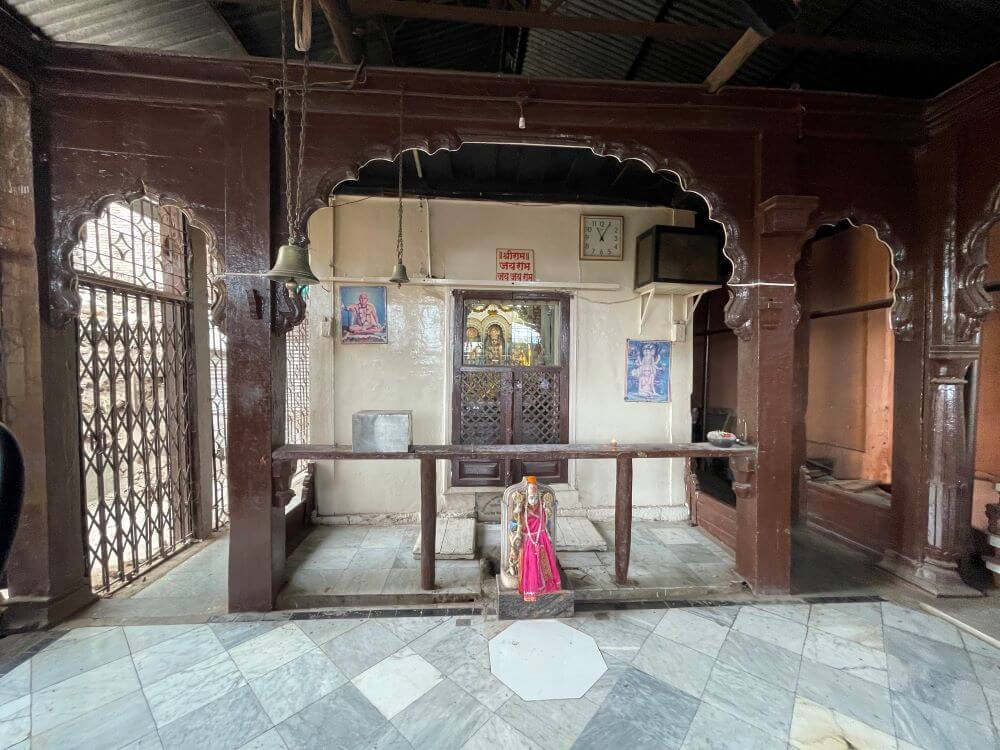
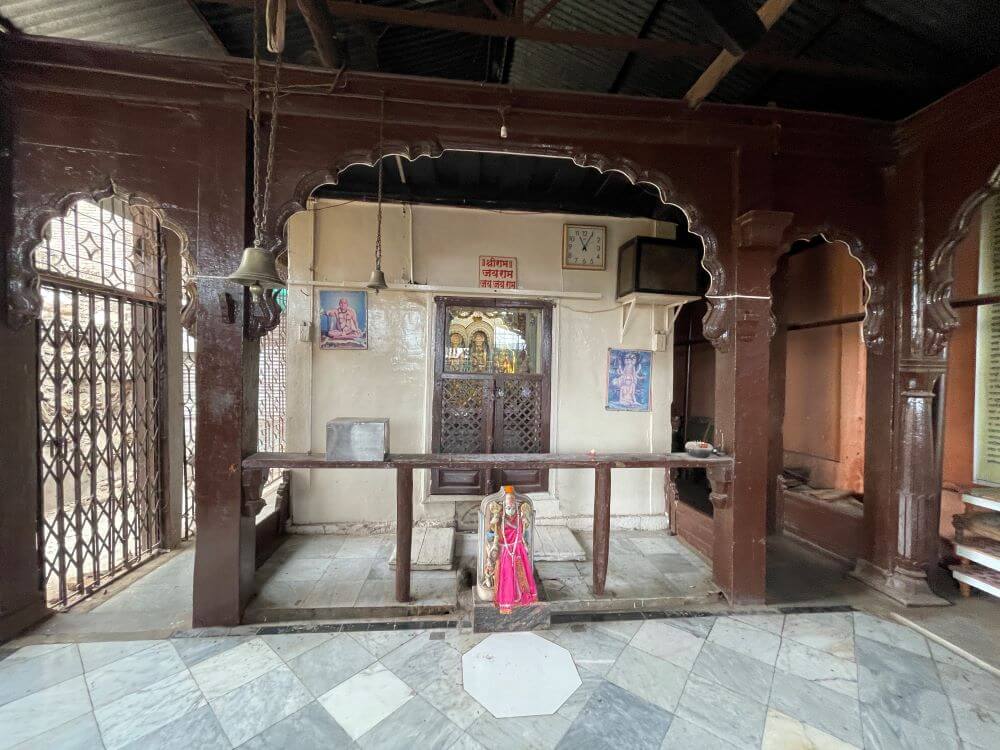
Inside the main entrance is a small paved courtyard. It contains a small Hanuman temple and three samadhis of saints. The Goreram Temple is located slightly higher from here. The Sabhamandap features sturdy wooden pillars, wooden arches adorned with carvings between the pillars, and beams above, all of which evoke the beauty of ancient architecture. The temple is designed with a Sabhamandap and a Garbhagriha. A Kirtimukh is carved at the base of the Garbhagriha’s doorway, and inside, there is an ancient Shiva Linga, with the pristine white marble idols of Shri Ram, Mother Sita, and Lakshman in front of it. To the left of the Garbhagriha is a temple of Shri Vishnu. There is a circumambulation path (pradakshina marg) within the temple-mansion, and on its northern outer side, there is a Makarmukh (crocodile-faced water spout). There is a staircase behind the sanctum to go to the upper floor.
It is recorded in the book ‘Gajanan Vijay’ that Saint Gajanan Maharaj of Shegaon visited this temple to seek the blessings of Goreram. During the Simhastha Kumbh Mela, there is a large influx of saints and devotees here. Ram Navami is the main festival celebrated here. On this day, programs such as Bhajans and Kirtans are held, and the festivities continue until late at night. On Tripurari Purnima, the temple is decorated with attractive lighting. Special programs are also organized here by the Swadhyay Parivar. Devotees can visit the temple between 6:00 AM and 10:00 PM. Abhishek and Puja begin at 6:00 AM.
This sacred temple stands as a testament to deep spiritual devotion, ancient architectural grandeur, and rich local cultural traditions.
The sanctum sanctorum houses the divine idol consecrated according to ancient Vedic traditions, surrounded by serene courtyards and traditional temple architecture.
Navratri, Maha Shivratri, Annual Temple Jatra & Deepotsav
Compare and book flights, secure top-rated local hotels near the temple, hire reliable guides, and rent cars instantly.
Extend your pilgrimage by visiting other highly sacred temples located nearby.


Add ₹999 more to unlock FREE SHIPPING!
Your sacred cart is currently empty.
Shop Photo FramesFill in your delivery details below to place your order.
Add comment