
Add ₹999 more to unlock FREE SHIPPING!
Your sacred cart is currently empty.
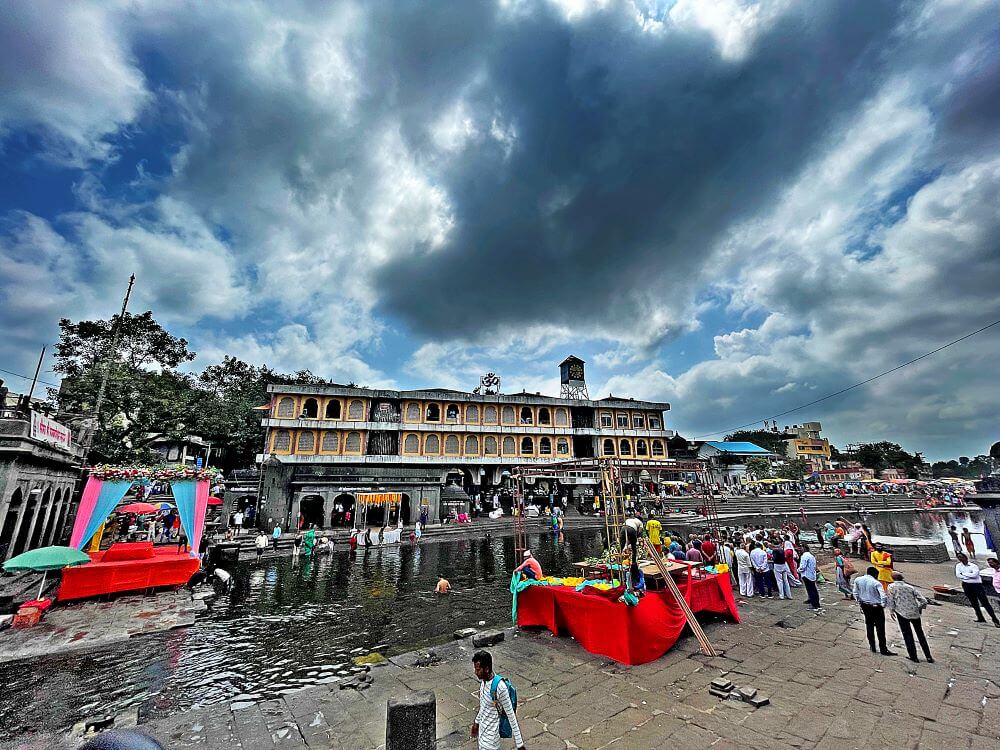
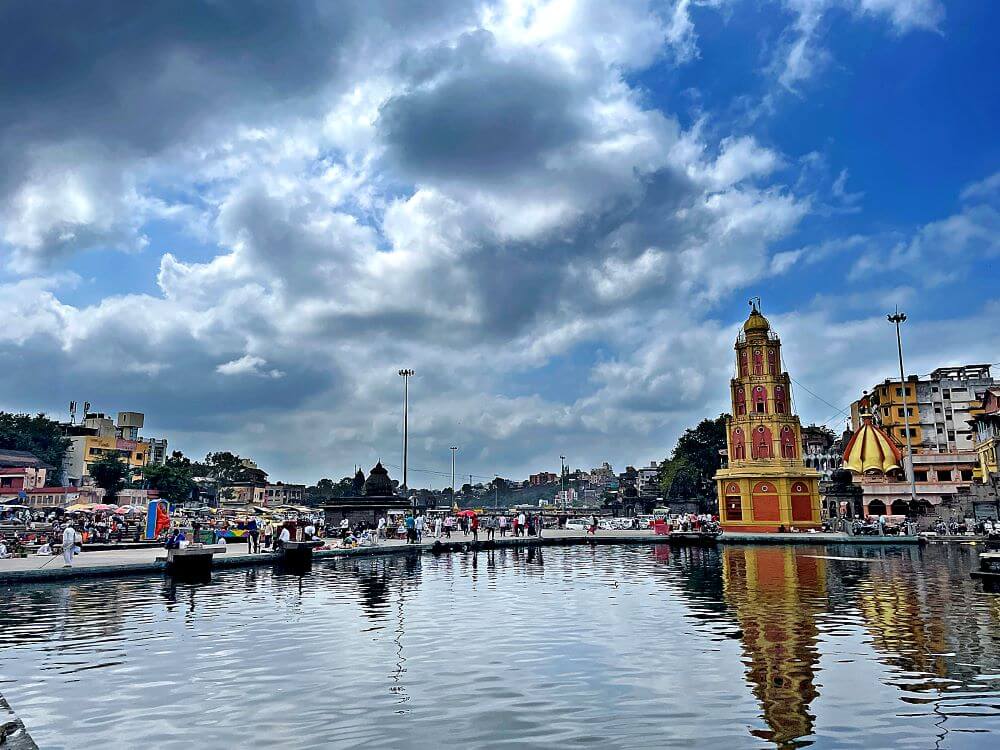
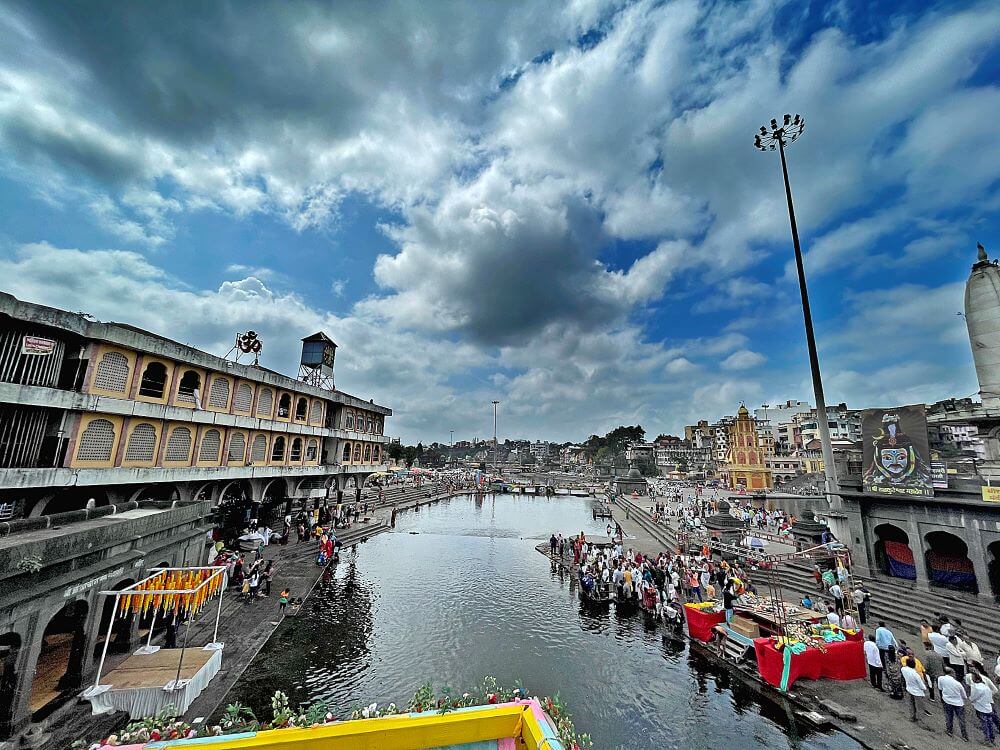
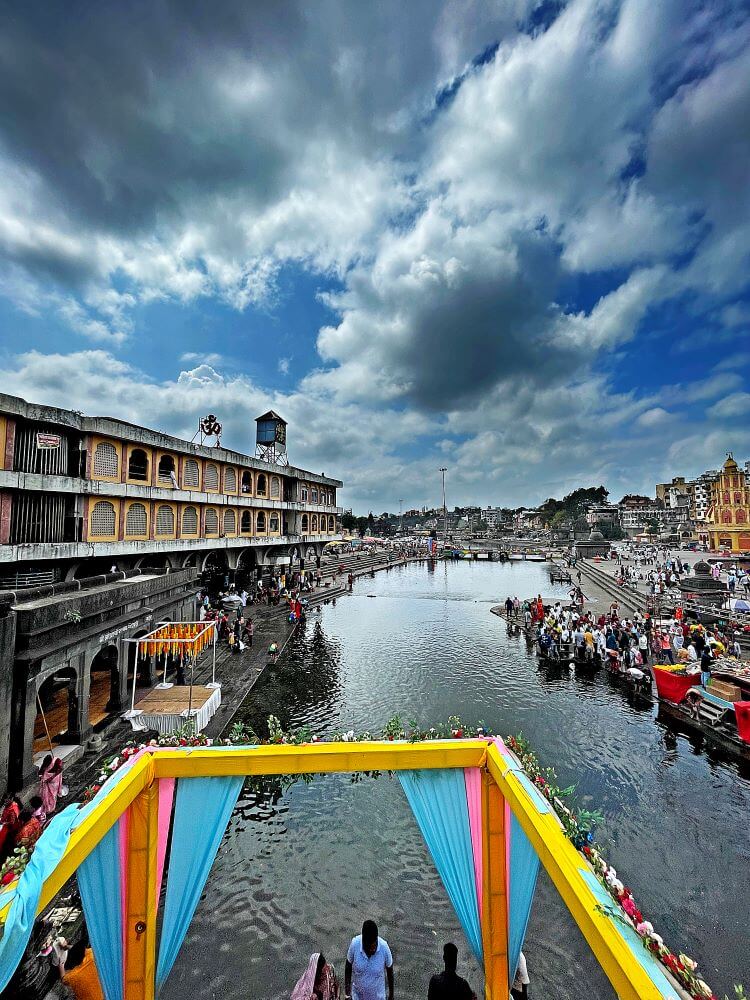
Shop Photo FramesNashik, known as the ‘West Kashi’ of India, is one of the country’s major pilgrimage centers. There are more than two hundred small and large temples in this place. Apart from these, there are also sacred sites of great spiritual significance. Among these, the Ramkund in Panchavati is considered a highly significant pilgrimage site.
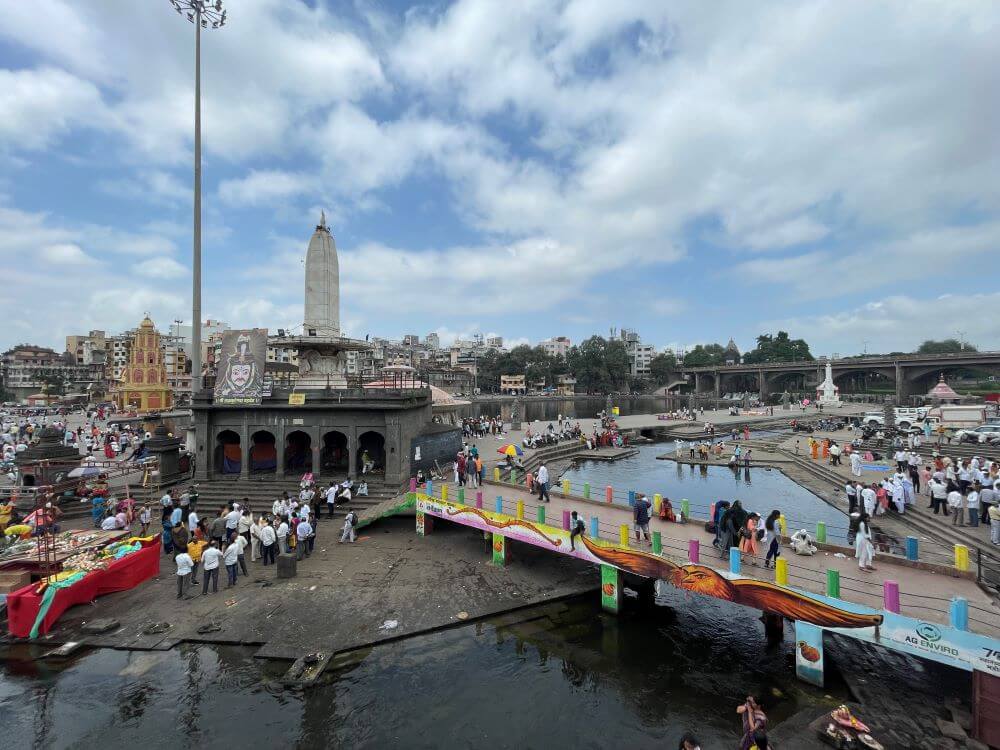
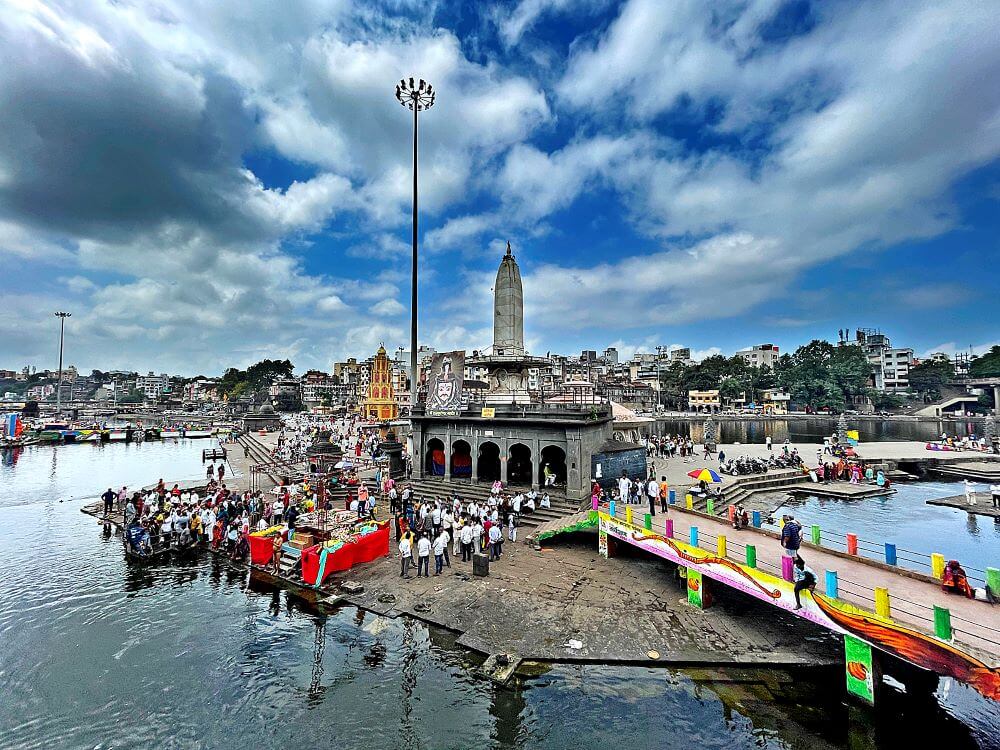
Since ancient times, the area of Panchavati has been considered extremely sacred. There is a cluster of five banyan trees here. ‘Panch’ means five and ‘Vati’ means banyan tree. Therefore, this area is called ‘Panchavati’. Many temples such as Kalaram Temple, Sita Gumpha, Kapaleshwar Temple, Ganga-Godavari Temple, Sundar Narayan Temple, Talkuteshwar Temple, Nilkantheshwar Temple, Goraram Temple, Murlidhar Temple, Tilbhandeshwar Temple, Balaji Temple, Sandvyachi Devi Temple, Vitthal Temple, Pataleshwar Temple, Naroshankar Temple, Dutondya Maruti, Kartik Swami Temple, Katyamaruti Temple, Panchmukhi Hanuman Temple, Bhadrakali Temple, and Kapurthala Memorial are situated on both banks of the Godavari River in the vicinity of Ramkund. In addition to these, there are Sita Kund, Lakshman Kund, Dhanushya Kund, Ahilya Kund, Sharangpani Kund, Dutondya Maruti Kund, and the largest, Dashashwamedh Kund, located in front of the Nilkantheshwar and Goraram temples.
Legend has it that when the gods obtained the nectar pot (Amrit Kalash) from the churning of the ocean, it was stolen by demons. Lord Vishnu then assumed the form of Mohini and retrieved it from the demons. While the Vishnu-form Mohini was returning with the nectar pot, four drops fell on the earth. These four places are Prayag, Haridwar, Nashik, and Ujjain. It is said that the spot in Nashik where a drop of nectar fell is Ramkund. Therefore, bathing in this reservoir is considered sacred.
During his exile, Lord Shriram, along with Lakshman and Sita, came to the banks of the Gautami (Godavari) in Panchavati, Nashik. Here, he performed the ritual bath and conducted the Shraddha ceremony for his father, King Dasharatha. Since then, this place has been known as ‘Ramkund’. Devotees believe that bathing at this pilgrimage site washes away sins, including the sin of Brahmahatya. It is also believed that to attain liberation from the sin of Brahmahatya, Lord Mahadeva himself bathed in this Ramkund and resided here.
The place where Lord Shriram performed the Shraddha ceremony for his father, Dasharatha, is now also called ‘Asthivilay Tirtha’. Even today, devotees immerse the ashes of their deceased relatives in the Asthivilay Kund. The ashes of many leaders, including Mahatma Gandhi, Pandit Nehru, Indira Gandhi, and Yashwantrao Chavan, have been immersed in Ramkund. The construction of this Ramkund was carried out in 1696 by Chitrao Khatao, a landlord from Khatav in Satara district. Later, Shrimant Gopikabai, the mother of Shrimant Madhavrao Peshwa (the fourth Peshwa), renovated Ramkund.
It is said that the confluence of the Aruna, Varuna, and Godavari rivers occurs near the Godavari Mata Temple, which is close to Ramkund. As a symbol of this, there is a platform with three Gomukhs from which the water of all three rivers flows continuously. That water flows into Ramkund. Deepdaan (offering of lamps) is also performed at this place.
The Simhastha Kumbh Mela is held in Nashik. This Kumbh Mela takes place here every twelve years. When the Guru and the Sun enter the Leo (Simha) zodiac sign and the day is a new moon (Amavasya), this fair is held at Trimbakeshwar, the source of the Godavari. However, at this time, the royal bath (Shahi Snan) of the saints takes place at two locations. One is Kushavarta in Trimbakeshwar and the other is Ramkund. There is also a story behind why this bath takes place at two locations. The Kumbh Mela had been held at the Kapildhara Tirtha in Nashik since the Satya Yuga. It is said that in 1755, a dispute arose between the Shaiva and Vaishnava sects over the first bath, which escalated significantly. Therefore, during the time of Madhavrao Peshwa, this Kumbh Mela was divided into two parts. The Shaiva sect, who are devotees of Lord Shiva, were given a place to bathe at Kushavarta in Trimbakeshwar, while the Vaishnava sect, who are devotees of Lord Shriram, were sent to Ramkund. Thus, Ramkund holds special importance in terms of the Kumbh Mela as well.
This sacred temple stands as a testament to deep spiritual devotion, ancient architectural grandeur, and rich local cultural traditions.
The sanctum sanctorum houses the divine idol consecrated according to ancient Vedic traditions, surrounded by serene courtyards and traditional temple architecture.
Navratri, Maha Shivratri, Annual Temple Jatra & Deepotsav
Compare and book flights, secure top-rated local hotels near the temple, hire reliable guides, and rent cars instantly.
Extend your pilgrimage by visiting other highly sacred temples located nearby.


Add ₹999 more to unlock FREE SHIPPING!
Your sacred cart is currently empty.
Shop Photo FramesFill in your delivery details below to place your order.
Add comment