
Add ₹999 more to unlock FREE SHIPPING!
Your sacred cart is currently empty.
Shop Photo FramesThe Kashi Vishwanath Temple in Varanasi, Uttar Pradesh, is world-renowned. After Varanasi, the second seat of Kashi Vishwanath in the country is located at Shrigonda in the Ahilyanagar district of Maharashtra. Situated in the lap of nature in the village of Dhorje, this sacred site stands as a testament to the profound devotion between Lord Mahadeva and his beloved devotee, Kashinath. It is believed that for the sake of his devotee, the Lord came directly from Kashi to the village of Dhorje; hence, this place is also known as the ‘Prati Kashi Vishwanath Temple’. Devotees firmly believe that seeking blessings here bestows the same spiritual merit as a pilgrimage to the Kashi Vishwanath Temple in Varanasi.
The legend of the temple states that a devotee of Lord Mahadeva named Kashinath lived in the village of Shirudi, near Dhorje in Shrigonda. Every year during the holy month of Shravan, he would travel on foot from his village to Varanasi to seek the blessings of Kashi Vishwanath. This tradition continued for many years. Pleased by Kashinath’s unwavering devotion, Lord Mahadeva appeared before him and asked him to seek a boon. Kashinath replied, “O Lord, I wish to remain immersed in your devotion. Every year I come to visit you; now, please come with me to my village so that I may have your darshan every day.” The Lord immediately agreed and began to follow Kashinath. Lord Mahadeva set a condition that Kashinath must not look back. They departed from Kashi accordingly. As they journeyed, they reached the village of Dhorje, where the scenic beauty captivated Lord Mahadeva, and He stopped for a few moments. Curious as to why the Lord had stopped, Kashinath looked back; the moment he did, the Lord vanished from where He stood, and a Swayambhu Shivling manifested in that very spot. Consequently, Kashinath remained there to serve the Shivling. Some time later, two temples were built at this site: the Vishwanath Temple for Lord Mahadeva and the Kashinath Temple for the devotee. arrived. Over time, the temples of Kashinath-Vishwanath became famous as Kashi Vishwanath.
The Kashinath and Vishwanath temples, featuring Yadava-era architectural design, date back to the 12th to 14th centuries. Regarding these temples, it is said that while Mahadeva and Kashinath were walking westward from Kashi, Kashinath looked back at Mahadeva, who was towards the east; consequently, the Kashinath temple faces east, while the Vishwanath temple faces west. It is also said that Sage Agastya performed penance for some time on a rock located within this temple complex.
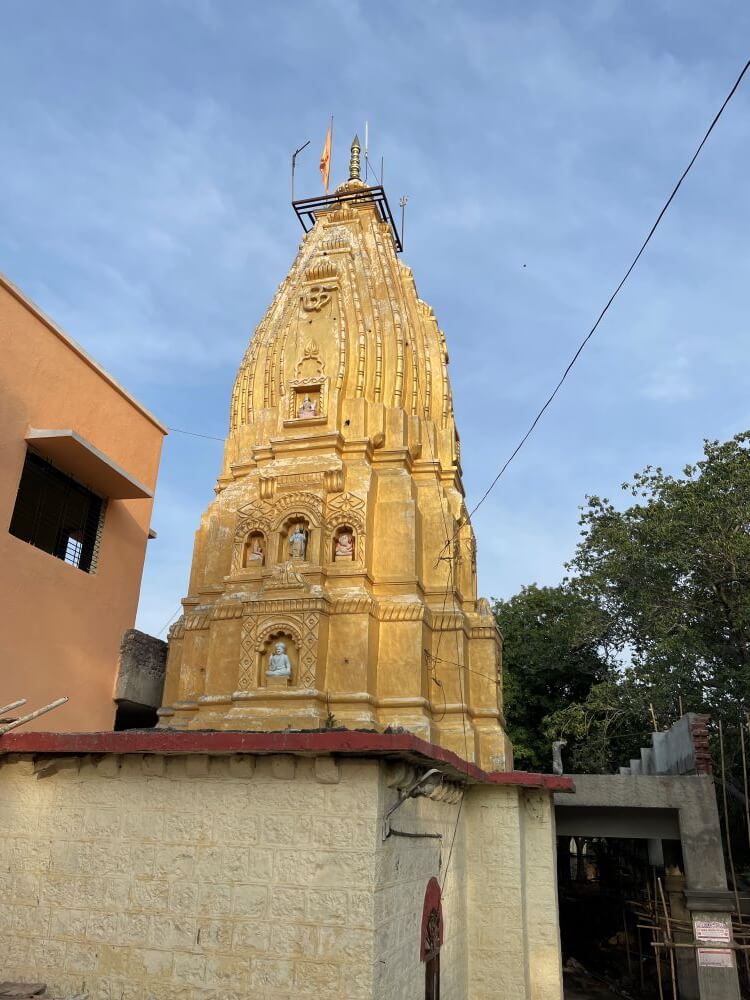
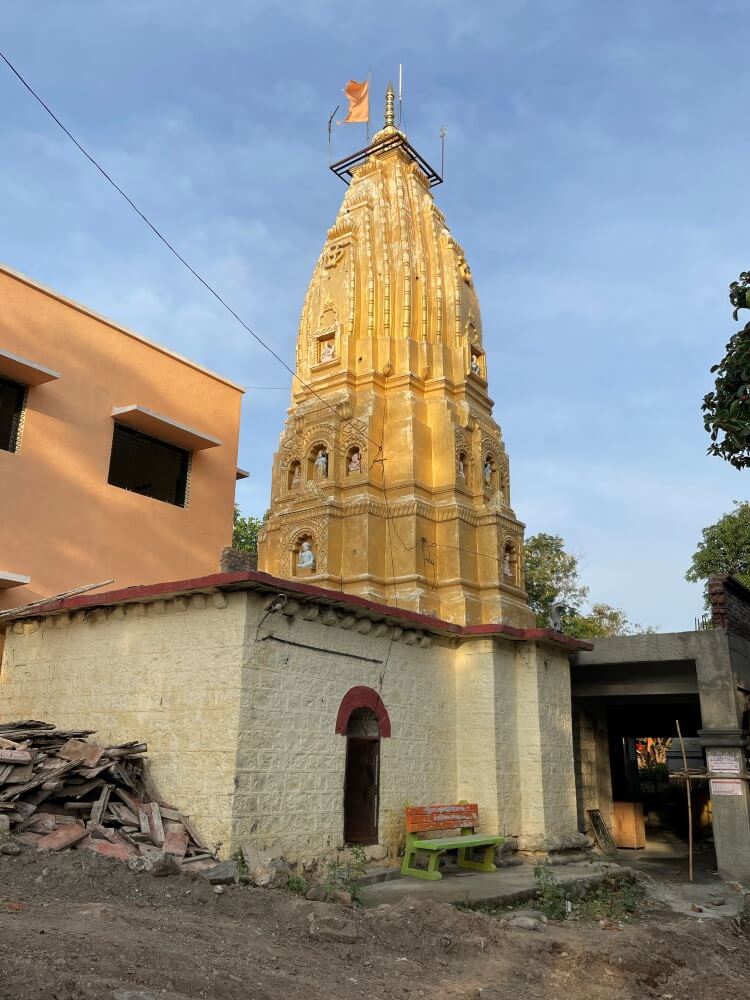
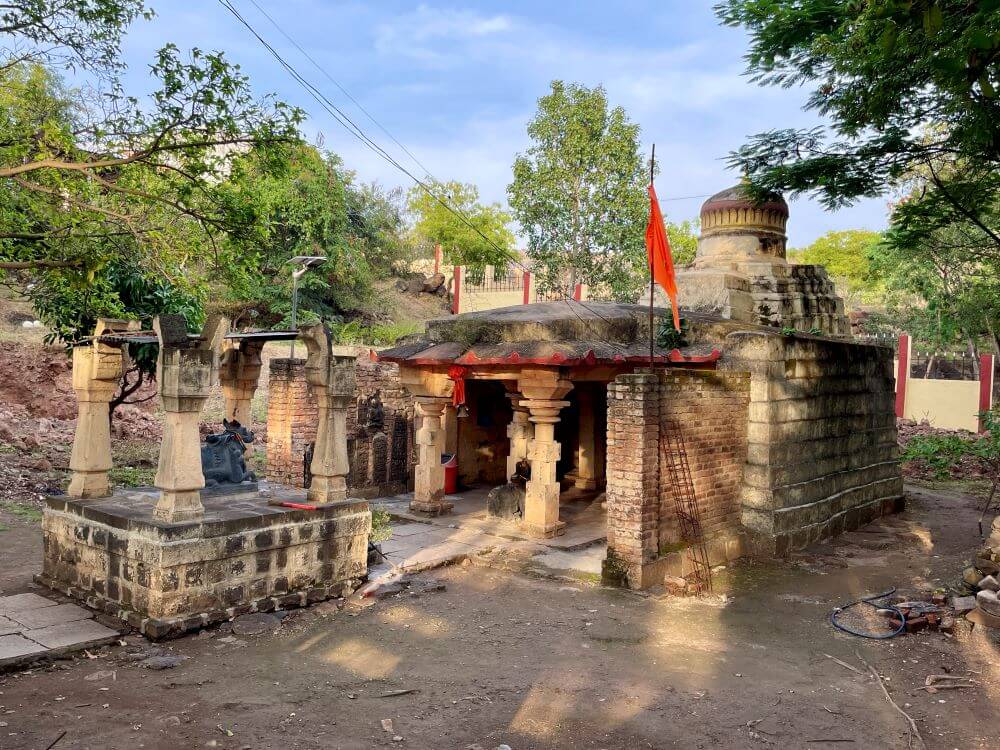
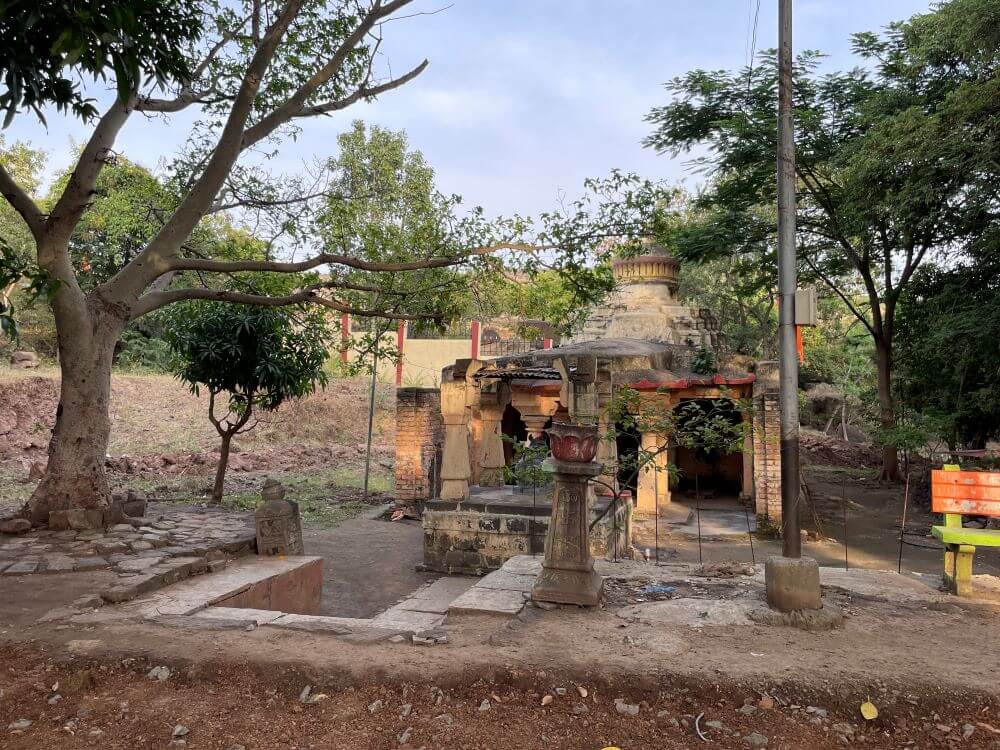
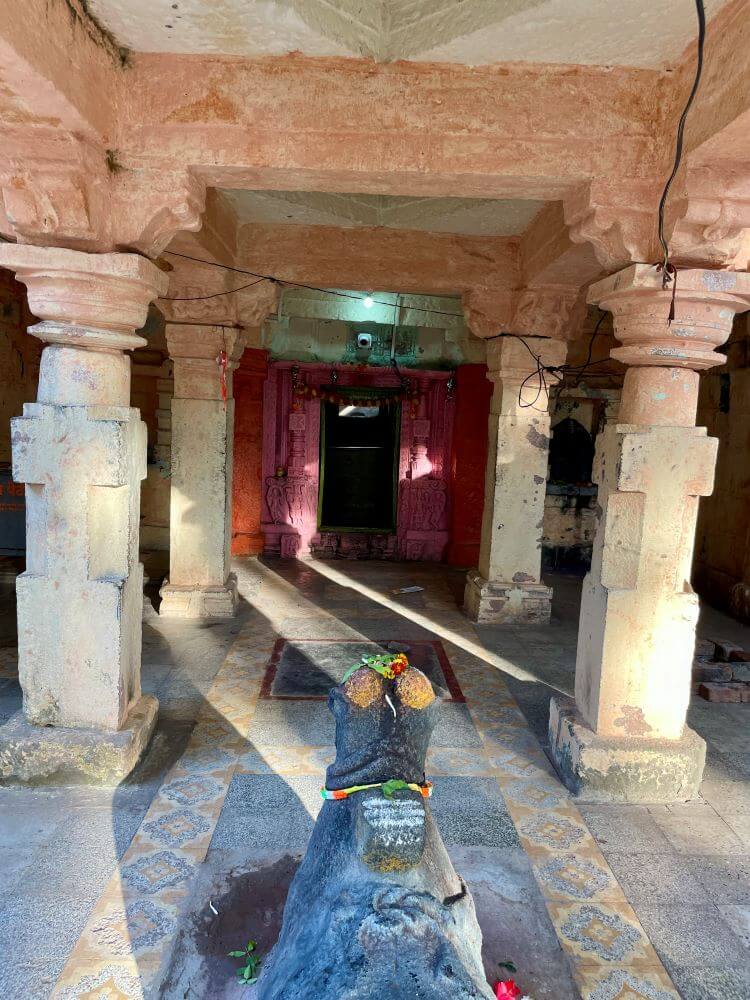
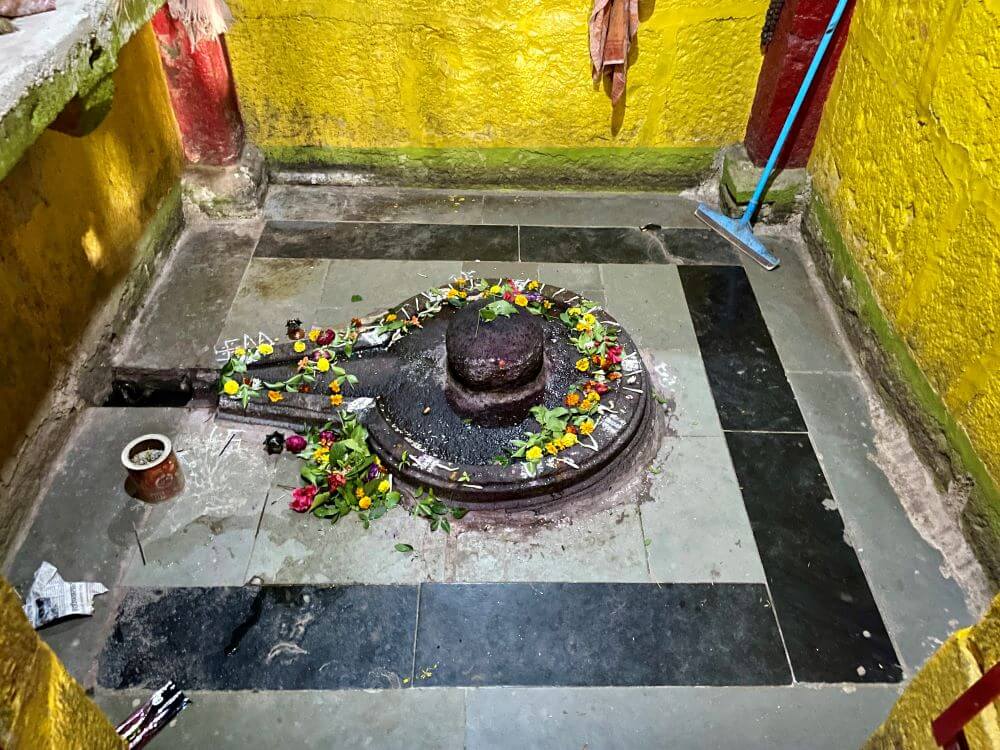
Of these two temples, the walls of the Vishwanath temple are adorned with numerous intricate sculptures. The temple structure consists of a Nandi-mandapa (pavilion for Nandi), a Sabha-mandapa (assembly hall), and a Garbhagriha (sanctum sanctorum). In addition to the Nandi in the Nandi-mandapa, there is another Nandi in the Sabha-mandapa. The walls of the Sabha-mandapa feature several Viragals (memorial stones carved to honor heroes who attained martyrdom or heroic death in battle). In Maharashtra, these Viragals are generally found placed at the entrance of ancient temples. As one moves from the Sabha-mandapa into the Garbhagriha, the entrance is decorated with various carved sculptures, and an image of Lord Ganesha is carved on the Lalatabimba (the central lintel). Inside the Garbhagriha, there is a Shiva Linga made of black stone.
Opposite the Vishwanath Temple stands the Kashinath Temple. It is customary to have darshan at this temple before visiting Lord Vishwanath. The sabhamandapa (main hall) of this temple is more spacious compared to that of the Vishwanath Temple. There are two ancient Nandi statues there. To the right of the entrance to the sanctum sanctorum is an idol of Lord Ganesha, while inside the sanctum lies an ancient Shiva Linga. During festivals, a mask of Lord Kashinath is placed upon this Shiva Linga. The temple spire is distinctive; the niches on the spire house idols of various deities. Within the temple premises, there are two underground chambers. Many sages used to sit in these chambers to perform penance. For this reason, this area is also known as Tapobhumi.
Next to the Kashinath Temple, there is a stone stepwell (barav) shaped like a Shivling. It contains water throughout all twelve months of the year. Every year, a large fair is held here on the first Monday of Shravan. It is said that the Ganga manifests here on this first Shravani Monday. As there is no fixed time for this manifestation, thousands of devotees arrive as early as 3:00 AM to collect the holy Ganga water. The Ganga disappears approximately two and a half hours after appearing. Once the Ganga manifests, many couples from the village perform Abhishekam on the Shivling using this holy water. Where this water comes from, why it appears only on the first Monday of Shravan, and how it stops after two and a half hours—these mysteries remain unsolved to this day.
This sacred temple stands as a testament to deep spiritual devotion, ancient architectural grandeur, and rich local cultural traditions.
The sanctum sanctorum houses the divine idol consecrated according to ancient Vedic traditions, surrounded by serene courtyards and traditional temple architecture.
Navratri, Maha Shivratri, Annual Temple Jatra & Deepotsav
Compare and book flights, secure top-rated local hotels near the temple, hire reliable guides, and rent cars instantly.
Extend your pilgrimage by visiting other highly sacred temples located nearby.


Add ₹999 more to unlock FREE SHIPPING!
Your sacred cart is currently empty.
Shop Photo FramesFill in your delivery details below to place your order.
Add comment