
Add ₹999 more to unlock FREE SHIPPING!
Your sacred cart is currently empty.
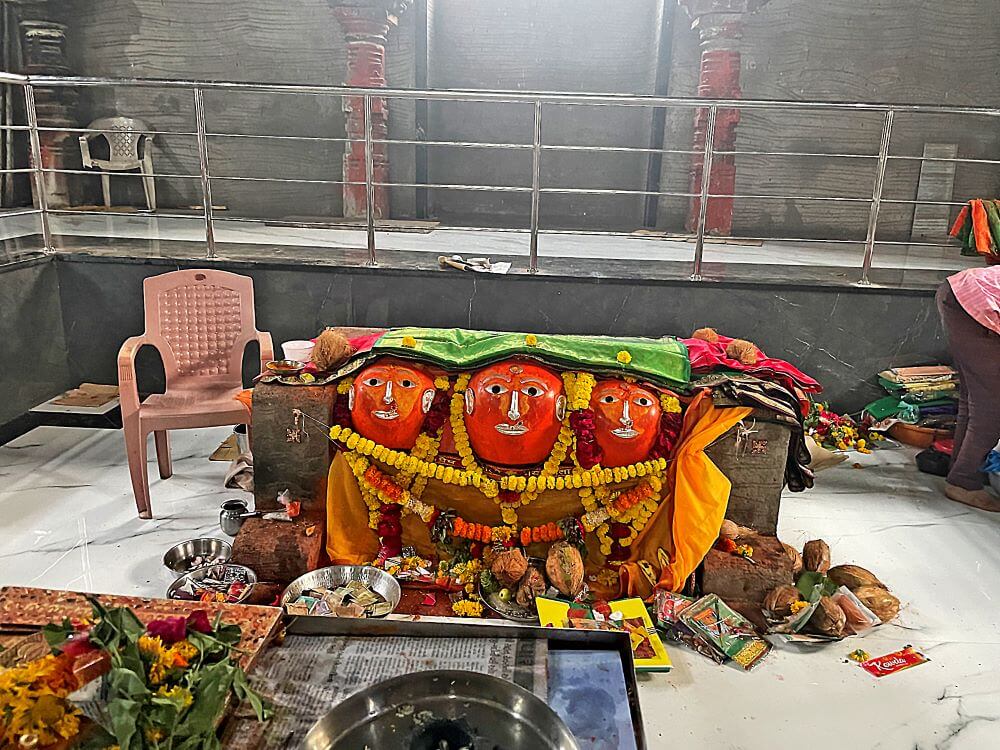
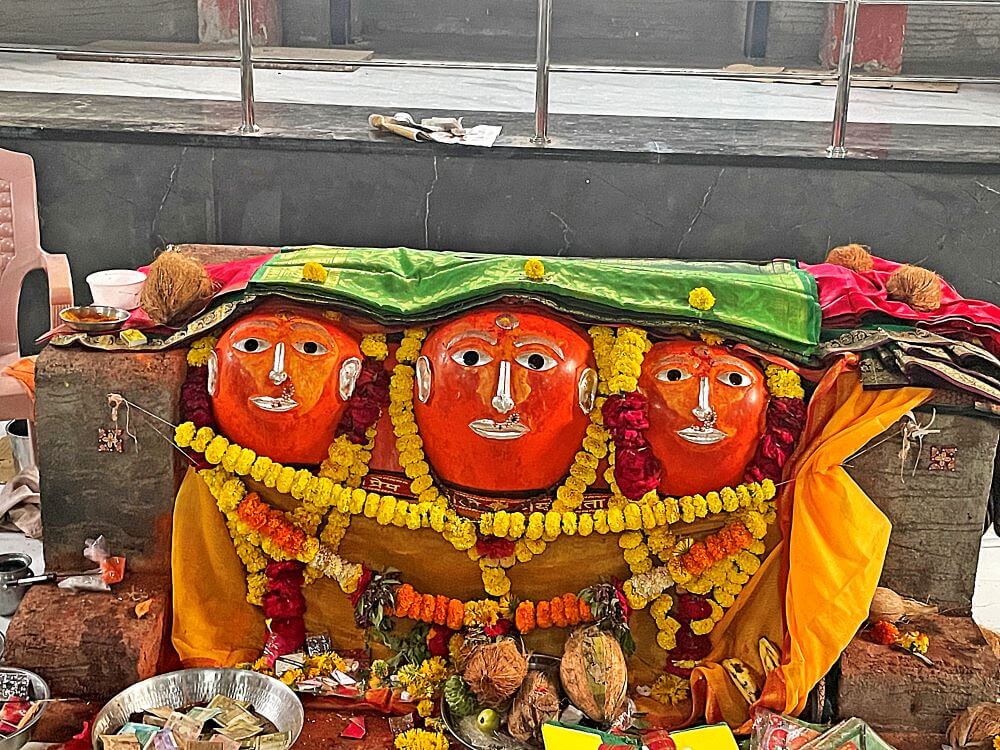
Shop Photo FramesThe shrine of Renuka Devi at Ukkadgaon is considered a highly awakened (Jagrut) site, representing the combined form of three goddesses: Mahalakshmi of Kolhapur, Tulja Bhavani of Tuljapur, and Renuka Mata of Mahur Gad. Devotees believe that vows made at Kolhapur, Tuljapur, and Mahur Gad can be fulfilled here at Ukkadgaon, and that a single darshan of the Goddess here grants the same spiritual merit as visiting all three holy places.
The legend of this Goddess states that a Brahmin from Ukkadgaon used to visit Renuka Devi at Mahur Gad every year, a practice he began at the age of eighteen. As he grew older, the journey became difficult for him. The Goddess appeared in his dream and said, “Do not come to the temple for darshan anymore; I shall come to your home instead.” The Goddess arrived at the elderly Brahmin’s house as promised, but after this event, the Brahmin became arrogant. He began to feel that his devotion was superior because he had brought the Goddess to his home. Day by day, he started treating everyone with contempt. Due to this change in his behavior, the Goddess vanished from there. Years later, the Goddess appeared in the dream of a local farmer and said, “I am in your field; please bring me out.” Following this, the farmer began plowing his field. At one spot, the plow got stuck in the ground. Upon clearing the soil, the idol of the Goddess was revealed. At that moment, the Goddess told the farmer, “I am now emerging from the earth. Do not look back until I have fully emerged.” However, after some time, out of curiosity, the farmer looked back, and by then, only half of the Goddess’s body had emerged. The Goddess remained in that state thereafter. Years later, the villagers built a temple for the Goddess at this site.
The site of Renuka Devi in Ukkadgaon is said to be four hundred years old. Located on the Kopargaon-Vaijapur road, this Goddess is also famous as “Tandulja Devi.” This Goddess is the family deity (Kuldaivat) for many families in the districts of Nashik, Ahilyanagar, and Pune, which is why there is a constant flow of devotees here.
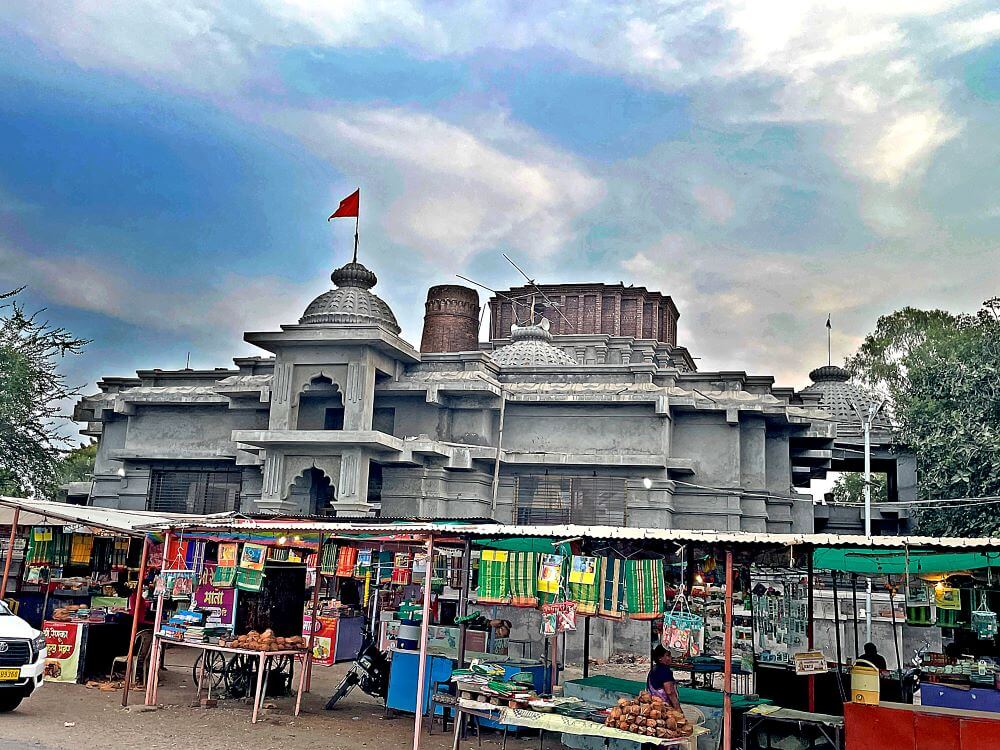
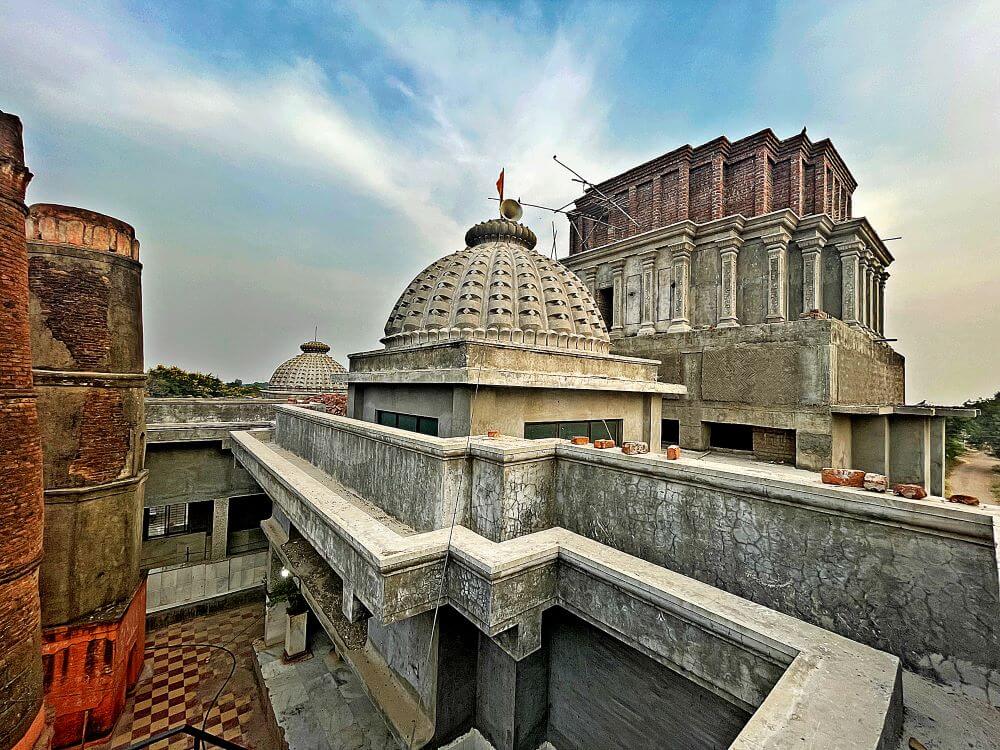
The spacious temple premises, located along the main road in Ukkadgaon, feature many ancient trees. In the slightly sunken sanctum sanctorum of the temple, there is a two-foot-tall, vermilion-anointed idol of the Goddess in the form of a Tandula (rice grain). This idol has three faces, representing Tulja Bhavani, Renuka Mata, and Mahalakshmi. Devotees believe that these three goddesses are sisters and have manifested here together.
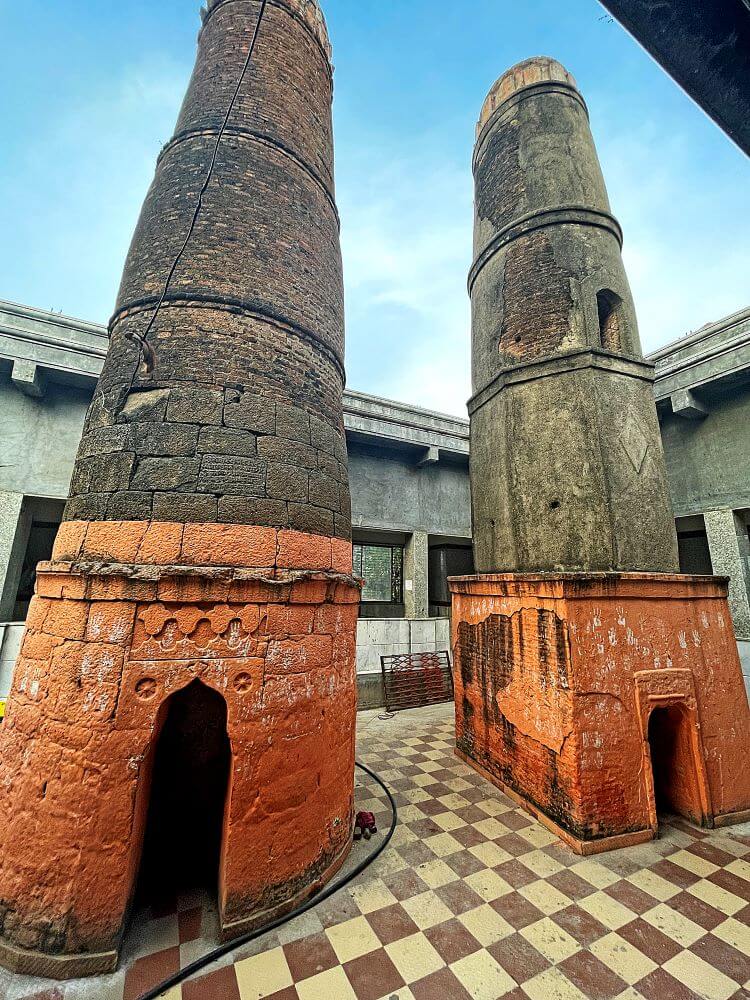
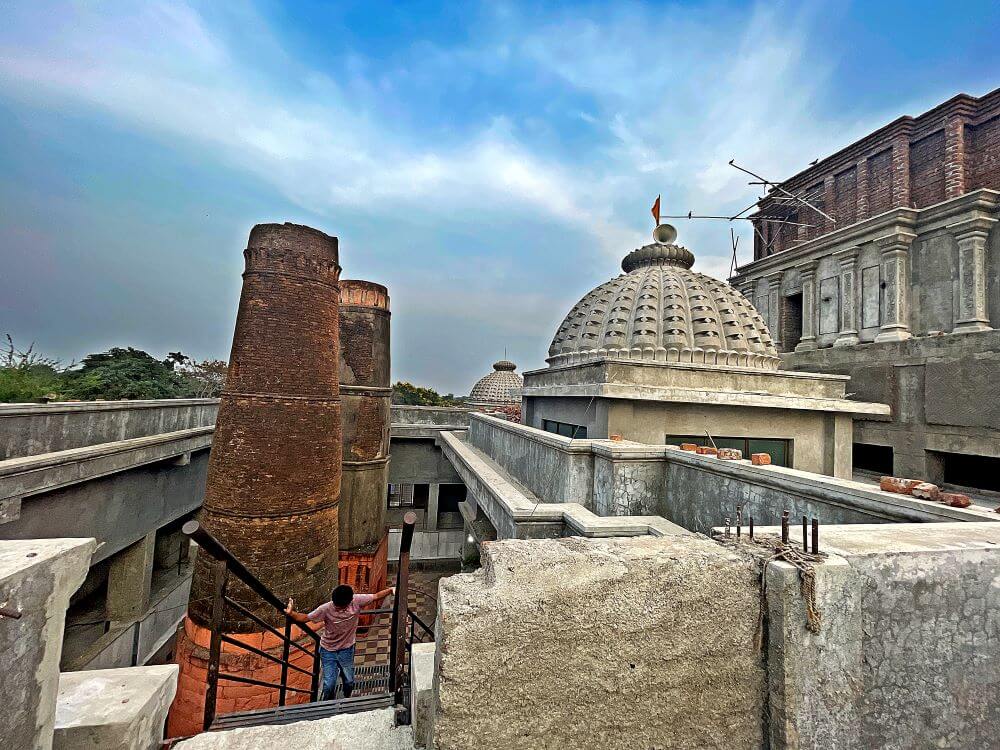
A unique feature of this temple is the two tall lamp towers (Deepmala) in front of it. These thirty-five-foot-tall towers (approximately the height of a four-story building) are circular and taper as they rise. They are constructed using stone and bricks. There are entrances to both these lamp towers. Inside, there is a narrow circular staircase that leads to the top of the towers. Along the staircase, there are windows on the outer side to allow light and air to circulate. From the top of the lamp towers, one can see the entire temple and the surrounding area. Devotees believe that if one stands at the top of these towers and shakes them vigorously, they sway to some extent.
A fair is held here for two days during Chaitra Purnima and for nine days during Navratri. During these times, thousands of devotees come for the Goddess’s darshan every day. During the festival, the Goddess is adorned and draped in a Paithani saree with silver zari. During Navratri, thousands of women observe ‘Ghati’ (staying in the presence of the Goddess to perform rituals, singing hymns, chanting stotras and mantras, reciting the Saptashati, and most importantly, chanting the name of the Goddess for nine days).
There is a tradition of ‘Limb Nesne’ (wearing neem branches) during Navratri for the fulfillment of vows. ‘Limb Nesne’ refers to a practice where women who wish to fulfill a vow or girls seeking liberation from the Devadasi tradition strip down, tie neem branches around their waists, and hold one branch in their mouths while chanting the praises of Renuka Mata. Some devotees perform prostrations (Dandvat) while chanting the praises of Renuka Mata for a certain distance. There is a strict rule that the neem branch held in the mouth must not fall. Currently, the law prohibits the practice of women stripping to wear neem branches. Nevertheless, during this festival, women and girls are seen tying neem branches over their clothes.
There is a story about ‘Limb Nesne’ in the text ‘Renuka Mahatmya’. It is said that when Parashurama rid the earth of the Kshatriyas, he provided protection to those who sought refuge. He told them to go to Joginath Tirtha, bathe, wear neem branches, and worship Renuka. It is said that the practice of ‘Limb Nesne’ may have started from there.
During the fair, bullock cart races and wrestling competitions are held. On the last day of Navratri, a Homa is organized here. Festivals are also celebrated on Hanuman Jayanti, Maghi Purnima, and Gudi Padwa. Devotees believe that the Goddess is self-manifested (Swayambhu) and awakened (Jagrut), and that she grants the wishes of those who pray with faith.
This sacred temple stands as a testament to deep spiritual devotion, ancient architectural grandeur, and rich local cultural traditions.
The sanctum sanctorum houses the divine idol consecrated according to ancient Vedic traditions, surrounded by serene courtyards and traditional temple architecture.
Navratri, Maha Shivratri, Annual Temple Jatra & Deepotsav
Compare and book flights, secure top-rated local hotels near the temple, hire reliable guides, and rent cars instantly.
Extend your pilgrimage by visiting other highly sacred temples located nearby.


Add ₹999 more to unlock FREE SHIPPING!
Your sacred cart is currently empty.
Shop Photo FramesFill in your delivery details below to place your order.
Add comment