
Add ₹999 more to unlock FREE SHIPPING!
Your sacred cart is currently empty.
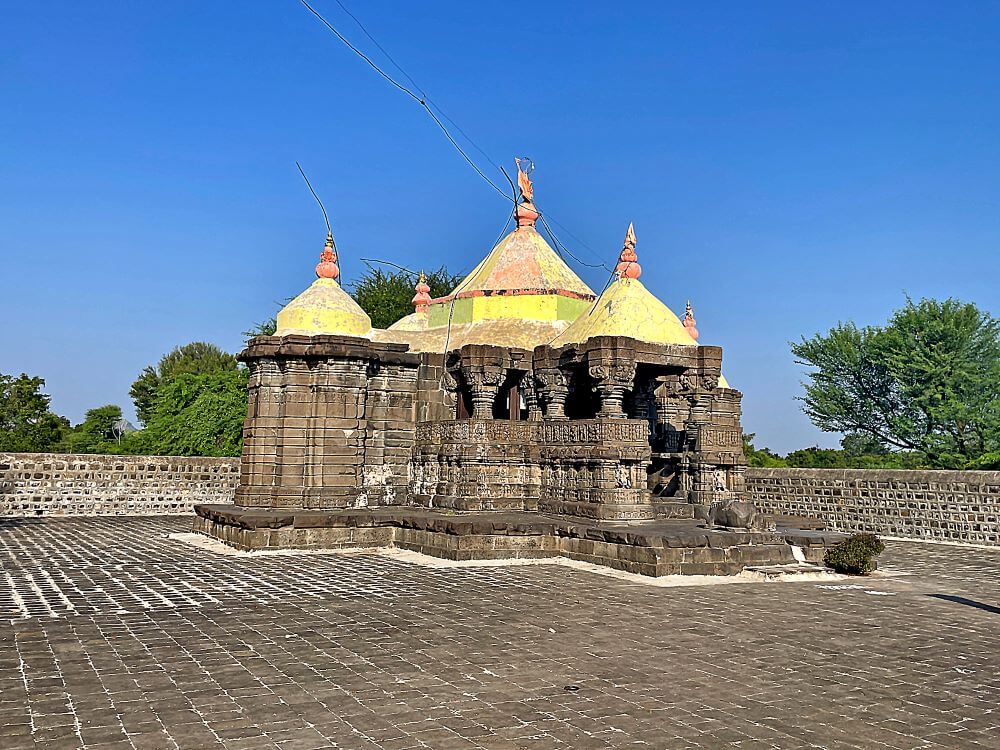
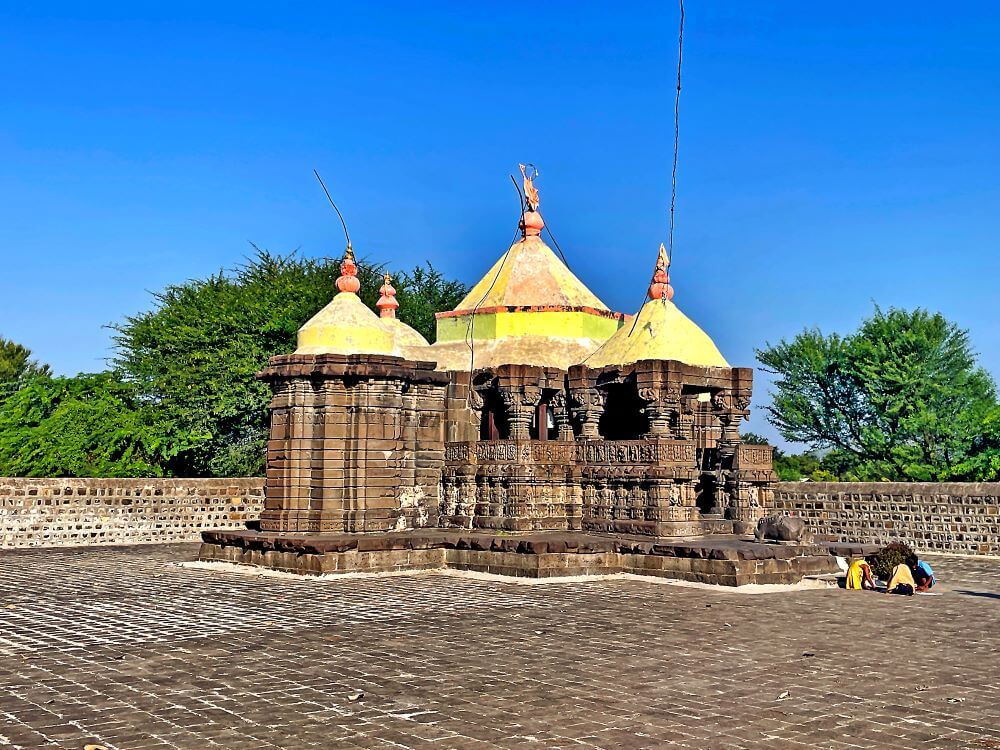
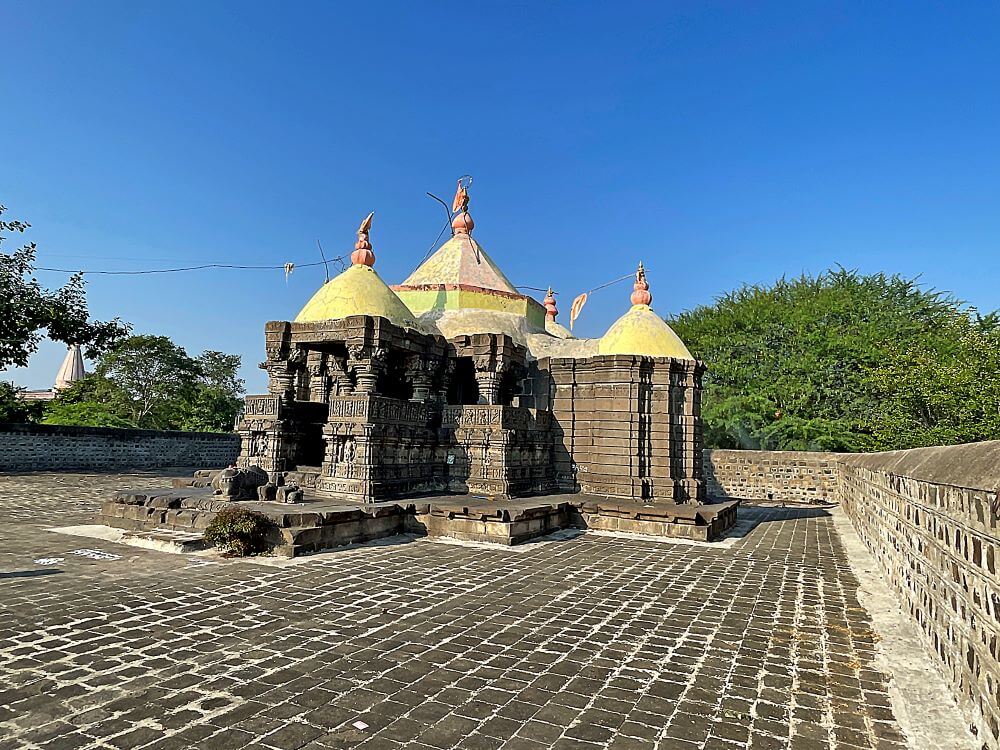
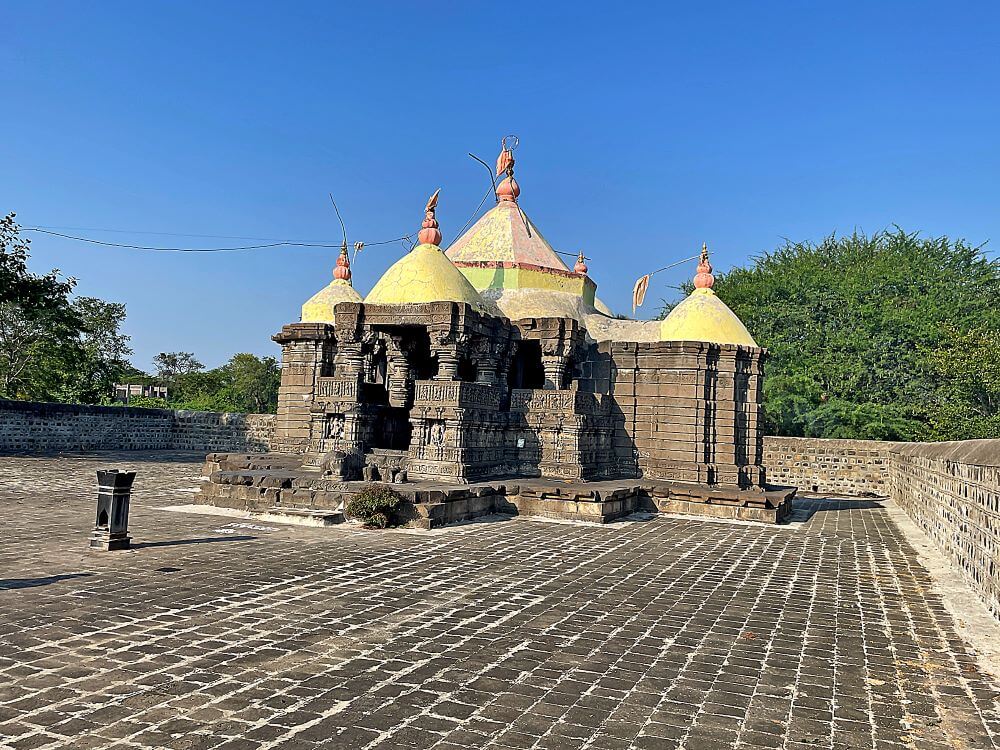
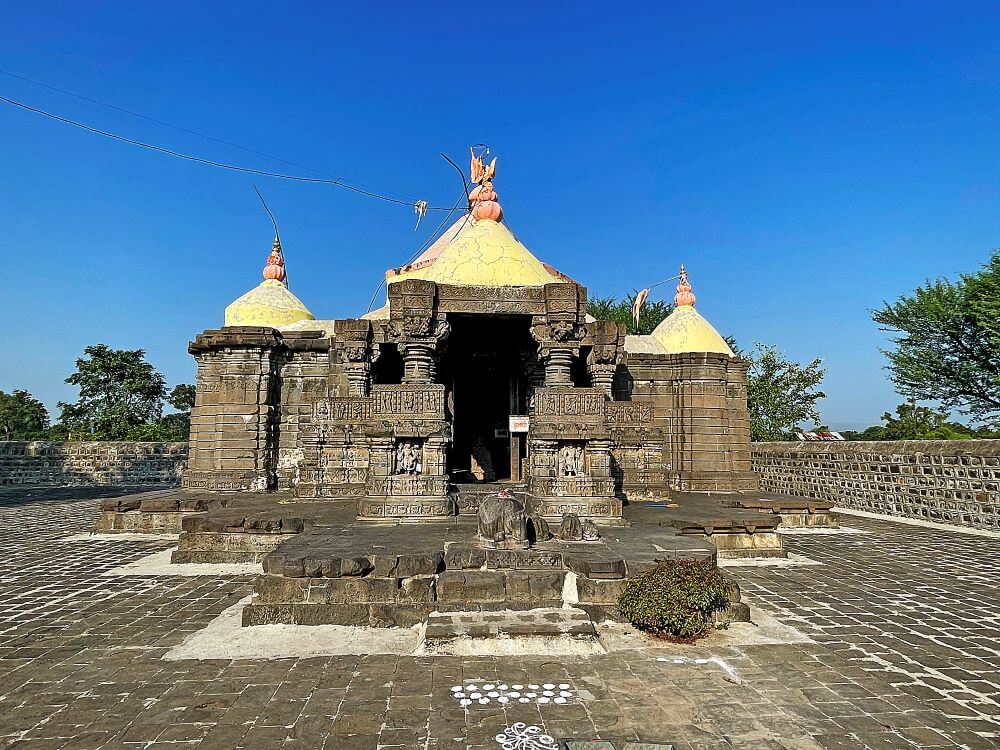
Shop Photo FramesThere are many ancient temples of Lord Mahadev in the Nashik district. Among them, the ‘Jogeshwar Mahadev Temple’ at Deolane in Satana taluka is truly noteworthy. Due to the hundreds of erotic sculptures carved on the outer walls of the temple, it is also referred to as the ‘Khajuraho of Maharashtra’. Built in the Hemadpanti architectural style, this temple is also known as the ‘Jogeshwar Kamdev Temple’. This beautiful sculptural temple is situated on the banks of the Dodhad River in Deolane. It is regarded as a prime example of exquisite and superior architecture. There is an inscription in this temple that reads, ‘Singandeva Hemadrideva Ravali Bandhla’, which means ‘This temple was built by Pandit Hemadri of the Seundeva King of the Yadavas’. According to historical records, Hemadri Pandit built many temples during the Yadava period in the 13th century. The British Gazette also records the ‘Jogeshwar Mahadev Temple’ at Deolane as one of them. During the British era, some silver coins were found by historians in the temple premises. These coins resemble those from the reign of King Krishnaraja of the Kalachuri dynasty, dating between 625 AD and 630 AD. This suggests that the Kalachuri dynasty may have ruled this region in the past.
The legend of the temple states that after completing the construction of the caves at Ajanta and Ellora, the artisans came to Deolane to wander through the forests. Using the local stone, these artisans built this temple in a single night. The similarity of these sculptures to those found in the Pitalkhora caves and the Nagarjun Kothi caves in the Sambhajinagar district lends credence to this belief. According to another legend, in the 15th century, two brave brothers from a Rajput family, Devsing and Ramsing, were passing through this area to loot the market town of Sonaj (Taluka Malegaon) and stopped at this temple for the night. A dispute arose between them for some reason, and Ramsing left in anger. Devsing, however, liked the area, cleared the forest, and established a village here. It is said that the village was named ‘Deolane’ after him.
The Jogeshwar Mahadev temple complex is spacious and enclosed by boundary walls on all four sides. The plinth of the temple is octagonal, shaped like a star. One can perform circumambulation (pradakshina) around the temple on this plinth. The temple is built on this plinth, which is about 3 feet high. In front of the temple, there is one large and three small Nandi statues. The carvings on these statues, made from a single piece of stone, are unique.
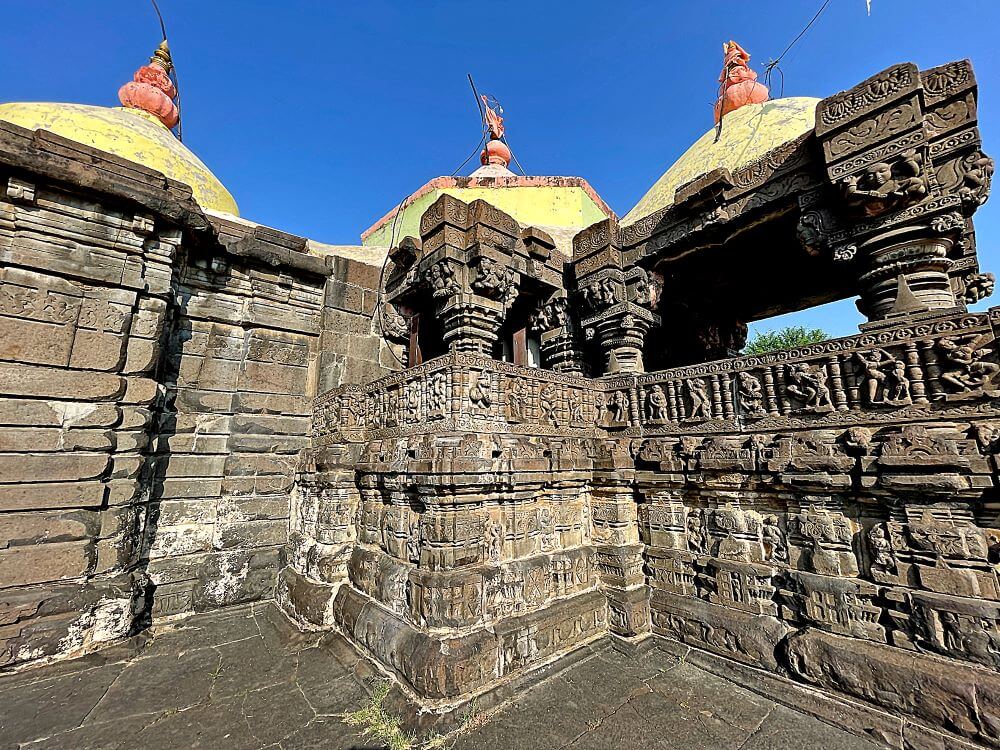
This entire temple is a treasure trove of sculptures. A distinctive feature of this sculptural temple is the hundreds of erotic sculptures depicting physical intimacy, similar to those at Khajuraho, carved on the outer southern and northern walls. Among them, two Naga (serpent) erotic sculptures are the most unique. At first glance, they appear to be Lord Ganesha, but upon closer inspection, one can see a male serpent entwined by two female serpents. The beauty and grace in these erotic sculptures are of a high order. Apart from this, sculptures of many gods and goddesses can be seen carved here. To drain the water used for the abhisheka of the Shivling in the sanctum sanctorum, two Makara (mythical sea creature) sculptures have been carved on the exterior. The water flows out through their mouths. With their piercing jaws, sharp teeth, and protruding tongues, every limb of these creatures expresses agility; the sculptures appear almost lifelike. Such large and ornate Makara sculptures are rarely found.
Upon entering the main hall (Mukha Mandapa), one can see further examples of sculptural art. Each pillar in the assembly hall (Sabha Mandapa) features unique carvings. In the circular domed area, one can see Gopis immersed in the pastimes of Lord Krishna. Inside, there is another Nandi, on whose back a small Shivling is carved. Scenes such as kings riding horses, wrestling matches, soldiers fighting elephants on the battlefield, and a king hunting in the forest can be seen through the sculptural compositions here.
Since the sanctum sanctorum (Gabhara) of the temple is somewhat deep, one has to descend three steps to enter it. In the center of the sanctum is a north-facing Panchmukhi (five-faced) Shivling. In a niche on the wall facing the Shivling, there is a sculpture of Lord Shankar sitting with Goddess Parvati on his lap. Additionally, in the main niche of the sanctum, there is a four-armed statue of Parvati, about a meter tall. In the center of the ceiling, there is a lotus flower sculpture. Inside the main sanctum, at the top, sculptures of Shankar and the Panchmukhi Naga are visible. There are also stone-carved statues of Ganpati and Riddhi-Siddhi.
To witness this sculptural beauty, hundreds of devotees, as well as tourists and researchers, visit this place every day. A fair is held here on Mahashivratri. On this day, Mahaprasad is distributed to the visiting devotees. Apart from this, there is a large crowd of devotees for darshan on Shravan Mondays as well. One can have the darshan of Jogeshwar Mahadev in this temple from 6:00 AM to 7:00 PM.
This sacred temple stands as a testament to deep spiritual devotion, ancient architectural grandeur, and rich local cultural traditions.
The sanctum sanctorum houses the divine idol consecrated according to ancient Vedic traditions, surrounded by serene courtyards and traditional temple architecture.
Navratri, Maha Shivratri, Annual Temple Jatra & Deepotsav
Compare and book flights, secure top-rated local hotels near the temple, hire reliable guides, and rent cars instantly.
Extend your pilgrimage by visiting other highly sacred temples located nearby.


Add ₹999 more to unlock FREE SHIPPING!
Your sacred cart is currently empty.
Shop Photo FramesFill in your delivery details below to place your order.
Add comment