
Add ₹999 more to unlock FREE SHIPPING!
Your sacred cart is currently empty.
Shop Photo FramesOn a hill in the Tambakada area, to the north of Chandwad town in Nashik district, lies the ancient abode of Shri Chandreshwar Mahadev. It is believed that thousands of years ago, after Sage Gautama cursed Ahilya, Indra, and Chandra, Chandra performed penance here and pleased Lord Shankara. Thereafter, Chandra himself established a Shiva Lingam here. Since then, the Shiva Lingam here has been known as ‘Chandreshwar’ and Devi Parvati as ‘Chandreshwari’.
The legend of this temple recounts that King Chandrasen’s capital, ‘Tamalidapur’, is today’s Chandwad city. King Chandrasen was a devout devotee of Lord Shiva. Having received the blessings of Shankara and Parvati, King Chandrasen established the Chandreshwar Mahadev Mandir at this very spot. When King Vikramaditya was afflicted by Shani’s Sade Sati, he performed penance in this vicinity. Lord Shani, pleased with his devotion, freed the king from the Sade Sati. Witnessing King Vikram’s penance, King Chandrasen arranged the marriage of his daughter, Chandrakala, to King Vikramaditya at this Chandreshwar Mandir. Along with Sage Jamadagni, Mother Renuka, and Parashurama, countless sadhus, saints, rishis, munis, kings, and emperors have performed spiritual austerities at this sacred seat for thousands of years.
During the Mughal rule, Aurangzeb desecrated many temples. To protect this ancient temple of Chandreshwara from destruction, the local villagers at that time buried it under mud and cow dung. Consequently, Aurangzeb’s attention was diverted from this temple. For many years thereafter, the temple remained in that buried state.
It is said that in the year १९००, Swami Dayanand, while on a pilgrimage, arrived in Chandwad. At that time, Lord Shankara appeared to him in a vision and instructed him, “My Shiva Lingam and temple are buried under mud and earth. Restore them.” Swami Dayanand halted his pilgrimage and hastened to Chandreshwar Fort, where he began excavation. There, he discovered a large Shiva Lingam and idols of Devi Parvati (Chandreshwari Mata). When this news spread, the local devotees, with the help of Swami Dayanand, undertook the renovation of the temple.
After serving for ६६ years, Swami Dayanand attained samadhi at this very spot in १९६६. Thereafter, the second Mahant, Swami Vidyanand Maharaj, served Chandreshwara for ३५ years. During this period, in the Kumbh Mela of १९९८, the sadhus and saints bestowed upon him the title of ‘Mahamandaleshwar’. He re-established the idol of Chandreshwari Mata and installed a magnificent idol. Swami Vidyanand Maharaj passed away here on the १८th of January, २०००.
The samadhis of many great ascetics, including Parashurama, as well as those of Swami Dayanand and Swami Vidyanand Maharaj, can be seen within the temple complex. This beautiful and spacious Chandreshwara temple is situated on a hill in the vicinity of the Renuka Mata Mandir in Chandwad. A concrete road from the base allows vehicles to reach directly up to the temple. From here, the entire city of Chandwad is visible. Being on a hill and with many trees planted by the temple trust in the surroundings, this verdant area feels serene and blissful.
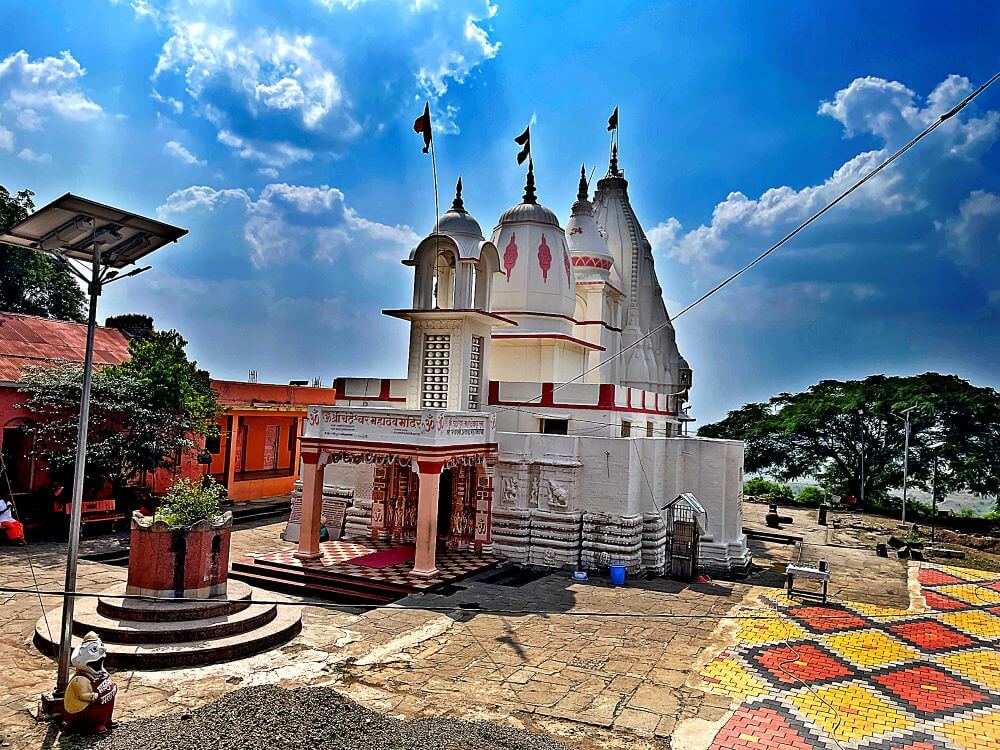
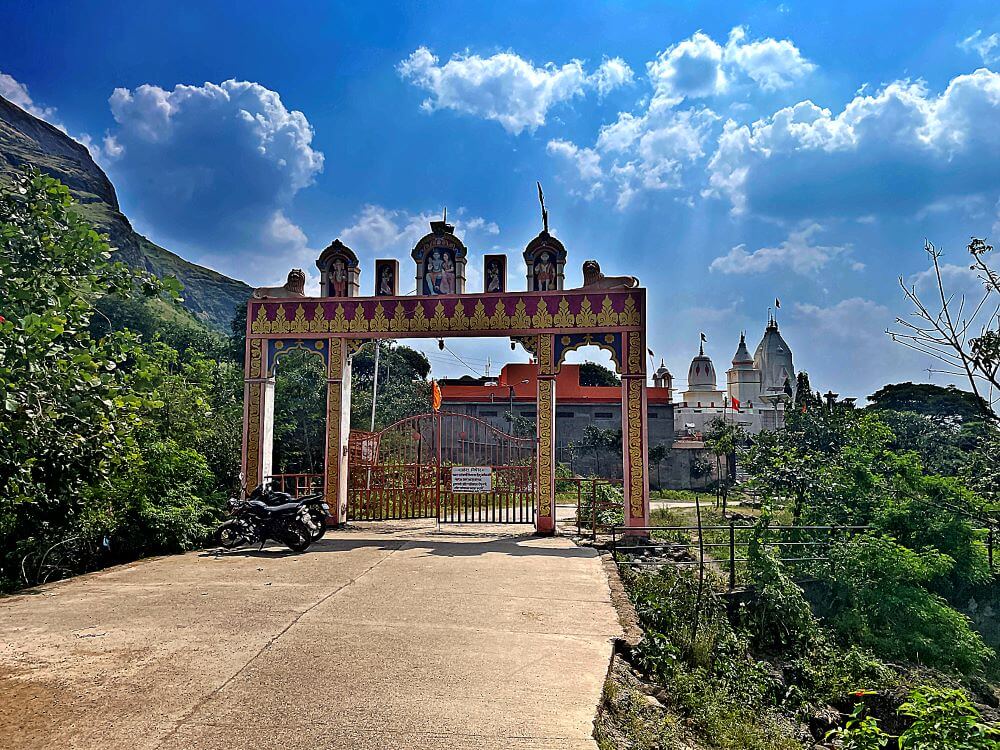
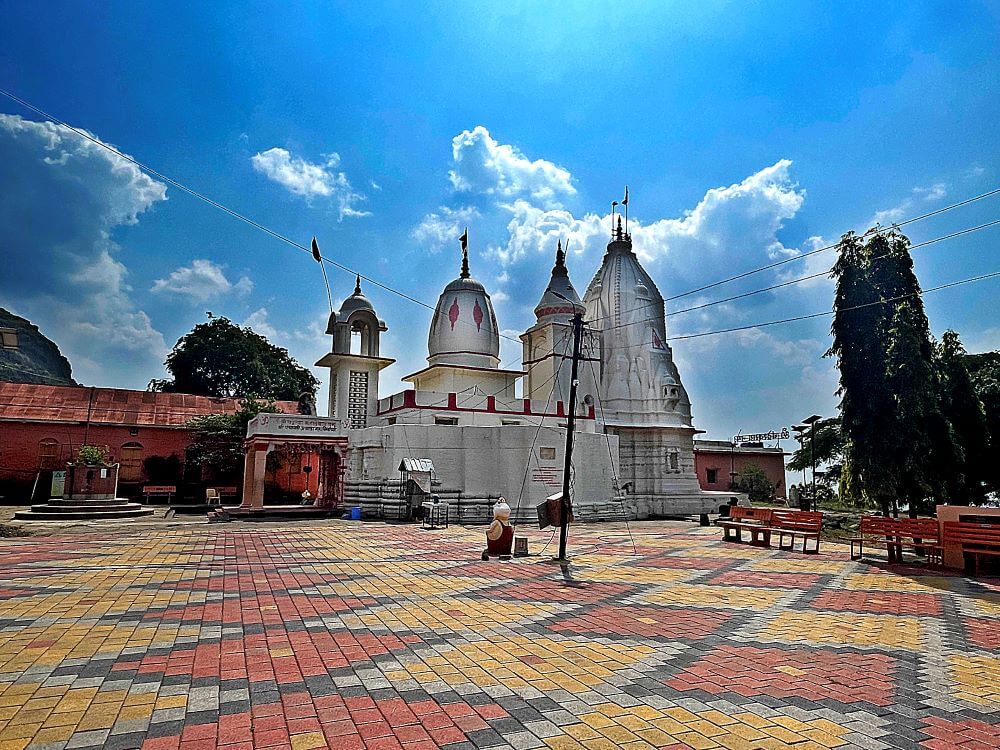
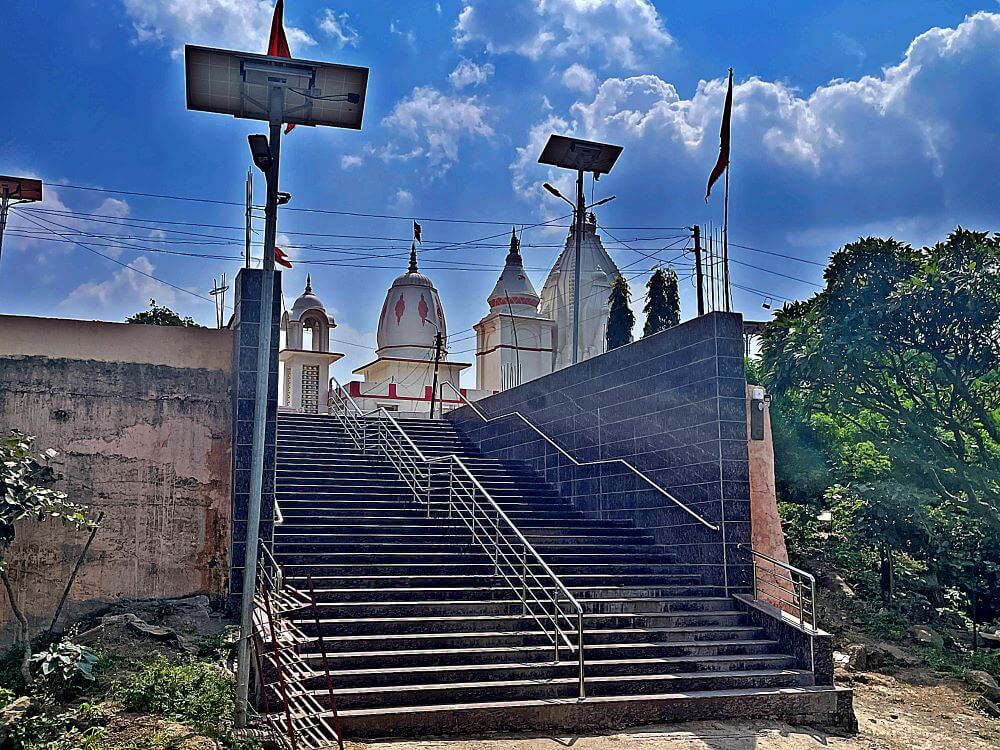
Before entering the temple, there is an archway. On the upper part of this archway are idols of Shankara-Parvati, Ganesha, and Hanuman. One enters the temple courtyard after ascending approximately ३० steps. Paver blocks are laid all around the temple, making the area clean and tidy. This spacious temple has four spires. The spire above the main sanctum features replicas of many smaller and larger spires.
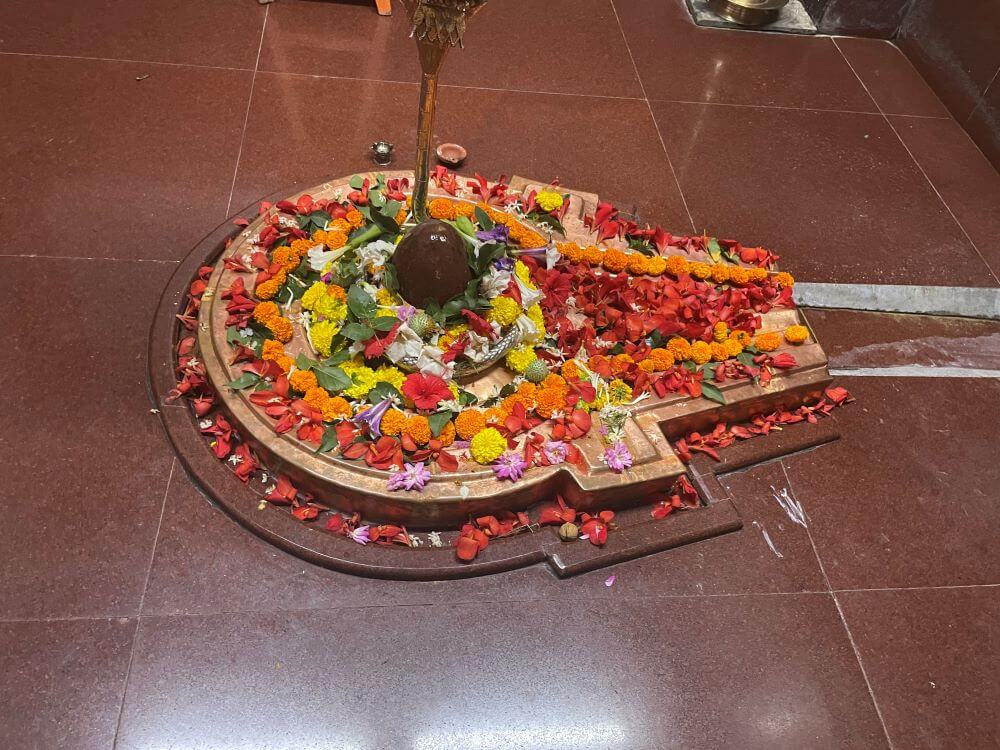
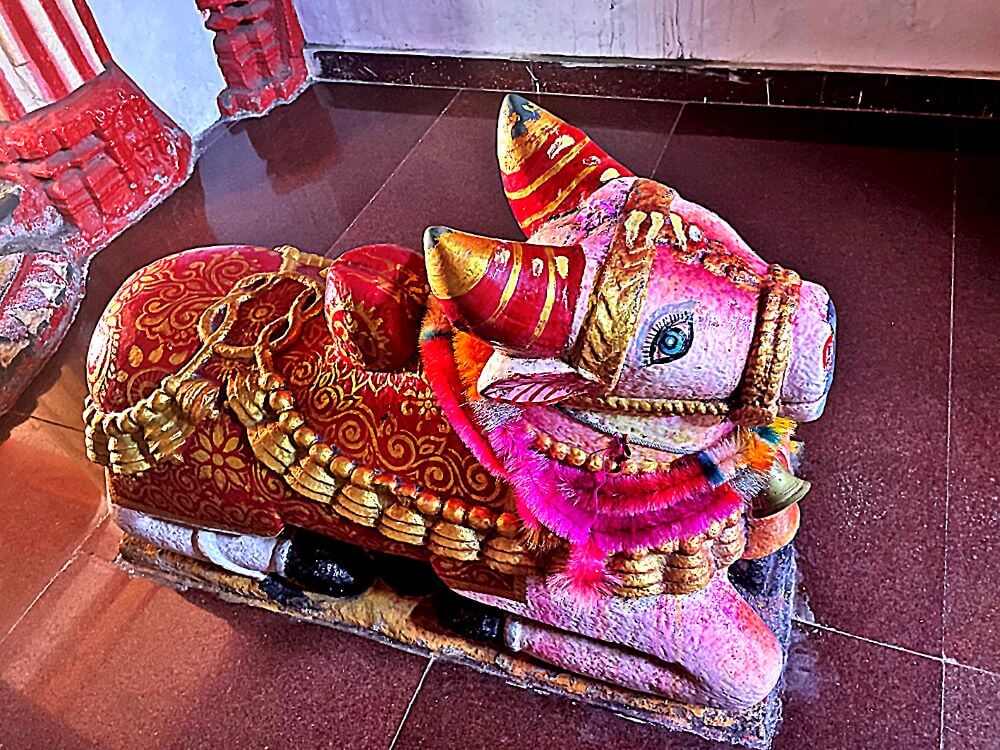
Along with the outer walls, the interior of the temple also boasts exquisite artistry. Numerous sculptures are carved on the main entrance of the temple. Beautiful painting makes them even more attractive. Distinctive carvings are also visible on the idol of Nandi in the assembly hall. The sanctum houses a beautiful Shiva Pindi, adorned with a brass covering.
In the temple, every Monday of Shravan, Mahashivratri, Harihar Bhet, Kojagiri Pournima, and Swami Dayanand Maharaj Punyatithi are celebrated with great enthusiasm. A fair is held here on Mahashivratri, during which a palanquin procession departs from the village. The palanquin carries a silver mask of Shankara, Sheshnag, an image of Swami Dayanand, and ornaments of Mother Parvati. Married women perform puja of this palanquin in front of every house. During Shravan, one lakh bilva leaves are offered on the Shiva Lingam with the chanting of ‘Om Namah Shivaya’. At this time, a grand Mahabhishek of Shri is performed with water brought from various pilgrimage sites. At the end of Shravan, a Satyanarayan Puja and Mahaprasad program are held here.
In the cowshed within the temple premises, care is taken of barren cows from the surrounding area. There is also a water tank in this vicinity, known as ‘Ganesh Tank’. Its special feature is that it contains cold water throughout the year. Devotees who come to the fort make it a point to drink this water as holy *teerth*. The complete authority of the temple rests with Shri Sansthan Mahamandaleshwar, Haridwar. An old staircase path is also available to reach this temple. Devotees can have darshan of Chandreshwara in the temple from ५ AM to ८ PM.
This sacred temple stands as a testament to deep spiritual devotion, ancient architectural grandeur, and rich local cultural traditions.
The sanctum sanctorum houses the divine idol consecrated according to ancient Vedic traditions, surrounded by serene courtyards and traditional temple architecture.
Navratri, Maha Shivratri, Annual Temple Jatra & Deepotsav
Compare and book flights, secure top-rated local hotels near the temple, hire reliable guides, and rent cars instantly.
Extend your pilgrimage by visiting other highly sacred temples located nearby.


Add ₹999 more to unlock FREE SHIPPING!
Your sacred cart is currently empty.
Shop Photo FramesFill in your delivery details below to place your order.
Add comment