
Add ₹999 more to unlock FREE SHIPPING!
Your sacred cart is currently empty.
Shop Photo FramesAgasti, one of the foremost among the Saptarishis, who is renowned for having consumed the entire ocean in a single gulp, has an ashram on Ankai Fort in Manmad. It is said that it was at this very spot that Agasti Rishi bestowed special divine weapons upon Shri Rama for the vanquishing of Ravana. This region is known as the sacred land of penance (Tapobhumi) of Agasti Rishi. Sanctified by the presence of Shri Rama and Mahadev, this area is renowned among devotees, history scholars, and tourists alike.
The legend of this ashram states that, honoring the request of the deities, Agasti Rishi journeyed south from Kashi to what is now the Nashik region. In ancient times, at this place, renowned as Dandakaranya, he performed penance (Tapasya) for many years. During the Tretayuga, Shri Rama, Sita, and Lakshman visited Agasti’s ashram near Nashik (the present-day Agasti Ashram) during their period of exile (Vanvas). They resided here for one day. At that time, the Rishi imparted special initiation to Shri Rama and advised him to put an end to the atrocities perpetrated by Ravana, the Lord of Lanka (Lankadheesh), on this earth. For this purpose, Agasti bestowed upon Shri Rama divine weapons and a quiver of inexhaustible arrows. After the abduction of Sita, Lord Mahadev himself, accompanied by Sati, resided here for four months to listen to the ‘Ramayana’ from Agasti Rishi.
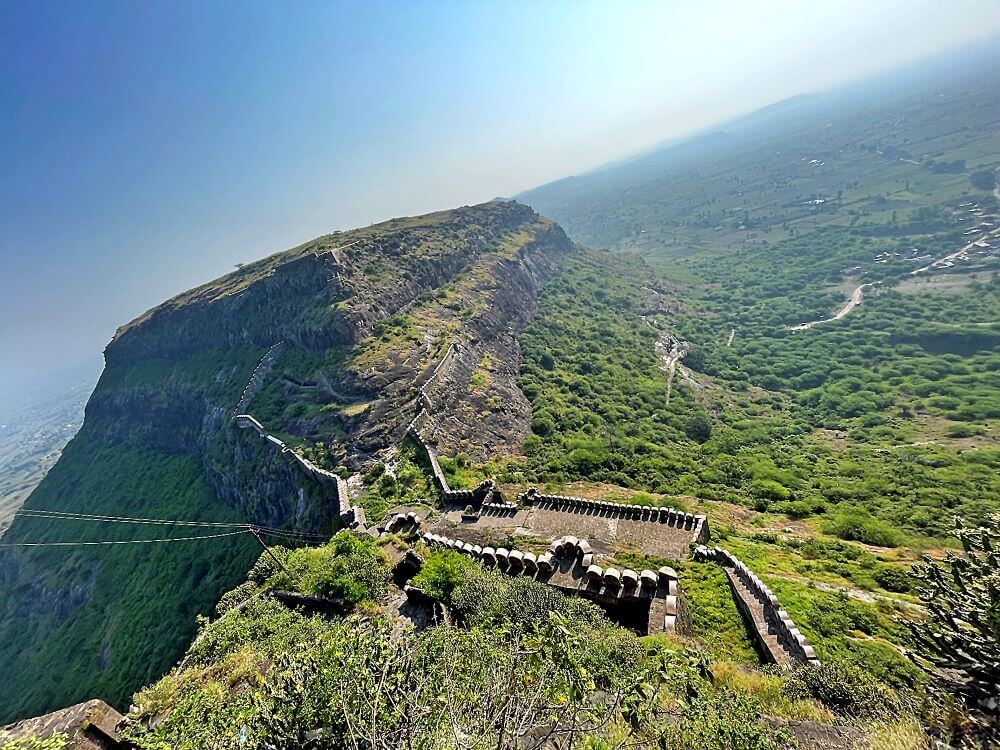
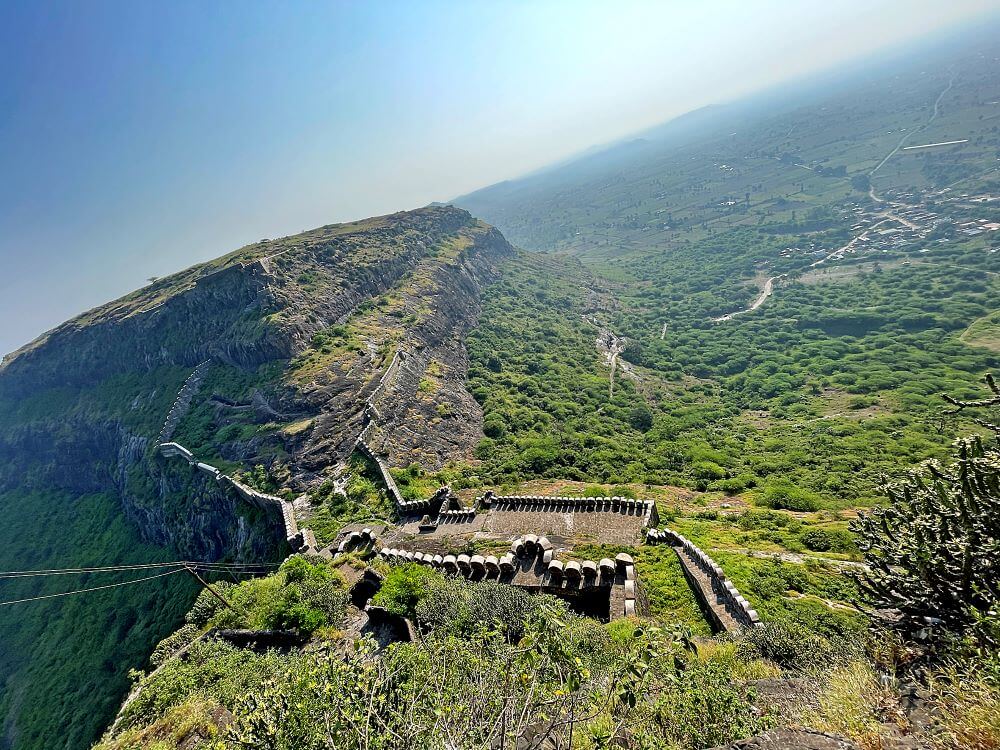
Near Manmad in Nashik district, on the hill north of Ankai village, two famous forts, Ankai and Tankai, stand. At the base of these forts are Jain caves, and within one cave, there is an idol of Mahavir. Ankai Fort was built approximately 1000 years ago by the Yadavas of Devgiri. In 1635, the Mughals gained control of it. In 1665, Nizam took possession of it from the Mughals. Records indicate that after the Treaty of Bhalki in 1752, this fort came under the Maratha Empire. Although no significant structures are visible on this fort now, its ramparts remain intact.
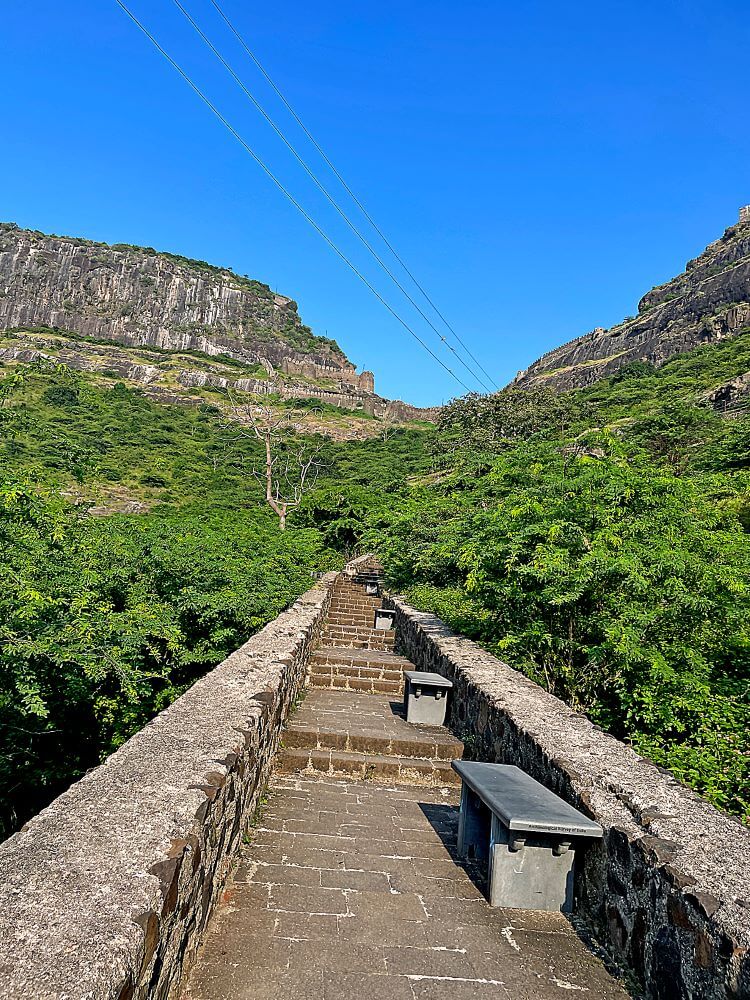
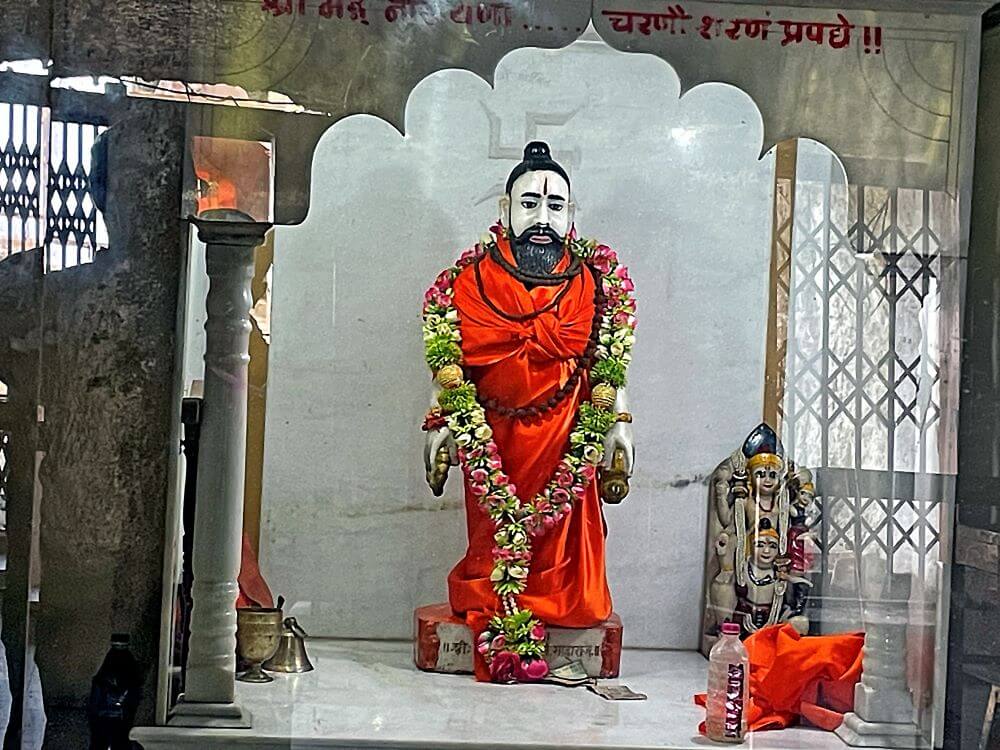
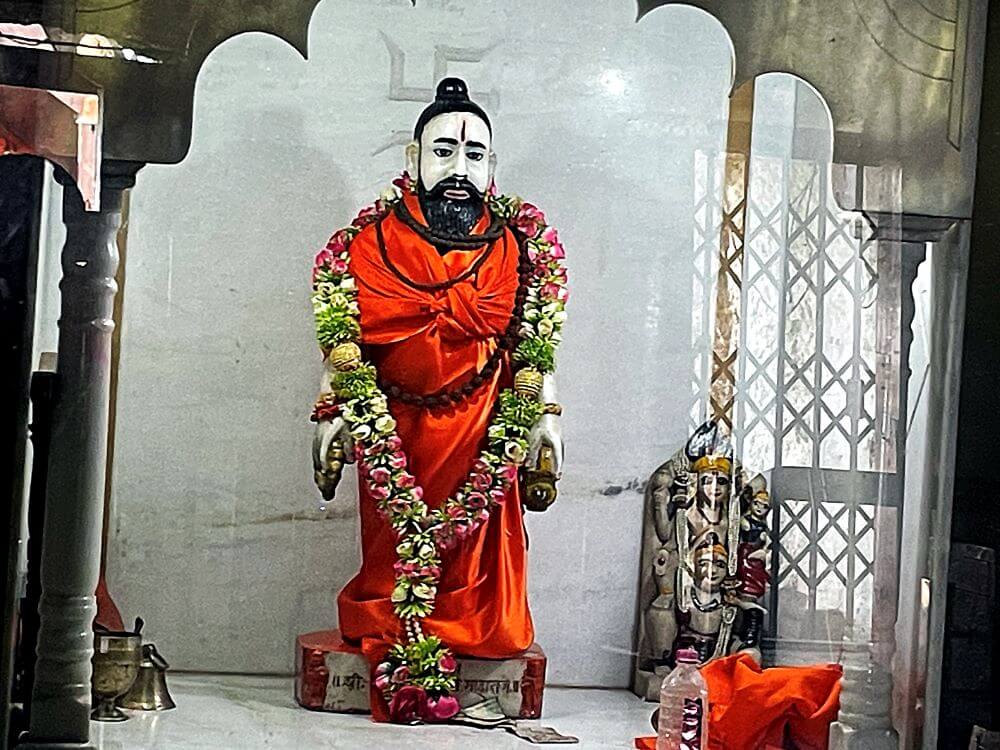
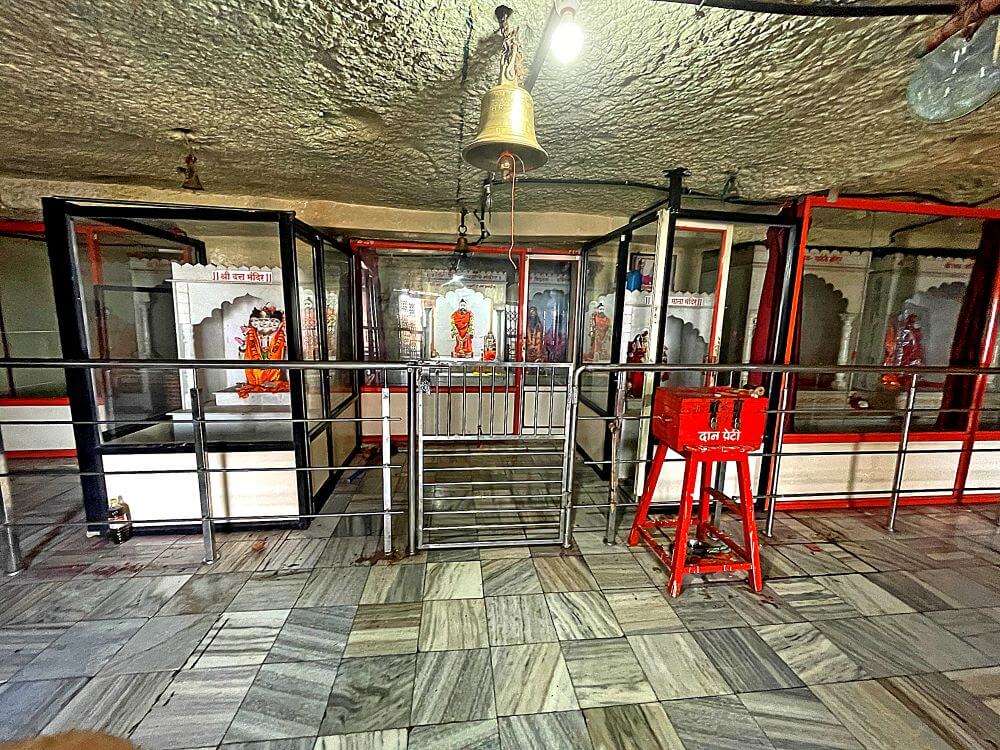
On this very fort, in a cave located at the topmost part, is Agasti Rishi’s ashram. There are approximately 900 steps to reach it. There are also steep climbs in many places. The Department of Archaeology has provided benches at intervals along this staircase path for devotees and tourists to rest. After ascending some distance from the fort, Agasti Ashram can be seen within a cave. It is said that Agasti performed penance for many years in this very cave. In this ashram, along with the idol of Agasti Rishi, there are also idols of Shri Rama, Sita, Lakshman, and Shri Datta.
In front of the cave, there is a platform (Par) where special Padukas (footprints) of Shri Rama, carved in marble, are present. Some figures are carved on these Padukas, and below them, the inscription reads: ‘The worship and darshan of Shri Rama’s lotus feet (Charanaravinda), imbued with the sacred dust (Raj) of numerous holy places (Teerthas) from Shri Rama’s forest path, is acknowledged by scriptures as the bestower of merit (Punya Pradata) for all the holy places of the world.’ Similar Padukas with the same inscription are also found at the Rameshwar Mandir in Patoda, located near the base of this fort. In research conducted nationwide a few years ago by the Shri Ram Sanskritik Shodh Sanstha (Shri Ram Cultural Research Institute) in Delhi, 294 holy places (Teerthas) bearing distinct footprints of Shri Rama from his period of exile (Vanvas) were discovered. These include locations from Ayodhya to Lanka. The Rameshwar Mandir in Patoda and Agasti Ashram are included among them.
Adjacent to Shri Rama’s Padukas is a small temple dedicated to Hanuman. Next to this ashram is the ‘Sita Gumpha’ (Sita’s Cave). Even today, many sadhus come to this cave for penance (Tapasya). There is a difference of opinion among scholars regarding this cave; some believe it is not Sita’s cave but rather Sati’s, who resided here with Mahadev. According to legend, Shri Rama, Sita, and Lakshman resided here for one day, while Mahadev and Sati resided for four months. This strengthens the possibility that this cave belongs to Sati.
Further from Agasti Ashram, on the plateau, is Kashi Talav (Kashi Lake). It is said that the Samadhi (tomb/shrine) in the middle of this lake belongs to Agasti Rishi. Despite being on a plateau, the water in this lake does not dry up throughout all twelve months. Hundreds of devotees and tourists visit this area daily, which has been sanctified by the touch of the feet of Shri Rama, Mahadev, and Agasti. During the month of Shravan, a pilgrimage (Yatra) dedicated to Agasti Rishi takes place every Monday. Furthermore, devotees believe that on the third Monday of Shravan, Agasti Rishi himself resides in the ashram here. Consequently, on this day, the entire fort takes on the appearance of a fair (Jatra). Mahashivratri, Navratrotsav, Gurupournima, and Dattajayanti festivals are celebrated here on a grand scale.
This sacred temple stands as a testament to deep spiritual devotion, ancient architectural grandeur, and rich local cultural traditions.
The sanctum sanctorum houses the divine idol consecrated according to ancient Vedic traditions, surrounded by serene courtyards and traditional temple architecture.
Navratri, Maha Shivratri, Annual Temple Jatra & Deepotsav
Compare and book flights, secure top-rated local hotels near the temple, hire reliable guides, and rent cars instantly.
Extend your pilgrimage by visiting other highly sacred temples located nearby.


Add ₹999 more to unlock FREE SHIPPING!
Your sacred cart is currently empty.
Shop Photo FramesFill in your delivery details below to place your order.
Add comment