
Add ₹999 more to unlock FREE SHIPPING!
Your sacred cart is currently empty.
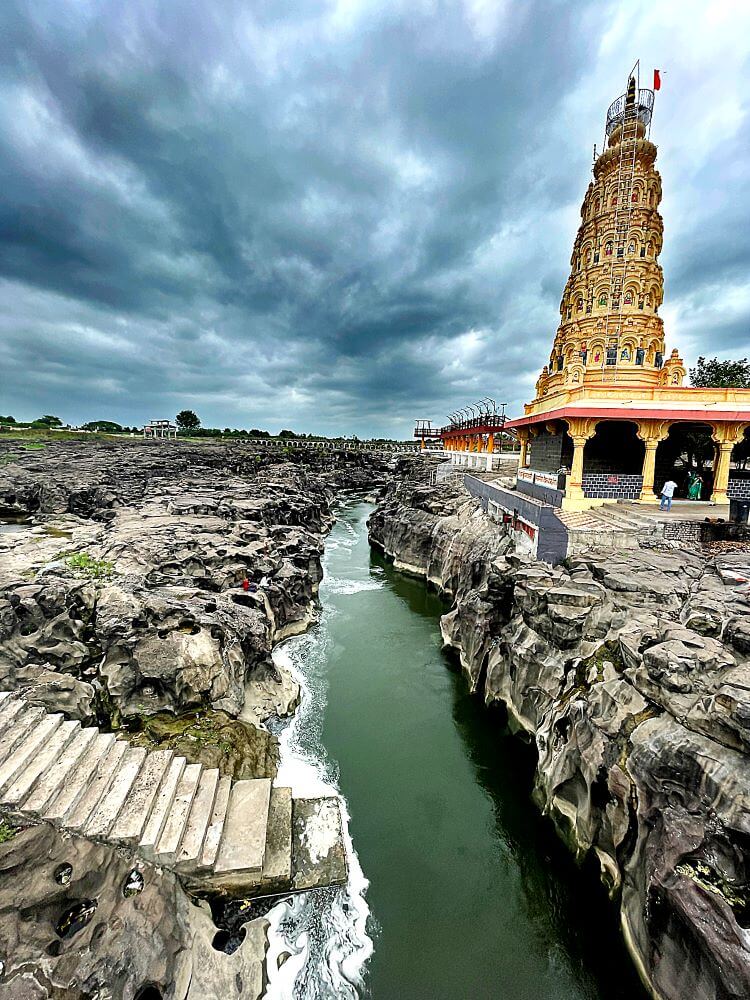
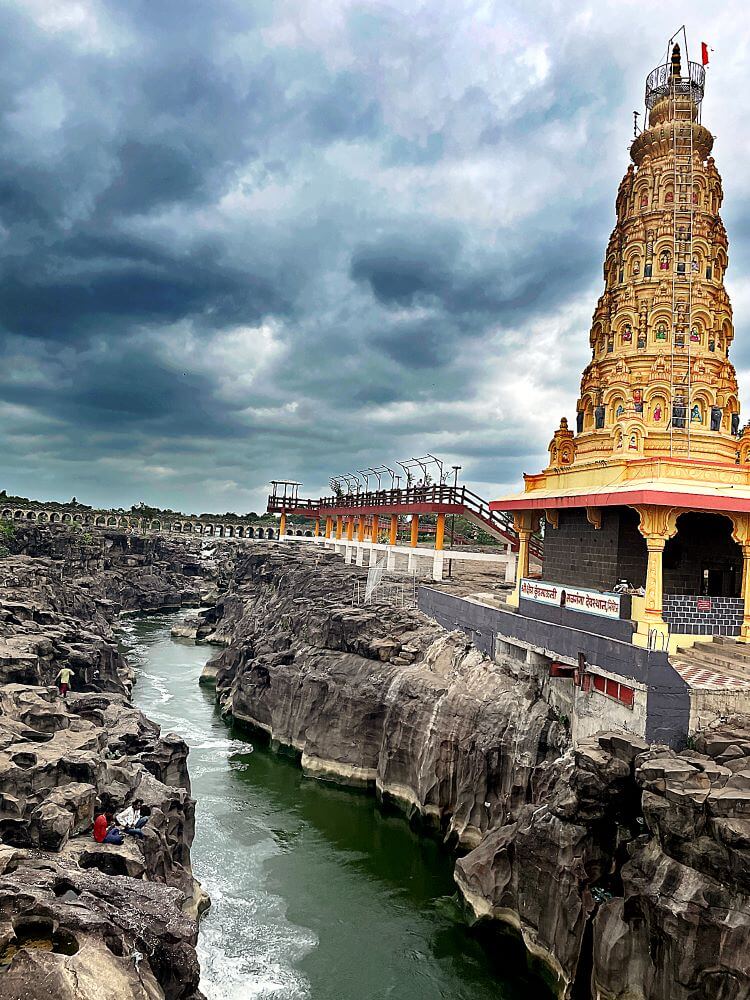
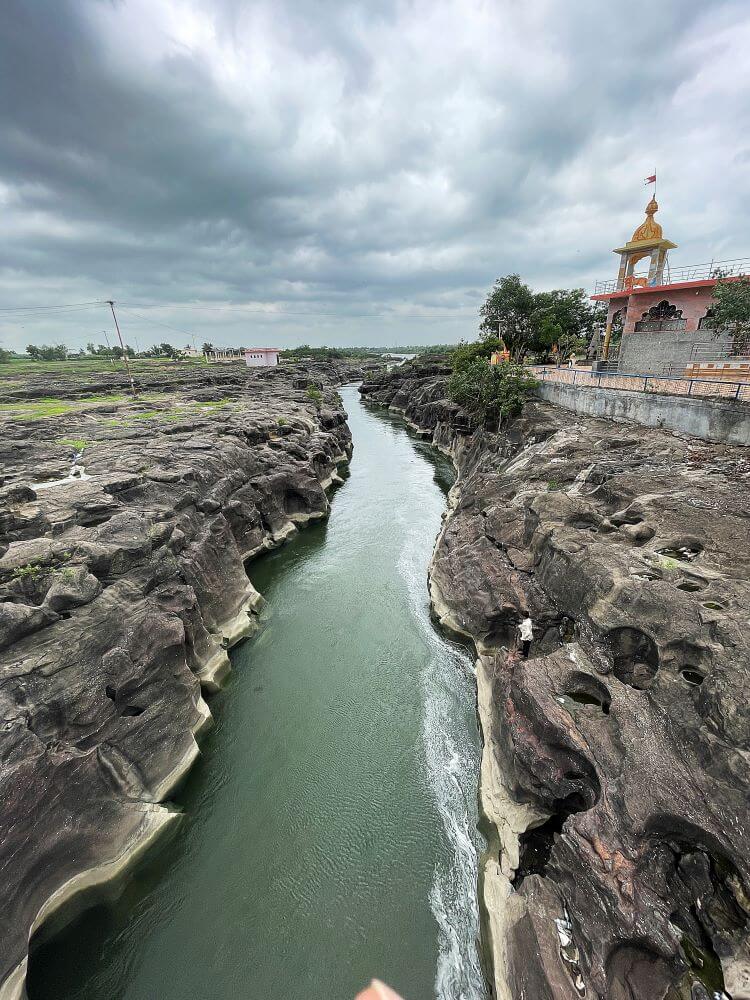
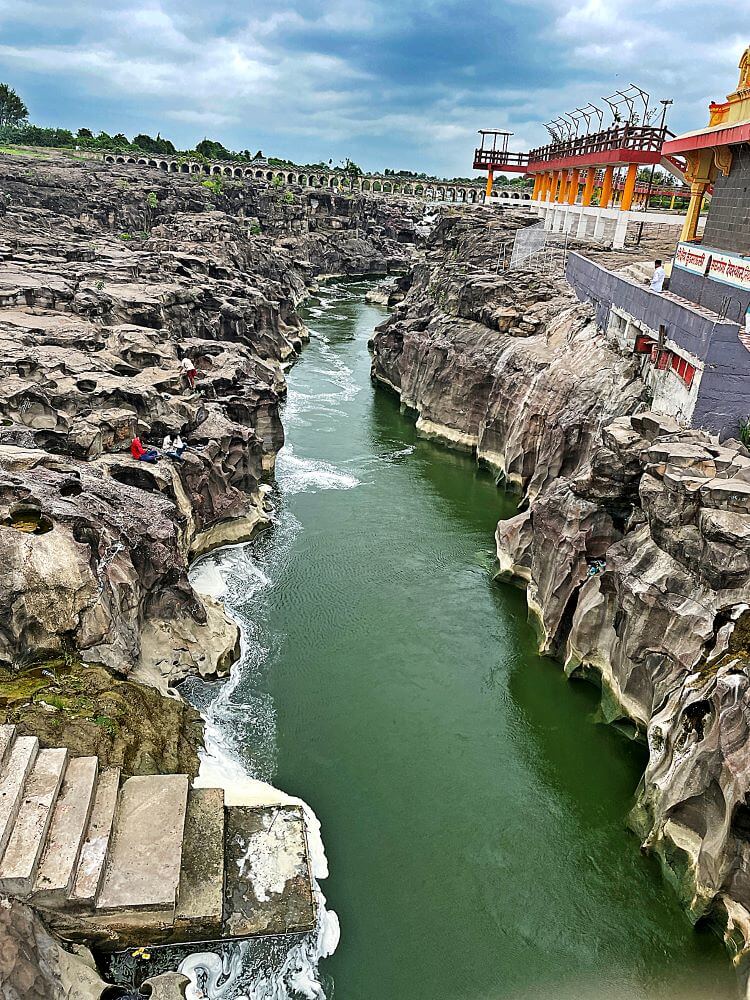
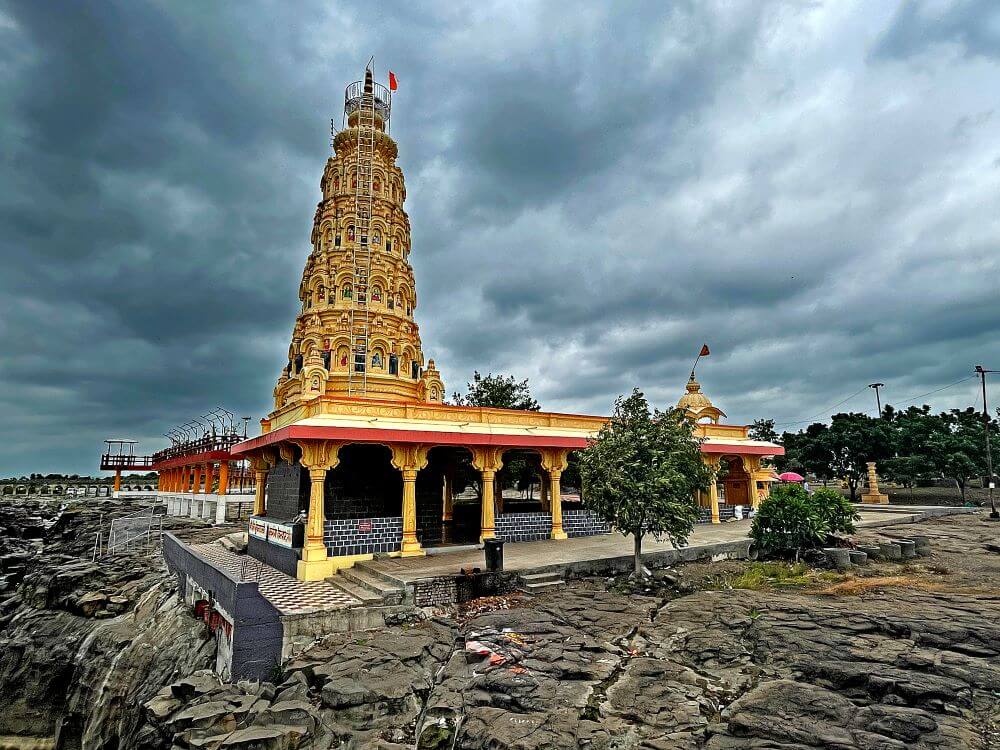
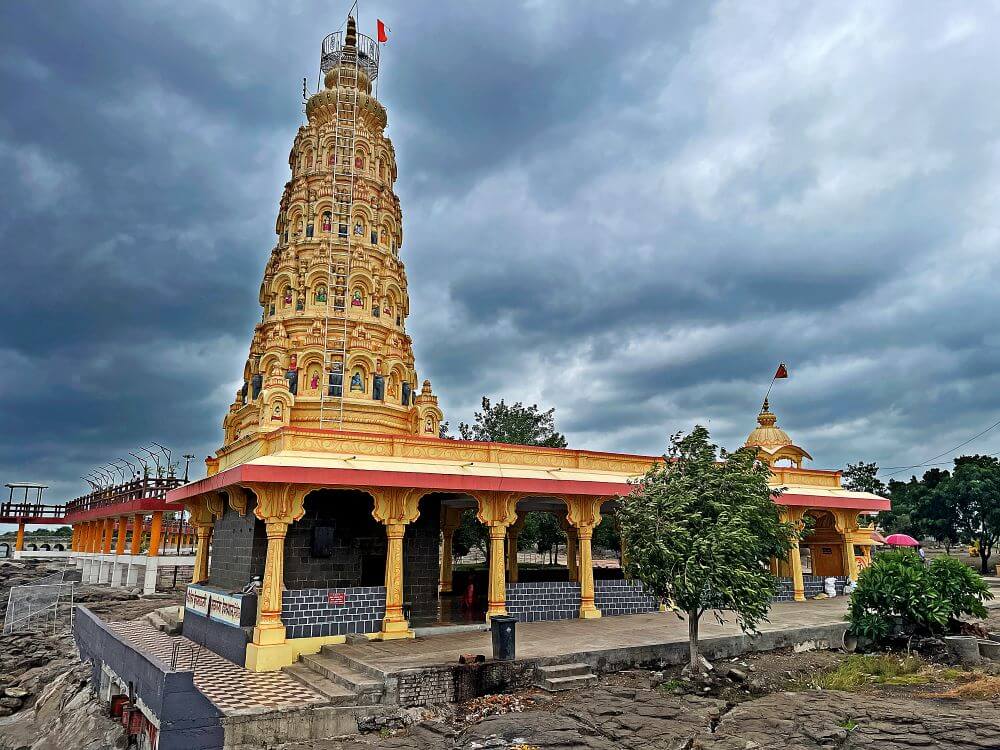
Shop Photo FramesThere are two temples of Malaganga Devi situated in the riverbed of the Kukadi River, on the border of Shirur Taluka in Pune District and Parner Taluka in Nagar District. Of these two temples, which stand on opposite banks, one is located at Takali Haji in Shirur Taluka, and the other is at Nighoj in Parner Taluka. The flow of the Kukadi River passes between these temples. Although the distance between the two temples is three kilometers, devotees and tourists can walk from one temple to the other in two to four minutes via the suspension bridge over the river.
The border between Pune and Nagar districts is defined by the flow of the Kukadi River here. It is said that the ‘Ranjan Khalke’ (natural potholes) formed by this river flow are the largest in Asia. Hundreds of tourists visit this place to see these ‘Ranjan Khalke’ located right next to the Malaganga temple. (Hard and soft rocks are found together in the riverbed. Stones and pebbles of various sizes are carried along by the swift current. The friction between these stones and the rocks causes the soft rock to erode, while the central part of the hard rock remains intact. This process, continuing for years, creates the ‘Ranjan Khalke’ in the riverbed.)
The legend of the temple states that long ago, a demon named Dhumaksha worshipped many gods and goddesses and obtained boons from them. He then became arrogant and began tormenting the sages and saints on Earth. He also tried to trouble the gods in heaven. At this time, all the gods prayed to Lord Shankar. Through his divine insight, Shankar realized that this Dhumaksha could not be killed by any man. For this, Shankar asked the Adi-Maya (the Primal Mother) residing in his matted hair to take an avatar. Respecting Shankar’s request, Adi-Maya took the avatar of Malaganga. She took her seven sisters with her. A fierce battle ensued between Malaganga and the demon Dhumaksha. The demon Dhumaksha was killed by a divine weapon released by the Goddess. The place chosen by the Goddess for rest on the banks of the Kukadi River after the battle is where the current temples of the Goddess stand today. It is said that the seven sisters of the Goddess who participated in the war have been enshrined in various villages along the river. The original seat of Malaganga Devi is in Nighoj, while there are other temples by the name of Malaganga in Takali Haji, Chincholi, Umbraj, and Belapur. They are all sisters.
Because the village of Takali Haji is situated between the Ghod River and the Kukadi River, it is also called an island (Bet). It is said that this seat of Malaganga Devi is 1,800 years old. A spacious assembly hall (Sabhamandap) has been built in front of the Malaganga Devi temple in Nighoj. Beautiful craftsmanship has been carved onto the pillars of the assembly hall. Idols are carved at the entrance of the sanctum sanctorum. Malaganga Devi is seated on a throne in the sanctum. To the right of Malaganga Devi is the suspension bridge. The view of the Ranjan Khalke can also be seen from the temple. The pinnacle of the Takali Haji temple is also visible from here. Malaganga Devi in these famous temples is known as a Mother who fulfills the wishes and aspirations of her devotees.
The Malaganga Devi Yatra (fair) is held for four days starting from Chaitra Vadya Ashtami. Devotees from the surrounding five villages gather to celebrate the festival of the Goddess. During the festival, a procession of the Goddess is taken out in a palanquin. On this occasion, the temple committee provides Mahaprasad to the devotees.
The festival of Malaganga Devi is celebrated during Navratri. An unbroken Harinam Saptah is organized for nine days. During this time, many devotees observe ‘Ghati Basne’. (Ghati Basne means sitting in the Goddess’s temple for nine days to perform worship, chanting the Goddess’s hymns, singing songs of the Goddess, and reciting the Devi Saptashati.) During the festival, Bhajans, Kirtans, and chanting of the Lord’s name are also performed. The Navratri festival here concludes on Vijayadashami. Every Tuesday at six in the morning, an Aarti is performed in these temples. Both temples are open for devotees 24 hours. For the convenience of devotees, a Bhaktaniwas (pilgrim lodging) has been built in the Nighoj temple premises.
This sacred temple stands as a testament to deep spiritual devotion, ancient architectural grandeur, and rich local cultural traditions.
The sanctum sanctorum houses the divine idol consecrated according to ancient Vedic traditions, surrounded by serene courtyards and traditional temple architecture.
Navratri, Maha Shivratri, Annual Temple Jatra & Deepotsav
Compare and book flights, secure top-rated local hotels near the temple, hire reliable guides, and rent cars instantly.
Extend your pilgrimage by visiting other highly sacred temples located nearby.


Add ₹999 more to unlock FREE SHIPPING!
Your sacred cart is currently empty.
Shop Photo FramesFill in your delivery details below to place your order.
Add comment