
Add ₹999 more to unlock FREE SHIPPING!
Your sacred cart is currently empty.
Shop Photo FramesSaints Dnyaneshwar, Namdev, Eknath, Tukaram, and Niloba are considered the Saint-Panchayatan of the Warkari tradition. As the fifth saint in this Panchayatan, Saint Niloba is renowned for his devotion to his Guru. It is said that even after Tukaram Maharaj’s departure to Vaikuntha, Niloba, desiring initiation from him alone, renounced food and water and began the continuous chanting of Tukaram’s name. Moved by his steadfast resolve and devotion, Tukaram had to descend from Vaikuntha to the mortal realm to grant him initiation. The Samadhi of this great saint is located at Pimpalner in Parner Taluka.
Shri Kshetra Pimpalner in Parner Taluka is a place of significance for Warkaris, equal to Pandharpur, Dehu, and Alandi. While foot processions (Dindis) or pilgrimages (Waris) for Dehu, Alandi, and Pandharpur originate from many places across Maharashtra, the Dindi of Saint Dnyaneshwar, accompanied by hundreds of Warkaris, travels from Alandi to the Samadhi Mandir of Saint Niloba at Pimpalner on the occasion of his Punyatithi.
According to references in the saint’s biography, Niloba was born on Bhadrapad Shukla Navami in the year 1675 at Shirur in Pune district. His parents used to perform worship and rituals at the Ramling temple situated on the banks of the Ghodnadi river in Shirur, Pune district. As Niloba grew up, he too began to manage the Kulkarni estate held by his father and perform the worship of Ramling. As the responsibilities of the estate began to interfere with his worship, he returned the estate and became fully immersed in the remembrance of the Lord. He began a regular pilgrimage (Wari) to Dehu, Alandi, and Pandharpur. Once, while on a pilgrimage, he was introduced to Narayan Maharaj, the son of Saint Tukaram Maharaj. Niloba was deeply influenced after hearing the life story of Tukaram from Narayan Maharaj.
Leaving Shirur, Niloba began residing in Parner. He would perform worship and rituals at the Nageshwar Temple there. From that place, he began his regular Wari pilgrimage. While he was in Parner, the marriage of Niloba’s daughter was arranged. At that time, until the wedding rituals were completed, Lord Panduranga himself, in the form of a servant named Vithu, performed all the tasks, starting from fetching water. After the wedding rituals were concluded, when Niloba called Vithu to give him some compensation, Vithu said he would return after finishing his work in the prayer room and went towards it. When he did not return even after a long time, Niloba went into the prayer room to check, only to find a Tulsi leaf and Bukka (sacred black powder) there. It was then that Niloba realized that Lord Panduranga himself had taken upon his own shoulders the burden of his tasks.
Nilobaraya deeply desired that Saint Tukaram should be his Guru. He became completely absorbed in the thought of Tukaram Maharaj. His state of mind became: “Tuka in my meditation, Tuka in my thoughts | Tuka is seen, at home and in the forest ||” Living in his physical body After His departure to Vaikuntha, Tukaram Maharaj had indeed returned for his daughter Bhagirathi, Santaji Maharaj, and Teli Jagnade. Holding a firm belief that He would also come for him and grant him grace, he gave up food and water and began the incessant chanting of Tukaram’s name. After some days, Panduranga Himself appeared before Niloba; however, he bluntly rebuked even Panduranga, saying, “O Lord, I did not call You, so why have You come? I do not know You. I am yearning for a meeting with Tukaram. So, You should go back.” Seeing this intense devotion and loyalty to his Guru, Panduranga had to return. Finally, after Panduranga instructed him, Tukaram awakened Niloba and, placing his hand upon his head, bestowed grace upon him.
Following the initiation by Sant Tukaram Maharaj, Niloba composed numerous Abhangs, Gavlanis, the Changdev Charitra, and Tukaram Stuti. While traveling from Parner to Pandharpur for the Wari, Niloba would stay at the Pimpleshwar Mahadev Temple in Pimpalner. Bhuloji Gajre, a Patil from Pimpalner, was suffering from a severe illness. Pimpleshwar Mahadev was the family deity of the Patil. Once, Mahadev appeared to the Patil’s son in a vision and told him that a saint was residing in their temple, and if his father applied the sacred ash (bukka) given by the saint, his ailment would be cured. Following this, they sought the darshan of Niloba and requested him to apply the sacred ash. A few days after the application of the ash, his illness was completely cured. After recovering from the sickness, Bhuloji Patil of Pimpalner requested Niloba to stay in Pimpalner itself. Accordingly, he settled in Pimpalner and from there, he began his regular pilgrimages to Alandi and Pandhari.
Until the age of seventy-five, Nilobaraya continued his pilgrimage to Pandharpur; however, as his body grew weary, he prayed to the Lord, “Panduranga, I am no longer able to come to Pandharpur to visit You. Either merge me into Your lotus feet, or come to me at Pimpalner.” Following this earnest plea from Niloba, Panduranga appeared to him in a vision and said, “I am present in a pool at Vitthalwadi, near Talegaon on the banks of the Bhima River; bring Me from there.” Accordingly, Niloba retrieved the idols of Panduranga and Rukmini from that pool and brought them to Pimpalner in a palanquin. In the space provided by Bhuloji Patil for Niloba to reside, Nilobaraya constructed a temple for Panduranga and Rukmini. Since then, Pimpalner has come to be known as ‘Prati-Pandharpur’. The Ashadhi and Kartiki Ekadashi festivals initiated by Niloba in this temple continue to this day.
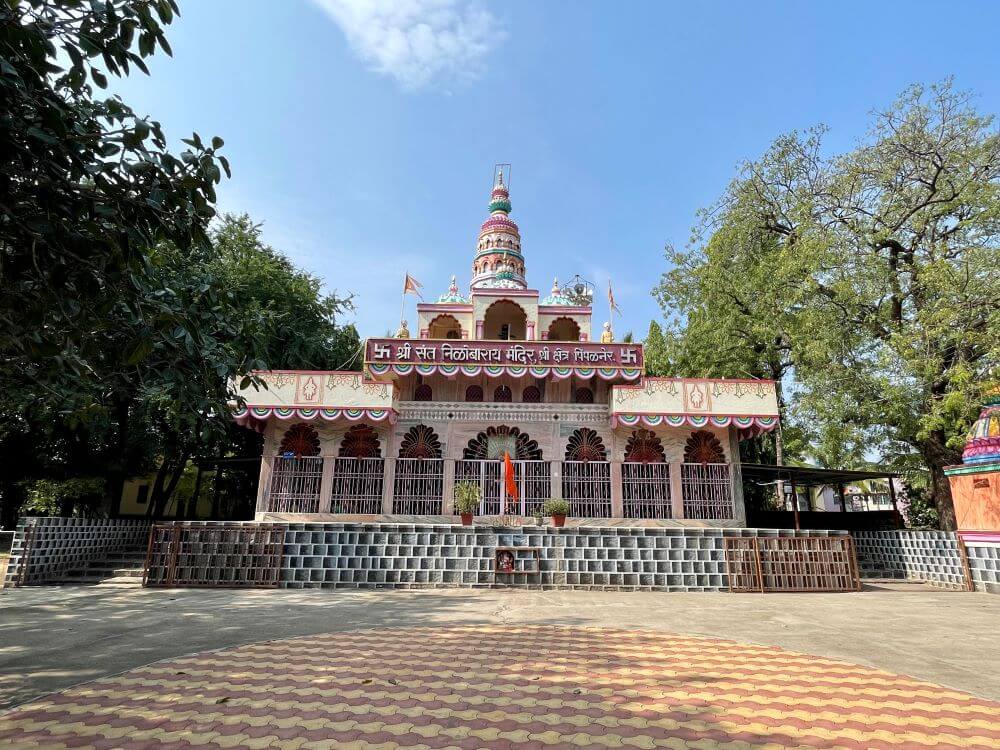
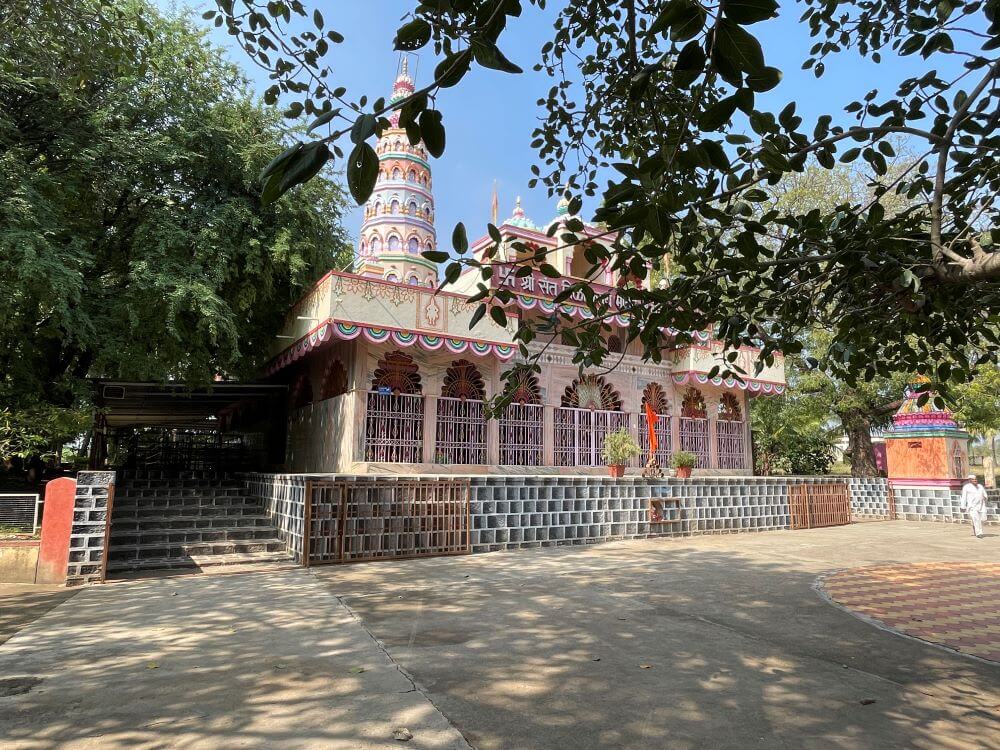
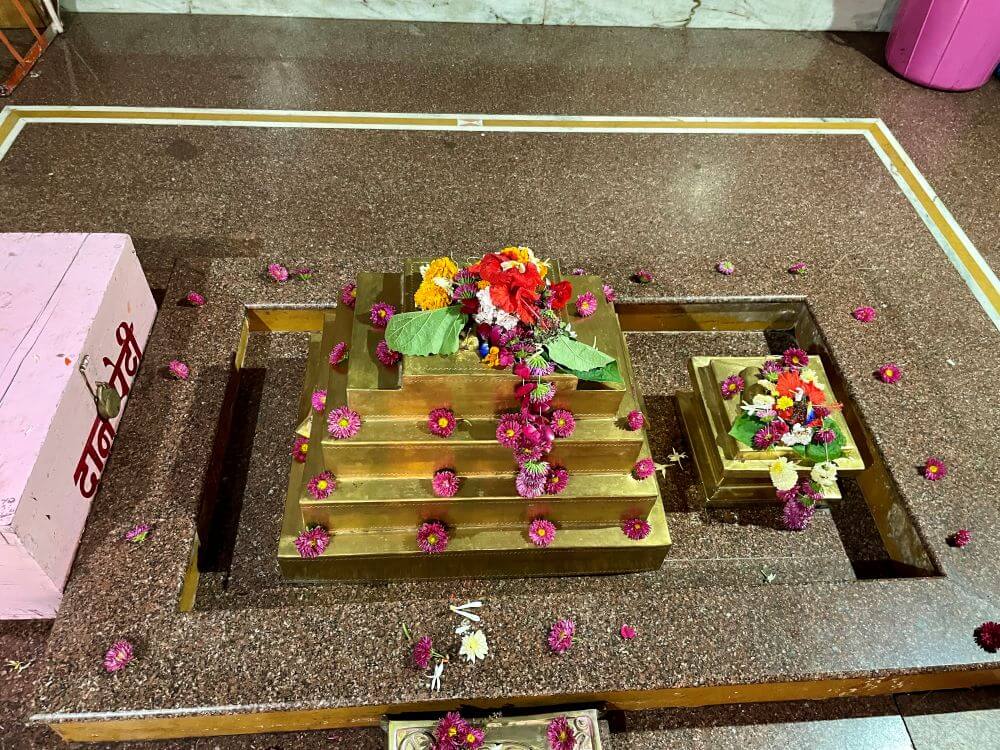
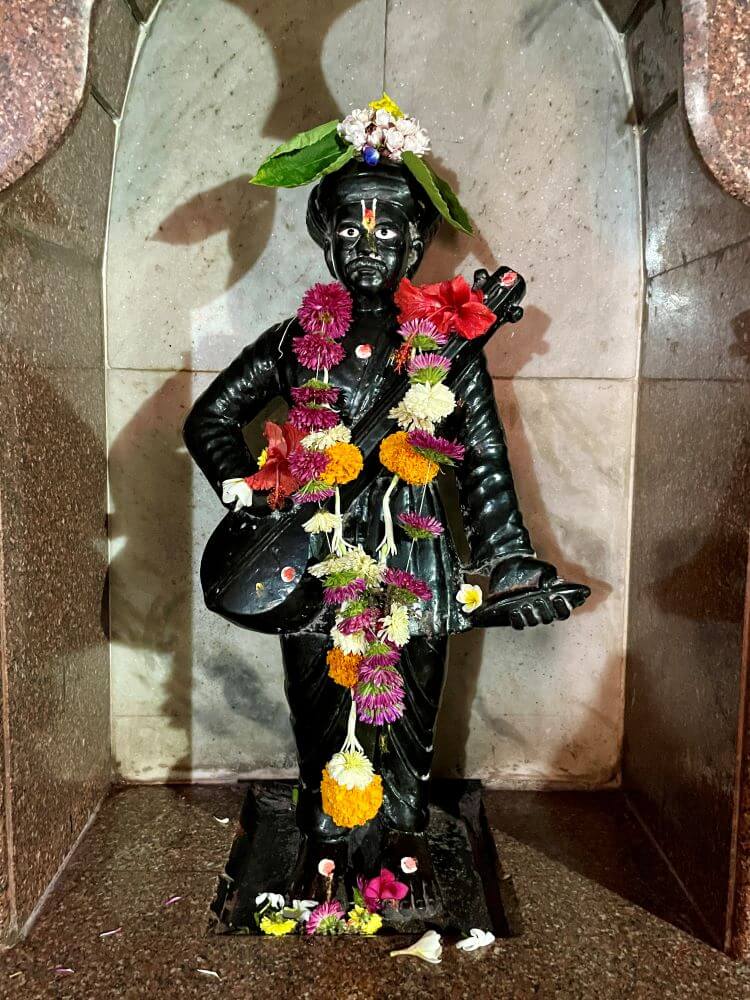
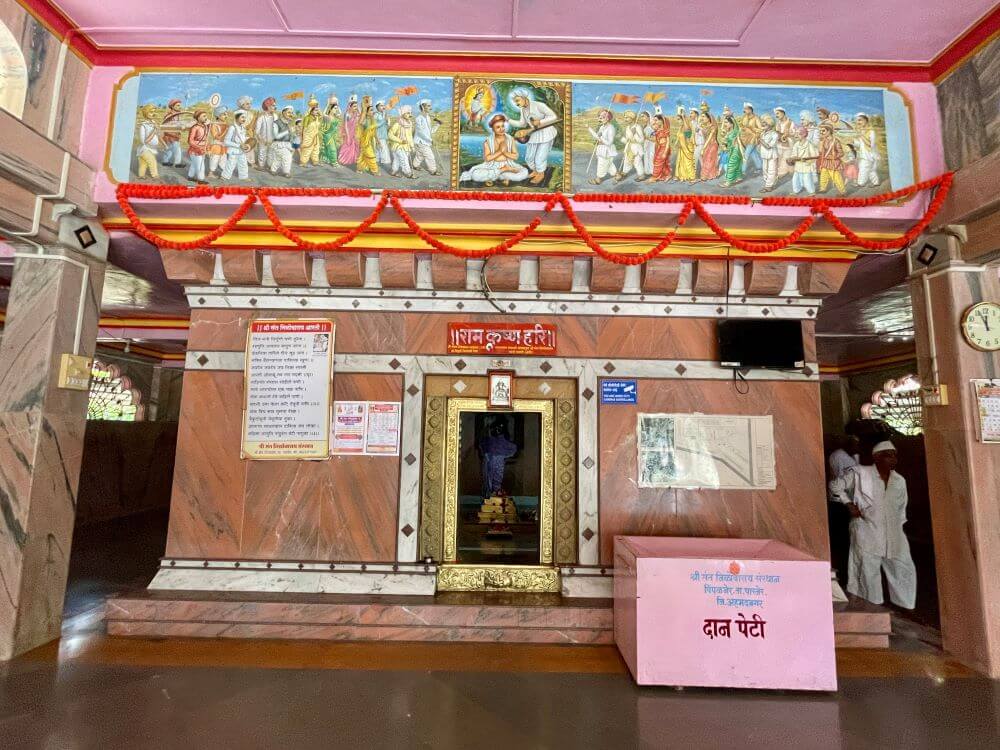
The ancestral residence of Nilobaraya is located in Pimpalner. Within it stands a Vitthal-Rukmini temple, while the Samadhi temple of Niloba is situated on the riverbank outside the village. This temple is located in a spacious area amidst a scenic, natural environment. Inside this temple, there is a beautiful idol of Saint Nilobaraya, and his Samadhi site is located directly in front of it. The death anniversary of both Nilobaraya and Tukaram Maharaj falls on the same day, Phalguna Vadya Dwitiya; however, for the convenience of devotees, the death anniversary festival of Niloba is celebrated in Pimpalner over the first three days of the month of Phalguna. A grand fair is held in Pimpalner during this time. Throughout this festival period, Warkaris from Alandi and various parts of the state arrive here with their Dindis and Palkhis. A Bhakta Niwas facility has been provided near the Samadhi temple for the convenience of the devotees.
This sacred temple stands as a testament to deep spiritual devotion, ancient architectural grandeur, and rich local cultural traditions.
The sanctum sanctorum houses the divine idol consecrated according to ancient Vedic traditions, surrounded by serene courtyards and traditional temple architecture.
Navratri, Maha Shivratri, Annual Temple Jatra & Deepotsav
Compare and book flights, secure top-rated local hotels near the temple, hire reliable guides, and rent cars instantly.
Extend your pilgrimage by visiting other highly sacred temples located nearby.


Add ₹999 more to unlock FREE SHIPPING!
Your sacred cart is currently empty.
Shop Photo FramesFill in your delivery details below to place your order.
Add comment