
Add ₹999 more to unlock FREE SHIPPING!
Your sacred cart is currently empty.
Shop Photo FramesA revelation occurred in fifteen days.
I met the formless Vithoba.
I made my abode on the plateau of Bhamgiri.
My consciousness became steady in the Supreme Brahman.
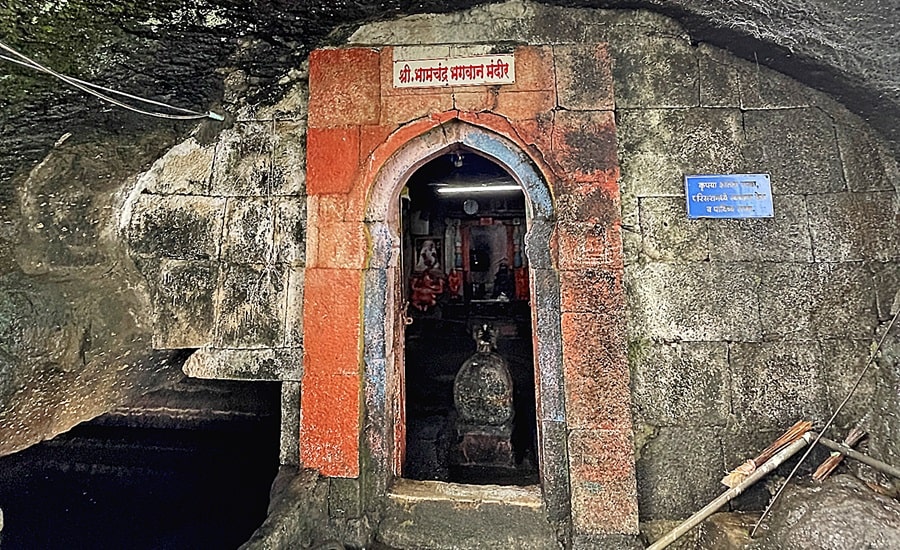
This Abhang emerged from the lips of Sant Tukaram Maharaj after fifteen days of unbroken Samadhi, and the place was Bhamgiri, that is, Bhamchandra Hill. This hill, sanctified by the presence of the supreme saint Tukaram Maharaj, holds extraordinary significance for the Warkari Sampradaya. It has been known as a pilgrimage site since ancient times. The evidence for this lies in the caves and temples carved into the rocks here. One of them is the Bhamchandra Bhagwan, that is, the Bhamchandra Mahadev Temple.
Bhamchandra Hill stands independently from the main ranges of the Sahyadri. The lower part of this hill, which stretches from east to west, is adorned with trees and creepers, while the upper part features a steep rocky cliff. The Bhima River flows from the foothills of the mountain. That is why this hill is named Bhamchandra. Due to the village named Navlakh Umbre located to the west of this hill, it is also called ‘Navlakhya Hill’. There is a path to reach the Bhamchandra Mahadev Temple from Shinde-Vasuli village, which is located 40 kilometers from Pune and 20 kilometers from Pimpri-Chinchwad. While trekking from the foothills to the temple via a difficult forest trail, one gets a panoramic view of Dehu village from above.
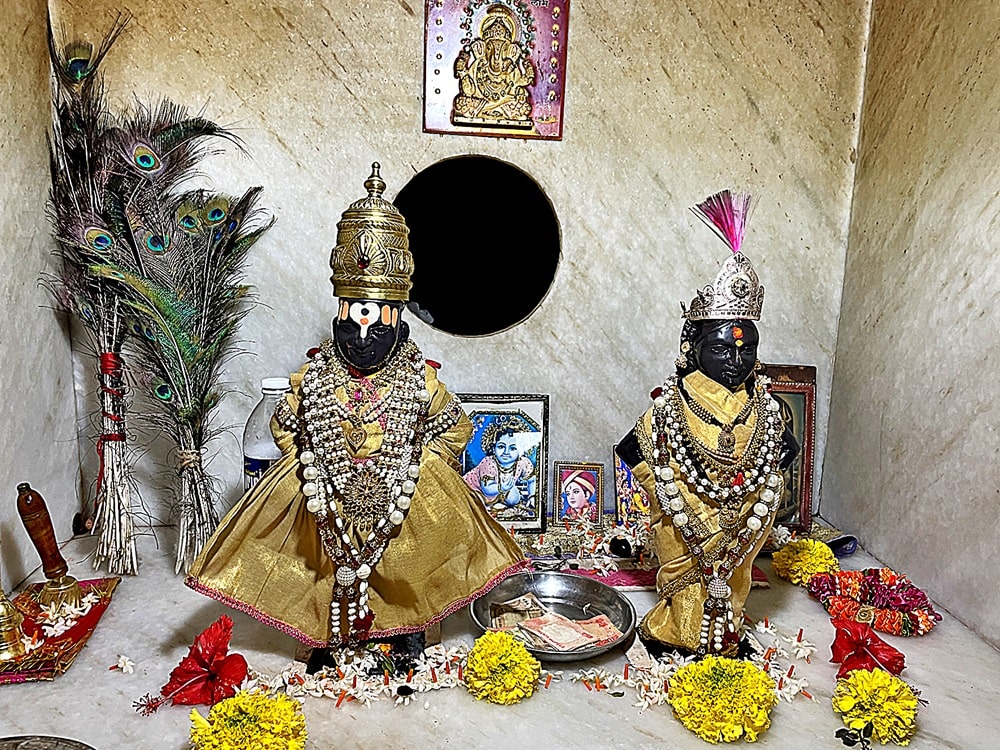
There is a plateau on the mountain at a distance of a half-hour walk from the foothills. Here, there is a platform of a Samadhi built from black stone. The legend regarding this platform is that Tukaram Maharaj’s disciple, Vaskar Maharaj, used to sit on this platform and perform Kirtan. He would become so engrossed in the Kirtan that he would be oblivious to everything else. Once, while a Kirtan was in progress, heavy rain began to fall. It is said that to ensure no interruption in his Kirtan, Lord Panduranga himself held an umbrella over him. Ten minutes further from this platform, there are water cisterns carved into the rock at a height near the cliff. The water here is sweet in taste and extremely cool. A short distance ahead is the ancient temple of Bhamchandra Mahadeva.
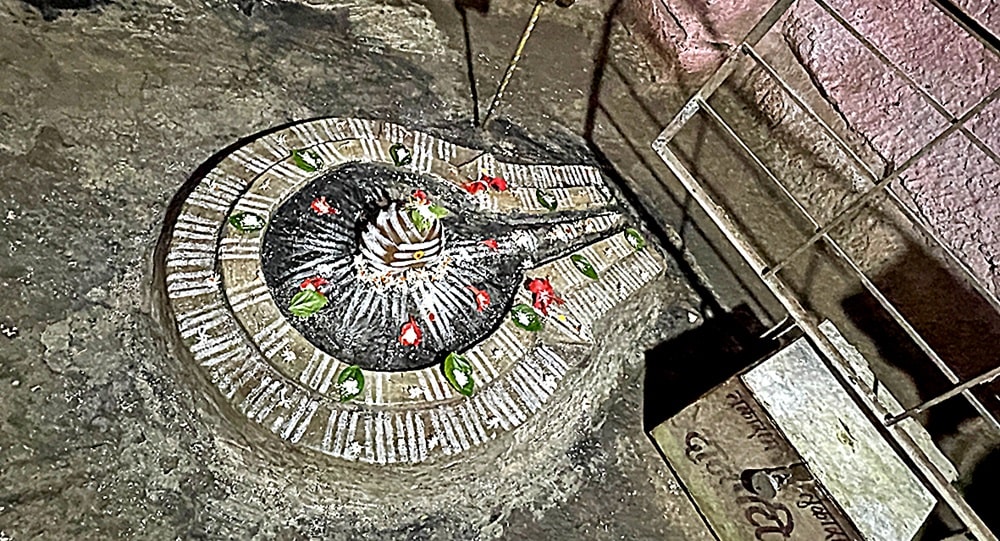
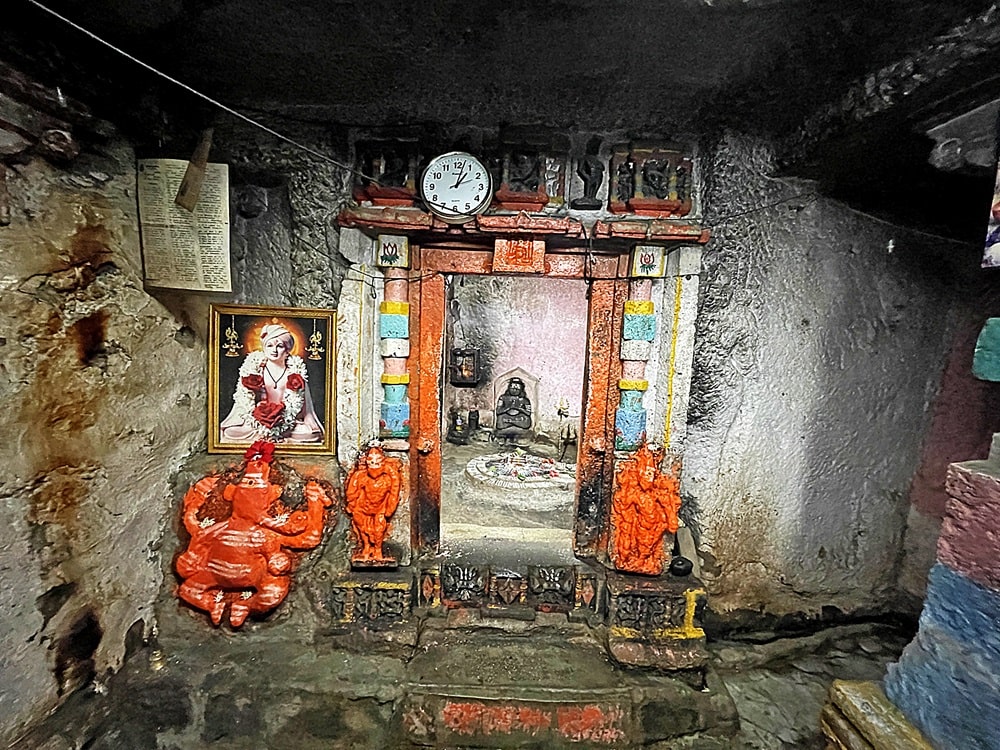
In front of the temple stands a large Peepal tree, which is also worshipped with devotion. The entrance to the temple is within the vertical cliff itself. This rock-cut temple is structured with a Sabha Mandapa and a Garbhagriha. The Sabha Mandapa has four pillars adorned with intricate carvings. The stone ceiling is also carved. Nandi is seated in the Sabha Mandapa. There are also stone idols of other deities here. In the Garbhagriha, there is an ancient Shiva Linga, with an idol of Parvati behind it. Every year, thousands of devotees come here to seek the blessings of Bhamchandra Mahadeva. Beside the temple is the Bhagirathi Kund, and its water is used to perform Abhisheka to Lord Shankara.
Concrete references regarding the construction of the temple are not available. Some believe this structure dates back to the era of the Pandavas, while others state that these caves belong to the Satavahana period. Along with this Mahadeva temple, the entire Bhamchandra mountain was granted the status of a protected heritage site by the State Government in the year 2011.
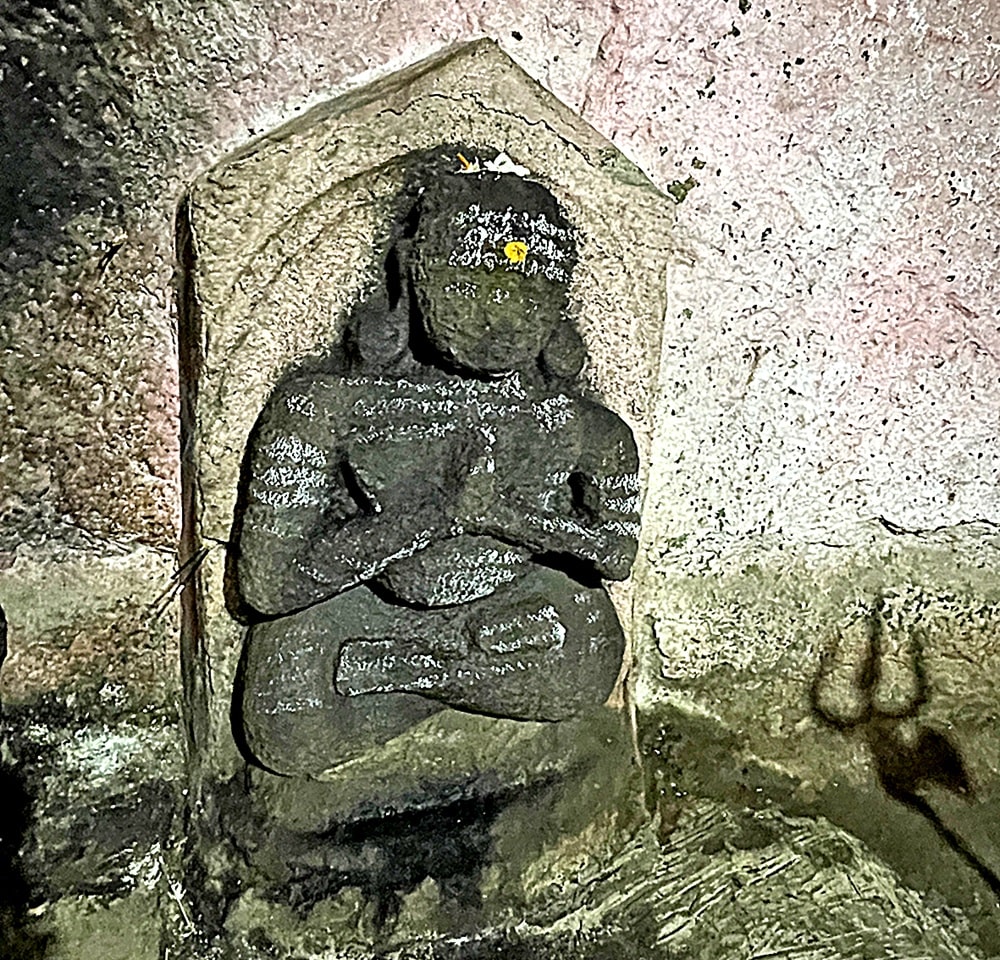
Near the temple is the place where Saint Tukaram Maharaj practiced meditation. It is said that Tukaram Maharaj meditated here continuously for 05 days in this cave, which measures approximately 00 by 6 feet. There is an idol of Tukaram Maharaj on the wall of the cave. Figures of snakes and scorpions are carved around the idol.
According to the legend, when Tukaram Maharaj did not return home for 05 days, his brother Kanhoba was searching for him in the area. He asked everyone he met about Tukaram. Kanhoba learned from a traveler that Tukaram Maharaj was on the Bhamchandra mountain. Upon reaching there, he saw Tukoba sitting in deep meditation, oblivious to hunger and thirst. Due to sitting in one place for so long, ants had begun to build an anthill over his body. Snakes and scorpions were moving around him, but Tukoba was unconcerned by any of this. On the fifteenth day, Tukoba attained enlightenment and was blessed with a divine vision of the Lord. At the spot where the Lord and Tukaram met, Kanhoba stacked stones one upon another. Later, he created an idol. Figures of scorpions, snakes, and tigers are carved behind the idol. The idol currently seen in the cave is this very same one.
Since this location falls under the forest department, there are limitations on the renovation process of this pilgrimage site. However, through the efforts of the Saptah Committee and donors, many facilities have now been created for devotees. As Warkaris have been coming to this mountain for spiritual practice and contemplation for several years, the Pune Zilla Parishad has also provided basic infrastructure, electricity, and water arrangements on the mountain. A fair is held here on the last Monday of the Shravan month and on the day of Tukaram Beej.
The sanctum sanctorum houses the divine idol consecrated according to ancient Vedic traditions, surrounded by serene courtyards and traditional temple architecture.

Navratri, Maha Shivratri, Annual Temple Jatra & Deepotsav
Compare and book flights, secure top-rated local hotels near the temple, hire reliable guides, and rent cars instantly.
Extend your pilgrimage by visiting other highly sacred temples located nearby.


Add ₹999 more to unlock FREE SHIPPING!
Your sacred cart is currently empty.
Shop Photo FramesFill in your delivery details below to place your order.
Add comment