
Add ₹999 more to unlock FREE SHIPPING!
Your sacred cart is currently empty.
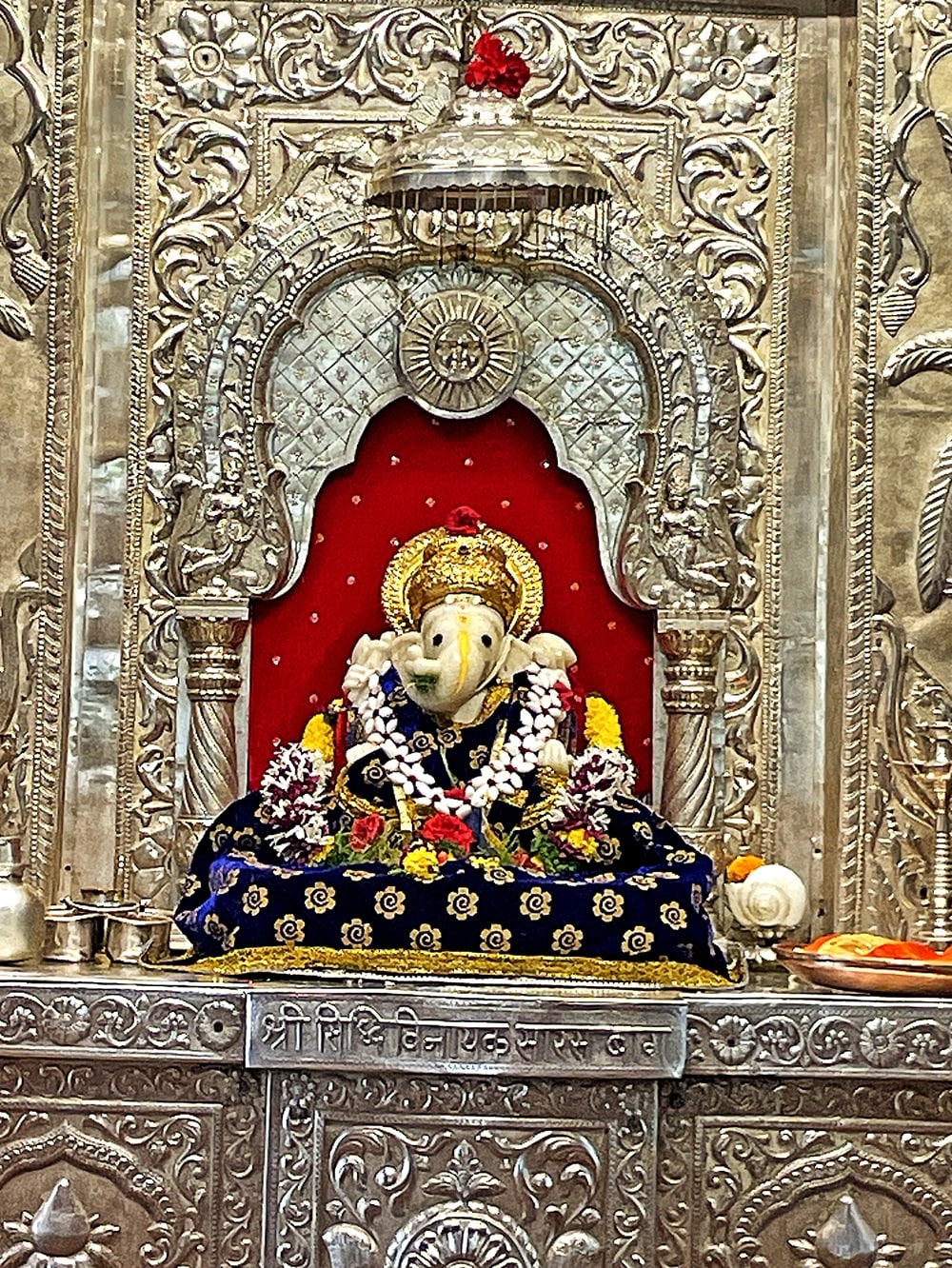
Shop Photo FramesThe ‘Talyatla Ganpati’ (Ganpati in the lake) of Sarasbaug in Pune is an important focal point of faith for the people of Pune. Shrimant Nanasaheb Peshwa had created a large lake at the foothills of Parvati in the mid-eighteenth century. Since this temple is situated in the middle of the lake, it came to be known as ‘Talyatla Ganpati’. Exemplifying fine Peshwa-era architecture, this temple houses an idol of Siddhivinayak Ganesha with His trunk turned to the right. This wish-fulfilling Ganpati is an important sacred site for devotees. In due course, a beautiful garden has now been developed in place of the lake.
During the reign of Shrimant Balaji Bajirao, also known as Nanasaheb Peshwa, the expansion and development of Pune city took place at a very rapid pace. As the water supply to the city began falling short due to the growing population, Nanasaheb first constructed the Katraj lake and brought water into the city through stone and terracotta pipes. However, with the objective of creating a viable alternative to the Katraj water and beautifying the foothills of Parvati, he planned an ambitious project around the year १७५०. It was decided to alter the natural course of the Ambil Odha (stream) flowing through the Parvati hill area and construct a grand lake there. Work on this lake began by blocking the flow of this stream with a dam wall and excavating twenty-five acres of land. It was planned to release the excess water from the Katraj lake and the waters of the Ambil Odha into this lake during the monsoon. A special spillway was also arranged in the western part of the lake to channel the excess floodwater back towards the river.
An incident that occurred while the construction of this lake was underway was that, upon receiving information that the pace of lake excavation was slow, Nanasaheb Peshwa personally visited the site to inspect it. Seeing the slowed pace of work, he stepped down from the elephant’s howdah, lifted a large stone himself, and carried it to the embankment site. Seeing their ruler laboring himself, the assembled laborers and citizens were filled with remorse. This accelerated the work, and it was completed in the year १७५४. A beautiful garden was later developed precisely on the island of about २५,००० square feet area preserved in the middle of this lake. As Saras birds (cranes) frequented this lake and its surroundings, this garden was named ‘Sarasbaug’.
A few years after the creation of the lake, namely in १७८४, Shrimant Sawai Madhavrao Peshwa built a small temple of Shri Siddhivinayak on this island. Ever since, this right-trunked Ganpati has been known as ‘Talyatla Ganpati’. This location held extraordinary importance in the political and social life of the Peshwa era. Many secret political meetings and strategic consultations of stalwarts such as Sawai Madhavrao Peshwa, Mahadji Shinde, and Nana Fadnavis used to take place during boat rides on this lake. Notably, to maintain the confidentiality of these discussions, the task of rowing the boats was often entrusted to people of African descent known as ‘Siddis’ who did not understand the Marathi language, or to deaf boatmen.
Following the decline of the Maratha Empire and the end of Peshwa rule in ۱۸۱۸, the maintenance of this lake was gradually neglected during British rule. The management of the shrines continued according to the Peshwa system until ۱۸۴۲, but in ۱۸۶۱ the British government retained the site of the island in the lake while transferring the remaining area to the Pune Municipality. During this period, the accumulation of silt and stagnant water in the lake increased the breeding of mosquitoes, posing a threat to the city’s health. Consequently, the municipality decided to fill up this lake by dumping garbage and rubble. This reservoir, which once extended up to Tilak Road, was filled in to create the present-day ground and garden, though the existence of the temple on the island remained intact. Around ۱۹۳६-۳۷, Judge R. B. Kondo Mahadev Kumthekar had marble steps and a tin-shed assembly hall (sabhamandap) constructed for the convenience of devotees visiting the temple.
The credit for the modern transformation of this historic area goes to the then Commissioner of Pune, Bhujangrao Kulkarni. In ۱۹६۸-۶۹, he brought to reality a plan to develop a well-equipped and beautiful garden in the remaining area of the lake. The Pune Municipal Corporation implemented this project in a highly systematic manner, creating greenery, tree plantations, a jogging track, and seating arrangements. As the development of the garden increased the footfall of devotees, it became necessary to renovate the old temple. The temple’s board of trustees took the initiative and had a new temple design prepared by architect U. M. Apte. On December ۳, ۱۹۶۹, the cornerstone-laying ceremony took place at the hands of the then Mayor V. B. Patil, and on March ۲۰, ۱۹۷۰, the inauguration ceremony of the new structure was successfully held. The entire renovation cost around six and a quarter lakh rupees at that time.
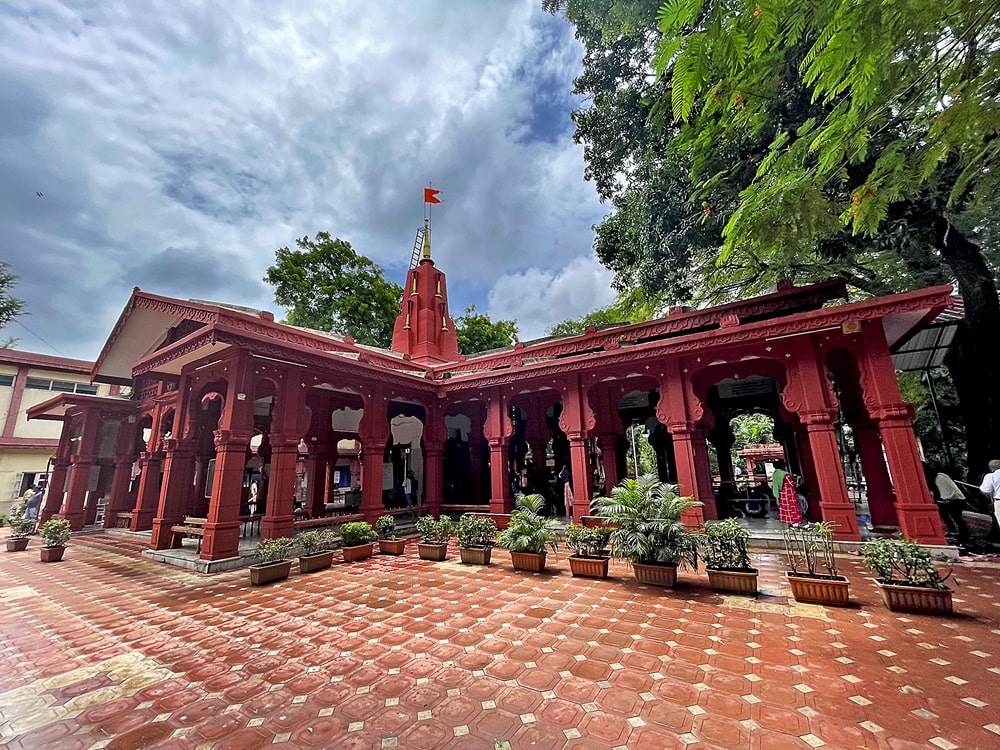
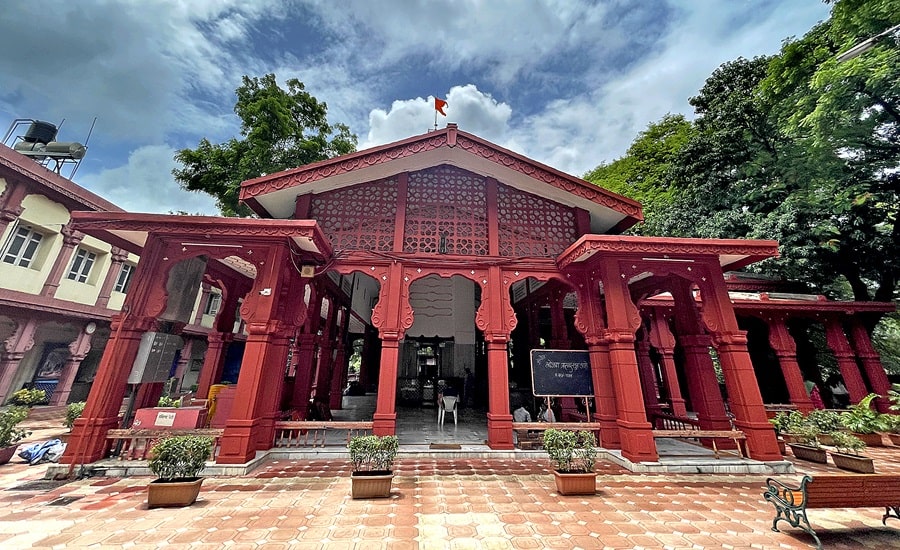
Situated in Pune’s renowned Sarasbaug, this temple is a confluence of Maratha and North Indian architectural styles. The approach path to the temple leads from the ‘Khau Galli’ outside Sarasbaug. The three arches over the main entrance of the garden feature amalaka and kalasha on their crests. Since this lake was converted into a garden about ۸۰ years ago, this area lies at a lower level than the road. The temple is situated on the island in the lake located in the middle of the garden. A bridge has been built over the lake to reach this temple. After crossing this bridge, one has to climb steps to enter the elevated temple.
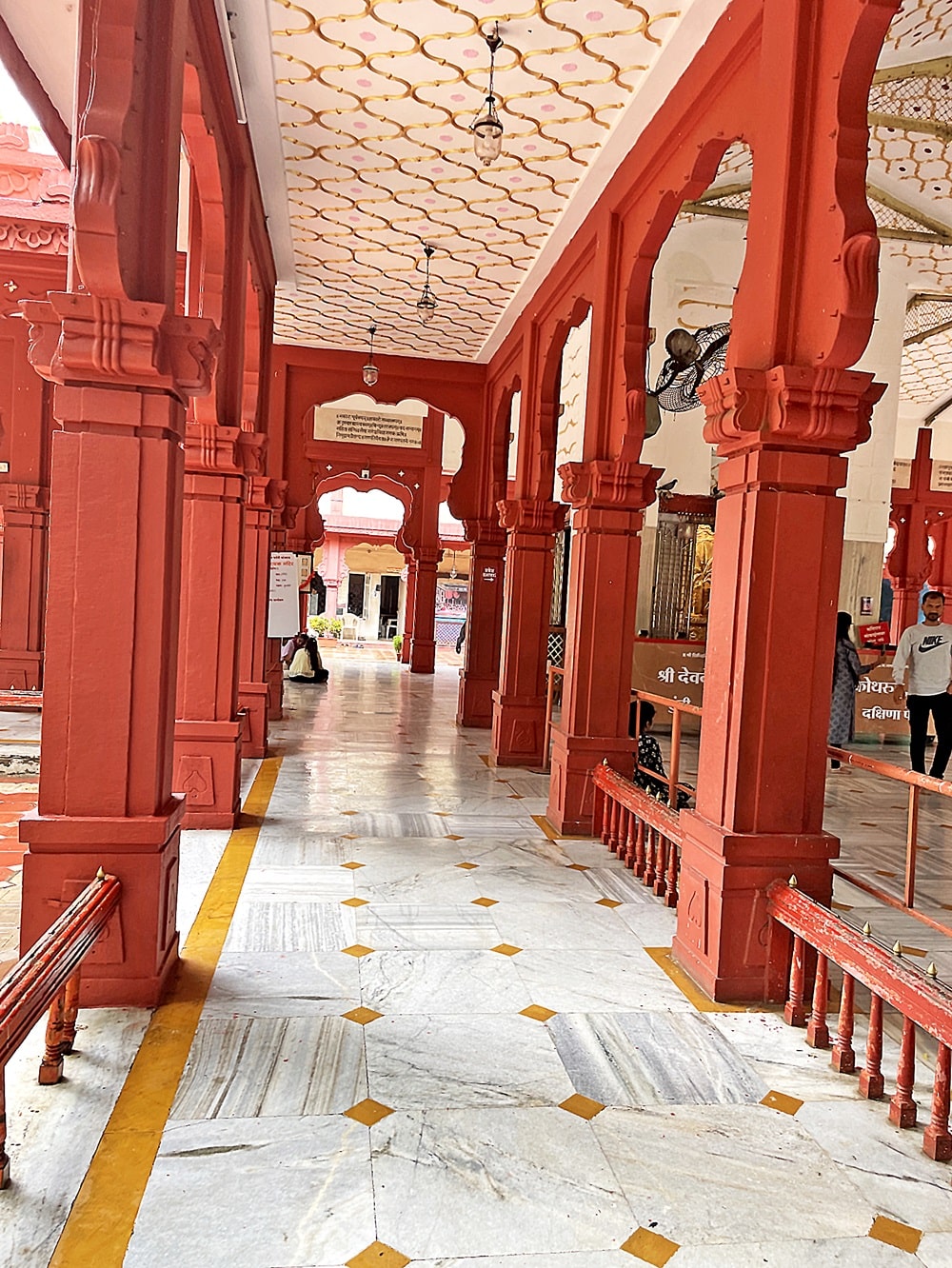
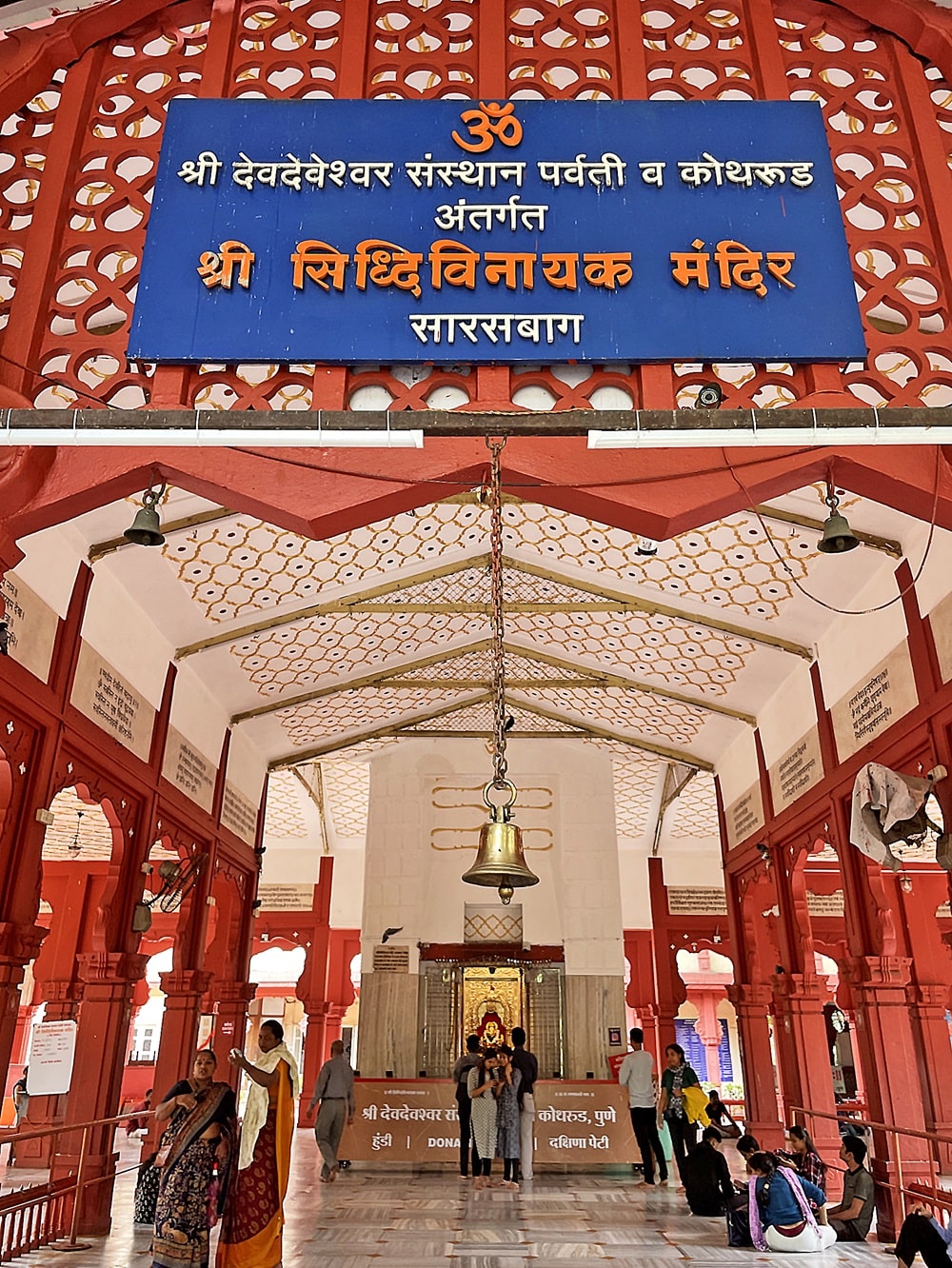
The structure of this temple consists of an assembly hall (sabhamandap) and a sanctum sanctorum (garbhagriha). This sabhamandap, about ۴۰ feet wide and ۴۸ feet long, faces east. The rows of ornate pillars in the sabhamandap are connected to each other by arches. The outer walls of the stone-built garbhagriha located in the center of the semi-open sabhamandap are covered with marble tiles. The entrance of the garbhagriha features carved door jambs and a sculpture of Ganesha on the lintel (lalatbimba). Seroned in the recess (makhar) on the adamantine pedestal (vajrapitha) inside the garbhagriha is the idol of Siddhivinayak adorned with garments, ornaments, and a golden crown. A silver canopy is suspended from the ceiling above the idol, and the vajrapitha and makhar are covered with ornate silver plating. The silver panel on the back wall of the vajrapitha features exquisite carvings of foliage, flowers, vines, and trees. This idol in the temple has undergone changes over time; as the original idol installed by Madhavrao Peshwa was damaged, a second idol was installed in ۱۸۸۲. Due to the wear and tear of the earlier idol, a new marble idol with a right-turned trunk was ritually consecrated (Pranpratistha) on May 28, 1990. There is a circumambulation path (Pradakshina marga) around the outer side of the sanctum sanctorum (Garbhagriha). On the square spire above the roof of the sanctum sanctorum, there are miniature spires in the Urushringi architectural style. At the apex of the main spire, there is a stupika, followed by a tall, tapering pinnacle.
In the ‘Ganesh Darshan Museum’ located at the rear of the temple, one can witness more than 2,000 Ganesh idols ranging from ancient to modern times. Oil paintings of Chhatrapati Shivaji Maharaj, Chhatrapati Sambhaji Maharaj, Thorle Bajirao Peshwa, and other great historical figures have been displayed in the temple premises. Additionally, the genealogy of the Peshwas and historical information are also displayed here.
Various religious and cultural festivals are celebrated throughout the year in this temple. Among them, Ganesh Chaturthi in the month of Bhadrapada is the principal festival. During this period, there is an overwhelming rush of Pune residents and tourists for the Darshan of Lord Ganpati. The Maghi Ganeshotsav is also celebrated here with deep devotion. Special worship, Abhishekh, and Kirtan programs are organized at that time. The festival of lights (Deepotsav), held on Tripurari Purnima in the month of Kartik, is a major attraction here. On this occasion, the entire temple and garden premises are illuminated by the glow of thousands of earthen lamps (diyas). Apart from this, on Sankashti Chaturthi every month, and especially on Angaraki Chaturthi, queues of devotees for Darshan form right from the early hours of dawn at the temple.
This sacred temple stands as a testament to deep spiritual devotion, ancient architectural grandeur, and rich local cultural traditions.
The sanctum sanctorum houses the divine idol consecrated according to ancient Vedic traditions, surrounded by serene courtyards and traditional temple architecture.

Navratri, Maha Shivratri, Annual Temple Jatra & Deepotsav
Compare and book flights, secure top-rated local hotels near the temple, hire reliable guides, and rent cars instantly.
Extend your pilgrimage by visiting other highly sacred temples located nearby.


Add ₹999 more to unlock FREE SHIPPING!
Your sacred cart is currently empty.
Shop Photo FramesFill in your delivery details below to place your order.
Add comment