
Add ₹999 more to unlock FREE SHIPPING!
Your sacred cart is currently empty.
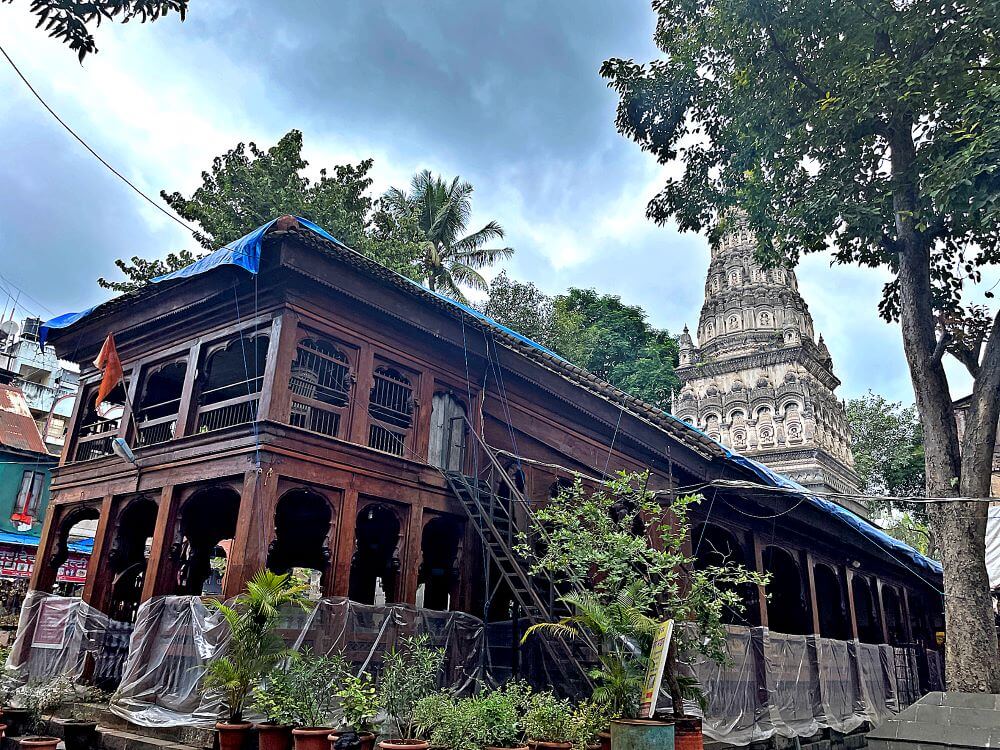
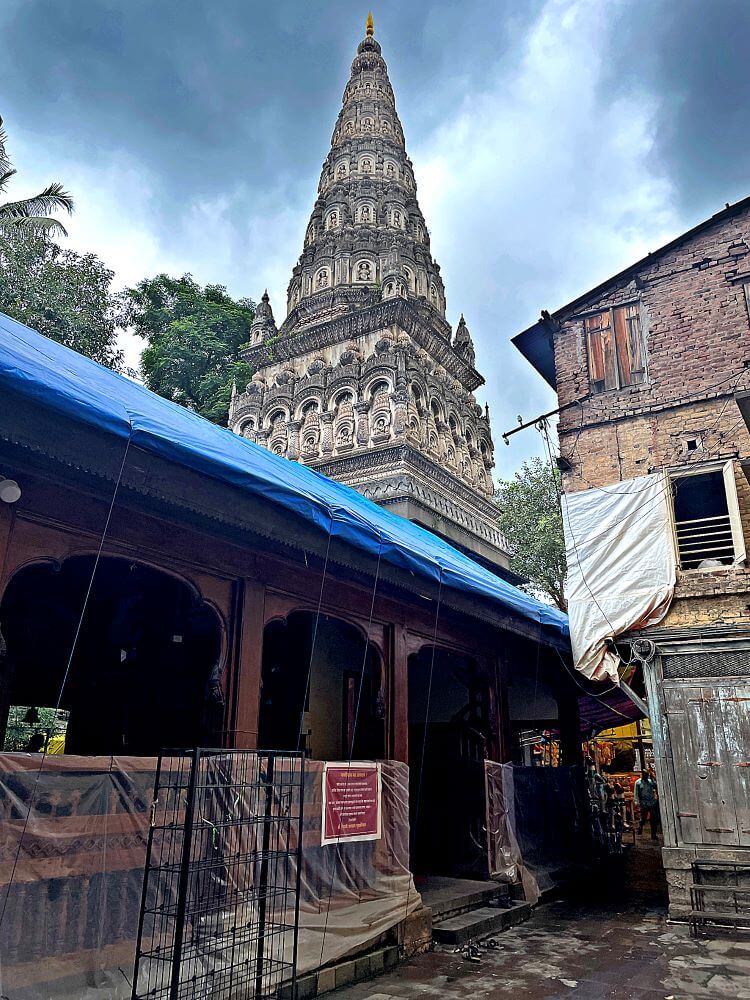
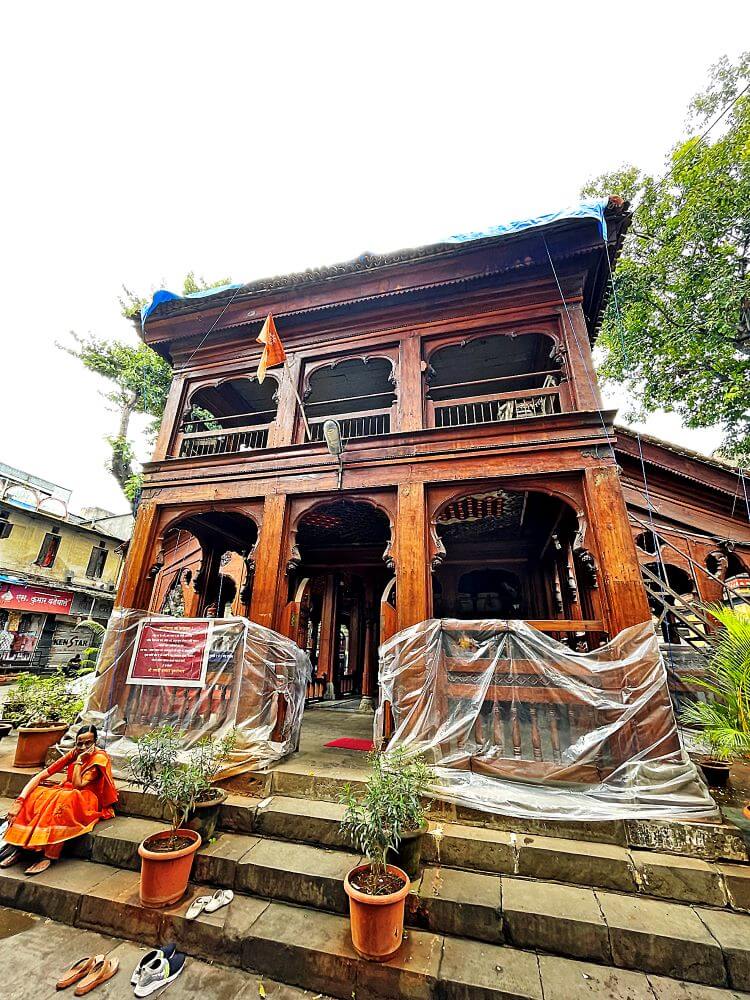
Shop Photo FramesThe Shri Ram Mandir located in Tulshibaug, in the heart of Pune, is considered an important structure from the Peshwa era. After the Battle of Panipat in 1761, Subhedar Naro Appaji Khire began the construction of this temple to boost the morale of the people. This area, situated along the Ambil Odha (stream), was once home to many Tulsi gardens, which gave the area the name ‘Tulshibaug’. Along with the temple’s spire, which stands at a height of 140 feet, the wooden assembly hall (Sabhamandap) features exquisite carvings. Beyond its historical significance, this temple remains a major spiritual and social center of Pune today.
The grand construction of this temple began in the eighteenth century. After the Third Battle of Panipat in 1761, a shadow of despair loomed over the lives of the people of Pune. During such difficult times, Naro Appaji Khire, a trusted Sardar of the Peshwas and the Subhedar of Pune, proposed the noble idea of establishing a strong foundation to uplift the spirits of the citizens and provide them with spiritual strength; with this intent, the foundation of the temple was laid in 1761. For the creation of this structure, he appointed the expert architect Nandram Naik. The construction of this temple is considered a highly significant historical event of the eighteenth century, aimed at healing the scattered hearts following the defeat at Panipat and sowing the seeds of positivity in society once again.
The construction of the temple continued for 32 years, and at that time, an expenditure of over 1.25 lakh rupees was incurred. In November 1765, the beautiful idols of Shri Ram, Lakshman, and Sita were consecrated in the temple. The renowned sculptor from Pandharpur, Umajibaba, had crafted these idols with special skill. In 1763, the ritual of installing the temple threshold was completed. During this same period, Shrimant Madhavrao Peshwa had taken a vow to build a Nagarkhana (drum house) here after winning the Battle of Kharda, and after the Marathas achieved victory, the Peshwas fulfilled their promise by erecting a large Nagarkhana.
In the nineteenth century and the modern era, the social and commercial changes in this area became noteworthy. In 1884, the descendants of the famous builder Sheth Nandram Naik carried out a major renovation of the temple’s spire and assembly hall. After the fall of the Peshwa rule, to cover the maintenance costs of the temple, space was provided for shops in the outer corridors, which led to the origin of today’s famous Tulshibaug market. Once an area containing only Tulsi plants, it has now expanded into a market favored by the people of Pune. Although the crowds around the temple have increased over time, the peace and sanctity within the temple remain undisturbed.
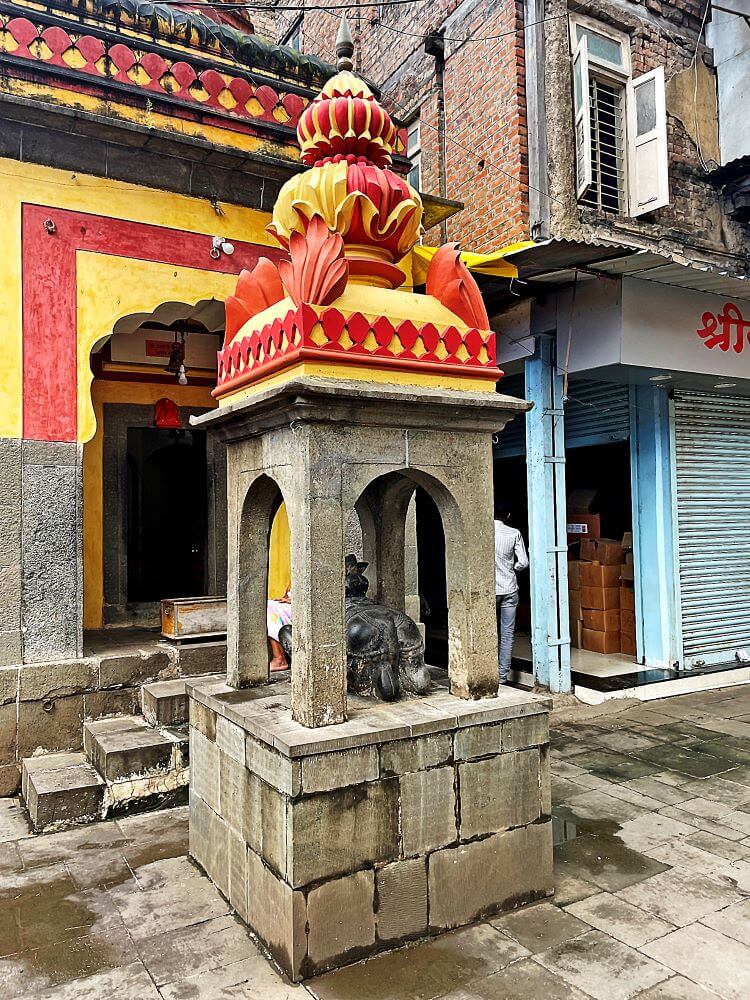
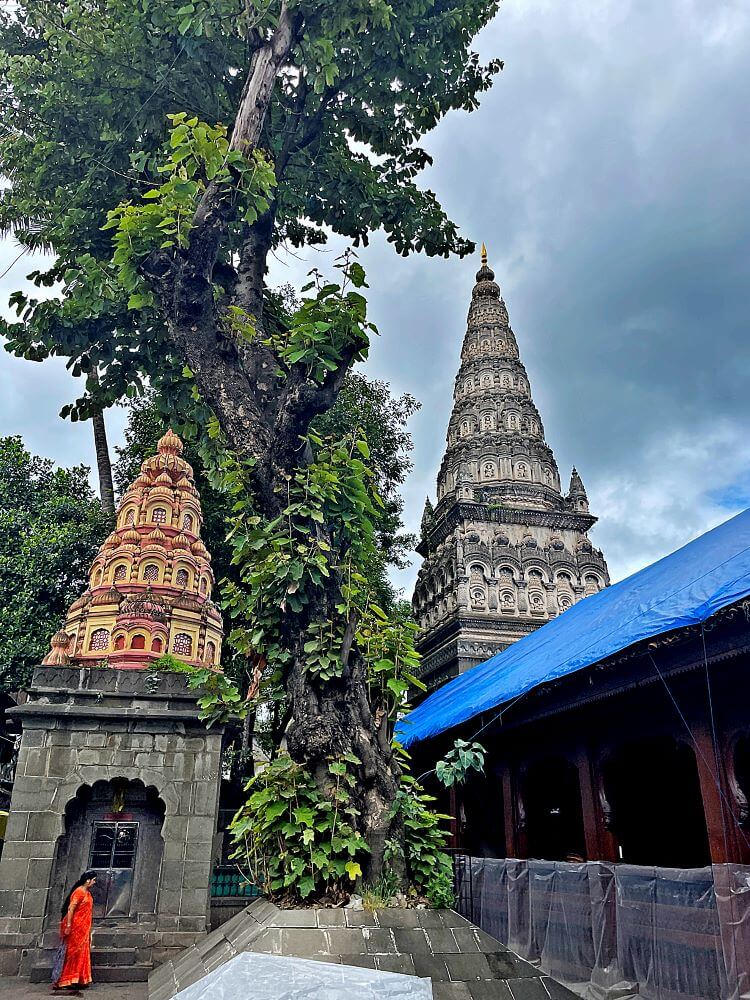
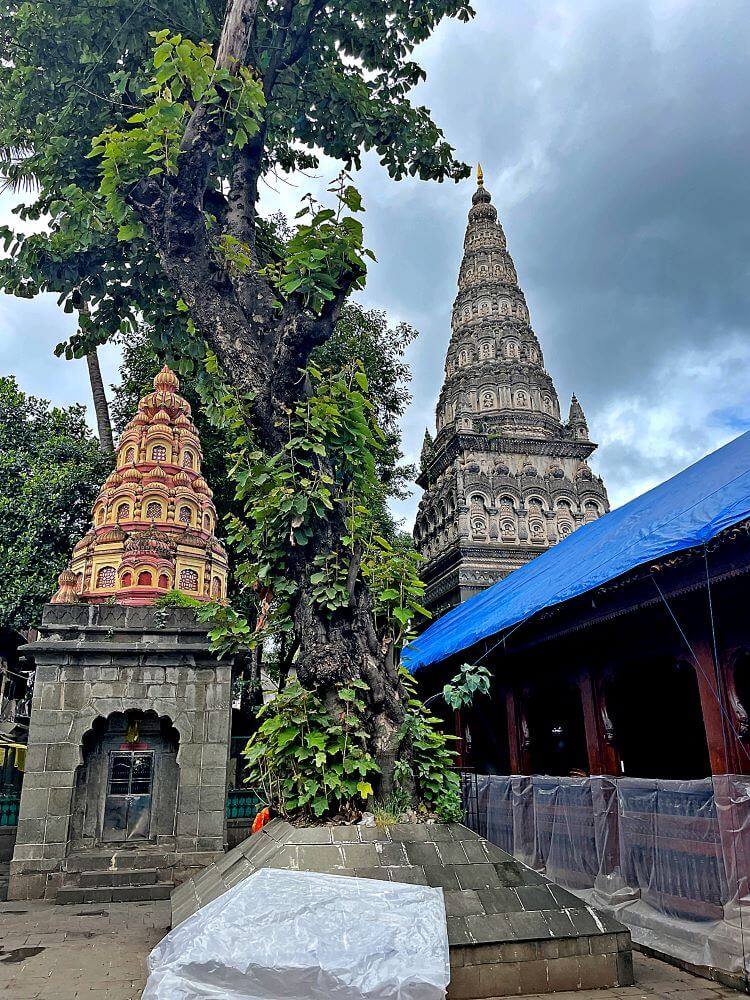
Spread over approximately one acre of land, the layout of the Tulshibaug Shri Ram Mandir complex is well-organized. Various mythological paintings are depicted on the boundary walls surrounding the temple. In the courtyard, along with the main temple of Shri Ram, there are smaller temples dedicated to Siddhivinayak Ganapati and Kashi Vishweshwar Mahadev. A stone idol of Nandi is seated in the Nandi Mandap located in front of the Mahadev temple. Directly in front of the main temple stands a 1.5-meter-tall black stone idol of Das Maruti. Due to all these sub-temples, the entire complex appears as a complete Panchayatana.
The main entrance of the temple, located to the north, bears witness to its historical grandeur. This two-story entrance, known as the ‘Dindi Darwaza’, houses a Nagarkhana. The influence of the Peshwa-era architectural style is visible on this Nagarkhana. Even today, Sanai-Chaughada music is played in this Nagarkhana at designated times. Beautiful paintings of Krishna Leela, gatekeepers, and various mythological events are painted on the walls of the Nagarkhana. One reaches the main temple through a narrow lane between rows of shops while entering from the temple gate.
The main temple’s assembly hall, which is approximately 60 feet long, 40 feet wide, and 25 feet high, is crafted from teak wood. This assembly hall is considered an excellent example of Peshwa-era wooden carving. The distinctive artistic ceiling of the assembly hall features colorful designs. There are four rows of wooden pillars, and these pillars are connected to each other by arched beams. There is distinctive, fine enamel work on the beams and the ceiling panels above the pillars. Metal lamps from the Peshwa era are fitted on the pillars here for the festival of lights. This ornate ceiling adds greatly to the interior beauty of the temple.
Beyond the assembly hall lies the Antarala (vestibule) and then the main sanctum sanctorum (Garbhagriha). The entrance to this stone-built sanctum is covered with ornate silver plating. Inside the sanctum, on a Vajrapitha (throne), are the white marble idols of Shri Ram, Lakshman, and Sita. These idols, approximately one meter in height, have pleasant and serene expressions. The idols are adorned with gold ornaments and artistic garments. Behind the idols is a beautiful, ornate silver halo. The carved wooden ceiling of the sanctum is decorated with intricate craftsmanship.
The spire built over the temple’s sanctum is considered an important jewel of Pune city and a marvel of architecture. This spire, standing at a height of 140 feet, is well-proportioned and beautiful. The structure of the spire is designed in seven layers. The bottom layer is square, and the upper six layers are circular. Sculptures of various deities and saints are carved into the niches present in each layer of the spire. At the pinnacle of the spire is a four-foot-tall gold-plated Kalash. The ornamental carvings done in lime and the use of natural colors on the spire enhance the beauty of this structure.
Various religious and cultural festivals are celebrated with great enthusiasm throughout the year at the Tulshibaug Shri Ram Mandir. The Ram Janmotsav celebrated in the month of Chaitra is the largest and most important event here. On the occasion of Ram Navami, high-quality classical music programs are organized here for nine days. This festival has a long tradition. Along with this, festivals like Ashadhi Ekadashi, Kartiki Ekadashi, and Dattajayanti are also celebrated with devotion. On the day of Dussehra, there is a special puja and festival at the temple. During the festival period, the entire temple is decorated with flowers and lights.
The temple’s daily schedule is conducted in a disciplined and traditional manner. Each day begins at 𝟓:𝟑𝟎 in the morning with the playing of the Sanai-Chaughada, followed by the Kakad Aarti. The main Aarti takes place at 𝟗:𝟎𝟎 in the morning, the Maha Naivedya in the afternoon, and the evening Aarti at 𝟕:𝟑𝟎 in the evening. On every Ekadashi, Bhajans are organized in the morning, Kirtans in the evening, and discourses at night within the temple. The temple doors close after the Shej Aarti at 𝟏𝟎:𝟎𝟎 at night. On Mahashivratri, the Laghurudra Anushthan is performed at the Shiva temple here. During Diwali, special Aartis are organized on Narak Chaturdashi and Bhaubeej.
This sacred temple stands as a testament to deep spiritual devotion, ancient architectural grandeur, and rich local cultural traditions.
The sanctum sanctorum houses the divine idol consecrated according to ancient Vedic traditions, surrounded by serene courtyards and traditional temple architecture.
Navratri, Maha Shivratri, Annual Temple Jatra & Deepotsav
Compare and book flights, secure top-rated local hotels near the temple, hire reliable guides, and rent cars instantly.
Extend your pilgrimage by visiting other highly sacred temples located nearby.


Add ₹999 more to unlock FREE SHIPPING!
Your sacred cart is currently empty.
Shop Photo FramesFill in your delivery details below to place your order.
Add comment