
Add ₹999 more to unlock FREE SHIPPING!
Your sacred cart is currently empty.
Shop Photo FramesThirumittakode Anchumoorthi Temple is an ancient Hindu temple situated on the western bank of the Bharathapuzha River in Pattambi Taluk of Palakkad district, Kerala. It is believed to be one of the 108 Shiva temples established by Lord Parashurama. The temple is unique because both Lord Shiva and Lord Mahavishnu are worshipped with equal importance. It is known as the Anchumoorthi Temple because it houses five main deities, comprising one Shiva shrine and four Vishnu shrines. The temple is also known as Thiruvithuvakkodu and is revered as one of the 108 Divya Desams praised in the Tamil hymns of the Alvars.
The history of Thirumittakode Anchumoorthi Temple is believed to date back to at least before the 9th century CE. The temple is mentioned in the Tamil hymns of Kulasekhara Alvar, the Vaishnavite saint who lived during the late 8th or early 9th century CE, indicating that it was already an important centre of worship in the Malabar region. One of the temple’s most important historical records is the Thirumittakode Inscription, dated to 1028 CE. Written in Old Malayalam using Vattezhuthu and Grantha scripts, the inscription belongs to the reign of the medieval Chera ruler Ravi Kotha. It contains references to the invasion of Kerala and the political influence of Rajendra Chola I, making it one of the rare Chola-period records found in Kerala. Historical records also suggest that the temple later had close links with the Perumpadappu Swaroopam and because of its strategic location on the banks of the Bharathapuzha River, received land grants and donations from various rulers.
According to historical records, the temple was badly damaged in a major fire that occurred after the 8th century CE. It is believed that it was later rebuilt under the guidance of the disciples of Adi Shankaracharya. During the 11th century, in the reign of the Chera ruler Ravi Kotha and under the influence of the Chola kings, extensive construction work was carried out, including the installation of stone pillars. After the decline of the Chera Kingdom of Mahodayapuram, the temple developed close ties with the Perumpadappu Swaroopam. In its early years, the temple was managed by prominent Brahmin Ooralan families of Malabar. Later, its administration came under the control of the Thachudaya Kaimal, an official appointed by the Maharaja of Travancore. This system continued even after Indian independence until the Government of Kerala officially took over the administration in 1971. Today, it is managed by the Travancore Devaswom Board. In recent years, major restoration work has been carried out by local people and devotees while preserving its traditional Kerala architecture and mural paintings. In 2013, the Kerala State Department of Archaeology also began the process of declaring it a protected historical monument.
The most famous legend associated with the temple is connected with the Pandavas from the Mahabharata. It is believed that during their exile, the Pandavas arrived on the banks of the Bharathapuzha River and decided to worship Lord Mahavishnu here. According to tradition, Yudhishthira installed the Vishnu idol in the centre, Arjuna installed the main west-facing idol, Bhima installed the idol on the left and Nakula and Sahadeva together installed the idol on the right. This legend is believed to explain why there are four Vishnu shrines within the same Nalambalam. Another legend tells of an elderly Brahmin who returned after spending many years in worship at Kashi. Saddened that he was too old to make the pilgrimage again, his deep devotion pleased Kashi Viswanatha, who is believed to have entered the Brahmin’s umbrella and come to this place on the banks of the Bharathapuzha River. For this reason, Lord Shiva here is worshipped in the form of Kashi Viswanatha.
Vaishnavite tradition also preserves a well-known legend connected with Lord Mahavishnu. According to the legend, Gajendra, the elephant devotee of Vishnu and Goddess Lakshmi were once gathering lotus flowers to worship Lord Mahavishnu. As Goddess Lakshmi collected all the lotus flowers first, Gajendra was left with none and prayed to the Lord in sorrow. Pleased with his devotion, Lord Mahavishnu appeared before him, blessed Goddess Lakshmi with an eternal place on His chest and granted the entire lotus pond to Gajendra for worship. This legend is the reason why the Tamil Alvars praised the deity here as ‘Uyyavanda Perumal’.
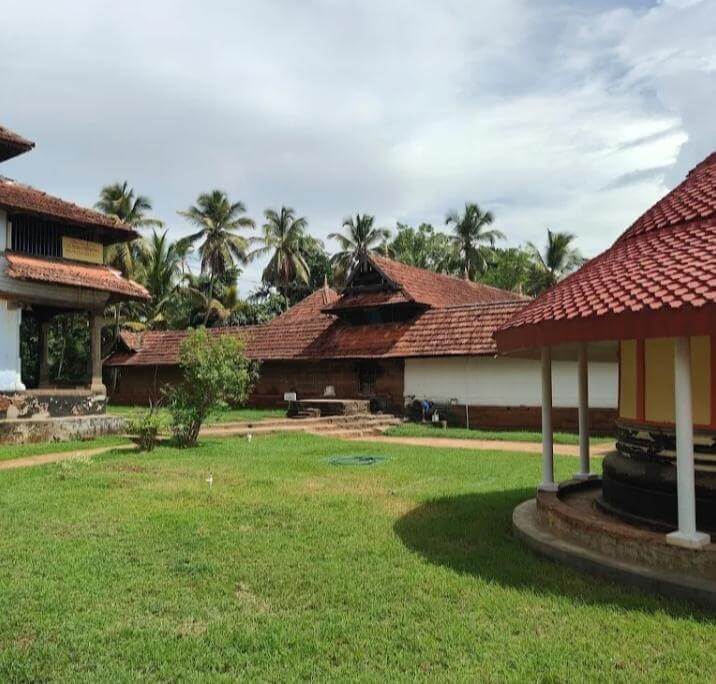
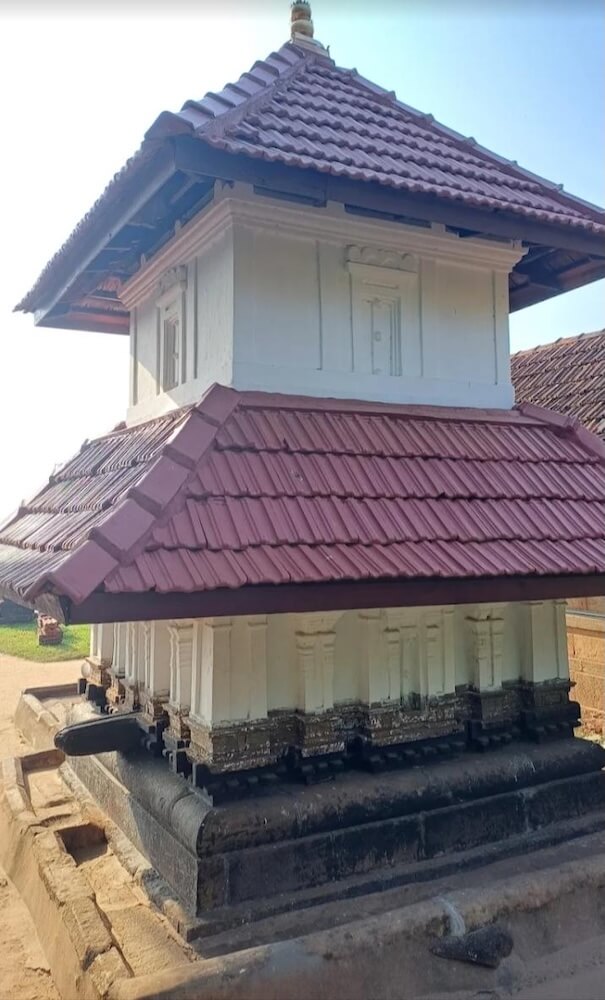
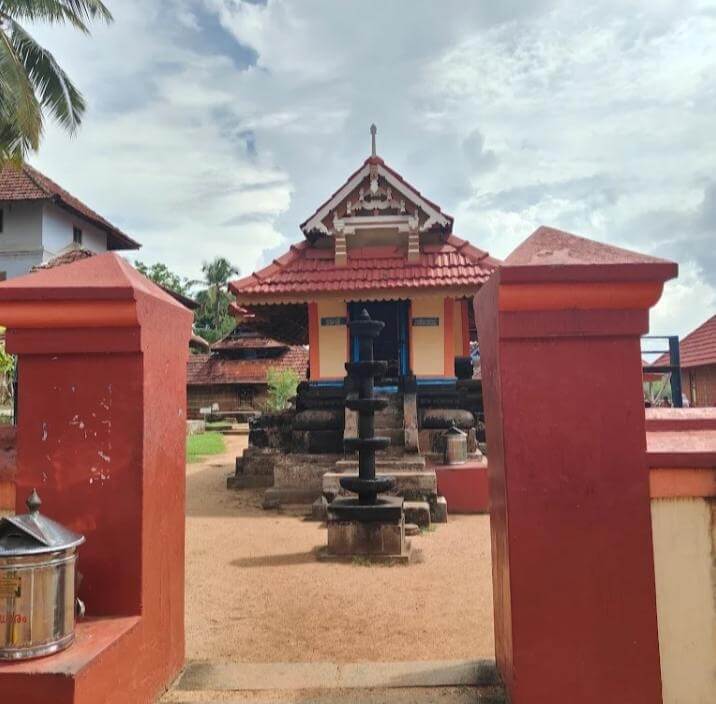
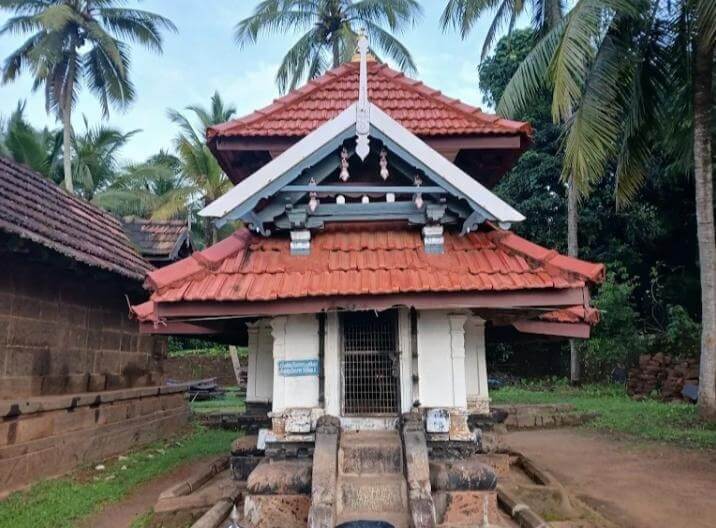
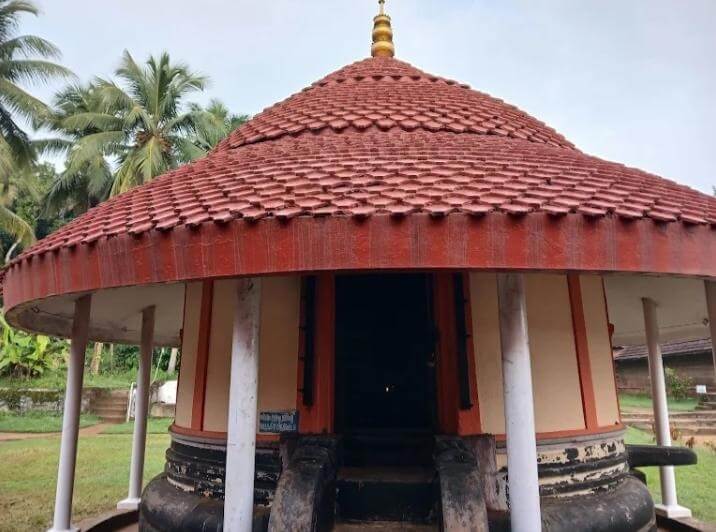
Built on a raised granite platform on the western bank of the Bharathapuzha River, the temple faces the river and stands prominently above its surroundings. Broad granite steps lead up from the riverbank, while high granite walls surround the complex. A beautiful entrance gateway, enclosing walls, sloping tiled roofs and laterite stone walls add to its traditional Kerala character. From outside, both the square and circular sanctum roofs are clearly visible. Inside, the temple has a unique layout with two separate Nalambalams divided by a small wall, unlike most Kerala temples. One of these contains a beautiful circular granite sanctum that houses the main Shiva shrine, worshipped in the form of Kashi Viswanatha. In front of the sanctum is a square Namaskara Mandapam, richly decorated with fine wooden carvings, making it an excellent example of traditional Kerala temple architecture.
A side entrance from the Shiva shrine leads to the second Nalambalam, which houses the Vishnu shrine. The main attraction here is the square sanctum. Within the same enclosure are four Vishnu shrines, believed to have been consecrated by the Pandavas. Among them, the west-facing Uyyavanda Perumal is worshipped as the principal Vishnu deity. The wooden pillars and ceilings of the sanctums and mandapams are adorned with beautiful carvings depicting scenes from Hindu mythology. Remains of traditional Kerala mural paintings can still be seen on the outer walls of the sanctums, while ancient inscriptions in the Vattezhuthu script are carved on the granite base and doorsteps, reflecting the temple’s rich history. Other deities worshipped here include Lord Ganesha in the south-west corner of the Shiva Nalambalam, Lord Sastha outside the main enclosure on the south-east side, Goddess Lakshmi, worshipped here as Vithuvakkottuvalli, near the Vishnu shrine, along with Goddess Bhadrakali, Naga deities and Brahmarakshas in the south-west outside the temple enclosure.
The temple’s main annual festival is the ten-day flag-hoisting festival held during the Malayalam month of Medam (April–May). The celebrations include special poojas, the Arattu ceremony, traditional percussion performances such as Chenda Melam and cultural programmes. The main festival for Lord Mahavishnu is celebrated on the Thiruvonam day in the Tamil month of Thai (Malayalam Makaram). Other important occasions dedicated to Lord Mahavishnu include Vaikuntha Ekadashi, Ashtami Rohini and Parashurama Jayanti on Akshaya Tritiya. Major festivals dedicated to Lord Shiva include Maha Shivaratri in the Malayalam month of Kumbham, the monthly Pradosham observance and Thiruvathira in the month of Dhanu. Special poojas and all-night devotional prayers are held during Maha Shivaratri. As the temple is located on the banks of the Bharathapuzha River, thousands of devotees gather here on Karkidaka Vavu to perform ancestral rites. In addition, special Ayilyam poojas and serpent worship rituals are conducted every month on the Ayilyam star day for the Naga deities.
The main offerings made to Lord Mahavishnu at the temple include Palpayasam, Vennai Nivedyam (offering of butter), Vishnu Sahasranama Archana and offering a Tulsi garland. Devotees perform these offerings for the blessings of children, prosperity, family well-being and the fulfilment of their wishes. The principal offerings to Lord Shiva, worshipped in the form of Kashi Viswanatha, include Jaladhara, Ksheeradhara, Shankhabhishekam, offering a Bilva leaf garland and Pinvilakku (lighting a lamp behind the sanctum). These are performed for peace of mind, good health, relief from difficulties and the removal of obstacles in life. As the temple is located on the banks of the Bharathapuzha River, it is also well known for ancestral rites. Many devotees visit to perform Bali Tharpanam and Thilahavanam for the peace of their ancestors’ souls and to seek relief from ancestral afflictions. Offerings to the other deities include Ottayappam and a Karuka grass garland to Lord Ganesha for the removal of obstacles and success, Neyyabhishekam and lighting sesame oil lamps to Lord Ayyappa for prosperity and the fulfilment of wishes and Palumootal and Naranga Vilakku to the Naga deities for relief from Naga Dosha and the well-being of the family.
The temple opens every day at 5:00 AM with Nirmalya Darshan. This is followed by separate Usha Poojas for Lord Shiva and Lord Mahavishnu at 5:30 AM, Ethirettu Pooja and Sreebali at 7:30 AM, Ucha Pooja at 9:30 AM and the midday Sreebali at 10:15 AM. The temple closes at 10:30 AM. It reopens at 5:00 PM, followed by Deeparadhana at 6:30 PM and Athazha Pooja with the night Sreebali at 7:00 PM. The temple closes for the day at 7:15 PM. During special occasions such as Maha Shivaratri, Vaikuntha Ekadashi, the Mandala season and the annual festival, the pooja timings may vary and the temple remains open until late at night.
This sacred temple stands as a testament to deep spiritual devotion, ancient architectural grandeur, and rich local cultural traditions.
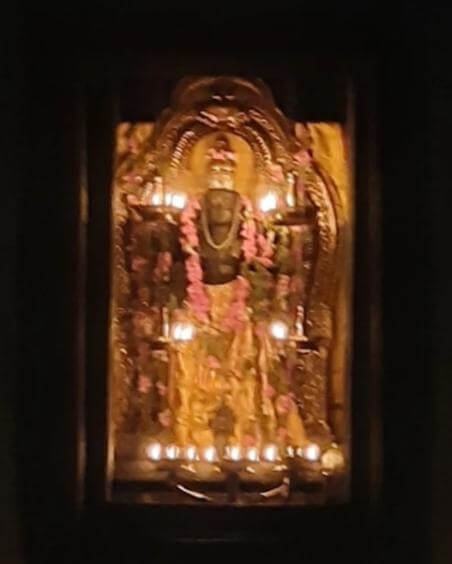
The sanctum sanctorum houses the divine idol consecrated according to ancient Vedic traditions, surrounded by serene courtyards and traditional temple architecture.
Navratri, Maha Shivratri, Annual Temple Jatra & Deepotsav
Compare and book flights, secure top-rated local hotels near the temple, hire reliable guides, and rent cars instantly.
Extend your pilgrimage by visiting other highly sacred temples located nearby.


Add ₹999 more to unlock FREE SHIPPING!
Your sacred cart is currently empty.
Shop Photo FramesFill in your delivery details below to place your order.
Add comment