
Add ₹999 more to unlock FREE SHIPPING!
Your sacred cart is currently empty.
Shop Photo FramesPundareekapuram Sri Mahavishnu Temple is a famous and ancient Hindu temple situated on Midayikkunnu Hill near Thalayolaparambu in Kottayam district. Surrounded by a peaceful natural setting, the temple is well known for its traditional Kerala architecture and beautiful mural paintings. Because of its historical and artistic importance, the temple is protected by the Archaeology Department. The temple is owned by the Velimamkovil Illam.
Based on its architectural style, historians believe that the temple was built between the 13th and 15th centuries. The temple, with its traditional Kerala-style square sanctum (Sreekovil), Chuttambalam and Balikkalpura, was once owned by the well-known Velimamkovil Illam. Archaeologists believe that the beautiful mural paintings on the walls of the sanctum were created during the second half of the 18th century or the first half of the 19th century, particularly between AD 1800 and 1837. The detailed depiction of flintlock rifles used by the British Army in the hunting scenes, along with the use of natural pigments made from plants and stones, helps to establish the historical importance of these paintings. To preserve this valuable historical and artistic heritage, the temple and its mural paintings have been declared a protected monument by the Central and State Archaeology Departments.
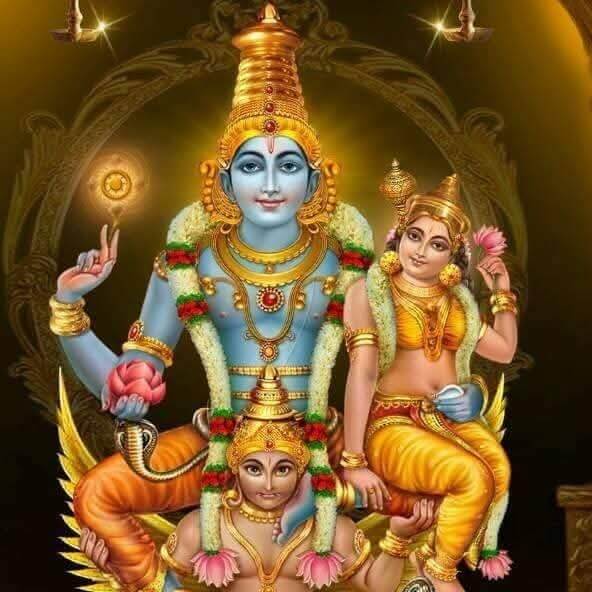
According to local tradition, a senior member of the Velimamkovil Illam once went to bathe in the Muvattupuzha River. There, he noticed tulsi leaves moving against the flow of the river. Curious, he dived into the water and found a sacred idol, which was later installed on 1 Hill. It is believed that this marked the beginning of the temple. There is also a local legend about the temple’s mural paintings. One evening, after the evening puja, three Brahmin pilgrims arrived at the temple and were given permission by the head priest to stay in the Balikkalpura for the night. By the next morning, the pilgrims had disappeared, but beautiful mural paintings had appeared on the walls of the sanctum. Devotees believe that they were not ordinary men, but either Vishwakarma, the divine architect, or messengers of the Lord. The main idol is believed to represent the fierce Vishwaroopa form of Lord Krishna. According to legend, it depicts Lord Krishna returning on Garuda with Sathyabhama after slaying Narakasura. In this rare form, Lord Krishna is seated on Garuda’s shoulder, while Sathyabhama is seated on His lap. It is also believed that Garuda shares the Lord’s fierce expression in this unique form.
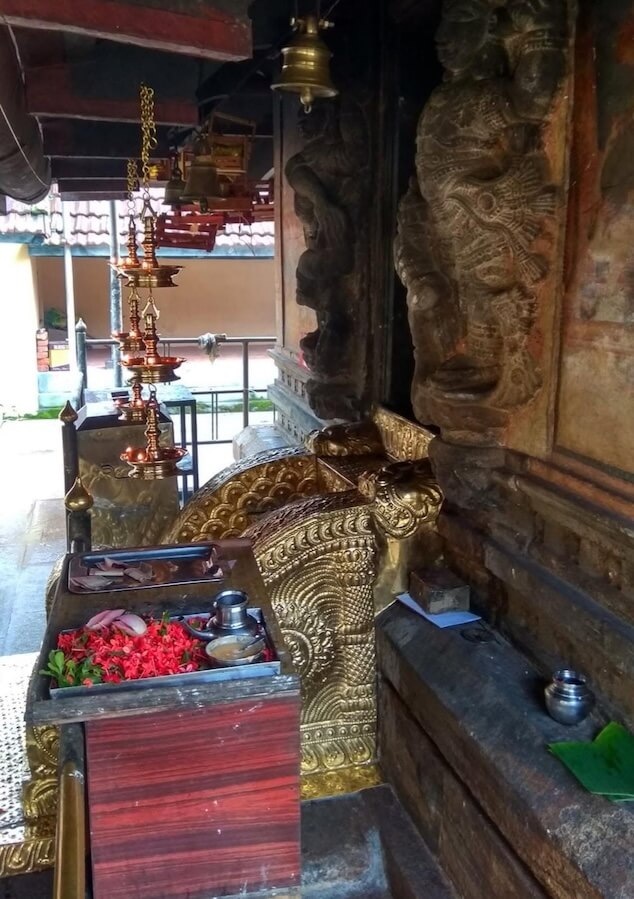
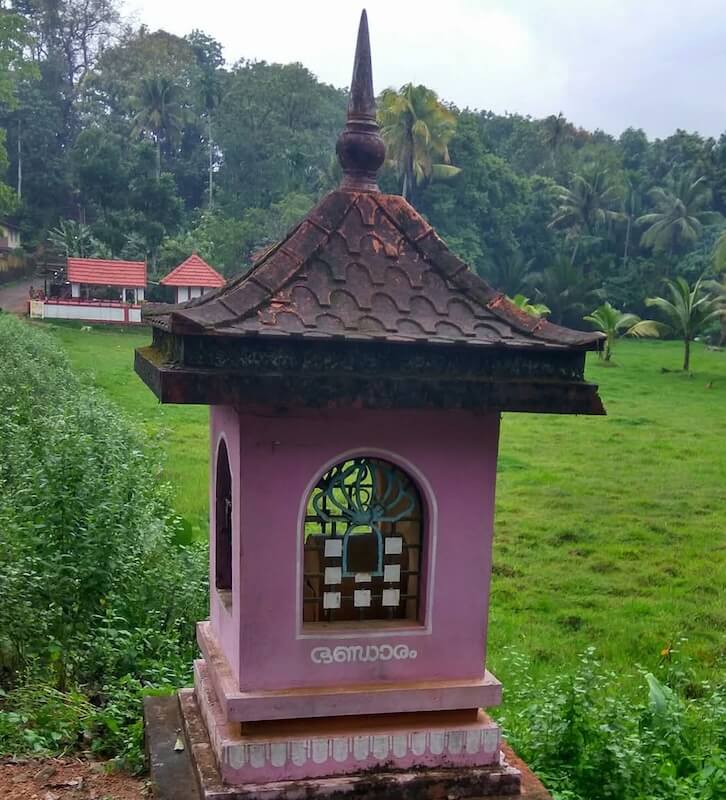
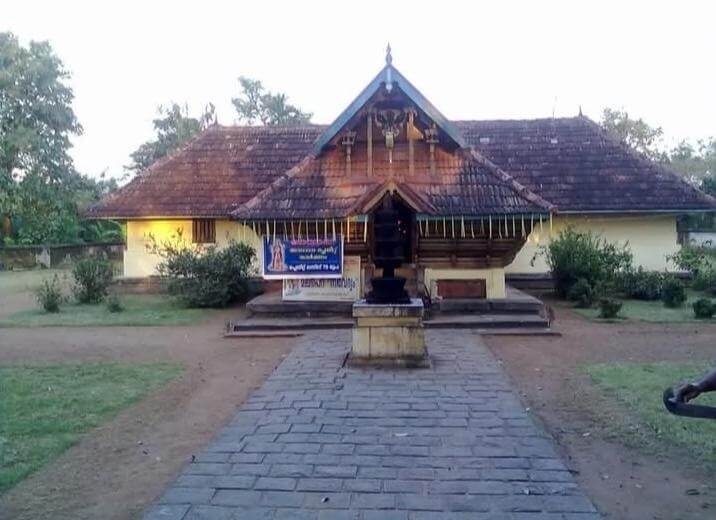
Pundareekapuram Sri Mahavishnu Temple is a charming village temple that preserves the beauty of traditional Kerala architecture without any grand or elaborate structures. Set amidst the peaceful surroundings of Midayikkunnu Hill, the temple has no towering gopurams or massive compound walls. A small tiled entrance gateway leads into the temple courtyard, where devotees can see the white-walled Chuttambalam and the tiled Balikkalpura, decorated with beautiful wooden carvings and housing a large Bali stone. The front of the Balikkalpura is supported by finely carved wooden pillars. A small square Namaskara Mandapam, built with wooden pillars, stands directly in front of the sanctum.
The sanctum (Sreekovil) is built in the traditional Kerala style with a square plan. Its walls, built of granite and laterite, are decorated with the temple’s famous mural paintings. The sanctum has a two-tiered tiled roof topped with a copper finial (Thazhikakudam). The Sopanam, the stone steps leading to the sanctum, has a simple design with beautiful stone carvings on either side. Sculptures of Dwarapalakas (guardian deities) are carved on both sides of the sanctum entrance. The main idol is a four-armed form of Lord Mahavishnu carved from black stone. However, it is believed to represent the Vishwaroopa form of Lord Krishna returning on Garuda with Sathyabhama after slaying Narakasura. This rare form, showing Garuda carrying the Lord with Sathyabhama seated on His lap, is one of the few Vishnu representations of its kind in Kerala. Although the main deity is Mahavishnu, the rituals and offerings are performed in the concept of the fierce form of Lord Krishna.
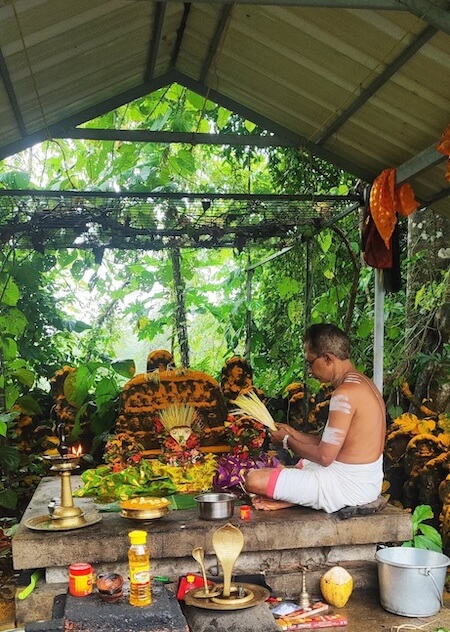
Apart from the main deity, the temple has several other deities. Lord Ganesha and Lord Dakshinamurthy are installed on the southern side of the sanctum. A unique feature of these shrines is that devotees cannot see the idols directly. Instead, they are viewed through a small opening in the sanctum wall using only one eye. Lord Narasimha is installed on the western side of the sanctum, facing west. In addition, naga deities, including Nagaraja, are enshrined on a separate naga platform located to the north-west of the Chuttambalam.
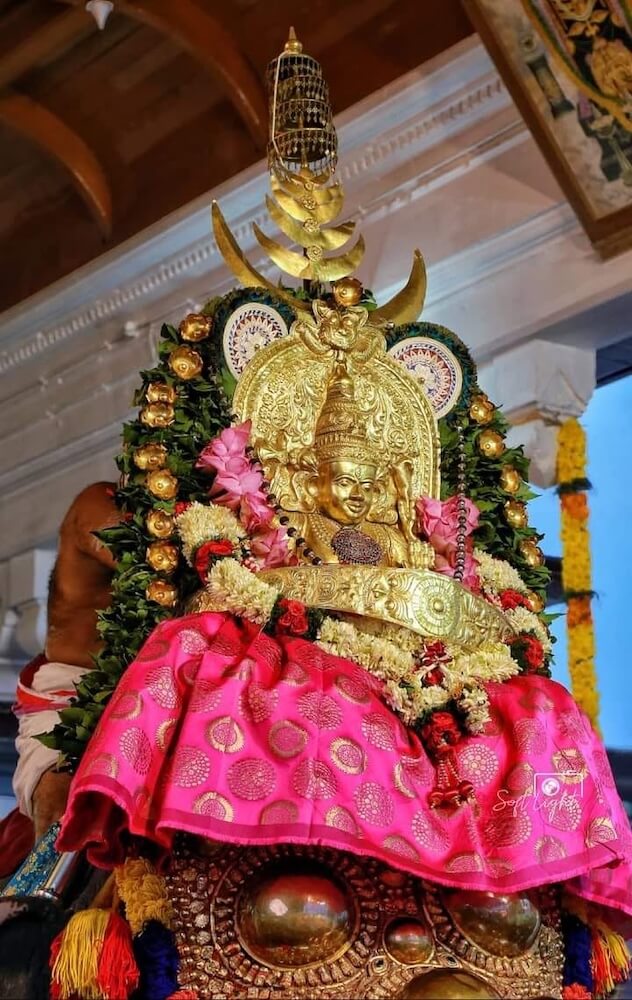
The main festivals celebrated here are Sri Krishna Jayanthi (Ashtami Rohini), Deepavali, Vishu, the Mandala season and the annual consecration festival. During Sri Krishna Jayanthi, celebrated in the Malayalam month of Chingam (August–September), special pujas, Dhara and special offerings are conducted. Deepavali, celebrated during October–November, is also observed with great importance and the entire temple is illuminated with traditional oil lamps. Vishu, celebrated in the Malayalam month of Medam (April), is marked by the Vishukkani and special pujas. During the Mandala season, from 1 Vrischikam to 11 Dhanu (November–January), special lamp offerings and special pujas are conducted for Lord Narasimha and Lord Sastha. In addition, the annual consecration festival is celebrated every year under the chief priesthood of the Tantri, with rituals such as purification ceremonies, Kalashabhishekam and Prasadam Oottu.
Among the main offerings, Dhara is the most unique. Although this offering is usually associated with Shiva temples, it is performed here for Lord Mahavishnu based on the belief that the sacred idol was recovered from a river and represents the Lord in a fierce form. Other important offerings include Malarpara Nivedyam for the fulfilment of wishes, Palpayasam and butter for the grace of Lord Vishnu and the intellectual growth of children, Set Mundu offering for a happy marriage and family prosperity and Tulsi garlands for peace of mind and relief from difficulties. Offerings to the other deities include Shatru Samhara Pushpanjali for Lord Narasimha, Appam, Modakam and Karuka Mala for Lord Ganesha and Palum Noorum for the naga deities.
The temple opens daily at 05:00 AM with Nirmalya Darshanam. This is followed by Usha Puja at 05:30 AM and Ucha Puja at 09:00 AM. The temple closes for the morning at 09:30 AM. It reopens at 05:30 PM, followed by Deeparadhana at 06:00 PM, Athazha Puja at 07:30 PM and Thrippuka at 08:00 PM, after which the temple closes for the day. Puja timings may vary slightly on festival days and other special occasions.
This sacred temple stands as a testament to deep spiritual devotion, ancient architectural grandeur, and rich local cultural traditions.
The sanctum sanctorum houses the divine idol consecrated according to ancient Vedic traditions, surrounded by serene courtyards and traditional temple architecture.
Navratri, Maha Shivratri, Annual Temple Jatra & Deepotsav
Compare and book flights, secure top-rated local hotels near the temple, hire reliable guides, and rent cars instantly.
Extend your pilgrimage by visiting other highly sacred temples located nearby.


Add ₹999 more to unlock FREE SHIPPING!
Your sacred cart is currently empty.
Shop Photo FramesFill in your delivery details below to place your order.
Add comment