
Add ₹999 more to unlock FREE SHIPPING!
Your sacred cart is currently empty.
Shop Photo FramesThalayolaparambu Thirupuram Sree Krishna Swamy Temple, located in Thalayolaparambu in Kottayam district, is one of the prominent Vaishnavite temples in the region. Lord Krishna, the incarnation of Mahavishnu, is the principal deity worshipped here. Rich in history, tradition and spiritual significance, the temple attracts numerous devotees throughout the year.
The exact origin and founder of Thirupuram Sree Krishna Swamy Temple remain unknown, as no definitive historical records are available today. However, the temple is deeply connected to the cultural and historical development of the Thalayolaparambu region. It is believed to be around 300–400 years old and is thought to have been established during the reign of the Vadakkumkoor dynasty. During that period, the temple was reportedly administered and protected by prominent Nair families and local community leaders.
In the eighteenth century, when Anizham Thirunal Marthanda Varma annexed the Vadakkumkoor kingdom to Travancore, the temple came under the administration of the Travancore state. Subsequently, its properties and management were brought under royal supervision. In the early nineteenth century, the famous market established by Velu Thampi Dalawa at Thalayolaparambu contributed significantly to the region’s growth. As merchants and settlers moved into the area, the nearby Thirupuram Temple gradually evolved into an important spiritual and social centre for the local community.
Following the end of princely rule, the temple came under the administration of the Travancore Devaswom Board in 1949 through the Travancore-Cochin Devaswom regulations. Today, it is a major temple under the Vaikom Group of the Travancore Devaswom Board. Like many ancient temples in Kerala, no inscriptions or palm-leaf manuscripts indicating the exact year of construction are publicly available. Nevertheless, its centuries-old traditions and uninterrupted worship testify to its antiquity and significance.
According to a popular legend associated with the temple, this region was once covered by dense forests where a sage performed intense penance, worshipping Lord Vishnu for many years. Pleased by his unwavering devotion, Lord Krishna appeared before him in a divine four-armed form, holding the conch, discus, mace and lotus.
The legend further states that the sage consecrated an idol based on the divine form he witnessed. It is also believed that the place came to be known as “Thirupuram” because it was sanctified by the direct appearance of the Lord. The word “Thiru” signifies sacredness, while “Puram” refers to a place or settlement, together meaning a holy abode blessed by divine presence.
Devotees also associate the temple’s famous Pakal Pooram festival with this sacred tradition. The festival is regarded as a symbolic celebration in which celestial beings, nature and devotees alike participate in honoring the Lord. It is also considered a symbol of unity and cultural harmony among the local people.
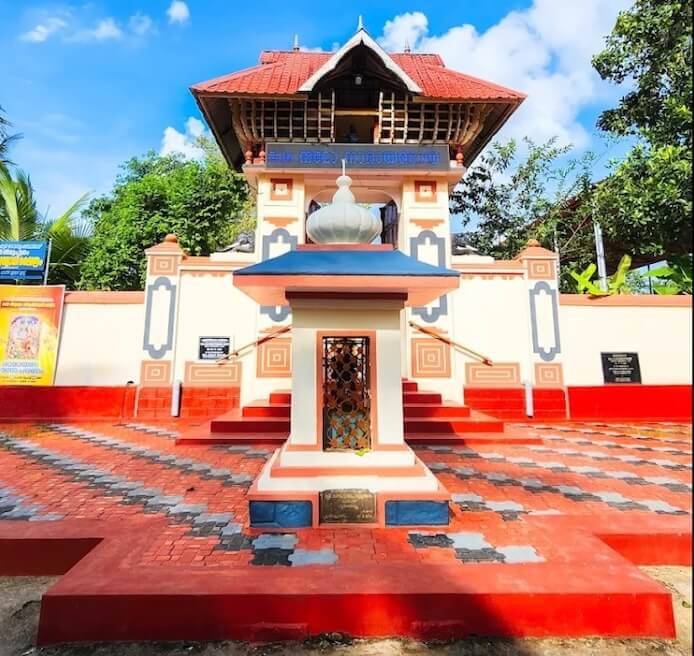
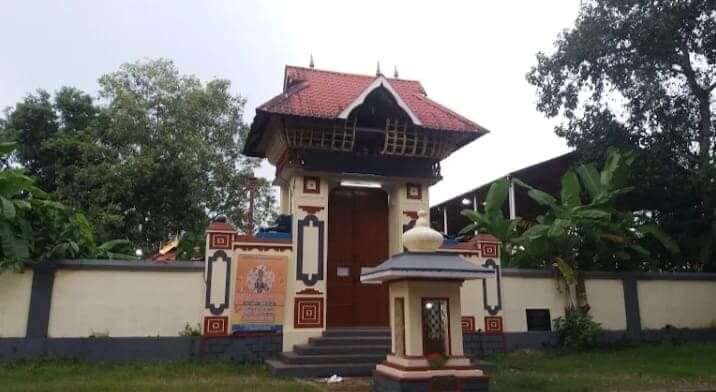
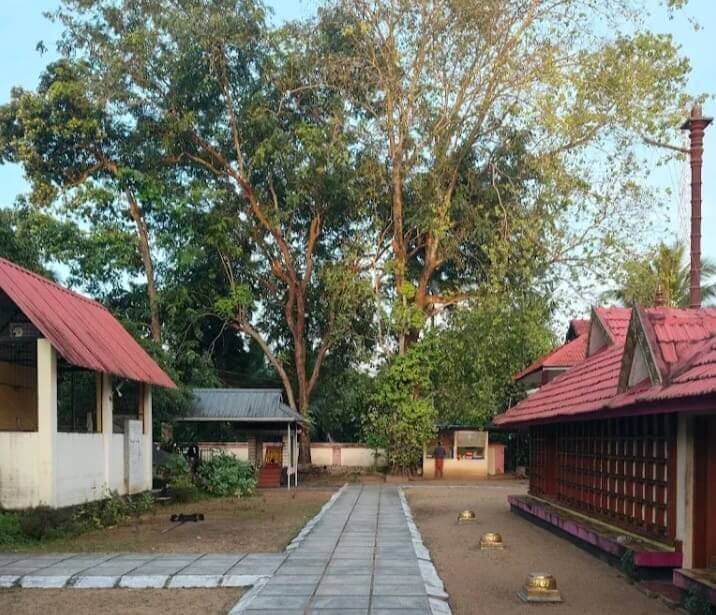
Visitors are first welcomed by the temple’s traditional Kerala-style entrance tower (Gopuram). Beyond the gateway lies a spacious sand-covered courtyard surrounded by greenery. Adjacent to the courtyard stands a large elephant pavilion, where caparisoned elephants and percussion ensembles assemble during festivals and where devotees gather on regular days.
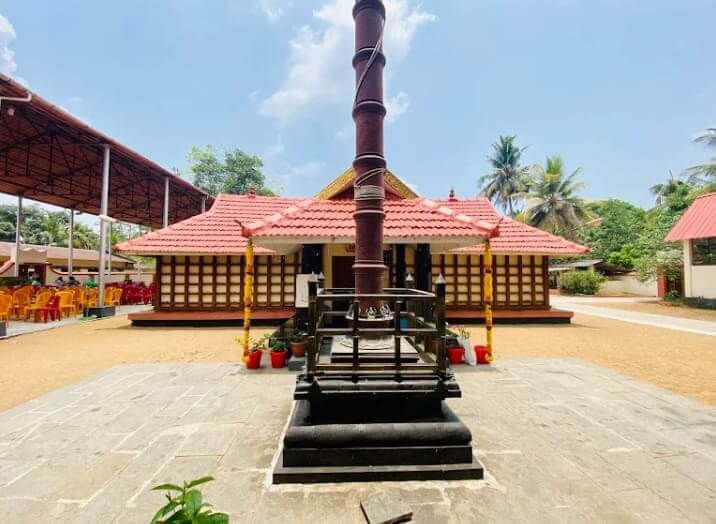
At the centre of the pavilion rises the majestic flagstaff (Kodimaram), where the ceremonial flag hoisting marking the commencement of the annual festival takes place. Sculptures representing the Ashta Dikpalakas (guardians of the eight directions) can be seen at its base. Behind the flagstaff stands a large sacrificial stone (Balikkal), believed to symbolise Harivahana, the principal attendant of the Lord.
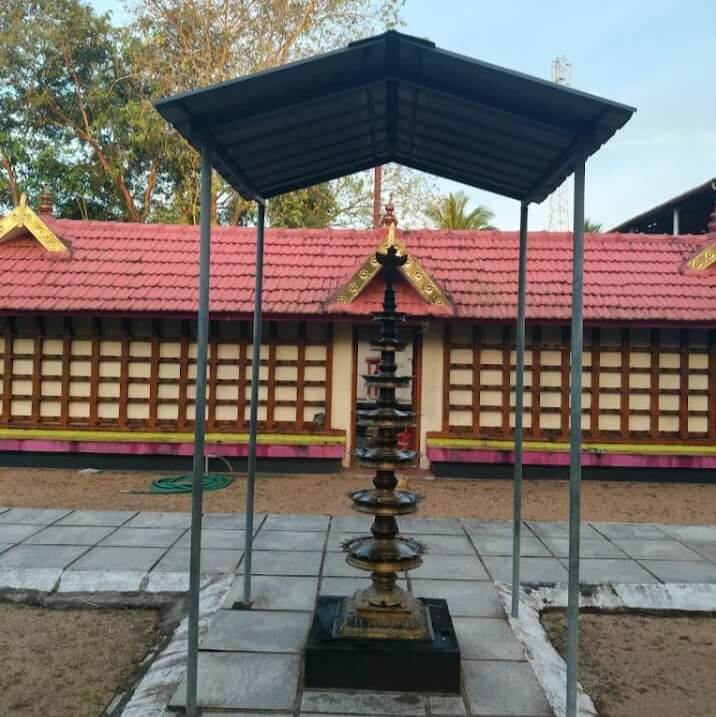
The Nalambalam, the main temple structure, lies beyond this point. Traditional rows of oil-lamp holders adorning its outer walls enhance the temple’s beauty, especially when illuminated during evenings and festival occasions.
Looking directly through the Nalambalam entrance, devotees can see the square-shaped Sreekovil (sanctum sanctorum). Built in traditional Kerala architectural style using granite and laterite stone, the sanctum faces east. Its roof is constructed with timber and traditional tiles and is protected with copper plating. A sacred finial (Stupika) crowns the structure.
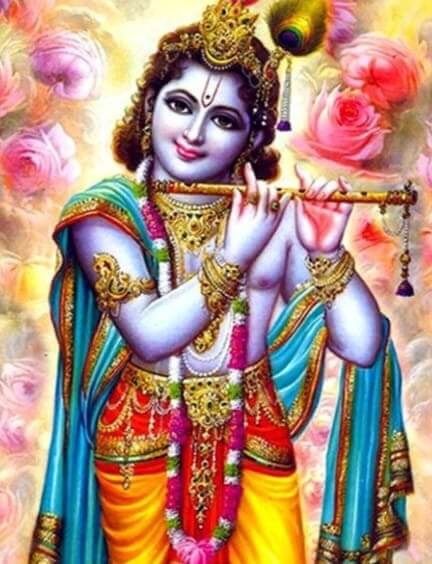
The principal deity is Lord Krishna, revered as the complete incarnation of Mahavishnu. The deity is consecrated in a four-armed form holding the conch (Panchajanya), discus (Sudarshana Chakra), mace and lotus.
The temple complex also houses several sub-shrines. Lord Ganesha is consecrated in the south-western corner within the Nalambalam. Lord Shiva is worshipped in a separate shrine behind the Nalambalam in the form of a Shiva Linga. Lord Sastha has a dedicated shrine on the south-western side outside the Nalambalam. Goddess Bhagavathy is worshipped in a sacred grove-like setting on the north-eastern side. A Nagar Kavu (Naga grove) situated in the north-western corner houses the deities Nagaraja and Nagayakshi.
The temple’s principal annual celebration is the ten-day festival held during the Malayalam month of Vrischikam (November–December). The highlight of the festival is the renowned Thirupuram Pakal Pooram, celebrated during the concluding days. Featuring a grand procession of decorated elephants, magnificent umbrella exchanges and traditional percussion performances inspired by the Thrissur Pooram style, the event attracts devotees and cultural enthusiasts from far and wide.
Ashtami Rohini, the birthday of Lord Krishna, is celebrated with great devotion during the Malayalam month of Chingam (August–September). The Mandala season, observed from Vrischikam 1 to Dhanu 11, is another important period in the temple calendar.
Vishu, celebrated in the Malayalam month of Medam (April), is marked by the traditional Vishukkani and Vishukkaineettam ceremonies. In addition, Rohini, the birth star of Lord Krishna, is observed every month with special prayers and offerings.
The observance of Ramayana Masam during the Malayalam month of Karkidakam (July–August) is another significant spiritual event. During this period, Ramayana recitations, special poojas and devotional activities continue throughout the month.
Major offerings to Lord Krishna include Thrikkai Venna Charthal (offering of butter), Palpayasam, Purusha Sukta Pushpanjali, Santhana Gopala Pooja, Chathussatham and Tulasi Mala Samarpanam. Butter offering is believed to promote mental peace and the well-being of children, while Palpayasam is offered for prosperity and fulfillment of wishes. Purusha Sukta Pushpanjali is performed for health and longevity and Santhana Gopala Pooja is conducted by couples seeking the blessing of children. Chathussatham and Tulasi garland offerings are also important devotional offerings.
Among the sub-deities, devotees offer Ganapathi Homam and Appam Moodal to Lord Ganesha; Dhara and Bilva garlands to Lord Shiva; Ellu Vilakku and Ellu Payasam to Lord Sastha; Lalitha Sahasranama Pushpanjali and Pattu Charthal to Goddess Bhagavathy; and Noorum Palum to the Naga deities on Ayilyam star days.
The temple opens daily at 5:00 AM with Nirmalya Darshanam. Abhishekam and Malar Nivedyam are offered at 5:30 AM, followed by Usha Pooja at 6:15 AM and Ethirettu Pooja at 7:00 AM. Ucha Pooja is performed at 10:30 AM, after which the temple closes at 11:00 AM. The temple reopens at 5:00 PM. Deeparadhana is offered at 6:30 PM, followed by Athazha Pooja at 7:30 PM. The temple closes for the day at 8:00 PM. Timings may vary slightly on festival days and special occasions.
This sacred temple stands as a testament to deep spiritual devotion, ancient architectural grandeur, and rich local cultural traditions.
The sanctum sanctorum houses the divine idol consecrated according to ancient Vedic traditions, surrounded by serene courtyards and traditional temple architecture.
Navratri, Maha Shivratri, Annual Temple Jatra & Deepotsav
Compare and book flights, secure top-rated local hotels near the temple, hire reliable guides, and rent cars instantly.
Extend your pilgrimage by visiting other highly sacred temples located nearby.


Add ₹999 more to unlock FREE SHIPPING!
Your sacred cart is currently empty.
Shop Photo FramesFill in your delivery details below to place your order.
Add comment