
Add ₹999 more to unlock FREE SHIPPING!
Your sacred cart is currently empty.
Shop Photo FramesThe village of Meriya, nestled within the Bodeli taluka of Chhota Udepur, serves as the sacred home of a renowned temple dedicated to Lord Hanuman in His child form. This holy sanctuary, widely celebrated as the ‘Bala Hanuman Temple’, possesses a historical antiquity spanning approximately two to three centuries. It has undergone extensive restoration in recent times. Within Hindu theological traditions, Hanuman is revered as the eleventh Rudra manifestation of Lord Shiva. As the glorious offspring of Vayudev and Anjana Mata, Maruti’s boundless prowess and absolute devotion are universally celebrated. Among the numerous names attributed to the deity, ‘Bala Hanuman’ holds a deeply cherished place in the hearts of the congregation, evokes the divine innocence of His childhood form. Gracefully positioned along the banks of the Orsang River in Meriya village, this temple stands distinguished as a pre-eminent bastion of faith for the regional community.
According to classical scriptural accounts preserved within the Kishkindha Kanda and Uttara Kanda of the Valmiki Ramayana, as well as the Shiva Purana, Bala Hanuman represents the childhood manifestation of Hanuman. According to these scriptures, Hanuman was born to Mother Anjana and king Kesari. Blessed at birth by the holy breath of the wind deity, He is also universally designated as Pavana-putra (the son of the wind). As recounted in the Brahmanda Purana and the Uttara Kanda of the Valmiki Ramayana, the young Hanuman was once seized by an overwhelming hunger during His childhood. Gazing up at the morning sky, He beheld the rising sun and mistaking the glowing orb for a luscious, brilliantly red, ripe fruit; leaped directly towards the solar deity with astonishing velocity.
Beholding the young child hurtling through the sky towards the Sun, Indra, the king of the gods, feared that an unprecedented catastrophe was about to engulf the cosmos. To avert this perceived peril, Indra hurled his thunderbolt (Vajra) at the ascending child. The powerful strike wounded the young deity’s jaw, causing Him to fall unconscious back to the earth. In the classical Sanskrit language, the jaw is termed ‘hanu’ and it was this profound celestial event that earned Him the permanent name of Hanuman. Witnessing his infant son lying motionless, Vayudev was consumed by absolute fury and instantly withheld the flow of the life-giving air current across the entire cosmos. The sudden cessation of breath plunged all living creation into immediate jeopardy, unleashing widespread panic throughout the universe.
To rectify this perilous state of existence, Lord Brahma, Lord Shiva and the entire assembly of celestial deities converged to placate Vayudev. They gently restored the young Hanuman to full consciousness and thereafter, collectively showered Him with an array of extraordinary divine blessings. Lord Brahma bestowed upon Him the boon of exceptional longevity and absolute immunity from death by any weapon. The solar deity, Surya, imparted a fraction of his own brilliant radiance and pledged to educate Him in the absolute mastery of all sacred scriptures.
Yama, the lord of death, liberated Him from the terror of mortality, while Kubera blessed Him with perpetual invincibility in battle. Indra declared that his thunderbolt would never again possess the power to harm Him and Vishwakarma rendered Him completely safe from the effects of all material weapons.
In accordance with the spiritual traditions outlined within the Skanda Purana and various sacred treatises, the ritual adoration of Bala Hanuman is performed to attain inner strength, intellectual refinement and absolute fearlessness. The worship of this childhood form is widely embraced across countless households, specifically to invoke divine protection for young children and to banish their anxieties. The consecrated icon of Bala Hanuman is found enshrined across numerous ancient sanctuaries throughout India. Within this devotional matrix, immense spiritual importance is assigned to the recitation of the Maruti Stotra and Bhimarupi Stotra composed by Samarth Ramdas Swami, alongside the timeless verses of the Hanuman Chalisa penned by Goswami Tulsidas. Notably, in the city of Jamnagar in Gujarat, situated along the scenic banks of the Ranmal Lake, stands a celebrated Bala Hanuman Sankirtan temple. This institution has maintained uninterrupted chanting of the holy ‘Ram Dhun’ since 1964, a historic devotional feat that has earned it a prestigious entry into the world records.
A fascinating hagiographical legend prevails regarding the genesis of the sanctuary at Meriya. It is recounted that a devout ascetic once sat upon the summit of a towering hill, completely immersed in the continuous chanting and contemplation of Hanuman’s name, driven by an intense yearning to experience the direct presence of the deity. Moved by his devotion, Hanuman manifested within his dream, disclosing that He would soon grant him a direct audience in the waking world. A few days passed following this revelation. While the ascetic sat absorbed in deep meditation, a young child suddenly appeared before him. The child gently shook the ascetic to awaken him from his trance and enquired, “Why do you sit here with your eyes tightly closed?” Deeply annoyed by this
interruption to his spiritual practice, the ascetic replied, “I am adoring Hanuman and the Lord will soon manifest before me.” The child smiled and remarked, “Adoring the divine with closed eyes will never grant you His vision,” and dissolving back into the ether. Following this encounter, the ascetic returned to his meditation, only to be visited by Hanuman once more in his sleep. The Lord revealed, “I arrived at your doorstep in the form of a young child, yet because your eyes were closed in absolute immersion, you failed to perceive My presence.” Upon realizing the true meaning of the encounter, the ascetic was overcome with profound repentance. He immediately consecrated an idol of Hanuman in His childhood form upon that very spot and erected a permanent temple. Because the deity chose to manifest as a child, He became universally adored by the local congregation as Bala Hanuman. Devotees hold an unshakeable faith that offering prayers to Bala Hanuman effectively dissolves all structural obstacles and anxieties in life.
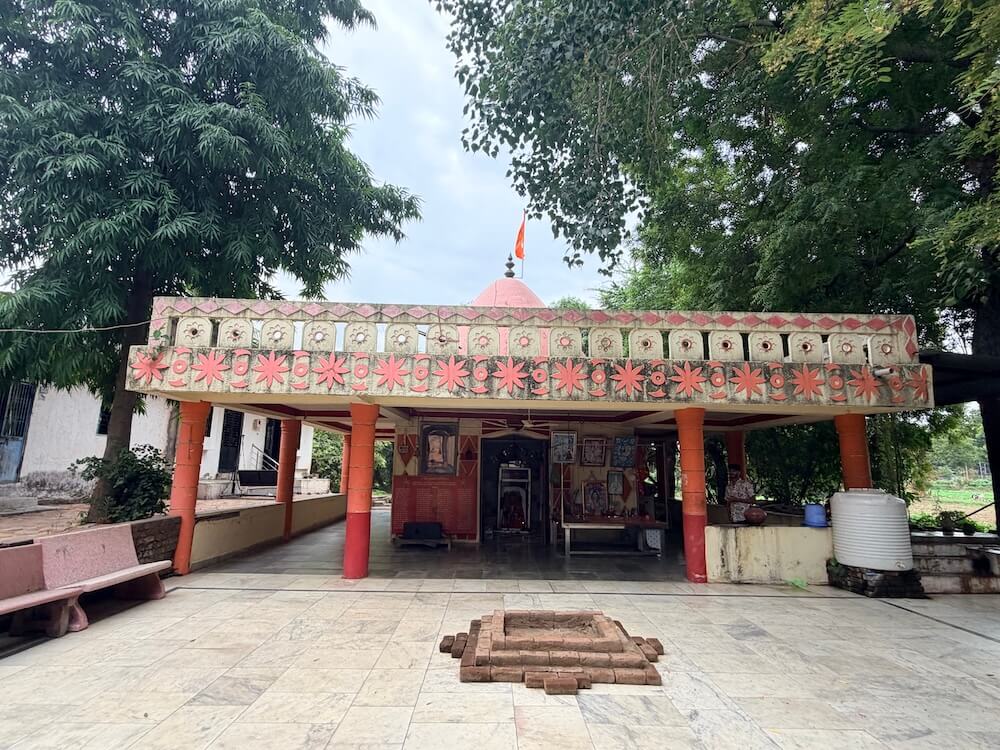
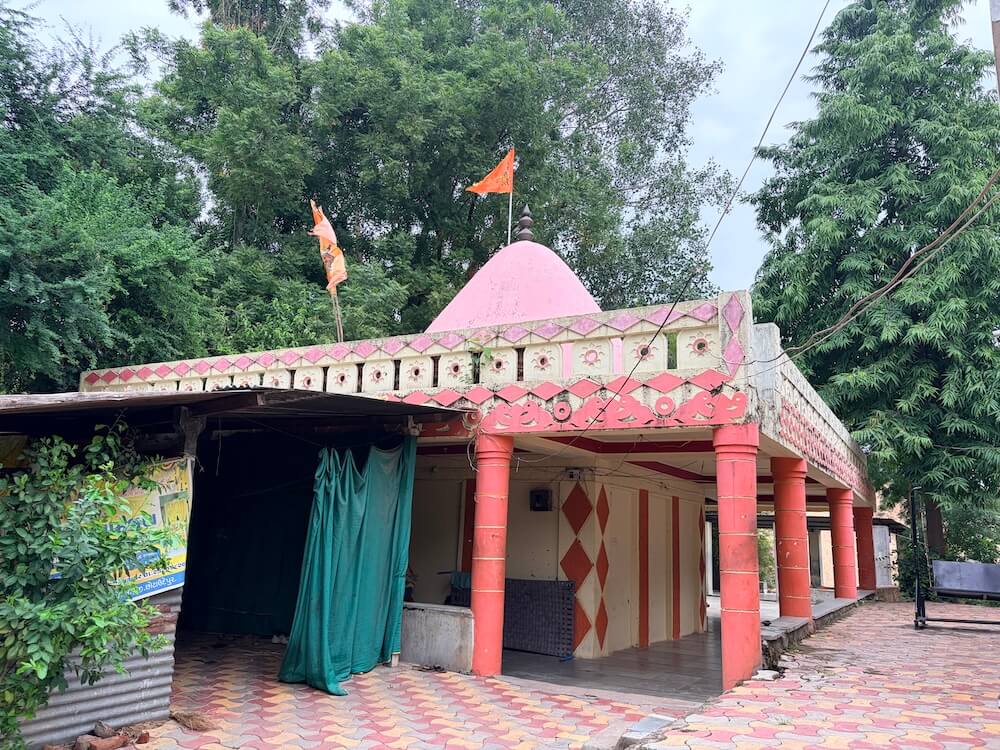
The temple complex is situated a short distance from the primary Bodeli-Jodhpur thoroughfare, running immediately adjacent to the banks of the Orsang River. A neatly cleared footpath connects the main road directly to the sanctuary. The temple structure is elevated upon a stone platform rising approximately three feet high, accessed via a flight of ceremonial steps. A protective lateral balustrade runs along all four sides of this elevated foundation. It is bordered by comfortable stone seating arranged for the relaxation of visiting pilgrims. A sacred sacrificial pit (‘yagnakunda’) stands constructed directly fronting the primary facade. Structurally, the sanctuary features a classical layout comprising a main assembly hall leading to the primary sanctum sanctorum. Positioned upon a dedicated stone pedestal directly before the assembly hall are twelve sacred ‘shivpindis’, which local traditions affirm were originally consecrated by the Pandavas.
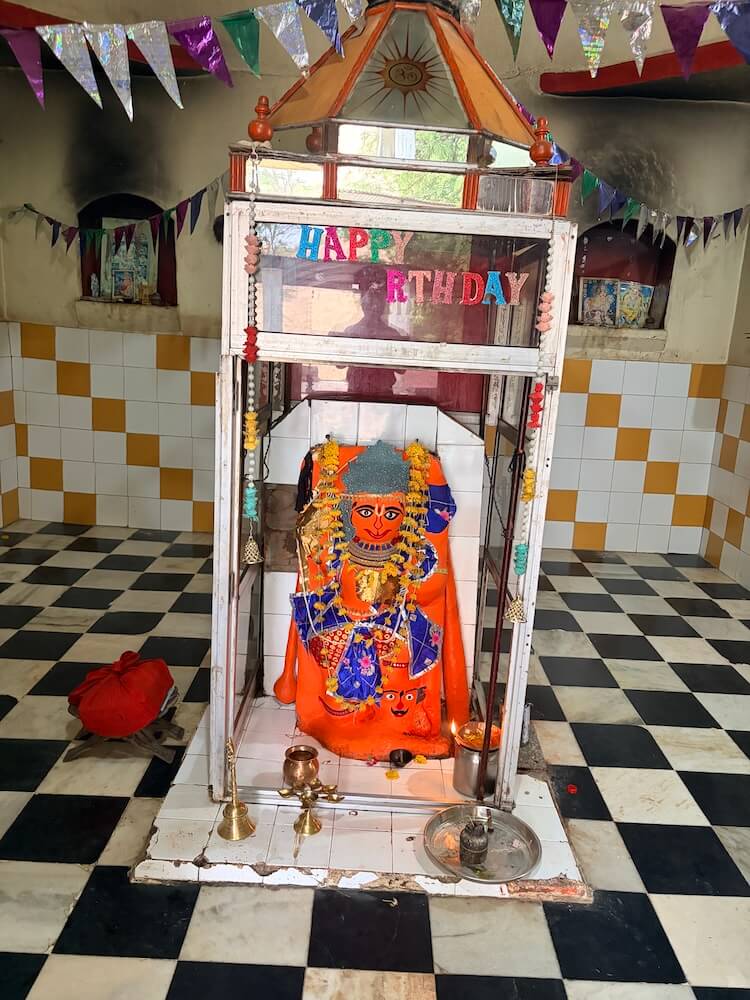
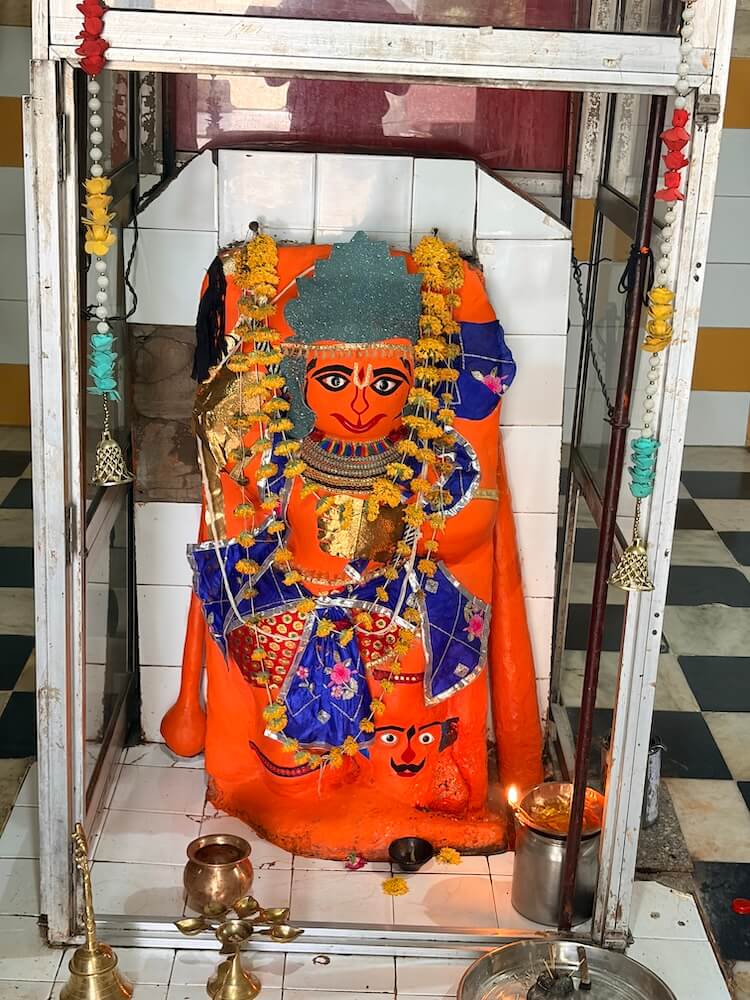
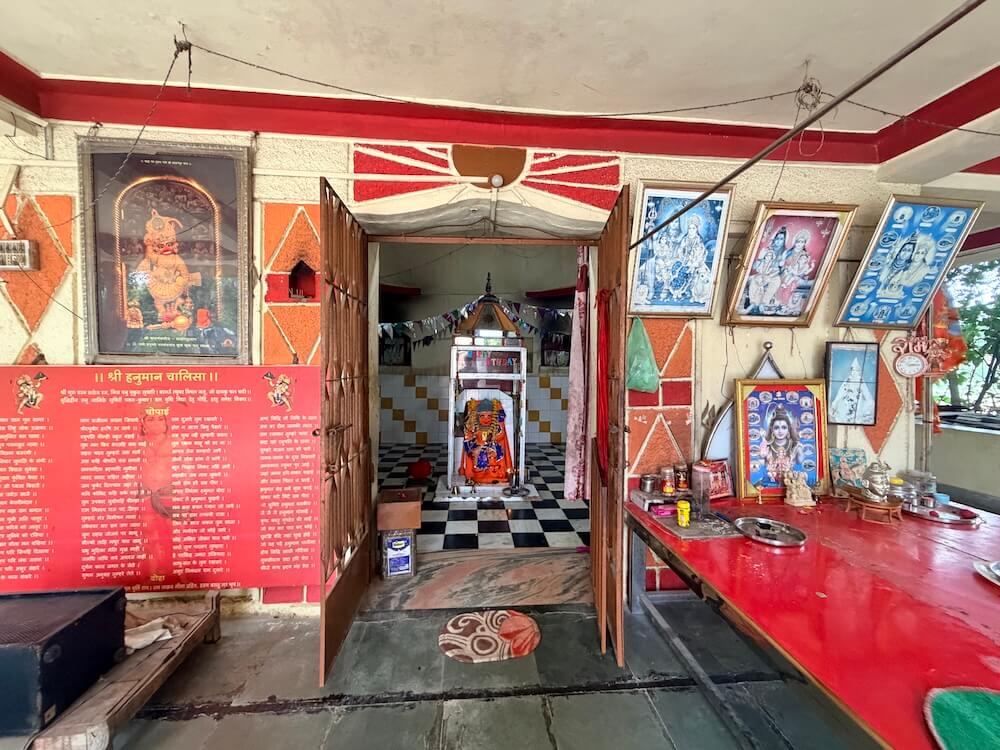
The main assembly hall (‘sabhamandap’) is configured in a traditional semi-open architectural style. At the center of it lies the inner sanctum. Enshrined within a beautifully executed glass enclosure upon an elevated altar inside the sanctum sanctorum is the principal stone idol of Bala Hanuman. It is depicted in a majestic standing posture and fully coated with traditional vermilion. A paved circumambulatory path (‘pradakshinamarga’) runs continuously along the external perimeter of the sanctum. The roofline of the complex is secured by an all-encompassing protective balustrade, while the superstructure surmounting the primary sanctum rises into a magnificent dome-shaped spire. Furthermore, the temple precinct integrates comfortable residential quarters for the priests and attendants, a well-equipped community kitchen and other utility structures, alongside a dedicated pathway leading directly down into the waters of the Orsang River.
The festival of Hanuman Jayanti stands as the pre-eminent annual celebration observed at the temple, during which time the entire precinct transforms into a vibrant, animated fairground. On this auspicious day, a vast multitude of pilgrims from across the region converges upon the shrine to offer prayers and fulfil their vows. The temple trust organizes specialized religious singing sessions (‘bhajans’ and ‘kirtans’) featuring local devotional vocalists. Additionally, prominent festivals such as Ram Navami, Krishna Janmotsav, Mahashivratri, Nag Panchami, Shravan Mondays, Dussehra and Diwali are celebrated here with immense public enthusiasm. The temple witnesses a steady influx of devotees throughout the week, particularly on Saturdays, Mondays, Tuesdays and during the auspicious phase of Purnima (full moon). The temple doors remain open to welcome pilgrims for the ‘darshan’ of Bala Hanuman daily from 6:00 am until 8:00 pm.
This sacred temple stands as a testament to deep spiritual devotion, ancient architectural grandeur, and rich local cultural traditions.
The sanctum sanctorum houses the divine idol consecrated according to ancient Vedic traditions, surrounded by serene courtyards and traditional temple architecture.
Navratri, Maha Shivratri, Annual Temple Jatra & Deepotsav
Compare and book flights, secure top-rated local hotels near the temple, hire reliable guides, and rent cars instantly.
Extend your pilgrimage by visiting other highly sacred temples located nearby.


Add ₹999 more to unlock FREE SHIPPING!
Your sacred cart is currently empty.
Shop Photo FramesFill in your delivery details below to place your order.
Add comment